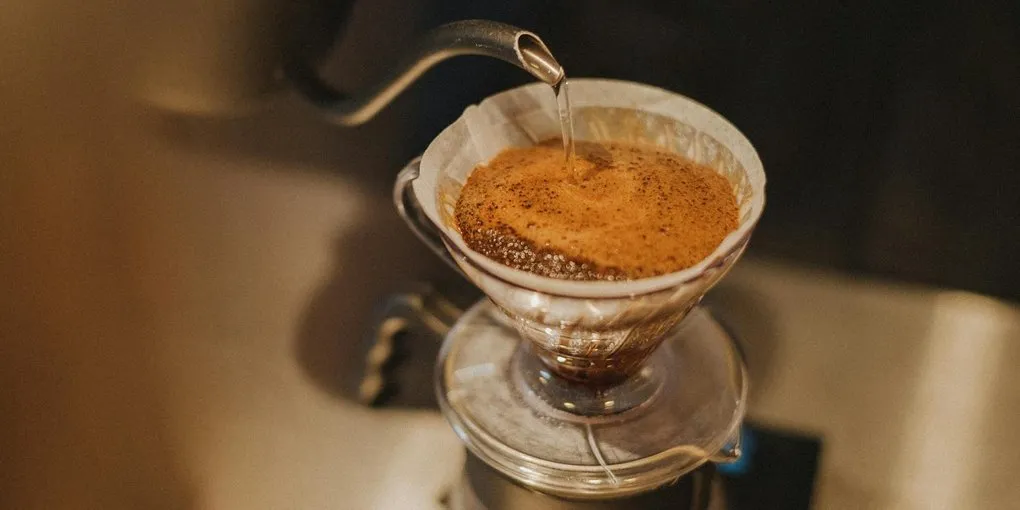
Some cities exist twice. The version on the postcards has the bridges and the palaces and the famous food, and that version is the one everyone knows. The version on the cupping table has different landmarks: a tiny espresso bar where the barista won a regional championship, a roastery in a converted warehouse where a head of green coffee buys lots from one Ethiopian co-op every January, a kissaten where the master pours through a Hario V60 with the same focus a sushi chef brings to fish.
For specialty coffee travelers, the second version is the trip. Which city you visit determines what you taste — Nordic-roasted Ethiopian Yirgacheffe in Oslo will not taste like the same Yirgacheffe pulled as espresso in Melbourne, even when the green coffee comes from the same lot. Each city’s coffee scene grew out of specific people, specific imports, and specific historical accidents, and the resulting cup carries those fingerprints.
This guide covers the cities I consider most consequential to modern specialty coffee — what makes each one distinctive, the roasters and movements that shaped each scene, and what a coffee-focused traveler should expect to find in the cup. The list is editorial, not statistical: there’s no single “most important” ranking that satisfies every reader, and cities with deep older coffee traditions (Vienna, Trieste, Istanbul, Addis Ababa) are deliberately scoped out because this guide maps the modern third-wave conversation specifically. It is not a list of “best cafes” by week or by Instagram traffic. The cafes change. The scenes are durable.
Quick Takeaways
- Melbourne and Wellington are the two cities most often cited as the origin of the flat white; Australia and New Zealand have been disputing the credit since the 1980s.
- Oslo’s Tim Wendelboe (founded 2007) is one of the most globally influential single roasteries of the past two decades — its house style defined what most people now mean by “Nordic light roast.”
- Tokyo runs two coexisting coffee cultures simultaneously: the post-war kissaten tradition of slow hand-drip, and a new wave of light-roast specialty roasters that emerged in the 2010s.
- Portland produced Stumptown (founded 1999), the roaster most often credited with making American third wave coffee a cohesive identity rather than a scattered movement.
- The third wave is no longer geographically American. Berlin, London, Oslo, Copenhagen, and Seoul are now equal centers of innovation, often more rigorous than US peers.
- Avoid equating “great coffee city” with “great Italian-style espresso city.” Italian cafe culture is foundational, but this guide maps traceability-driven third wave specialty rather than espresso ritual alone.
What Makes a City a Coffee City
Three things separate a destination coffee city from a city that merely has good cafes.
The first is anchor roasters — the specialty operations whose green-coffee buying, roasting style, and quality program define the local taste. Cafes can serve any roaster’s beans; a coffee city has at least two or three roasters whose own programs are recognizable in the cup. Tim Wendelboe in Oslo, Square Mile in London, Stumptown in Portland, Coffee Collective in Copenhagen — these are the kinds of operations that make a city.
The second is barista culture — the depth of skilled labor working with espresso machines and brew bars. World Barista Champions, World Brewers Cup competitors, and the regional cohorts they train all anchor a coffee city. Melbourne, Copenhagen, and London have produced disproportionate numbers of competition winners since the early 2000s.
The third is a customer base that pays attention. A coffee city has enough drinkers who care about origin, processing method, roast date, and brew method that the third wave economics actually pencil. Without that base, the best roaster in town becomes the only roaster in town, and the scene never compounds. This is why Seoul’s specialty scene grew so quickly between 2015 and 2025 — a generation of drinkers who treated coffee the way previous generations treated wine.
A great coffee city has all three. The cities below all do.
Melbourne — Where Espresso Became an Australian Identity
Melbourne’s coffee scene has the longest unbroken specialty lineage of any English-speaking city. Italian and Greek post-war immigration brought espresso machines and bar culture to inner-city neighborhoods like Carlton and Fitzroy in the 1950s, decades before American specialty culture had its first wave moment. By the time third wave principles arrived, Melbourne already had a population that took espresso seriously, baristas who treated their work as a craft, and an espresso machine on virtually every block.
The flat white — a microfoam-textured espresso milk drink without the volume of a latte or the heavy froth of a cappuccino — was popularized either in Sydney, Melbourne, or Auckland depending on which national source you trust. The dispute is unresolvable and largely irrelevant; what matters is that the drink is now the defining Antipodean export to global coffee culture.
Melbourne’s anchor third wave roasters include Seven Seeds (founded 2007), Market Lane (2009), Proud Mary (2009), ST. ALi (founded 2005, taken over by Salvatore Malatesta in 2008), and Padre Coffee (2008). The city’s cafe density is among the highest in the world per capita, and the cultural expectation is high: a tourist-grade espresso in a backstreet cafe in Fitzroy will routinely be better than a flagship cafe in most American cities. Melbourne is also one of the most reliable global cities to visit specifically for filter coffee — the Australian preference for slightly higher-roasted, fruit-forward filter produces a cup distinct from the Nordic style.
Tokyo — Two Coffee Cultures, Both Excellent
Tokyo is the only major coffee city where two completely different coffee traditions coexist at world-class quality, in the same neighborhoods, at the same time.
The first is the kissaten tradition — Japanese specialty cafes that flourished from the 1920s onward, built around dark-roasted single-origin coffee, hand-drip preparation through cloth or paper filters, and a contemplative, almost ceremonial customer experience. Many of the legendary kissaten — Cafe de l’Ambre (founded 1948 by Ichiro Sekiguchi), Chatei Hatou, Trois Bagues — have been operating for decades, with masters who have ground beans on the same hand-cranked grinders for thirty years. The kissaten cup is dark, syrupy, complex. The brewing precision rivals anything in modern third wave. For a closer look at Japanese filter technique, see our piece on Japanese iced coffee versus cold brew.
The second is the new wave — Japanese third wave roasters that emerged in the 2010s, applying lighter Nordic-style roasting to Japan’s deep filter-coffee precision. Onibus Coffee (founded 2012), Glitch Coffee (2015), Bear Pond Espresso (2009), Switch Coffee (2013), Sarutahiko Coffee (2011), and Koffee Mameya (2017) represent this generation. Their light roasts and emphasis on origin transparency align with European third wave; their preparation discipline — water temperature management, weight precision, pour pattern control — exceeds it.
Tokyo’s pour-over and Hario V60 culture is so deeply established that the V60 itself was designed by Hario, a Japanese glass company, in 2004 and released commercially in October 2005. Drinking specialty filter coffee in Tokyo is closer to its source than drinking it almost anywhere else — and if you want to recreate the Tokyo cup at home, our ultimate pour-over guide covers the V60 technique.
Oslo — Tim Wendelboe and the Nordic Light Roast
If you had to name one shop that shaped global specialty coffee in the past twenty years more than any other, Tim Wendelboe in Oslo would be on most short lists. Wendelboe — 2004 World Barista Champion and 2005 World Cup Tasters Champion — opened his small roastery and bar in the Grünerløkka neighborhood in 2007 and has spent the years since establishing what came to be called the Nordic style: extremely light roasts that preserve maximum origin character, dense traceability of every lot, hands-off espresso programs that emphasize filter coffee, and a rejection of milk-heavy drinks in favor of straight espresso and pour-overs.
The Nordic style spread because it works. Light roast preserves the volatile aromatic compounds that origin character lives in, and the Nordic approach to extraction — high-temperature, longer-time pour-over with very fresh, gas-active beans — extracts those compounds without bitterness. The result is a cup that tastes more like its origin than the same beans roasted darker would. (For the chemistry of why brew temperature matters at this level, see the ideal coffee brewing temperature.)
Wendelboe is not the only major Oslo operation. Stockfleths, dating to 1895, is a heritage cafe operation that bridges into specialty. Java Mocca, Supreme Roastworks, and Talor & Jørgen also anchor the city’s modern scene. But Wendelboe is the one that traveled. Roasters from Berlin to Seoul cite his program as a direct influence, and his style appears in commercial roasting machine documentation worldwide.
Stockholm — Drop Coffee and Sweden’s Pour-Over Heritage
Stockholm’s modern specialty scene is younger than Oslo’s but parallel in style. Drop Coffee (founded 2009) is the city’s most internationally visible roastery — its founders Joanna Alm and Erik Rosendahl have placed in World Brewers Cup and World Roasting competitions, and Drop’s lots are widely distributed across European specialty cafes. Johan & Nyström, founded slightly earlier, helped establish the first wave of Stockholm specialty.
Sweden as a country drinks more coffee per capita than almost any other — Swedish consumption regularly ranks among the world’s highest — and the cultural tradition of fika, the daily coffee-and-pastry break, gives Stockholm a coffee customer base unlike any American or Asian counterpart. The fika tradition is what gave Swedish specialty cafes the room to specialize in light-roast filter coffee while still operating commercial cafes profitably; the customer was already coming for the ritual.
The Stockholm style is a touch warmer than the Oslo style — a hair longer in roast development, more accessible to drinkers who find Wendelboe-style coffees too acidic — but the lineage is the same. Drop’s washed Ethiopians and Kenyans have set reference points for Nordic-style filter coffee for over a decade.
Copenhagen — Coffee Collective and World Barista Champions
Copenhagen punches well above its size on the modern specialty coffee map, and is one of the most consequential coffee cities in continental Europe. Coffee Collective, founded in 2007 by Klaus Thomsen, Casper Engel Rasmussen, and Peter Dupont, became one of the first European specialty roasters to operate full direct-trade programs at origin and to publish the green prices it paid for every lot. Klaus Thomsen won the 2006 World Barista Championship; Casper Engel Rasmussen won the 2008 World Cup Tasters Championship. The combination of competition pedigree and direct-trade rigor turned Coffee Collective into a model for how a small European specialty roastery can punch globally.
La Cabra, founded in Aarhus in 2012 by Esben Piper and now operating with locations in Copenhagen, Aarhus, and New York, extended that model — light roasts, transparent origin sourcing, and a minimalist visual identity that has been imitated worldwide. The Coffee Collective and La Cabra house styles between them have set much of the contemporary continental European reference point for filter coffee.
Copenhagen also benefits from being a barista training ecosystem. Through the late 2000s and 2010s, Coffee Collective trained baristas who later opened cafes across Scandinavia and northern Europe. The institutional density that resulted — the cluster of cafes you can walk between in the city center, all run by people who learned in the same kitchens — is what makes Copenhagen feel singularly cohesive.
Berlin — The Barn and the Continental Third Wave
Berlin’s specialty scene was a late starter by Nordic standards but caught up faster than any continental city. The Barn (founded 2010 by Ralf Rüller) is the operation usually credited with bringing rigorous third wave standards to Germany — Rüller imported the Stumptown-and-Coffee-Collective sensibility and applied it to a city that, before 2010, was largely a second wave coffee market with great cafes but unremarkable beans. The Barn’s house style — washed, light, often Ethiopian-driven, served in small ceramic cups with no milk pushed on the customer — set the German reference.
Bonanza Coffee Roasters and Five Elephant followed. The Berlin scene multiplied through the 2010s, partly because Berlin’s relatively low rents and concentration of expat creative-class drinkers gave specialty cafes the runway most other German cities couldn’t match. Berlin now anchors a German specialty network — Hamburg, Munich, Leipzig — that mirrors the Australian or American network in density, if not yet in age.
The Berlin cup is mostly Nordic-derived but with a touch of Berlin-specific stubbornness about espresso. While Oslo and Copenhagen lean filter-first, Berlin has retained a serious espresso culture. The result is a city where you can get a flawless Wendelboe-style filter and a flawless darker, more traditional Italian-style espresso within the same block.
London — Square Mile and James Hoffmann
London’s specialty scene is anchored by Square Mile Coffee Roasters, founded in 2008 by James Hoffmann (2007 World Barista Champion) and Anette Moldvaer (2007 World Cup Tasters Champion). Hoffmann’s subsequent influence — through his books The World Atlas of Coffee and The Best Coffee at Home, his industry consulting, and a YouTube channel that became the largest single specialty coffee education resource on the internet — made Square Mile globally visible far beyond its London cafe footprint.
London’s specialty scene is multi-anchored. Workshop Coffee, Monmouth (a heritage operation predating the modern third wave), Caravan, Prufrock, and Ozone all hold their own programs. The city’s barista culture has produced a steady stream of competition placements through the 2010s and into the 2020s, and London is reliably included in any global “top five specialty cities” assessment by trade publications.
The London style is harder to pin down than the Oslo or Melbourne styles. London is more cosmopolitan and more eclectic — you can find Nordic-style filter, Australian-style espresso, and traditional Italian-style espresso in the same neighborhood, all done well. This pluralism is a feature, not a bug. It is the same dynamic that makes London one of the world’s best food cities: there is no single London cuisine, only London cuisines.
Portland — Stumptown’s Hometown
Portland’s claim on coffee history is specific and durable: this is where Stumptown Coffee Roasters opened in 1999, and Stumptown is the third wave roaster most often credited with making the American specialty movement a coherent identity. Duane Sorenson’s program — direct trade with farmers, light-medium roasts, single-origin emphasis, in-house cafe culture — became the template that subsequent American third wave roasters refined. The full backstory of how this generation reshaped American coffee is in our third wave history piece.
Portland’s modern scene is now multi-anchored. Heart Coffee, Coava, Sterling, Water Avenue, and Spella Caffè all run their own programs and ship beans nationally. Stumptown itself was acquired by JAB Holding in 2015 (later folded into Peet’s Coffee) but has retained its program identity. The Portland cafe density is high, and the customer culture is rigorous.
Portland is also the city where third wave coffee culture and broader Pacific Northwest food culture converge most visibly. The customers who care about the provenance of their pour-over are typically the same customers who care about the provenance of their bread, their beer, their cheese, and their pickles. Visiting Portland for coffee is functionally inseparable from visiting Portland for food.
Seattle — Beyond Starbucks, the Quiet Third Wave City
Seattle’s coffee identity is clouded by Starbucks. Starbucks was founded in 1971 at Pike Place Market by three Peet’s customers — Jerry Baldwin, Gordon Bowker, and Zev Siegl — and Howard Schultz turned it into the global second wave engine starting in the 1980s. By the 2010s, the global association of Seattle with coffee had been so thoroughly fused with the Starbucks brand that the city’s third wave specialty operations were often overlooked.
This is unfair. Seattle has Espresso Vivace (founded by David Schomer in 1988) — one of the longest-running rigorous espresso programs in the United States and a foundational reference for American latte art. Slate Coffee, Milstead & Co., Lighthouse, Elm Coffee Roasters, Anchorhead, and Victrola anchor the modern Seattle third wave. The city’s customer base is older and more coffee-literate than almost any other American specialty market — these are the descendants of the customers who bought whole-bean Peet’s-style coffee in the 1980s, then graduated to third wave when it arrived.
Seattle is, in the best sense, a post-Starbucks specialty city. The specialty scene exists not in opposition to Starbucks but largely indifferent to it, the way a strong literary fiction scene exists indifferently to genre publishing.
San Francisco and the Bay Area — Blue Bottle and the West Coast Third Wave
The San Francisco Bay Area has the deepest specialty coffee history of any American region. Berkeley’s Peet’s, opened by Alfred Peet in April 1966, is the founding text of American specialty. San Francisco’s Graffeo, Freed Teller & Freed, and Hardcastle’s predated even Peet’s by a few years. Erna Knutsen, who coined the term “specialty coffee” in Tea & Coffee Trade Journal in 1974, worked at B.C. Ireland in San Francisco. And Blue Bottle Coffee, founded by James Freeman in Oakland in 2002, was one of the four anchor American third wave roasters along with Stumptown, Intelligentsia, and Counter Culture.
Modern Bay Area specialty is multi-anchored: Blue Bottle (now owned by Nestlé but program-intact), Ritual Coffee Roasters, Sightglass, Four Barrel, Saint Frank, Equator, and Wrecking Ball Coffee Roasters (founded by Trish Rothgeb in 2011 — Rothgeb had earlier coined the term “third wave” in a 2002 article in The Flamekeeper, the Roasters Guild newsletter) all hold pieces of the scene. The Bay Area is the only American region where you can trace specialty coffee’s genealogy on foot — Peet’s original Berkeley location, the Wrecking Ball cafe, the early Blue Bottle sites, and several rounds of subsequent specialty operations are all within a Bay Area Rapid Transit ride of each other.
The Bay Area cup is harder to characterize because the scene’s longevity has produced more stylistic variation than younger cities. Most Bay specialty cafes have settled at a slightly warmer roast than Nordic peers, with strong espresso programs and excellent filter — closer to a moderate Stumptown house style than a Wendelboe house style.
New York — Brooklyn and the East Coast Third Wave
New York’s specialty scene is among the largest in the United States by raw cafe count and arguably the most pluralistic in style. Brooklyn anchors most of the third wave intensity — Devoción (with its Colombia farm-to-cafe program), Sey Coffee, Variety Coffee Roasters, Sweetleaf, Saltwater, and Parlor all run their own programs from Brooklyn locations and ship nationally. Manhattan’s specialty footprint includes Stumptown’s New York operations, Joe Coffee, Birch, Café Grumpy, and Bluestone Lane (bringing Australian-style espresso to a domestic market that mostly hadn’t seen it before 2010).
The New York scene benefits from being the most international city on the American coffee map. Australian and Kiwi roasters opened New York operations because that was where the customer base demanded their style; European and Korean operations have followed. The result is a city where you can experience seven different national specialty traditions in their authentic forms in a single subway ride.
Seoul — One of the World’s Densest Cafe Cultures
Seoul’s specialty coffee scene exploded between roughly 2015 and 2025. South Korea is widely cited as having one of the world’s densest cafe cultures (Seoul, Daegu, and Busan all rank near the top of per-capita cafe counts in the OECD figures most often quoted), and Seoul can feel saturated with specialty-style cafes at a level few cities match. The cultural shift was generational — the under-40 Korean drinker who spent the 2010s on Instagram developed an aesthetic-driven cafe culture in which a beautiful, thoughtful, third-wave-quality cafe became table stakes. The mid-tier had to compete on quality, and the top tier became extraordinary.
Fritz Coffee Company, Center Coffee, Felt Coffee, Anthracite Coffee, Coffee Libre, and Bean Brothers anchor the Seoul roastery scene. The Korean approach to specialty has been distinctive: a willingness to embrace experimental processing methods (anaerobic, carbonic maceration, yeast inoculation) earlier and more enthusiastically than most other markets, an integration of cafe design and visual aesthetics into the specialty experience at a level that European peers had not pursued, and a customer base willing to pay specialty-cafe prices for educational experiences.
Seoul is one of the cities where contemporary specialty coffee experimentation surfaces earliest. New fermentation methods, new brewing devices, new cafe-design ideas — they often appear in Seoul before they reach the rest of the global specialty conversation.
“Scene founded” dates anchor on each city’s defining modern specialty operation; most of these cities have older coffee histories that predate the third-wave era.
The Cities That Almost Made the Main List
Several cities deserve mention without warranting a full deep-dive. Reykjavik has Reykjavik Roasters and one of the highest cafe densities in northern Europe. Wellington has Flight Coffee, Pour & Twist, and a barista culture that disputes Melbourne’s claim on the flat white. Auckland has Allpress and Coffee Supreme. Vancouver has 49th Parallel and a Pacific Rim sensibility distinct from the American west coast. Chicago has Intelligentsia, Metric, and one of the clearest American third wave legacy claims; Durham has Counter Culture and the training-culture influence that came with it. Taipei has RuFous and Fika Fika and a serious siphon culture. Singapore has Common Man Coffee Roasters and a humid-climate filter coffee scene that demands its own brewing protocols. Lisbon, Paris, and Amsterdam all have growing specialty footprints with anchor roasters worth visiting (Coutume, Lot Sixty One, Comoba). Vienna is the city most often discussed as a coffee city that the third wave conversation excludes — Viennese coffeehouse culture is profound, important, and largely unrelated to the specialty conversation this guide is mapping.
How to Plan a Coffee-Focused Trip
Start with the anchor roasters. Identify the two or three roasteries that define each city’s modern scene and visit those first — they will explain everything else. Tim Wendelboe in Oslo, Coffee Collective in Copenhagen, The Barn in Berlin, Square Mile in London, Stumptown in Portland, Coffee Libre or Fritz in Seoul. Visit during quieter weekday morning hours, order filter coffee rather than espresso, and let the barista pick the lot if the menu is unfamiliar.
Order the city’s house style first. Start with the cup each scene is built to make: flat white in Melbourne, hand-drip or nel drip in Tokyo, washed Ethiopian or Kenyan filter in Oslo/Stockholm/Copenhagen/Berlin, espresso plus filter in London, light-medium single-origin filter in Portland/Seattle/San Francisco, Colombia-focused pour-over in New York, and experimental-process filter in Seoul.
Skip the social-media famous list. The cafes that show up in travel listicles are often great, but they are also often crowded, tourist-priced, and not actually the most interesting operations in the city. Local coffee subreddits, the European Coffee Trip city guides, and Sprudge city directories are more reliable sources.
Plan around release calendars where possible. Many of the best Nordic and American roasters have small annual auction-lot releases — Tim Wendelboe’s Esmeralda lots, Coffee Collective’s Best of Panama bids, Square Mile’s small competition releases — that turn a normal cafe visit into a once-a-year tasting experience. The 2004 Best of Panama auction, where a Geisha variety from Hacienda La Esmeralda sold for $21 per pound (more than four times the previous record of $4.80), inaugurated this entire auction-lot economy; today’s top Geshas sell for over $30,000 per kilogram.
Bring a notebook. Coffee cities reward attention; the cafes you remember a year later are the ones you bothered to write down.
Pack your own gear if you care. A small Hario V60 dripper, a few filters, and a portable scale fit in a carry-on and let you brew the beans you buy back at the hotel. The best roasters in every city sell whole beans by the bag; bringing them home brewed is one of the most reliable ways to anchor a memory of the trip. (For dialing in those beans at home, see our guides to pour-over technique and grind size by brew method.)
The Third Wave Is No Longer Just American
When the term “third wave” was coined in 2002, the movement was effectively American — Stumptown in Portland, Intelligentsia in Chicago, Counter Culture in Durham, Blue Bottle in Oakland. By 2025, the geographic center of gravity had pluralized. The United States still matters, but many of the most rigorous green-buying programs are now split between Europe (Coffee Collective, Tim Wendelboe, La Cabra, Square Mile) and Asia (Glitch, Onibus, Fritz). Some of the most experimental processing work is happening in Korea. The deepest filter coffee discipline lives in Japan.
This is the right outcome. Specialty coffee was always going to globalize — coffee is a tropical agricultural product, and the producers had no reason to be permanently downstream of American taste. The cities in this guide are the places where that globalization is most visible from the customer side. Visit them in any order. Order filter coffee first. Let the cup teach you the city.
Frequently Asked Questions
- What city has the best coffee in the world?
- There is no single answer because the answer depends on what kind of coffee you want. For the most rigorous filter coffee, Oslo and Copenhagen lead. For Italian-influenced espresso done at world-class quality, Melbourne. For meticulous hand-drip and dual-tradition depth, Tokyo. For broadest pluralism (every style available, all done well), London or New York. The 'best' answer is whichever city's house style most closely matches your own taste preference.
- Where did the flat white originate — Australia or New Zealand?
- Both countries claim it, the dispute is largely unresolvable, and the cafes most often credited as the origin point are in Sydney, Melbourne, and Auckland depending on the source. What is undisputed is that the drink — espresso with microfoam-textured milk, no decorative froth, served in a smaller cup than a latte — emerged in the late 1980s in Australasian espresso bars and was largely unknown in the United States until the 2010s. Today flat white is on the menu at most third wave cafes globally; the credit dispute is mostly a national pride argument between two coffee-strong countries.
- Who is Tim Wendelboe and why is he so important?
- Tim Wendelboe is a Norwegian roaster, cafe operator, and competition coffee professional. He won the 2004 World Barista Championship and the 2005 World Cup Tasters Championship, then opened a small roastery and bar in Oslo's Grünerløkka neighborhood in 2007. Over the next two decades, his program — extremely light roasts, dense origin traceability, an emphasis on filter coffee over milk drinks — became the most copied house style in modern specialty coffee. When people refer to 'Nordic-style' or 'Scandinavian-style' coffee, they are usually describing Wendelboe's approach. Roasters from Berlin to Seoul cite his program as a direct influence.
- What is the difference between Nordic-style and Italian-style coffee?
- Nordic-style coffee is typically very lightly roasted, single-origin, served as filter or espresso without milk, and designed to showcase origin character — fruit, florals, acidity. Italian-style coffee is darker-roasted, often blended, served primarily as espresso (or espresso plus milk), and designed for consistency and a balanced 'coffee' flavor regardless of origin. Both traditions produce excellent cups; they reflect different priorities. The third wave specialty conversation is mostly an extension of the Nordic approach, while Italian coffee culture is a foundational espresso tradition built more around cafe ritual, consistency, and volume than origin transparency.
- Is Vienna a coffee city?
- Vienna has a profound, centuries-old coffeehouse culture and is one of the most culturally important coffee cities in history — UNESCO inscribed Viennese coffeehouse culture on its Intangible Cultural Heritage list in 2011. But that culture is not specialty coffee in the modern third wave sense. Viennese coffeehouses are about the room, the newspapers, the long sit, the Sachertorte — not about lot transparency, light roasts, or origin character. A serious specialty coffee traveler should visit Vienna for the experience but should not confuse it with the kind of coffee city this guide is mapping. The two traditions can coexist; they are not the same thing.
- Are these recommendations based on first-hand experience?
- This guide is built from a synthesis of widely-cited specialty coffee literature, including Mark Pendergrast's Uncommon Grounds, James Hoffmann's The World Atlas of Coffee, and the SCA's published industry research. The history, founding dates, and roastery lineage are drawn from those sources. Specific cafe details and current operational status should always be verified locally before a trip — cafes close, roasters change ownership, and even durable institutions occasionally relocate. The roastery and movement information in this guide is durable; the address-and-hours information you should always check independently.
- What is the best coffee city for a specialty coffee beginner?
- Melbourne or London. Both cities have a deep specialty footprint without imposing a single house style, so a beginner can taste Italian-style espresso, Australian-style flat whites, Nordic-style filter, and traditional second wave coffee in the same neighborhood, often the same week. This breadth is more useful than depth for someone calibrating their own taste. Once you know what you prefer, then go to Oslo or Tokyo for that specific style done at the highest level.
- How long does it take to develop a specialty coffee scene?
- Roughly fifteen to twenty years from anchor-roaster founding to mature scene, based on the historical record. Stumptown opened in 1999; Portland's scene was deep by 2015. Tim Wendelboe opened in 2007; Oslo's full Nordic identity was globally exported by the early 2020s. Coffee Collective opened in 2007; Copenhagen's training-ecosystem effect was visible across continental Europe by the late 2010s. Seoul compressed this timeline — the city's specialty scene matured in roughly ten years (2015-2025) — because Korean drinkers were already conditioned by an Instagram-driven cafe aesthetic that lowered the customer-education barrier. The variable is the customer base; the roasters can move faster than the drinkers.