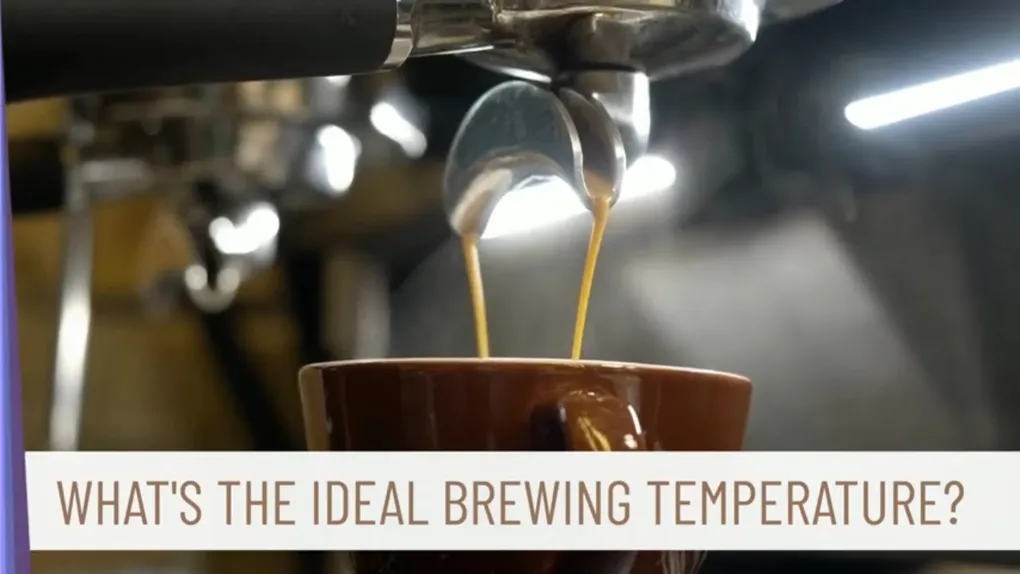
It’s one of the most debated topics among coffee enthusiasts: what’s the ideal brewing temperature? The truth is there’s no single optimal temperature. Instead, we’re working with ranges — and understanding how temperature affects extraction is one of the fastest ways to improve your daily cup.
How Temperature Affects Extraction
The dynamic is straightforward: hotter water extracts faster. If your coffee tastes overly acidic or sour, try increasing the temperature to boost extraction. Conversely, if it’s coming out bitter, reduce the temperature. Keep in mind that other variables — brewing method, grind size, and extraction time — also play significant roles, so temperature is just one lever to pull.
Pour Over: 90-96 C (195-205 F)
The general rule baristas will tell you is 96 degrees Celsius (205 F), but this is likely the highest temperature you’d want to use for manual brewing. For pour over, aim for a range of 90 to 96 C (195 to 205 F). Use the lower end for darker roasted beans and the upper end for lighter roasts.
Note that these temperatures are well below water’s boiling point of 100 C (212 F). A good rule of thumb: let your kettle come off the boil for about 30 seconds before pouring.
AeroPress: 80-93 C (176-200 F)
The AeroPress allows for a much wider temperature range. Championship-winning recipes have used temperatures anywhere from 80 C to 93 C (176 to 200 F). The lower temperatures are possible because the AeroPress uses pressure and full immersion, which aid extraction even at cooler temps.
Espresso: 86-95 C (187-203 F)
Espresso is more particular about temperature, and the ideal range shifts based on roast level:
- Extra dark roasts: 86-91 C (187-196 F)
- Average roasts: 89-93 C (192-200 F)
- Lighter espresso roasts: 91-95 C (196-203 F)
Generally, you can expect to notice a discernible change in your espresso when adjusting temperature by just 1 degree Celsius (about 2 F).
PID Controllers: The Precision Solution
Achieving consistent brewing temperature for espresso can be frustrating. Traditional heating elements simply turn on when the temperature drops too low and off when it’s too high, creating temperature swings. This led brewing enthusiasts to adopt PID controllers (proportional-integral-derivative controllers), which intelligently cycle the heater to achieve a flat, consistent temperature.
The industry embraced flat-line temperature control because it wasn’t difficult to engineer and delivered consistent results. To verify your machine’s temperature stability, simply check the temperature at the start of a shot and compare it to the end.