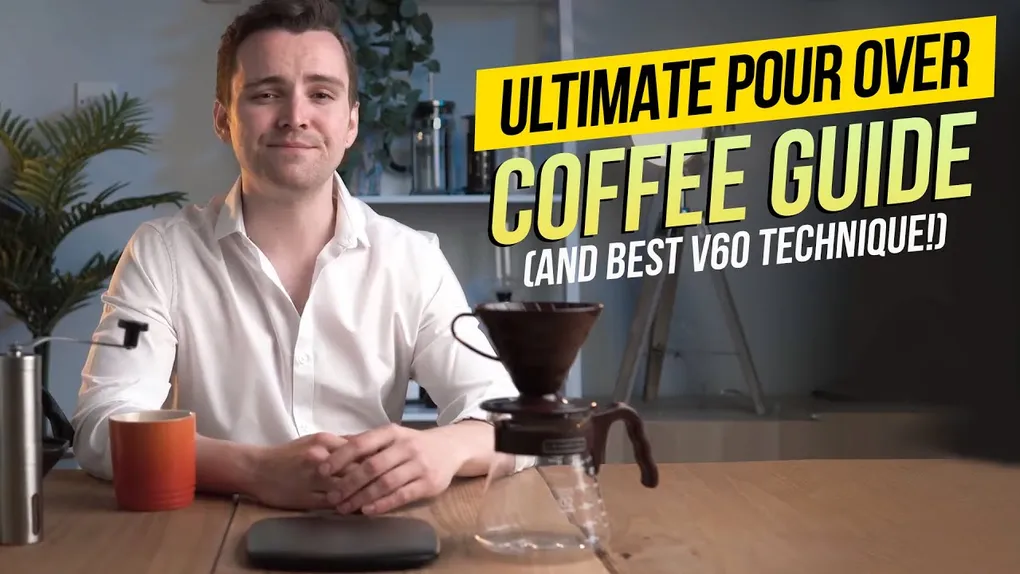
The pour over method has burst into the mainstream coffee scene, and for good reason. It is especially common in high-end cafes and specialty shops, and it has become the go-to brewing method for anyone who wants maximum control over their cup. But beyond the quality of the brew itself, there is something genuinely captivating about the process — the slow pour, the bloom, the ritual of it all. It is as much an art form as it is a brewing technique.
What You Will Need
The pour over method is more hands-on than most brewing styles, so the equipment list is a bit longer than usual:
- Burr grinder (consistency matters here)
- Paper filters
- Gooseneck kettle (the narrow spout gives you essential pour control)
- Quality coffee beans
- Carafe or decanter
- Timer
- Coffee scale
- Pour over dripper — popular options include the Hario V60, Kalita Wave 185, Chemex, Bee House Ceramic, and Coffee Gator
For this guide, we are using the Hario V60, which is arguably the most popular pour over dripper on the market.
Choosing Your Beans
Light roasts tend to be favored for pour over brewing. They are less porous than darker roasts, meaning the compounds extract more slowly — giving the water more contact time with the grounds than in quick methods like espresso. That said, do not feel restricted by this. You can brew with any beans you like.
Step-by-Step Brewing Instructions
1. Boil your water. Heat at least 20 ounces in your gooseneck kettle, then let it stand for about 30 seconds. This should bring the temperature to around 200 degrees Fahrenheit (93 degrees Celsius). A temperature-controlled kettle makes this even easier.
2. Weigh and grind your beans. Measure out 15 grams of coffee for one cup. Grind to the coarseness of sand — medium to medium-coarse. Always grind fresh.
3. Prepare the filter. Place a paper filter into your dripper. Fold the seam so it sits flush. Pour some hot water through the filter to pre-wet it — this serves three purposes: it rinses away any papery taste, it heats the dripper for more even extraction temperature, and it holds the paper snugly against the walls. Discard this rinse water.
4. Add the grounds. Place the dripper on your scale, add the grounds, and tare to zero. Gently shake the dripper to level the coffee bed, and create a small well in the center.
5. The bloom pour. Very slowly and carefully pour about 60 grams of water over the grounds in roughly 15 seconds, making sure to cover them evenly. Give a light swirl and let it sit for 30 seconds. You will see the grounds rise like a muffin and release a fine aroma — this is the coffee bloom, the release of carbon dioxide from the beans.
6. Second pour. After 30 seconds, begin pouring again in a slow spiral motion from the center outward — roughly 90 grams of water over 15 seconds. Pour evenly and slowly. Wait another 50 seconds to a minute.
7. Third pour. Add another 100 grams of water, slowly and evenly.
8. Final pour. Pour the remaining water (roughly another 100 grams). Let it filter through completely.
9. Remove and enjoy. Take off the dripper, discard the filter and grounds, give your coffee a quick swirl, and enjoy.
Tips for the Perfect Cup
Water quality and temperature — Always use clean, filtered water with minimal additives. Maintain water temperature between 90-96 degrees Celsius (195-205 degrees Fahrenheit) to prevent under-extraction.
The right grind — Use a high-quality burr grinder. The grind size should be medium to medium-coarse, somewhere between a French press and an espresso grind. Distribute the grounds evenly in the filter to optimize extraction and reduce channeling.
Pre-wet the filter — This step is easy to skip but makes a real difference. It preheats the dripper, removes paper taste, and ensures even contact.
The bloom — Pour around 30 grams of water in a spiral motion over the coffee bed to release the CO2. Wait for the grounds to expand before continuing. This step is essential for optimal extraction.
Coffee-to-water ratio — The generally accepted standard is 1:17 (one gram of coffee to 17 grams of water). Adjust to taste.
Why Pour Over Is Worth the Effort
Most experienced baristas prefer the pour over method, and the reasons go beyond flavor:
- Control — You control every variable: water temperature, pour rate, grind size, brew time, and coffee strength. No other method gives you this level of precision.
- Flavor profile — Pour over illuminates intricate flavors and aromas better than nearly any other brewing method. If you have a batch of single origin coffee, this is the best way to experience its unique characteristics.
- Efficiency — The constant supply of fresh water makes extraction of coffee solubles more efficient compared to immersion methods like French press.
- Consistency — Paper filtration produces a clean, clear cup. Oils are extracted gradually and consistently, and most are filtered out for a bright, crisp result.
One caveat: like any manual method, pour over is subject to human error. Channeling — where water finds an easy path through the coffee bed due to uneven distribution — is the most common issue. Even distribution and a controlled, consistent pour are the keys to avoiding it.
The best part about pour over is the individuality of each brew. Hot, iced, or cold brewed — it is suitable for any style. The entire experience, from grinding the beans to sipping the last drop, is meditative in a way that automated brewing simply cannot replicate. And the coffee is exactly the way you want it to be.
Some links above are affiliate links. If you purchase through them, we earn a small commission at no extra cost to you.