Ethiopia is the birthplace of all Arabica coffee, and it still produces some of the most exciting cups on earth. The country is forecast to produce 11.6 million 60-kg bags in MY 2025/26 (USDA FAS) — the largest producer in Africa — and the flavor range is genuinely unmatched. A washed Yirgacheffe and a natural Guji taste like they come from different planets. No other origin offers that kind of diversity.
What Ethiopian Coffee Tastes Like
The short answer: it depends entirely on how it was processed.
Washed Ethiopian coffees are elegant, clean, and tea-like. Expect floral aromatics (jasmine, bergamot), citrus brightness, and a lighter body with exceptional clarity. The best washed Yirgacheffes are explosively aromatic — they practically announce themselves when you open the bag.
Natural processed Ethiopian coffees are the opposite end of the spectrum. The entire cherry dries around the bean before removal, producing intensely fruity, wine-like cups with syrupy body, pronounced berry sweetness, and sometimes wild, funky fermentation notes. The best naturals are nearly impossible to replicate from any other origin.
Both are spectacular. Choosing between them comes down to whether you prefer precision or wildness in your cup.
Most Ethiopian coffee grows at 1,500 to 2,200 meters in the southern highlands — volcanic soil, abundant rainfall, and cool temperatures that slow cherry maturation. Slower development means more time for sugars and complex organic compounds to accumulate. The terroir is essentially perfect for coffee without any intervention.
One practical note: Ethiopian coffees consistently produce more fines when ground than other origins (the beans are harder and more brittle). If you’re dialing in an Ethiopian on your grinder, you may need a slightly coarser setting than you’d use for the same roast level from Central America. If you’re still dialing in your grind settings generally, our coffee grind size guide covers every brew method in detail.
The “Heirloom” Question
When you see “Ethiopian Heirloom” on a bag, here’s what that actually means: we don’t know which specific varieties are in here. Ethiopia’s wild coffee forests and smallholder farms contain an estimated 6,000 to 15,000 distinct Arabica varieties, but the vast majority remain unnamed and ungenotyped.
These aren’t cultivars bred in laboratories — they’re ancient landraces that evolved naturally over centuries, adapted to specific microclimates. That genetic diversity is genuinely important. Most cultivated Arabica worldwide descends from very few plants taken from Ethiopia and Yemen centuries ago, creating a dangerously narrow genetic base. Ethiopia’s forests represent the insurance policy for the entire global coffee industry.
The Kaffa zone — widely considered the birthplace of wild Arabica — was named a UNESCO Biosphere Reserve in 2010, protecting nearly 5,000 wild coffee varieties in their natural forest habitat. As climate change threatens coffee cultivation worldwide, these wild Ethiopian varieties may hold the keys to developing heat-tolerant and disease-resistant cultivars.
The Growing Regions
Yirgacheffe
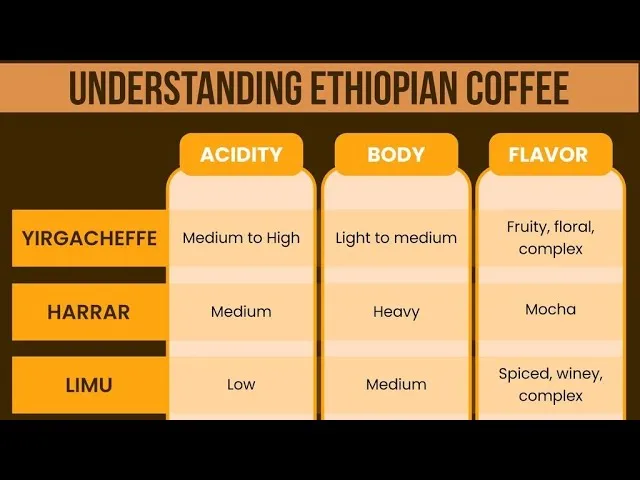
The most celebrated Ethiopian regional type. Located within the Sidama zone at 1,700 to 2,200 meters. Washed Yirgacheffes are renowned for jasmine-like aromatics and citrus brightness with a tea-like body. Naturals from here are intensely fruity. If you’re new to Ethiopian coffee, start here — the quality is consistently excellent.
Guji
South of Sidama, Guji has emerged as a producer of exceptional natural processed coffees with intense fruit-forward profiles, dark chocolate, and floral complexity. Many specialty roasters now highlight Guji as a distinct origin rather than grouping it under the Sidamo umbrella — the flavor profile justifies the distinction.
Sidamo
The broader zone that includes Yirgacheffe. Sidamo coffees showcase the full range of Ethiopian flavors — bright and fruity to deep and earthy. As the largest coffee-producing region in Ethiopia, the variety within Sidamo means you can find something different every time.
Harrar
Eastern highlands, 1,500 to 2,000 meters. One of the oldest coffee-producing regions in Ethiopia. Almost entirely natural processed, producing wild berry notes, wine-like characteristics, and a heavy, mocha-flavored body. Harrar is the gateway for people who think they don’t like African coffees — it shares more DNA with the rich, chocolatey profile of South American beans than with the floral elegance of Yirgacheffe.
Limu
Southwestern Ethiopia. Sharper and bolder than Yirgacheffe with wine notes and spiced floral undertones. Heavier bodied and excellent at darker roast levels. Underappreciated and often a better value.
Jimma
Western highlands, near the ancient Kaffa forests where coffee was first discovered. Unique balance of body and acidity. Less internationally celebrated, but excellent value and surprising depth.
The Coffee Ceremony
Ethiopian coffee culture runs deeper than anywhere else on earth. Ethiopians consume close to a third of the country’s coffee production domestically (USDA FAS forecasts 3.7M bags of domestic consumption against 11.6M bags total in MY 2025/26) — coffee isn’t just an export crop, it’s woven into daily life.
The Ethiopian coffee ceremony happens up to three times a day. Raw beans are washed, roasted over open fire, ground by hand, and brewed in a traditional clay pot called a jebena. Three rounds are served — Abol (strongest), Tona, and Baraka (lightest) — each said to bring the drinker closer to spiritual elevation. The ceremony is traditionally led by women and accompanied by burning incense.
It’s the world’s oldest continuous coffee tradition, and it reflects how Ethiopians view coffee: not as a commodity to be rushed through, but as an experience to be shared.
How to Brew Ethiopian Coffee
Washed Yirgacheffe and Guji: Pour-over (V60, Chemex) is ideal. The clean extraction highlights delicate floral and citrus notes. Medium-fine grind, 200-205°F water. Our ultimate pour-over guide walks through the full V60 technique.
Natural processed Harrar and Sidamo: French press or AeroPress preserves more body and fruit-forward sweetness. Slightly coarser grind, 4-minute steep. If you’re newer to AeroPress, our guide to using an AeroPress covers the basics and advanced techniques.
Roast level: Light to medium. Darker roasts mask the origin characteristics that make Ethiopian coffee special. You didn’t buy Ethiopian coffee to taste char — you bought it to taste Ethiopia.
One more tip: Let the cup cool. Ethiopian coffees evolve dramatically as temperature drops. What starts as bright citrus at 160°F can shift to blueberry jam at 130°F. The most interesting flavors often emerge in the last third of the cup.
If you want to take this further, we’ve reviewed seven Ethiopian coffees side by side and also covered the heirloom vs. named varietal debate in depth.
Some links above are affiliate links. If you purchase through them, we earn a small commission at no extra cost to you.
Frequently Asked Questions
- Why does Ethiopian coffee taste fruity and floral compared to other origins?
- Two factors: genetics and processing. Ethiopia's 6,000-15,000 wild Arabica varieties have evolved naturally over centuries, developing flavor compounds no cultivated varieties can match. Natural processing — drying the whole cherry intact — ferments the fruit around the bean, intensifying berry and wine-like notes. The high altitude (1,500-2,200m) and volcanic soil further concentrate sugars and complex organic acids.
- What does "Ethiopian Heirloom" mean on a coffee bag?
- It means the roaster doesn't know the specific variety — and that's normal. Most Ethiopian coffee comes from wild or semi-wild plants that haven't been genetically identified. The term "heirloom" covers thousands of unnamed landraces that evolved naturally in Ethiopia's forests. It's not a marketing gimmick; it reflects genuine genetic diversity that doesn't exist anywhere else.
- Should I buy washed or natural Ethiopian coffee?
- It depends on your taste preference. Washed Ethiopian coffees are elegant, clean, and tea-like with jasmine and citrus notes — ideal if you like precision and clarity. Natural processed Ethiopians are bold, fruity, and wine-like with berry sweetness and heavier body — ideal if you like intensity and wildness. Try one of each to discover which style you prefer.
- Why does my Ethiopian coffee taste different as it cools?
- Ethiopian coffees evolve dramatically with temperature. At 160°F, you might taste bright citrus; at 130°F, that can shift to blueberry jam or stone fruit. This happens because different volatile compounds become perceptible at different temperatures. It's a feature, not a flaw — let the cup cool and pay attention to how the flavors change. The most interesting notes often emerge in the last third.