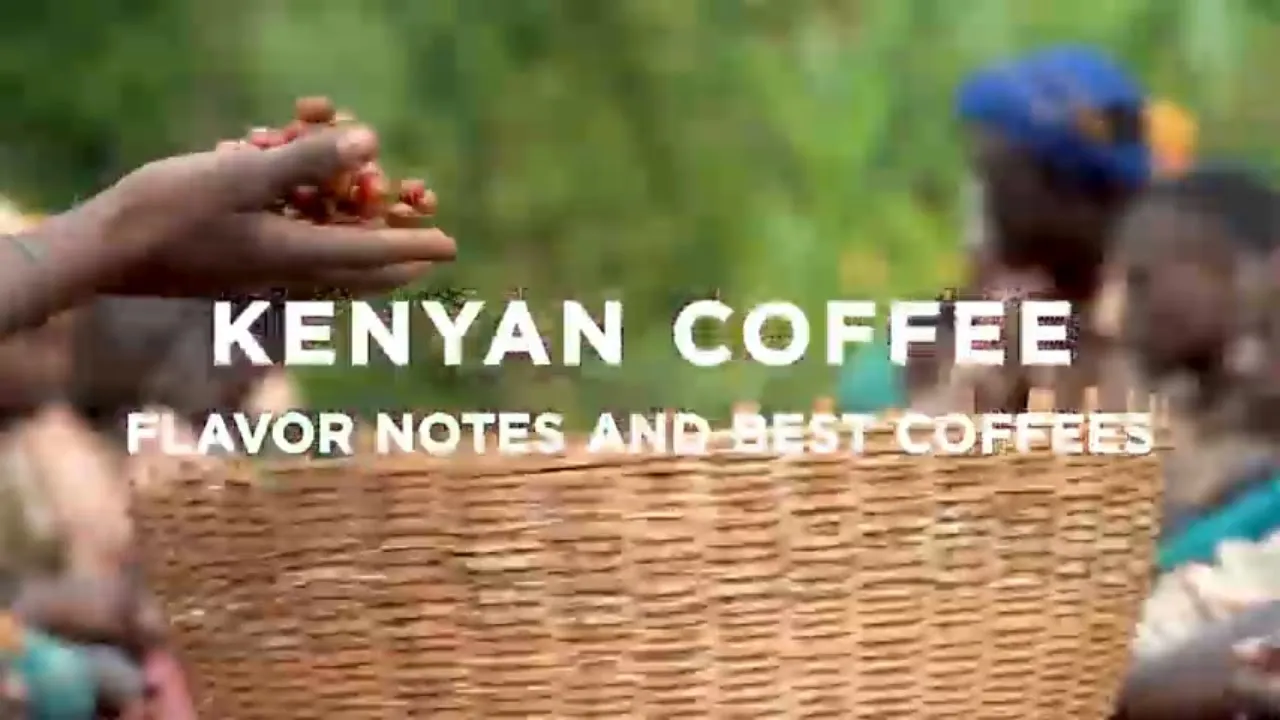
Kenya produces less than 1% of the world’s coffee. It doesn’t need to produce more. What it does produce is consistently among the most celebrated, most complex, and most expensive coffee on earth. If you want to understand what specialty coffee is capable of, Kenyan coffee is the argument.
What Kenyan Coffee Tastes Like
Kenyan coffee has a signature that, once you learn to recognize it, you’ll never mistake for anything else. Here’s what to expect:
- Intense, sparkling acidity — not sour, but bright and complex. Think grapefruit, blackcurrant, lemongrass
- Berry and stone fruit — blackcurrant is the classic Kenyan note, but you’ll also find tomato, grapefruit, and tropical fruit depending on the lot
- Full, juicy body with a pleasant weight in the mouth
- Wine-like finish — dry, complex, lingering
- Floral undertones — jasmine, bergamot, and sometimes a tea-like delicacy
The acidity is the defining characteristic. Kenyan coffee contains phosphoric acid in notable quantities — the same acid that gives cola its sparkling, almost-sweet brightness. This is distinct from the citric acid dominant in Central American coffees or the malic acid (apple-like) in Colombian coffees. Phosphoric acid tastes sweeter and more effervescent than other coffee acids, which is partly why Kenyan coffee’s acidity feels vibrant rather than sharp.
Each sip reveals layers. The bright acidity hits first, then fruit notes emerge, then floral undertones appear, and finally a satisfying herbal-wine finish lingers. This complexity rewards slow, mindful drinking — Kenyan coffee isn’t a gulp-it-on-the-commute coffee.
Fun fact: Kenyans themselves barely drink the stuff. Tea is the national beverage. Over 80% of Kenya’s coffee production is exported.
Why Kenyan Coffee Tastes This Way
Four factors converge to create Kenyan coffee’s distinctive character. Understanding them helps you appreciate why these beans command the prices they do.
The Varieties: SL-28 and SL-34
This is the single biggest reason Kenyan coffee tastes like nothing else. SL-28 and SL-34 are varieties developed by Scott Agricultural Laboratories in Nairobi during the 1930s-1940s. Scott Labs selected these from existing Kenyan coffee populations for drought tolerance and cup quality — and they hit the jackpot.
SL-28 is rated “exceptional” for cup quality by the World Coffee Research Varieties Catalog — one of only two varieties globally to receive that rating (the other is Geisha). The intense blackcurrant, citrus, and sweetness that define “Kenyan character” come primarily from SL-28. It produces large beans with low yield, which concentrates flavor but limits supply.
SL-34 is closely related — similar quality (rated “very good”), slightly more productive, slightly less intense. Most Kenyan farms grow both.
The downside: both varieties are highly susceptible to coffee leaf rust, the disease devastating Arabica production worldwide. Kenya has responded with two newer varieties:
- Ruiru 11 — a compact, very high-yielding, rust-resistant F1 hybrid developed by Kenya’s Coffee Research Institute. Cup quality is rated “good” — a step down from SL-28’s “exceptional,” but the yield and disease resistance are dramatically better.
- Batian — a tall, complex variety bred from SL-28, SL-34, Rume Sudan, and Timor Hybrid genetics (among others). Very large beans, high yield, intermediate rust resistance, and “very good” cup quality. Batian is Kenya’s bet on a future where SL-28 and SL-34 may no longer be viable due to disease pressure.
When you buy Kenyan coffee, you’re most likely drinking SL-28 and SL-34. If the bag specifies the variety, that’s a good sign — the roaster is paying attention to sourcing.
The Double-Wash Processing
Kenyan coffee is almost exclusively washed, but Kenya’s version is more rigorous than most. Many Kenyan washing stations use a double-wash (or double-ferment) process: after the initial fermentation and wash, the parchment coffee is soaked in clean water for an additional 12-24 hours, then washed again.
This extended soaking and second wash produces exceptionally clean cups — it removes more mucilage residue than a single wash, amplifying the brightness and clarity that define Kenyan coffee. It’s one reason why Kenyan coffees are described as having a “clean cup” — there’s no muddiness, no fermentation residue, just pure varietal and terroir expression.
The processing infrastructure matters too. Kenya has a network of centralized washing stations where cherries from smallholder farms are carefully processed and sorted. This centralized quality control is one reason why Kenyan coffee maintains such consistent standards.
The Auction System
Kenya has one of the most unique coffee trading systems in the world. All coffee passes through the Nairobi Coffee Exchange, where lots are sold at a weekly Tuesday auction. Buyers sample and bid on individual lots based on cupping quality.
This auction system means that quality is directly rewarded with higher prices. A farm or co-op producing exceptional lots will see their coffee bid up; mediocre lots sell for less. It creates a direct incentive to invest in quality at every step — picking, processing, sorting — because the auction transparently prices the result.
The downside is that the system has historically taken a significant cut from farmers. Recent reforms have improved direct payouts, and some specialty buyers now source through “second window” direct relationships that bypass the auction for specific lots. But the auction remains the backbone of Kenyan coffee commerce, and it’s a major reason why quality stays high.
Kenya’s coffee exports surged 12% in 2024, reaching 53,519 tonnes and generating approximately $296.8 million. Auction prices hit historic highs of $363 per 50-kg bag in early 2025.
Altitude and Volcanic Soil
Most Kenyan coffee grows between 1,400 and 2,000 meters — some of the highest Arabica cultivation altitudes in the world. At these elevations, cherries ripen slowly, developing more complex sugars and acids.
Research shows that higher-altitude coffees (Kenya, Ethiopia, Burundi) consistently extract more soluble flavor compounds than lower-altitude coffees — about 25% of the variation in extraction yield can be explained by elevation alone. In practical terms: Kenyan coffee has more “stuff” in it for your water to extract. More flavor material = more complex cup.
The volcanic soils across Kenya’s coffee belt — rich in phosphorus, potassium, calcium, magnesium, and trace minerals — provide exactly what Arabica plants need to produce concentrated, flavorful beans. When you taste mineral complexity in a great Kenyan coffee, you’re tasting this volcanic terroir directly.
The Grading System: What AA Actually Means
Kenya’s grading system is based on screen size — the physical dimensions of the green bean, measured by passing beans through screens with specific-sized holes. The grades run:
- E (Elephant) — unusually large beans, often two beans fused together. Rare and novelty-priced.
- AA — screen size 17-18 (6.8-7.2mm). The largest standard grade and the most sought-after. More surface area, generally more concentrated flavors, more structured and intense cups.
- AB — screen size 15-16. About 30% of Kenya’s production. Very good quality, often excellent value compared to AA.
- PB (Peaberry) — a single round bean instead of the usual two flat-sided beans per cherry. Peaberries are sorted separately and often produce distinctive, intensely flavored cups.
- C, TT, T — progressively smaller and lower-quality grades.
Wait, really? AA doesn’t automatically mean “best.” AA is a size grade, not a quality grade. An AA lot from a mediocre farm can be worse than an AB lot from an exceptional one. The correlation between bean size and cup quality is real but imperfect. That said, the best lots — the ones that win Cup of Excellence and fetch auction record prices — are almost always AA. Size creates the potential for quality; farming and processing determine whether that potential is realized.
When shopping, “Kenya AA” is a strong indicator but not a guarantee. Look for additional details: named region, named farm or co-op, processing info. A Kenya AA from Nyeri with variety and processing specified is a much more informed purchase than a Kenya AA with nothing else on the label.
Growing Regions
Central Region (Nyeri, Kirinyaga, Kiambu, Muranga)
Produces 60% of Kenya’s coffee and is the source of the classic Kenyan profile. Mount Kenya and the Aberdare Ranges provide volcanic soil, high elevation, and ideal microclimates. Coffees from here tend to have the brightest acidity, the most wine-like character, and the most intense fruit notes.
Nyeri and Kirinyaga are the prestige sub-regions — if you see either name on a bag, you’re looking at coffees from the heart of Kenya’s quality belt. Kiambu sits at 1,520-2,200 meters, producing some of the most complex lots in the country.
Western Region (Mount Elgon)
An extinct volcano on the Uganda-Kenya border. 1,500-1,950 meters, deep red volcanic soils. Western Kenyan coffees are slightly heavier-bodied than central-region lots, with pronounced fruit character and sharp citrus notes.
Eastern Region
Drier conditions, 1,280-1,970 meters. Fruity with a silky mouthfeel. Slightly less sharp acidity than central-region coffees, but with beautiful stone fruit and floral notes.
Nyanza Region (Kisii, Nyamira)
Sweeter, creamier coffees with nutty notes and less intense acidity than other Kenyan regions. If you find classic Kenyan coffees too bright for your palate, Nyanza is your entry point. Kisii coffees specifically show sweet citrus, caramel, and stone fruit.
Best Kenyan Coffees to Try
Volcanica Kenya AA
100% AA-grade Arabica grown up to 6,800 feet. The full Kenyan experience in one cup: floral aroma, sweet top notes, tartness on the tongue, then a savory edge. Volcanica is transparent about sourcing and roasts fresh — both important when dealing with an origin this quality-dependent.
Java House Kenya AA
Java House is a Nairobi-based cafe franchise — this isn’t some external roaster capitalizing on Kenya’s name, it’s a company embedded in East African coffee culture. Organic, fair trade, single origin. Lighter roast than most Kenyan coffees, which lets more origin character shine through: the highland acidity is there, but with sweeter, smoother notes than darker-roasted alternatives.
Out of the Grey Kenyan AA
Family-run small-batch roaster from Pennsylvania. Floral notes with blackcurrant, fennel, and black tea. This is a coffee that rewards mindful tasting — take your time and discover layers. Small-batch means inventory changes seasonally; if you find a lot you love, buy extra and freeze it (airtight bag, squeeze out air — frozen beans stay fresh for up to a year).
Screen 18 Kenya AA
Named for the screen size used to grade the beans — that’s commitment to concept. Miami-based, 75 years in the business. Medium-to-dark roast that brings out deeper chocolate notes while maintaining Kenya’s signature brightness. Good choice if you prefer slightly darker roasts or if you’re using Kenyan beans for espresso.
Allegro Coffee Kenya Grand Cru Light Roast
Direct from smallholders in Nyeri — the prestige sub-region. Light roast that preserves brightness and brings forward the wine-like, currant, and blackberry characteristics. If you want to taste what makes Kenyan terroir special without roast-character getting in the way, this is the one.
Brewing Tips for Kenyan Coffee
Pourover is the ideal method. Kenyan coffee’s complexity and layered acidity are best showcased by clean extraction through a paper filter. The paper removes oils that can muddy the bright notes, and the manual process lets you control extraction precisely.
Water temperature: don’t go too hot. Kenya’s bright acidity can tip into harshness if you over-extract. Start at 200-205F (93-96C) and adjust down if the cup tastes sharp or astringent.
Try it black first. Milk and sugar will dampen the acidity and fruit notes that make Kenyan coffee worth the premium. Give it a fair shot on its own — the sweetness and body are substantial enough to make it enjoyable without additions.
For espresso: Kenya AA works beautifully as a single-origin shot. The body and acidity produce excellent crema and a layered shot with real complexity. Pull slightly longer (28-32 seconds) to give the dense beans time to extract fully.
For more on getting your grind right for different methods, the coffee grind size guide covers everything from pourover to espresso. And if you want to compare Kenya to Africa’s other great origin, the Ethiopian coffee review is the natural next read — both origins are bright and complex, but for very different reasons.
The Future of Kenyan Coffee
Production is forecast to increase 13.3% to 850,000 bags in 2025/26 — farmers are responding to record prices by investing in better practices. Disease-resistant varieties like Batian are expanding. Government support is growing.
But challenges remain. Climate change is pushing the coffee berry borer pest to higher altitudes in Kenya. SL-28 and SL-34’s susceptibility to leaf rust is a long-term concern. And the auction system, while quality-promoting, continues to evolve in response to demands for better farmer compensation.
For coffee lovers, the outlook is positive: more Kenyan coffee, from more producers, at the quality standard Kenya is known for. This is one origin where the reputation is entirely earned.
Some links above are affiliate links. If you purchase through them, we earn a small commission at no extra cost to you.
Frequently Asked Questions
- Why is Kenyan coffee so expensive?
- Three factors: Kenya produces less than 1% of the world's coffee (limited supply), the SL-28 and SL-34 varieties are low-yielding (fewer beans per tree), and the Nairobi auction system directly rewards quality with higher prices. Auction prices hit historic highs of $363 per 50-kg bag in early 2025. You're paying for genuinely rare, quality-sorted coffee — not a marketing premium.
- What does Kenya AA mean on a coffee bag?
- AA is a screen size grade, not a quality grade. It means the beans passed through a 6.8-7.2mm screen — the largest standard size. Bigger beans generally correlate with more concentrated, structured flavors, but an AA lot from a mediocre farm can be worse than a smaller AB lot from an exceptional one. Look for additional details like region (Nyeri, Kirinyaga), variety, and processing method to assess real quality.
- Is Kenyan coffee too acidic for people who don't like sour coffee?
- It depends on what kind of acidity bothers you. Kenyan coffee's brightness comes from phosphoric acid, which tastes sweeter and more effervescent than the sharp citric acid in many other coffees. If you're sensitive to acidity, try coffees from the Nyanza region (Kisii), which are sweeter, creamier, and less intense. A medium roast also tames the brightness significantly.
- What's the difference between SL-28 and SL-34 coffee varieties?
- Both were developed by Scott Agricultural Laboratories in Kenya in the 1930s-40s. SL-28 is rated "exceptional" for cup quality — one of only two varieties globally at that tier — and produces the intense blackcurrant, citrus, and sweetness that define classic Kenyan character. SL-34 is closely related with "very good" quality, slightly more productive but slightly less intense. Most Kenyan farms grow both varieties.
- What's the best way to brew Kenyan coffee?
- Pour-over through a paper filter. The paper removes oils that can muddy the bright, complex notes, and the controlled extraction lets you taste the layered acidity, fruit, and floral character that makes Kenyan coffee special. Brew at 200-205 degrees F and try it black first — milk and sugar dampen the very qualities you're paying a premium for.