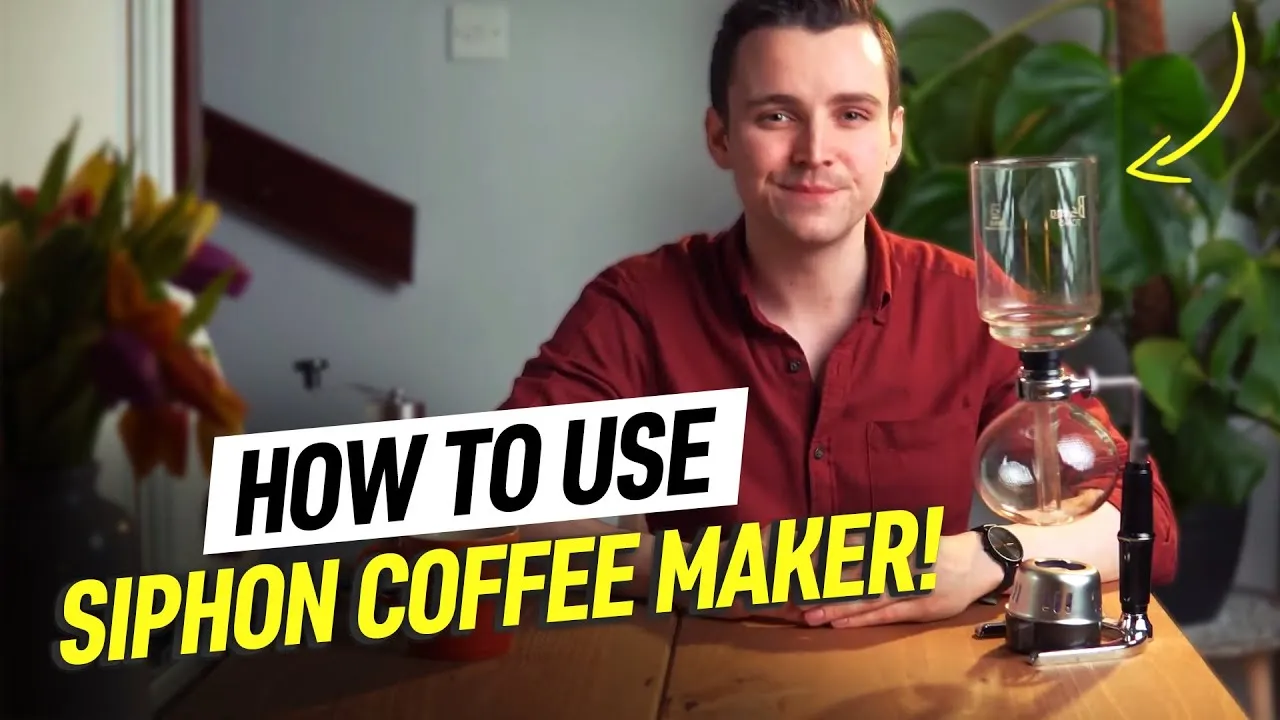
The siphon brewer looks like a chemistry experiment and produces some of the cleanest, most transparent coffee you can make at home. It combines full immersion brewing (like a French press) with vacuum filtration — and the result is coffee with the body of immersion and the clarity of paper-filtered pour-over. Nothing else quite replicates it.
How It Actually Works
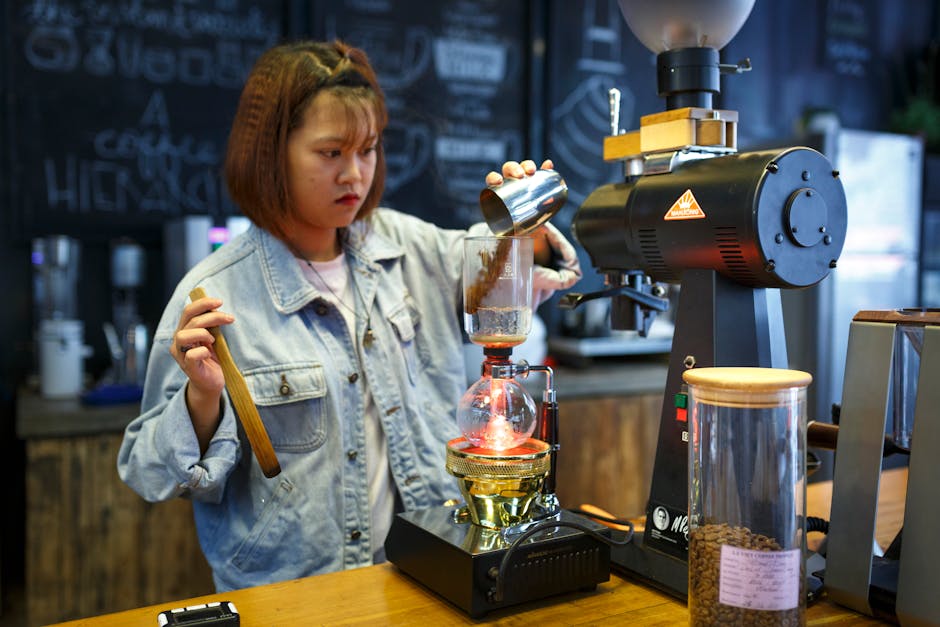
Two glass chambers sit vertically. Water goes in the bottom. Coffee goes in the top. A heat source drives the process:
- Heat the bottom chamber. Water boils, creating steam pressure.
- “Kick up.” Pressure forces water up through the siphon tube into the upper chamber where the coffee grounds are.
- Steep. Coffee brews in the upper chamber by full immersion (1-1.5 minutes).
- Remove heat. The lower chamber cools, steam condenses back to liquid, and pressure drops below atmospheric.
- “Kick down.” Atmospheric pressure pushes brewed coffee back down through the filter into the lower chamber. Grounds stay in the top.
The physics: It’s not a vacuum “sucking” coffee down. When steam condenses, it occupies far less volume than the gas did, creating a pressure drop. The 14.7 psi of atmospheric pressure above the coffee is now greater than the pressure below it, forcing the liquid down through the filter. Pure pressure differential, no moving parts.
Why Use One
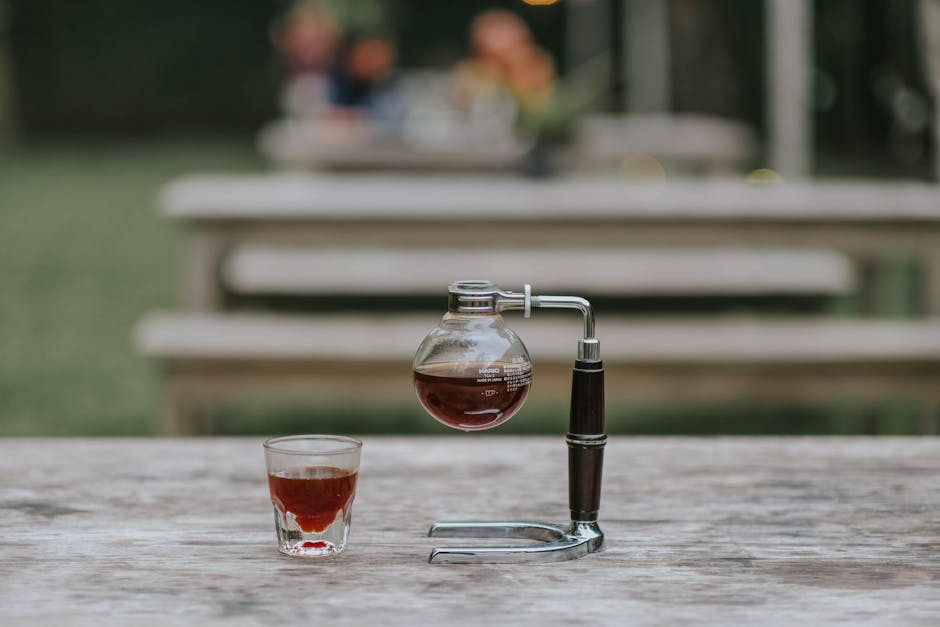
The cup: Clean, transparent, complex. More body than a paper-filtered pour-over (the cloth filter passes more oils), less sediment than a French press. Single-origin coffees with delicate, complex tasting notes show their best here — whether you’re brewing Ethiopian naturals or Colombian washed lots.
The experience: There’s nothing quite like watching water rise through glass, coffee steep in a suspended chamber, and then gravity and physics pull a perfectly filtered cup back down. It’s theatrical and produces genuine results.
The drawbacks: Fragile glass. Intensive cleaning. Requires your full attention for 5 minutes. Cloth filters need refrigerated storage in water between uses. Replacement parts can be hard to find. Real learning curve.
This is not an everyday brewer for most people. It’s a weekend ritual — the kind of brewing that rewards attention and patience.
The Recipe
Ratio: 1:15 coffee to water (20g coffee to 300g water for ~2 cups)
Grind: Medium — coarser than pour-over, finer than French press. Getting the grind size right is especially important here: too fine and you risk bitterness; too coarse and the short steep time will under-extract. Light roasts benefit from slightly finer (more extraction time needed). Dark roasts can go a touch coarser.
Water: Start with hot water (not boiling) in the bottom chamber — this cuts heating time significantly. Target 195-200°F.
Two Siphon Brewers to Consider
Hario Technica — The premium choice. Borosilicate glass, stainless steel components, excellent cloth filters. Built to last decades with proper care. For committed siphon brewers.
Bodum Pebo — Solid entry-level option with a plastic filter (simpler cleanup than cloth). Good if you want to try siphon brewing without the full maintenance commitment.
Maintenance
After every use: Rinse both chambers with warm water immediately. Remove grounds from the upper chamber. Don’t let coffee residue dry — it gets much harder to clean.
Cloth filters: Rinse thoroughly with warm water (no soap — it leaves residue). Store submerged in clean water in a sealed container in the fridge. Replace every 3-6 months. If you won’t brew for a while, freeze the filter in a ziplock bag.
Metal/plastic filters: Quick warm rinse after each use. Much lower maintenance than cloth.
Glass: Handle with care. Avoid temperature shocks (no cold water in a hot chamber). Store with padding. One crack = replacement.
Troubleshooting
| Problem | Cause | Fix |
|---|---|---|
| Water won’t rise | Weak seal or low heat | Reseat upper chamber firmly; increase heat |
| Bitter/over-extracted | Grind too fine or steep too long | Coarsen grind; reduce steep to 1 min |
| Weak/sour | Grind too coarse or too short steep | Finer grind; extend steep to 1.5-2 min |
| Grounds in cup | Damaged filter or too-fine grind | Inspect/replace filter; coarsen grind |
| Won’t kick down | Seal too tight or chamber not cooling | Wait longer; gently break seal if needed |
Who Should Get One
Buy a siphon if: You enjoy the process of brewing as much as the cup. You want maximum clarity and transparency from single-origin coffees. You treat coffee as a weekend craft.
Skip it if: You want quick, easy morning coffee. You don’t enjoy cleaning. You’re clumsy with glass. For everyday brewing, a V60, AeroPress, or Clever Dripper will serve you better with less effort.
The siphon brewer has survived nearly 200 years because it produces genuinely unique results. It demands more from you than any other method — and rewards the effort proportionally.
Frequently Asked Questions
- How long does it take to brew coffee with a siphon?
- About 8-10 minutes total — 3-4 minutes to heat the water and get the kick-up, 1-1.5 minutes of steeping in the upper chamber, and 60-75 seconds for the draw-down. The active portion where you're managing the brew is around 5 minutes. It's not a quick morning method.
- Can you use a siphon coffee maker on an electric stove?
- Most siphon brewers are designed for standalone heat sources like butane burners, not electric stovetops. The glass bottom chamber can crack from uneven heating on an electric coil or induction plate. Some models (like the Hario Technica TCA-3) work on gas stoves, but a butane burner gives you the most control and is the safest option.
- Is siphon coffee better than pour-over?
- Different, not objectively better. Siphon coffee has more body than paper-filtered pour-over because the cloth filter passes more oils, but it's cleaner than French press. The full-immersion brewing creates a rounder, more uniform extraction. If you want maximum clarity and delicate flavors, pour-over excels. If you want body with transparency, the siphon is unique.
- How often do you replace a siphon cloth filter?
- Every 3-6 months with regular use. Between brews, rinse thoroughly with warm water (no soap) and store submerged in clean water in a sealed container in the fridge. If the filter develops a stale or musty smell even after rinsing, replace it immediately. Metal and paper filter alternatives exist if the cloth maintenance is too much.
- How much does a siphon coffee maker cost?
- Entry-level models like the Bodum Pebo run $40-60. The Hario Technica, the standard for serious siphon brewing, costs $60-90. Specialty and vintage siphons can run much higher. Budget for replacement filters and a butane burner ($15-25) if one isn't included.
Some links above are affiliate links. If you purchase through them, we earn a small commission at no extra cost to you.