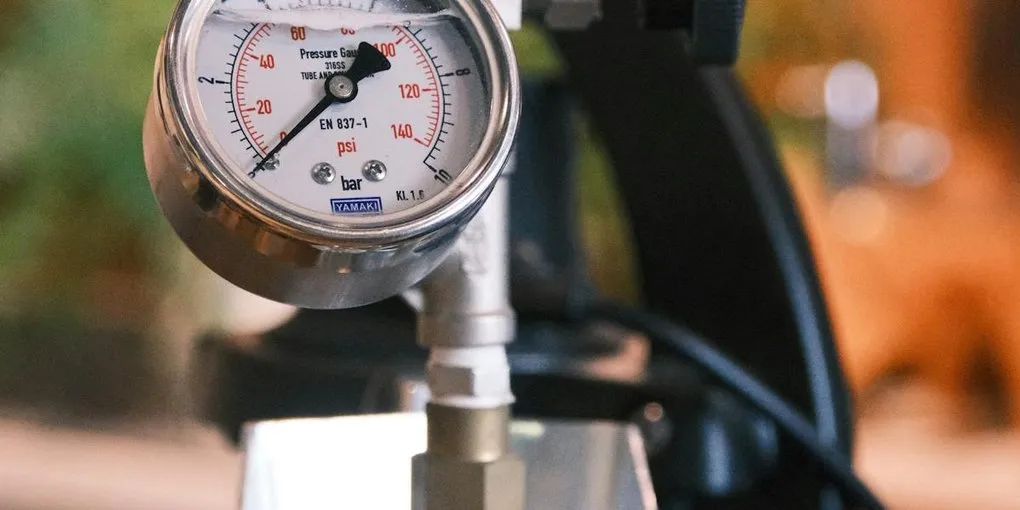
Pressure profiling means deliberately changing the water pressure during an espresso shot instead of holding it constant at 9 bar from start to finish. The idea is simple: different phases of extraction benefit from different pressures. A gentle start lets the coffee bed organize itself. Full pressure maximizes extraction. A declining tail improves clarity and reduces harsh compounds in the final drops.
This isn’t theoretical. Scott Rao developed a 3-phase pressure profiling model that he validated with consulting clients — none of whom improved upon it. Jonathan Gagne’s puck physics research explains why it works at a physical level. And every lever machine ever built has done some version of this by default, because springs naturally produce declining pressure.
Here’s what pressure profiling actually does, why it produces better espresso than a flat 9-bar profile, and how to start practicing it regardless of your machine.
Why Flat 9-Bar Profiles Are a Compromise
Most espresso machines apply a constant pump pressure for the entire shot — typically 9 bar. This is simple and reproducible, but it forces the coffee puck to handle everything at once: initial wetting, full-speed extraction, and the dilute tail end all happen at the same pressure.
The problem is that the puck changes throughout the shot. At the beginning, it’s dry and disorganized. Under sudden high pressure, fines migrate downward, clogging the bottom of the puck and creating uneven resistance. Some areas channel while others are barely touched. By the end of the shot, the puck is eroded and offering less resistance, meaning the last drops come through too fast and too dilute — contributing harsh, astringent flavors.
A flat profile doesn’t cause bad espresso. It causes inconsistent espresso. Some shots channel badly; others hit right. Rao’s observation was that preinfusion “will not necessarily make your best shot better, but it will almost certainly result in a much higher frequency of great shots.” Pressure profiling doesn’t raise the ceiling as much as it raises the floor.
The 3-Phase Model: Preinfusion, Full Pressure, Decline
Rao’s model divides the shot into three phases, each with a specific purpose and pressure range. This is the framework most commonly referenced in the specialty espresso community, and it’s the starting point for nearly all advanced profiling.
Phase 1: Preinfusion (10-12 seconds)
Preinfusion means starting at low pressure — typically 3.5-4.5 bar rather than a full 9 — and slowly ramping up. During this phase, water gently saturates the coffee puck.
What happens physically: The grounds swell as they absorb water. This swelling reorganizes the puck, filling small voids and creating a more uniform resistance profile. Fines — tiny particles that cause most channeling problems — become adhesive when wet and stick in place rather than migrating downward. The puck essentially self-organizes into a more even, more predictable extraction bed.
Why it matters: Micro-CT imaging research (Foster et al., 2025) using real-time X-rays showed that puck saturation time varies from less than 4 seconds to about 10 seconds. Standard preinfusion on most machines is far shorter than this. Gagne found that adding a 10-second pause after preinfusion “drastically reduced the peak in bed resistance” — the puck needs time to fully equilibrate before you hit it with full pressure.
Practical preinfusion settings: Set line pressure to 3.5-4.5 bar. Sample preinfusion times between 3-10 seconds. You’ll need to grind finer than you would for a flat profile, because the gentler start means less mechanical extraction in the early phase.
Phase 2: Full Pressure (6-9 seconds)
After the puck is saturated and organized, pressure ramps to the machine’s optimal flow-rate pressure. This is the main extraction phase — the engine of the shot.
The optimal pressure isn’t necessarily 9 bar. Rao discovered that flow rate through the coffee bed increases with pressure until 7-9 bar at the group head, then actually declines as bed compression outpaces flow promotion. The right pressure is the one that produces the highest flow rate for your specific machine and coffee.
Most machine pressure gauges read pump pressure, not group-head pressure. Group pressure is always lower — the gap varies by machine. If your gauge reads 9 bar, your actual group-head pressure might be 7-8 bar, which could be near-optimal already.
Rao’s 5-step pressure optimization protocol:
- Set pump to 7.5 bar (about 7.0 at group). Pull 3 shots at exactly 30 seconds with identical dose (within 0.1g). Average the shot weights.
- Increase to 8.0 bar (7.5 group). Repeat.
- Continue in 0.5 bar increments.
- When average shot weight decreases, the previous setting was optimal.
- Refine with 0.2 bar increments around the optimum.
Phase 3: Declining Pressure (15-18 seconds)
After the main extraction, pressure gradually drops — mimicking the natural behavior of a lever machine’s spring. This is the longest phase and the one that most affects cup clarity.
Why declining pressure improves clarity: As the puck erodes during extraction, its resistance drops. On a flat-profile machine, this means the last drops come through faster and faster — thin, dilute, and carrying extracted compounds that taste harsh and astringent. A declining pressure profile matches the declining puck resistance, keeping flow rate more constant and preventing those harsh late-extraction flavors from dominating.
The decline is linear — a steady ramp down from peak to about 2 bar over 15-18 seconds. This is exactly what happens when a lever machine’s spring decompresses. It’s not a coincidence that many baristas describe lever shots as having exceptional clarity.
The extraction trade-off: Declining pressure may increase or decrease total extraction yield depending on the decline rate. A steep decline extracts less; a gentle decline extracts more. The point isn’t to maximize extraction — it’s to maximize the quality of what gets extracted.
What Pressure Profiling Changes About Your Workflow
Pressure profiling isn’t just a set-and-forget upgrade. It changes several aspects of how you dial in and maintain consistency.
Dose sensitivity is amplified. With flat profiles, a 0.5g dose change might shift beverage weight by 1-2g. With pressure profiling, that same 0.5g change can shift output by 3-4g. Rao recommends dosing to within 0.1g for pressure profiling — tighter than the 0.4g tolerance acceptable for flat profiles. This means weighing every dose, not relying on timer-based grinding.
Grind finer. The gentle preinfusion start means you’re not relying on high initial pressure to push water through the puck. Grind finer to maintain appropriate flow rate. This is actually a benefit — finer grinds at the same flow rate extract more, which is the whole point. A capable burr grinder is essential.
Shot times are longer. Expect 25-40 seconds total versus 25-30 seconds for flat profiles. The extended preinfusion and gradual decline add time, but the extraction quality per second is higher.
Tamping consistency matters more. Tamping pressure affects the amount of headspace above the puck, which affects when pressure from preinfusion reaches the coffee surface, which affects the timing of everything downstream. If multiple people use the same machine, everyone needs to calibrate to a common tamp pressure. That said, once you’re consistent, tamping pressure itself barely matters — the pump’s approximately 533 pounds of force dwarfs your 20-30 pounds.
Machines That Can Pressure Profile
Not every espresso machine supports pressure profiling, and the level of control varies enormously.
Manual lever machines (Flair 58, Cafelat Robot, La Pavoni): These are natural pressure profilers. You control pressure directly with your arm — pull gently for preinfusion, full pull for peak extraction, and the spring (or your controlled release) provides the declining phase. Lever machines are the most intuitive way to learn profiling because you physically feel the puck resistance change throughout the shot. The Flair 58 (about $580) is the most accessible dedicated profiling machine.
Flow-control paddle machines (Lelit Bianca, Profitec Pro 800): A needle valve restricts flow to the group head. Opening it slowly mimics preinfusion; full open provides peak pressure; closing it gradually creates the declining phase. The Bianca (about $2,800-3,200) is the most popular mid-range profiling machine. The paddle is intuitive and the dual boiler handles steaming simultaneously.
Software-controlled machines (Decent DE1): The Decent DE1 (about $3,700) controls pressure, flow, and temperature via a tablet interface. You can draw arbitrary pressure curves, save profiles, and replay them exactly. Gagne developed a 20-step adaptive profile for the DE1 that scans flow rates and automatically locks onto the optimal one for whatever coffee is in the basket. This is the most precise and reproducible profiling available, but the machine is a significant investment.
Pump dimmer/OPV mods: Some machines (Gaggia Classic, Rancilio Silvia) can be modified with a dimmer switch on the vibratory pump or an adjustable over-pressure valve to reduce and control pressure. This provides crude profiling — you can do preinfusion at lower pressure and manual decline — but it’s not as precise or repeatable as dedicated profiling hardware. It’s a $20-50 modification that lets you experiment.
Machines that cannot profile: Any machine with a fixed vibratory or rotary pump and no adjustable OPV is locked at whatever pressure the manufacturer set (usually 15 bar at the pump, about 9-10 at the group after the OPV bleeds off excess). Most sub-$500 machines fall into this category. Some have a built-in preinfusion pause, which helps, but you can’t control the pressure curve during the shot.
A Starter Profile to Try
If your machine can profile, here’s a conservative starting point based on Rao’s model.
Dose: 18g, ground finer than your normal flat-profile setting Preinfusion: Ramp from 0 to 4 bar over 3 seconds. Hold at 4 bar until first drops appear in the cup (typically 8-12 seconds total). Pause for 3-5 seconds after first drops. Full pressure: Ramp to 8-9 bar over 2 seconds. Hold for 6-8 seconds. Decline: Linear ramp down from peak to about 2 bar over 15-18 seconds. Target output: 36g (1:2 ratio) Expected total time: 30-40 seconds
Taste the shot. Compare it directly to a flat-profile shot from the same coffee and dose. The profiled shot should have noticeably more clarity and sweetness, with less bitterness and harshness in the finish. If it’s sour, the preinfusion was too long or the grind is too coarse. If it’s bitter and harsh, the decline phase may need to be steeper (shorter).
Common Mistakes When Starting
Using your flat-profile grind setting. The whole point of profiling is that the gentle start lets you grind finer and extract more cleanly. If you don’t adjust your grind, you’ll underextract because the low preinfusion pressure can’t push water through at a reasonable rate.
Skipping preinfusion pause. The data shows puck saturation takes up to 17 seconds. Rushing straight from preinfusion to full pressure defeats the purpose — the puck hasn’t had time to organize. Gagne found that even a 10-second pause after preinfusion nearly eliminates the resistance spike that causes early-shot channeling.
Inconsistent dosing. At 0.5g tolerance, your shots will wander. Weigh your dose after grinding and before tamping. For serious profiling, Rao recommends 0.1g consistency — which means using a quality grinder with low retention and weighing the dose into the portafilter.
Profiling dark roasts. Dark roasts are already easy to extract and produce less resistance. Aggressive profiling with very fine grinds can push dark roasts into overextraction territory quickly. Start with medium to light roasts where the benefits of high, even extraction are most apparent.
Is Pressure Profiling Worth It?
If you’re already pulling good flat-profile shots with a consistent workflow, profiling raises the average quality of your shots more than it raises the peak quality. Your best shot might be marginally better. But your worst shots will be significantly better, because the gentle preinfusion phase prevents the catastrophic channeling events that ruin shots on flat-profile machines.
The investment depends on where you are. If you own a lever machine, you’re already profiling — you just need to be more intentional about the three phases. If you’re considering a machine upgrade, flow-control paddle machines like the Bianca offer profiling as a core feature at the prosumer price point. If you’re on a budget espresso setup, focus on distribution and puck prep first — those fundamentals matter more than pressure profiling until your workflow is consistent.
The three-phase model isn’t the only way to profile. It’s the best-documented starting point. Once you understand what each phase does and why, you can experiment with longer preinfusions, stepped declines, or Gagne’s adaptive flow profiles. But start with Rao’s model, learn what each phase tastes like, and adjust from there.
Frequently Asked Questions
- What is pressure profiling in espresso?
- Pressure profiling means deliberately changing the water pressure during an espresso shot instead of holding it constant at 9 bar. Rao's 3-phase model uses low-pressure preinfusion (3.5-4.5 bar for 10-12 seconds) to organize the puck, full pressure (7-9 bar at the group head for 6-9 seconds) for maximum extraction, and a linear declining phase (15-18 seconds) that improves clarity by matching the puck's decreasing resistance. The result is more consistent shots with better sweetness and less harshness.
- Does pressure profiling work with pre-ground coffee?
- Technically yes, but it's not practical. Pressure profiling's main benefit comes from grinding finer than normal and using the gentle preinfusion to manage the fine grind without channeling. Pre-ground espresso coffee is ground for a generic flat-profile shot. You can't adjust the grind to take advantage of profiling, which removes most of the benefit. If you're using pre-ground, focus on distribution and consistent tamping instead — those improvements are free and don't require grind adjustments.
- Can I pressure profile on a Breville Bambino or Gaggia Classic?
- The Bambino has a built-in preinfusion (low-pressure pulse at the start of the shot), which is a form of basic profiling. You can't control the curve or the declining phase. The Gaggia Classic can be modified with an OPV adjustment and a dimmer switch on the vibratory pump — this gives crude manual control over pressure. It's not precise, but it lets you experiment with preinfusion duration and rough pressure shaping. Neither machine supports true programmatic profiling like a Decent DE1 or flow-control like a Bianca paddle.
- What's the difference between pressure profiling and flow profiling?
- They're related but not identical. Pressure profiling controls the pump pressure at each point in the shot. Flow profiling controls the volumetric flow rate of water through the puck. On some machines (like the Decent DE1), you can choose either mode. In practice, they're interconnected — restricting flow reduces effective pressure, and reducing pressure reduces flow. The key difference is what you're targeting: pressure profiling optimizes for puck conditions (compression, channeling), while flow profiling optimizes for extraction rate directly. Most home baristas start with pressure profiling because it maps more intuitively to the 3-phase model.
- How do I know if my shots are actually better with profiling?
- The clearest signal is in the aftertaste. A well-profiled shot should have a cleaner, sweeter finish with less lingering bitterness or astringency compared to a flat-profile shot from the same coffee and dose. If you own a refractometer, you can measure extraction yield — profiled shots typically achieve higher EY (19-21%) with better flavor quality than flat shots at the same yield. Without a refractometer, do a direct comparison: pull two shots back-to-back from the same dose, one flat and one profiled, and taste them side by side.
- Is the declining pressure phase really necessary?
- Preinfusion alone captures most of the consistency benefit — it prevents early channeling and lets the puck organize. The declining phase adds clarity by preventing thin, harsh late-extraction liquid from dominating the end of the shot. If your machine supports preinfusion but not declining pressure, you're still getting the biggest single improvement. The full 3-phase profile is the gold standard, but preinfusion plus flat is a meaningful step up from pure flat 9-bar.
Some links above are affiliate links. If you purchase through them, we earn a small commission at no extra cost to you.