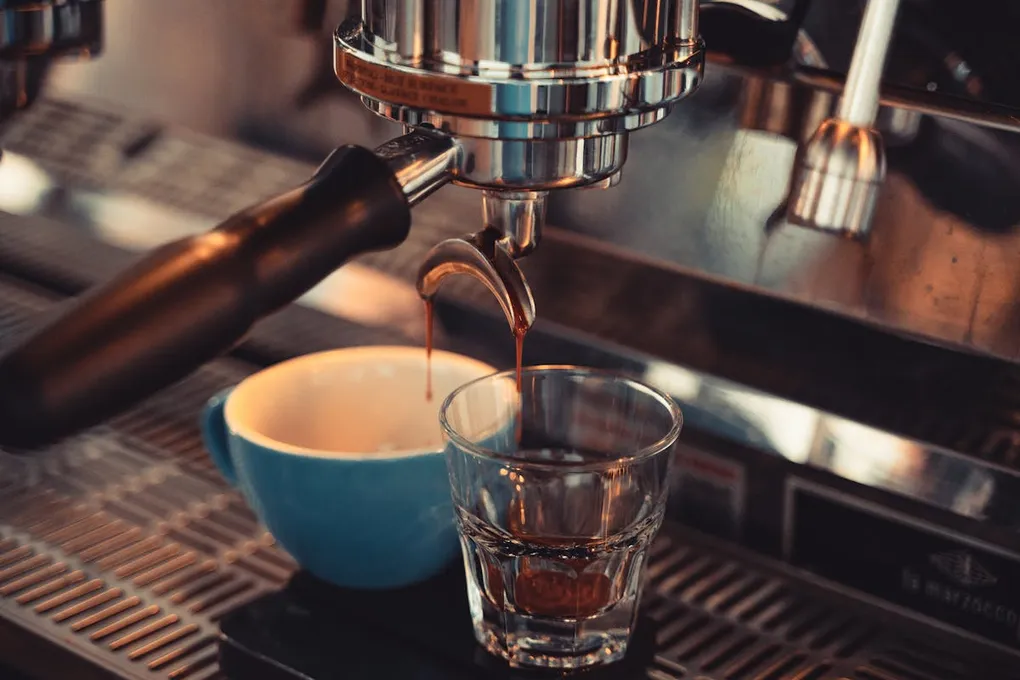
Most coffee misconceptions are minor. This one reshapes how you understand every cup you’ve ever made: espresso is not a bean. It is not a roast level. It is not a special variety of coffee. Espresso is a brewing method — a specific set of physical conditions applied to ground coffee to produce a concentrated beverage.
That distinction matters because it changes every comparison between espresso and drip coffee. You’re not comparing two different ingredients. You’re comparing two radically different ways of extracting the same ingredient. And those differences in extraction — pressure, contact time, grind, concentration — produce cups so different from each other that many people who drink both daily have never thought carefully about why they taste so different.
Here’s the actual science.
What Makes Espresso Espresso: Pressure
The defining characteristic of espresso is pressure — specifically, 9 bars of it. One bar equals normal atmospheric pressure. Espresso forces water through a compressed puck of very fine coffee at nine times atmospheric pressure. That’s roughly equivalent to the pressure at 90 meters underwater.
Drip coffee uses none. Water flows through the grounds by gravity alone, producing near-zero pressure at the coffee bed. The entire brewing process is passive. Water soaks the grounds, dissolves soluble compounds, and drains through by gravity.
This pressure difference is not cosmetic. It changes the fundamental physics and chemistry of extraction in ways that ripple through every other variable.
Why 9 bars specifically? Research by coffee scientists — and decades of professional espresso practice — established that 9 bars produces the optimal combination of dissolved solids, emulsified oils, and CO2 retention. Too little pressure and you under-extract; too much and you get harsh, over-extracted shots. The value isn’t arbitrary, even if its exact optimization is still debated in specialty coffee circles.
Contact Time: 25 Seconds vs. 5 Minutes
The other critical variable is how long water touches the coffee.
A properly pulled espresso shot extracts in roughly 25-35 seconds. Some modern “long” espressos push to 40-50 seconds. But the core of the extraction happens fast.
Drip coffee takes 4-6 minutes for most methods. A French press brews for 4 minutes. A pour-over V60 takes 3-4 minutes. A Clever Dripper steeps for 3-4 minutes. Even the fastest drip methods take ten times longer than espresso.
How can espresso extract properly in 25 seconds when drip needs 5 minutes? Grind size.
Grind Size: Fine Powder vs. Medium
Espresso uses the finest grind of any common brewing method — a texture closer to face powder than table salt. This enormous surface area allows water to dissolve soluble material extremely quickly despite the short contact time.
Drip coffee uses a medium grind, roughly the texture of coarse sand. More surface area than, say, cold brew coarse grounds, but far less than espresso. Water needs longer contact time to extract adequately because each particle presents less surface area.
Grind size is one of your most powerful extraction controls regardless of method. For espresso, dialing in grind size to within a single notch on your grinder can be the difference between a sour under-extracted shot and a balanced, sweet one.
Temperature: Surprisingly Similar
Here’s where the methods converge: both espresso and drip coffee brew at nearly identical water temperatures. The SCA recommends 90-96°C (194-205°F) for both methods. Most quality drip machines and espresso machines target around 92-94°C. The optimal brewing temperature is determined by coffee chemistry, not by the delivery mechanism.
Temperature matters because it controls which compounds dissolve. Below about 88°C, many desirable flavor compounds don’t dissolve efficiently. Above 96°C, you risk extracting bitter phenolic compounds. Both methods need to operate in the same window.
Caffeine: The Math That Confuses Everyone
Here’s where the espresso vs drip question gets most contentious — and most misunderstood.
A standard double espresso (two shots, approximately 2 oz / 60ml) contains roughly 60-80mg of caffeine. A standard 8 oz (240ml) cup of drip coffee contains roughly 80-100mg of caffeine.
Per serving, drip coffee has more caffeine. Usually.
But per ounce? A 2 oz double espresso at 70mg averages 35mg per ounce. An 8 oz drip at 95mg averages about 12mg per ounce. Espresso has nearly three times the caffeine concentration.
This is why people get confused. Espresso tastes stronger and feels stronger in your mouth — and it is more concentrated. But most people drink a 2 oz double shot, not an 8 oz mug of straight espresso. If they did, they’d be at 280mg of caffeine, which is a very different experience from an 8 oz drip.
The “espresso is stronger” belief is technically true at the molecular level (per volume) but behaviorally misleading because serving sizes are so different. When someone says they “need espresso to wake up,” what they usually mean is they like the ritual and intensity — not that they’re actually consuming more caffeine than their drip-drinking colleague.
The exact numbers vary based on bean variety (Robusta has roughly twice the caffeine of Arabica), roast level (light roasts have slightly more caffeine than dark by weight — the roasting process destroys a small amount), and dose.
TDS: Why Espresso Tastes “Stronger”
TDS stands for Total Dissolved Solids — the percentage of your brewed beverage that is dissolved coffee material rather than water. It’s the clearest measurement of concentration vs extraction.
Drip coffee brews to a TDS of roughly 1.2-1.5%. The remaining 98.5-98.8% is water.
Espresso brews to a TDS of roughly 8-12%. Rao’s reference range for a standard shot is 10-13%, though longer ratios and turbo-style shots can fall lower.
That gap explains the sensory experience. At 10% TDS, espresso concentrates every flavor compound — acids, sugars, bitters, aromatics — into a small volume. Flavors that might register as subtle background notes in a drip cup become loud and prominent in espresso. A coffee with floral and berry notes in drip might taste intensely fruity in espresso. A coffee with chocolatey drip character might taste almost syrupy and bittersweet as espresso.
Drip’s lower TDS distributes those same compounds across a larger volume of water, which allows more subtlety and nuance. Origin character — the terroir notes of a specific farm or region — often reads more clearly in pour-over than in espresso, precisely because concentration doesn’t overwhelm the delicacy.
Extraction Yield: The Same Target, Different Path
Both methods target an extraction yield of 18-22%. That number represents the percentage of your coffee dose that actually dissolved into the water. Extraction yield is the primary quality control metric in specialty coffee.
Undershooting (below 18%) produces sour, weak, under-developed coffee. Overshooting (above 22%) produces harsh, astringent, bitter coffee. The sweet spot is the same for both methods.
They just get there via completely different means. Espresso uses pressure, fine grind, and short time to hit that target in 30 seconds. Drip uses gravity, medium grind, and 4-6 minutes. A well-executed double espresso and a well-executed pour-over cup are both achieving the same extraction yield — just at wildly different concentrations and brew ratios.
Crema: What It Is and Why Drip Can’t Make It
Crema is the tan, slightly reddish foam that sits on top of a fresh espresso shot. It’s one of the most misunderstood things in coffee.
Crema is not fat. It’s not foam like soap bubbles. It’s an emulsion: tiny CO2 gas bubbles stabilized by coffee oils and proteins, all created and held together by the pressure of the extraction process.
When high-pressure water hits the coffee puck, it forces CO2 out of solution and into the liquid simultaneously with the oils and dissolved solids. As the shot exits the portafilter and pressure releases, those CO2 bubbles form and get coated with the oils and proteins that were dissolved under pressure. The result is a stable emulsion — crema.
Drip coffee has no pressure. CO2 is released during brewing (that’s what the bloom is — degassing), but without pressure forcing it into emulsion with oils, it just escapes into the air. No pressure, no crema. It’s physically impossible to produce crema without pressurized extraction.
What does crema tell you? A rich, persistent crema often indicates fresh beans (lots of CO2) and correct extraction pressure. Thin crema can mean stale beans (CO2 has escaped) or incorrect pressure. Tiger-striped crema (light and dark swirling together) is often associated with well-developed extraction. But crema is not a reliable quality indicator on its own — it tells you more about freshness and pressure than it does about flavor.
Flavor Profile: Concentration vs. Nuance
The practical flavor difference comes down to what concentration does to your perception.
Espresso compresses and amplifies. Every note — fruit, chocolate, caramel, bitterness, acidity — is present at higher intensity. This can make espresso thrilling when the coffee is excellent, and fatiguing when it’s not. Bad coffee becomes very obviously bad coffee when concentrated tenfold.
Drip spreads flavors across a larger volume, which paradoxically allows more subtlety. Light roast pour-over from a high-altitude Ethiopian coffee might give you a long, complex cup with distinct layers of flavor — jasmine, stone fruit, raw sugar — that would become a single blurred “bright fruity intensity” note in espresso.
Neither is better. They are different sensory experiences, best suited to different coffees and contexts. Heavy-bodied, chocolatey Sumatra naturals often shine as espresso. Delicate, high-acid Ethiopian washed coffees often express themselves more fully as pour-over or Aeropress.
The “Espresso Roast” Myth
“Espresso roast” is a marketing label, not a technical specification. Walk into any grocery store coffee aisle and you’ll see bags labeled this way, but there is no official standard that defines what it means.
Traditionally, Italian-style espresso used darker roasts because darker beans produce more body, less acidity, and a more forgiving extraction window (fine-tuning a light roast espresso takes considerably more skill). Many commercial espresso blends are medium-dark to dark for exactly this reason.
But in modern specialty coffee, some of the most celebrated espresso coffees are light to medium roasts. Nordic roasters, in particular, have built their reputation on light roast espresso. The roast level affects the flavor profile and the difficulty of dialing in, but no roast level is “required” for espresso.
You can pull espresso with any roast level. Dark roasts are more forgiving. Light roasts are more expressive and more demanding. The choice is yours — not the bag’s.
Cost: Realistic Home Setups
This is where the methods diverge most practically.
A capable home drip setup ranges from $50 (a reliable commodity brewer) to $300 (a Specialty Coffee Association-certified brewer like the OXO Brew 9-Cup or Technivorm Moccamaster). Add a decent burr grinder for $100-200 and you’re set up well for under $500 total.
Home espresso is more expensive and more demanding. The machine alone starts at roughly $300-500 for entry-level semi-automatic machines capable of producing quality shots (Breville Bambino, Gaggia Classic Pro). A quality grinder capable of espresso-fine grinding without inconsistency — this matters enormously — adds $150-300 minimum. A complete entry-level espresso setup capable of excellent results lands at $500-800. For the best results under $1,000, expect to spend $600-900 on machine plus grinder combined.
The espresso machines under $500 and espresso battle royale guides on this site cover the specific hardware options in detail. The key insight: the grinder matters as much as the machine, and under-investing in the grinder is the single most common beginner mistake.
There’s also a skill gap. Pulling consistently excellent espresso requires understanding grind-dose-yield relationships, diagnosing extraction by taste and sight, and iterating shot by shot. Pour-over and drip methods reward consistency and attention; espresso rewards obsessive calibration. Neither is difficult with practice, but espresso has a steeper learning curve and less margin for error.
Which Should You Choose?
The honest answer is that they’re not competing products. Many serious coffee drinkers brew both — espresso in the morning for the ritual and intensity, pour-over for exploring origin character and nuance.
If you’re choosing one to start with: drip or pour-over is a lower-cost, lower-barrier entry point that produces excellent coffee and teaches you about extraction fundamentals. Espresso is a deeper hobby with higher ceiling and higher setup costs.
If you’re considering espresso, read the grinder guides first. The machine gets the headlines; the grinder makes the coffee.
Some links above are affiliate links. If you buy through them, we earn a small commission at no extra cost to you. We only recommend equipment we’d use ourselves.
Frequently Asked Questions
- Is espresso stronger than regular coffee?
- By concentration, yes — espresso has a TDS of 8-12% compared to drip's 1.2-1.5%, meaning far more dissolved coffee per ounce. By caffeine per serving, no — a standard double espresso (2 oz) has about 60-80mg of caffeine while an 8 oz drip cup has 80-100mg. Per ounce, espresso has about three times the caffeine of drip. The confusion comes from comparing concentration to serving size.
- Is espresso a type of coffee bean or roast?
- Neither. Espresso is a brewing method — water forced through finely ground coffee at 9 bars of pressure. Any coffee bean can be brewed as espresso. 'Espresso roast' on a bag is a marketing label, not a technical specification. Traditionally, darker roasts were favored because they're more forgiving to extract, but modern specialty coffee regularly uses light to medium roasts for espresso.
- Why does espresso have crema but drip doesn't?
- Crema is an emulsion of CO2 bubbles stabilized by coffee oils and proteins, created by the pressure of espresso extraction. As pressurized water forces CO2 out of solution and combines it with dissolved oils, the released pressure at the portafilter outlet creates the stable foam. Drip coffee uses no pressure, so CO2 simply escapes during brewing without forming an emulsion. Crema is physically impossible without pressurized extraction.
- What's the difference in extraction between espresso and drip?
- Both methods target the same extraction yield of 18-22% — the percentage of the coffee dose dissolved into the water. They reach that target differently. Espresso uses 9 bars of pressure, an extremely fine grind, and 25-35 seconds of contact time. Drip uses gravity, a medium grind, and 4-6 minutes. Despite those wildly different conditions, a well-executed shot and a well-executed pour-over cup both ideally dissolve the same proportion of the coffee's soluble material.
- How much does a home espresso setup cost compared to drip?
- A quality home drip setup costs $150-500 total for machine plus grinder. Home espresso costs significantly more: a capable machine starts at $300-500, and a grinder capable of espresso-fine grinding without inconsistency adds $150-300 minimum. Plan on $500-900 for a complete entry-level setup capable of excellent espresso. The grinder is as important as the machine — under-investing there is the most common beginner mistake.
- Can you use drip coffee beans for espresso?
- Yes. There is no such thing as an 'espresso bean' — that distinction doesn't exist at the botanical or processing level. Any roasted coffee bean can be ground and brewed as espresso. Darker roasts are traditionally preferred because they have a wider dialing-in window and produce more body with less acidity. Light roasts can make exceptional espresso but require more precise grind adjustment and extraction control.
- Why does espresso taste so much more intense than drip?
- TDS — Total Dissolved Solids. Drip coffee brews to roughly 1.2-1.5% dissolved solids in water. Espresso brews to 8-12% dissolved solids. That concentration compresses and amplifies every flavor compound — acids, sugars, oils, bitters — into a small volume. The same coffee that tastes subtly fruity in pour-over can taste intensely and obviously fruity as espresso. Concentration doesn't just make flavors louder; it changes the relative perception of each note.
- Is drip coffee or espresso better for tasting origin character?
- Drip — particularly pour-over methods — generally shows origin character more clearly. The lower concentration spreads flavors across a larger volume of water, allowing delicate notes like florals, specific fruit types, and terroir nuance to register distinctly. Espresso's high concentration often merges those notes into a single intense impression. This is why high-altitude Ethiopian washed coffees with complex floral profiles are often showcased as pour-over by specialty roasters.