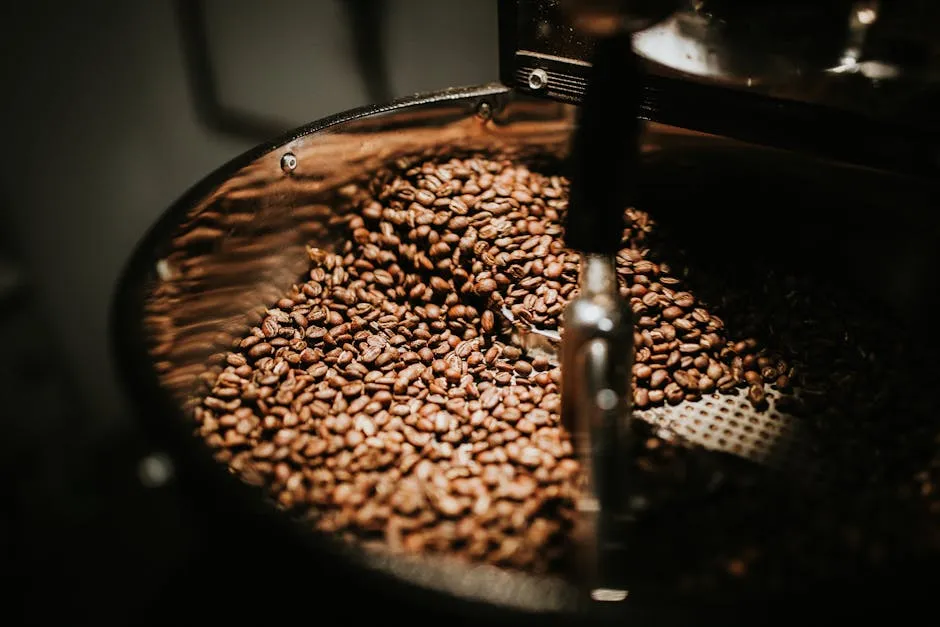
Most coffee drinkers pick a roast level the way they pick a paint color — by what they think they prefer — without knowing what they’re actually choosing. Light, medium, and dark roasts are not just flavor descriptions. They are specific chemical states of the coffee bean, produced by stopping the roasting process at different points along a transformation that involves over 800 distinct volatile aromatic compounds, multiple chemical reaction cascades, and changes to the bean’s physical structure that directly affect how you’ll need to brew it.
Understanding what roasting does to a bean tells you why your current roast tastes the way it does, why your light roast keeps coming out sour, and why “dark roast is stronger” is not quite the right way to think about it.
What Green Coffee Is Before Roasting
Raw coffee beans are green, dense, and grassily unpleasant. They contain sugars, amino acids, organic acids, fats, proteins, water, and hundreds of precursor compounds that don’t yet taste like coffee. Roasting converts these precursors through a series of chemical reactions that produce the aromatics, sweetness, and body we associate with the final cup.
The bean loses roughly 16-18% of its weight during roasting (Rao) — almost entirely water initially, then carbon dioxide and volatile organic compounds as reactions progress. This degassing continues after roasting for several days, which is why fresh-roasted beans bloom vigorously and need a brief rest before optimal extraction.
The Chemical Stages of Roasting
Drying Phase (0-4 minutes, green to yellow)
The bean is mostly water at this point — approximately 10-12% moisture. The first phase drives off moisture and raises internal bean temperature to around 150°C. The color shifts from green to yellow to light tan. No meaningful flavor development yet; this phase is preparation.
The quality of this phase matters: rapid, uneven drying can create a hard outer shell that inhibits later reactions from completing evenly throughout the bean’s interior.
Maillard Reactions (150-200°C, browning phase)
The Maillard reaction — the same one that browns bread, sears steak, and caramelizes onions — is the primary driver of coffee’s flavor complexity. It occurs between amino acids and reducing sugars, generating hundreds of new aromatic compounds that did not exist in the green bean.
During roasting, Maillard reactions produce:
- Brown color (melanoidins)
- Roasted, nutty, and caramel aromas
- The early framework of what becomes the cup’s body and sweetness
- Melanoidins that have documented antiradical (antioxidant) properties
The rate and temperature of Maillard development is one of the key variables separating roasters’ styles. A longer, slower Maillard phase generally develops more complexity; a faster, hotter Maillard creates a more abbreviated flavor profile.
Caramelization (170-200°C, overlapping with Maillard)
Sucrose and other sugars begin breaking down and restructuring into hundreds of flavor compounds including diacetyl (buttery), furans (nutty/caramel), and organic acids. Caramelization contributes both flavor complexity and color.
A counterintuitive fact: More caramelization does not mean more perceived sweetness. The sugar molecules are being destroyed and converted. Extended caramelization — as in darker roasts — actually reduces perceived sweetness because the precursor sugars are depleted. Hoffmann describes sweetness as following a bell curve: too little development (too light) produces sourness and grassy character; the peak of the curve is where sweetness is highest; too much development (too dark) produces bitterness and ashy character as the sweetness-contributing compounds break down.
First Crack (~196°C / 385°F)
First crack is the audible inflection point of roasting — a popping sound created when CO2 and water vapor build up enough internal pressure to fracture the bean’s physical structure. The bean roughly doubles in size as cell walls break. This is the dividing line between under-developed and developed roasts.
Light roasts stop shortly after first crack. Medium roasts develop further into what roasters call the “development phase” — the time between first and second crack. This development time is one of the most important quality variables, affecting the integration of the flavors that Maillard and caramelization built.
Development Phase (Between Cracks)
The development phase is where the roaster has the most creative control. More development time:
- Integrates sharp, sour notes from Maillard and acid formation into sweeter complexity
- Builds body
- Begins converting the structural complexity of the beans’ cells into the porous matrix that water will need to penetrate when brewing
Under-developed roasts stopped too early in this phase produce a distinctive wood or bread flavor — flat and grassy, not the same as a well-developed light roast. Easto distinguishes sharply between a genuinely good light roast (careful development, complex, bright) and an under-roasted bean (underdeveloped, woody, one-dimensional). “Light” and “underdeveloped” are not synonyms.
Second Crack (212-218°C / 414-424°F)
A second round of cracking occurs when the now-porous bean’s structure fractures further. Oils begin surfacing to the bean exterior. Color darkens to deep brown. CO2 is released in volume.
Beyond second crack, French roast territory begins (~220°C+). The bean is now losing structural integrity and the dominant flavors are generated not by the bean’s original character but by the destruction of those compounds — smoky, ashy, intensely bitter, with oils heavily expressed on the surface.
Second crack and beyond: George Howell’s analogy. Howell, one of the founders of modern American specialty coffee, described dark roasting as covering the coffee’s inherent character “like a heavy sauce.” The light roast shows you the meat. The dark roast shows you the sauce. The bean’s origin character — the terroir, the variety, the processing — is progressively obscured as roasting progresses beyond the development phase.
The Caffeine Myth
One of the most persistent misconceptions in coffee is that dark roast has more caffeine because it “tastes stronger.”
The reality is more nuanced. Roasting does not create caffeine — but it also barely destroys it (Easto). Caffeine content in green vs. roasted coffee of the same origin is nearly identical. The roasting process is largely caffeine-neutral.
Where confusion enters is measurement method:
- By weight: Dark roast has slightly more caffeine per gram. The roasting process drives off water and volatile compounds, making the bean lighter. Dark beans have more caffeine per gram because there’s less non-caffeine material per gram.
- By volume (scoop): Light roast has more caffeine per scoop. Light roast beans are denser and smaller — you fit more beans into the same scoop, which means more caffeine.
The difference in either direction is modest — roughly 5-15% depending on roast level and measurement method. The meaningful caffeine variation in coffee comes from species (Robusta has approximately twice the caffeine of Arabica) and dose, not roast level.
Solubility: Why Light Roasts Are Harder to Brew
Here is the most counterintuitive fact about roast levels for home brewers: light roasts are less soluble than dark roasts, and harder to extract properly (Easto, Gagné).
This seems backward. Light roasts taste brighter and more acidic — shouldn’t they dissolve more easily? No. The denser physical structure of lightly roasted beans resists water penetration. The Maillard and caramelization reactions that break down the bean’s cellular structure haven’t proceeded as far, leaving it more intact. Water has to work harder to dissolve the compounds you want.
Dark roasts, by contrast, have a more porous, physically degraded structure. Water moves through them more easily. This is why dark roasts extract quickly and are more forgiving of imprecise grind settings — there’s a wider window before they over-extract.
Practical consequences:
- Light roasts often need finer grind, higher temperature, longer brew time, or some combination of all three
- Extraction yield on light roasts requires more careful calibration
- Gagné documents that darker roasts have lower available solubles overall and yield lower extraction yields at equivalent extraction parameters — they simply contain less extractable material by this point in development
- Water temperature matters more for light roasts — approaching the upper limit of the brewing range (93-96°C) helps unlock compounds that won’t dissolve at lower temperatures
This is also why light roast espresso is notoriously difficult to dial in. The narrow solubility window combined with espresso’s fast contact time creates very little margin for error. Dark roast espresso forgives more because the bean extracts freely and consistently.
Chlorogenic Acids: The Antioxidant Story
Green coffee beans are rich in chlorogenic acids (CGAs) — a class of polyphenols with documented antioxidant properties. Roasting progressively destroys CGAs:
- Light roast: Retains the highest CGA concentration — perhaps 50-70% of the original green coffee levels
- Medium roast: Moderate CGA reduction
- Dark roast: Loses more than 90% of original CGAs
This doesn’t mean dark roast is “unhealthy” — Maillard products (melanoidins) produced during roasting have their own antiradical activity. But if you’re specifically interested in coffee’s polyphenol content, lighter roasting preserves more of the original compounds.
Measuring Roast Level
Professional roasters measure roast level with a colorimeter device that reads the lightness/darkness of ground coffee on a standardized scale. One system (used widely in Nordic roasting) measures light reflectance:
- Nordic light roast: 65-70% (very light)
- Medium roast: 72-76%
- French dark roast: ~85% (very dark)
Home roasters and consumers don’t typically have access to colorimeters, but the visual cues are reliable:
- Light: Cinnamon to medium brown, dry surface, no visible oils
- Medium: Medium to slightly darker brown, dry to barely oily surface
- Medium-dark: Rich brown, slight oil sheen
- Dark: Dark brown to near-black, visible oil on surface
- French/Italian: Very dark, shiny oily surface, sometimes with visible carbon
Which Roast for Which Purpose
Light roast: Best for methods where origin character matters most — pour-over, V60, Aeropress, Chemex. Rewards careful brewing. For a guide to pour-over technique that works well with light roasts, see the ultimate pour-over guide. Also pairs exceptionally well with the Clever Dripper, where immersion brewing helps extract the denser bean more thoroughly.
Medium roast: Most versatile. Works in virtually any brew method. The sweetness peak of Hoffmann’s bell curve tends to land here for most well-developed coffees. Good choice for French press because the body and sweetness are balanced without the edge of light or the dominance of dark.
Dark roast: Best for espresso beginners (wider extraction window), Moka pot (bold flavors survive the high-heat extraction), and cold brew, where long immersion time with coarse grounds benefits from the more readily extracted compounds. See the cold brew guide for dark roast cold brew technique.
For freshness: Roast level affects how long coffee stays at peak flavor. Coffee freshness covers the timeline in full — dark roasts go stale faster because the oils on the surface oxidize more quickly than the oils locked inside a denser light-roast bean.
Frequently Asked Questions
- Does dark roast have more caffeine than light roast?
- Neither decisively. Roasting barely destroys caffeine (Easto). By weight, dark roast has slightly more caffeine per gram because water loss during roasting concentrates what remains. By volume — a typical scoop — light roast has slightly more caffeine because denser, smaller beans pack more mass into the same volume. The difference is 5-15% in either direction. Meaningful caffeine variation in coffee comes from species (Robusta has roughly twice the caffeine of Arabica) and dose, not roast level.
- Why does my light roast coffee taste sour?
- Almost always an extraction problem. Light roasts are less soluble than dark roasts — their denser physical structure resists water penetration more. Under-extraction (too little dissolved material) produces sour, thin coffee. Try grinding finer, increasing water temperature toward 93-96°C, extending brew time, or a combination. Also confirm the beans are well-developed light roast, not underdeveloped beans (which taste woody/grassy, not sour). A good light roast should taste sweet, bright, and complex — not sour.
- Is light roast or dark roast healthier?
- Light roast retains significantly more chlorogenic acids (CGAs) — a class of antioxidant polyphenols. Dark roasts lose more than 90% of original CGAs through the roasting process. However, Maillard products (melanoidins) generated during roasting have their own documented antiradical activity, partially offsetting the CGA loss. If polyphenol content is a priority, lighter roasts preserve more. For overall health research on coffee, the picture is more complex than roast level alone.
- Why is it hard to taste 'origin character' in dark roast coffee?
- Roasting progressively overwrites the flavors produced by the bean's origin — its variety, altitude, processing, and soil. At darker roast levels, the dominant flavors come from the roasting reactions themselves (Maillard products, caramelization byproducts, carbon char) rather than from the original bean. George Howell put it directly: dark roast covers origin character like a heavy sauce. The lighter the roast, the more the bean's inherent character is preserved and expressed in the cup.
- What's the difference between an underdeveloped and a well-developed light roast?
- An underdeveloped coffee — stopped too early in roasting — tastes woody, bready, or grassy. A well-developed light roast, stopped just after first crack with adequate development time, tastes sweet, bright, and often fruity or floral. The distinction matters because under-development is a roasting flaw, not a roast level. When people say they 'don't like light roast,' they often have had underdeveloped beans, not a genuinely well-crafted light roast from a quality roaster.
- Does roast level affect how I should brew coffee?
- Yes, significantly. Light roasts are denser and less soluble — they need finer grind, higher water temperature (93-96°C), and potentially longer contact time to extract properly. Dark roasts have a more porous structure and extract more easily, giving them a wider, more forgiving extraction window. This is why dark roast espresso is easier to dial in than light roast espresso. Adjust your grinder and temperature when switching between roast levels — the extraction parameters that work for one will likely under-extract or over-extract the other.
- Why does steeping coffee longer sometimes not fix a weak cup?
- With dark roasts, the total available solubles are lower to begin with — roasting destroys extractable material, and darker roasts have less of it (Gagné). At some point you've extracted most of what's available, and longer steeping just adds bitterness rather than more flavor. Light roasts actually have more extractable material but require the right conditions to release it. If your dark roast coffee is weak and extending steep time doesn't fix it, consider increasing dose or switching to a denser extraction method.