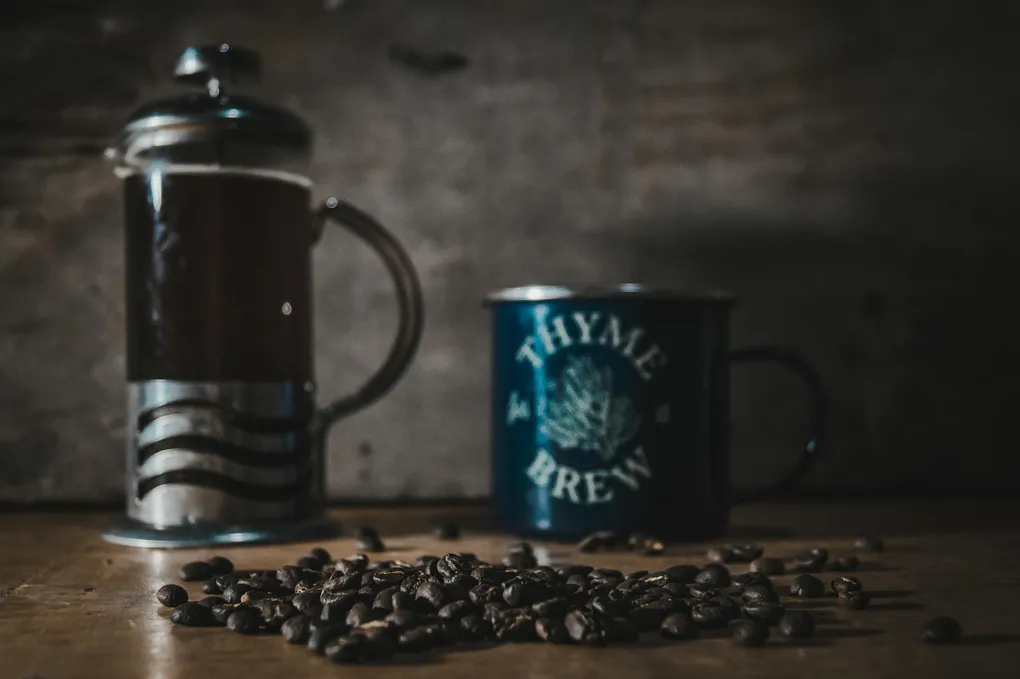
The French press is an unfiltered, unforgiving brewer. Paper filters don’t exist here to round off rough edges or mask defects. Every characteristic of your beans — roast quality, origin, freshness, grind — ends up in the cup. That’s its greatest appeal. It’s also why bean selection matters more for French press than for almost any other method.
Here’s what I’ve learned after years of immersion brewing: most coffee advice about bean selection treats all brewing methods as interchangeable. They’re not. A delicate light-roast Ethiopian that shines in a V60 will disappoint in a French press. A blended medium-dark designed for espresso might produce the most satisfying cup of coffee you’ve ever had through a press. This guide explains the logic — then gives you eight specific beans worth buying.
What Makes a Bean Good for French Press
Roast Level: Medium to Medium-Dark Is the Sweet Spot
French press is an immersion method. Grounds steep fully submerged in hot water for 4-9 minutes, and the metal mesh filter lets all the coffee oils pass into your cup. That combination of long contact time and oil retention creates a rich, full-bodied cup — but it also amplifies anything harsh or bitter in the bean.
Light roasts are the most common mistake. Light-roasted beans are dense and difficult to extract, and the short window in a French press (even at 9 minutes) often leaves them underextracted. You get sourness and thin body. More critically, the delicate floral and fruit notes that make light roasts special in pour-over are largely buried under the oil-heavy, full-body character that immersion produces. You’ve paid a premium for nuance that won’t survive the method. For a deeper look at what each roast level actually does to the bean, see our roast levels guide.
Medium roasts are ideal. They’ve developed enough sweetness and body-producing compounds to thrive in immersion. Caramel, chocolate, dried fruit, and nut notes translate beautifully. They’re forgiving of small temperature and timing variations. This is where most of the recommendations in this guide live.
Medium-dark roasts also work well in French press — arguably better here than in any other method. The increased body, lower acidity, and tobacco/dark chocolate notes pair naturally with the oiliness and weight that French press produces. Bittersweet chocolate in a French press at medium-dark roast is genuinely excellent. Just avoid anything that smells smoky or ashy before it’s brewed — that’ll be amplified, not smoothed.
Dark roasts are the debate. Much depends on quality. Cheaply roasted dark coffees are hiding defect-damaged beans under char. A carefully roasted dark from a specialty roaster is a different thing entirely. But in French press, the bitterness extraction risk goes up significantly. Keep the steep short, the water temperature lower (90-93C), and use extra coarse grounds.
Origin Characteristics That Shine in Immersion
Not all origins perform equally in immersion. Here’s the hierarchy for French press:
Central and South American coffees are the most reliable French press performers. Colombian, Brazilian, Guatemalan, and Peruvian coffees tend toward chocolate, nut, and caramel notes with balanced acidity. That profile translates cleanly into a full-bodied immersion cup. Brazilian naturals in particular — low-acid, heavy-bodied, fruit-forward in a subtle way — are near-perfect for French press.
Indonesian coffees (Sumatra, Sulawesi, Java) are tailor-made for this method. Their naturally heavy, syrupy body, earthy complexity, and low-acid profile fill the cup completely. Sumatra especially benefits from the oil retention — that earthy, herbal depth needs body behind it to work.
Blends often outperform single-origins in French press. A well-constructed espresso blend that marries Latin American body with a hint of East African brightness can produce a more complex and balanced cup than any single origin. The blend is doing work that the method can showcase.
Delicate East African single origins are the trickiest. Ethiopian Yirgacheffes and Kenyan AA coffees processed as washed lots have high acidity and fragile floral/citrus aromatics. In pour-over, that precision is the point. In French press, those aromatics get swamped by body, and the acidity can read as sourness rather than brightness. They can work — especially at shorter steeps with slightly lower temperatures — but they require more care and often disappoint.
Why Coarse Grind Changes What Beans Work
French press requires coarse grounds — like sea salt or raw sugar. This isn’t just about sediment. At coarse settings, extraction happens more slowly and less completely. That means high-density, hard-to-extract beans (typically light roasts, high-altitude grown coffees) will underextract even more dramatically. It’s another reason medium roasts dominate here: they extract more readily at coarse settings.
If you’re buying pre-ground, understand that “French press grind” pre-ground coffee is often only medium-coarse, not coarse. The result is faster extraction, faster sediment buildup, and a faster stale coffee experience. Grinding fresh with a burr grinder immediately before brewing is the single biggest quality upgrade you can make. For a deep dive on what exactly “coarse” means and how to dial it in, see our complete grind size guide.
8 Beans Worth Buying for French Press
1. Lavazza Super Crema
Roast: Medium Origin: Blend (South American / Indonesian) Flavor notes: Hazelnut, brown sugar, dried fruit, mild tobacco Price: About $12-14/lb Why it works: Lavazza Super Crema is an espresso blend that happens to be perfectly engineered for French press. The blend leans on South American body with Indonesian earthiness, producing a cup with tremendous weight and sweetness. It’s low-acid, hazelnut-sweet, and the tobacco edge that can feel harsh in espresso becomes a pleasant depth note in immersion. It’s also widely available and consistent batch to batch — important if you want a repeatable morning cup.
Lavazza Super Crema on Amazon2. Peet’s Major Dickason’s Blend
Roast: Dark Origin: Blend (multiple origins) Flavor notes: Dark chocolate, black cherry, smoky earth Price: About $13-16/lb Why it works: Peet’s Major Dickason’s is a dark roast done with more care than most. It’s bold without being purely ash and char — the dark chocolate and black cherry notes are genuinely present. In French press, the full-body immersion environment is where this bean peaks. Keep steep time to 3.5-4 minutes, water at 93C, and you’ll get a rich, bittersweet cup that works as both a morning necessity and a deliberate experience. It’s a classic for a reason.
Peet’s Major Dickason’s on Amazon3. Stumptown Hair Bender
Roast: Medium Origin: Blend (Latin America, East Africa, Indonesia) Flavor notes: Dark cherry, citrus zest, chocolate Price: About $19-22/lb Why it works: Stumptown Hair Bender is an ambitious three-region blend that manages the difficult trick of adding East African brightness to a Latin/Indonesian base without losing cohesion. In French press, the result is a cup with big body (Indonesian contribution), sweetness (Latin American), and just enough aromatic lift to keep it interesting (East African). The cherry and citrus notes survive the immersion environment better than in a pure East African bean because they’re balanced by the heavier components. One of the best French press blends available from a specialty roaster.
Stumptown Hair Bender on Amazon4. Counter Culture Hologram
Roast: Medium Origin: Blend (multiple) Flavor notes: Caramel, milk chocolate, dried fruit, walnut Price: About $18-20/lb Why it works: Counter Culture’s Hologram blend is built for drip and immersion — it’s explicitly designed to be approachable without sacrificing complexity. The medium roast produces balanced extraction in French press, and the caramel-chocolate profile reads clearly through the full body the method produces. If you want a specialty-roaster bean that doesn’t require perfect technique to taste good, Hologram is a reliable choice.
5. Kicking Horse Three Sisters
Roast: Medium Origin: Central and South America Flavor notes: Milk chocolate, dried stone fruit, mild roastiness Price: About $15-17/lb Why it works: Kicking Horse is a Canadian roaster with wide North American distribution that consistently punches above its price point. Three Sisters is their medium blend — clean, chocolatey, with enough body to reward immersion without any harshness. It’s the best value-per-dollar option on this list for everyday French press drinking. Available at most grocery stores that carry specialty coffee, which matters when you’ve run out and need to restock.
Kicking Horse Three Sisters on Amazon6. Intelligentsia House Blend
Roast: Medium Origin: Blend (Latin America, East Africa) Flavor notes: Brown sugar, lemon zest, hazelnut Price: About $18-20/lb Why it works: Intelligentsia’s House Blend is designed for the everyday cup — approachable, clean, and sweet. In French press, the Latin American base gives it the body it needs, while the East African component adds just enough brightness to keep the cup from being flat. The brown sugar sweetness is the dominant note, which works beautifully with the oil-forward character of immersion. A very good everyday bean from a roaster with rigorous sourcing standards.
7. Stone Street Colombian Supremo
Roast: Medium-Dark Origin: Colombia Flavor notes: Dark chocolate, caramel, toasted nuts, low acidity Price: About $12-15/lb Why it works: Stone Street is a Brooklyn roaster with direct-to-consumer pricing that makes specialty quality accessible. Their Colombian Supremo is single-origin at medium-dark — a roast level that enhances rather than obscures the Colombian origin’s natural chocolate and nut character. In French press, the low acidity and high body of this bean means you can steep at the full Hoffmann method time (9+ minutes) without risk of sourness. It’s an honest, uncomplicated cup.
Stone Street Colombian on Amazon8. Death Wish Coffee
Roast: Dark Origin: Blend (Robusta/Arabica, primarily Indian/Peruvian) Flavor notes: Bold chocolate, cherry, mild smokiness Price: About $20-22/lb Why it works: Death Wish markets itself as “the world’s strongest coffee” — which mostly means they use Robusta beans (higher caffeine content) blended with Arabica. Here’s the thing: that Robusta-forward formula actually makes sense in French press. Robusta produces a heavy, thick body and crema that oils-through-metal-filter immersion brewing can carry. The bold, somewhat blunt flavor profile that would read as harsh in a V60 is more at home in the full-body immersion environment. Keep your steep time short (3.5 minutes), and don’t overthink it — Death Wish delivers exactly what it promises.
Death Wish Coffee on AmazonWhat to Avoid in French Press
Very Light Roasts
Light roasts are dense, high-acidity, and require aggressive extraction conditions to shine — short contact time with precise temperature control, a fine grind, and ideally the turbulence of a pour-over to drive efficiency. French press offers none of these advantages. The result is underextraction: you pull the acids without fully developing the sugars and sweetness, leaving a thin, sour, hollow cup. If you have a bag of light-roast single-origin from a specialty roaster, make it in a V60. Save the French press for medium and darker roasts where it thrives.
Delicate Washed Ethiopians and Kenyans
This is an extension of the light roast problem, but worth calling out separately. Washed Ethiopian Yirgacheffes and Kenyan AAs are celebrated for high, wine-like acidity and perfumey floral notes. These characteristics are fragile — they exist precisely because paper filtration removes the oils that would otherwise dominate them. In French press, those oils are present in full force, and they swamp the delicate aromatics. The floral tea-like notes collapse under the body weight. What you’re left with is acidity without the complexity that justifies it. These beans deserve a V60 or Chemex. For more on what makes Ethiopian coffees unique, see our Ethiopian coffee guide.
Stale Pre-Ground Coffee
The worst thing you can put in a French press isn’t a light roast — it’s stale pre-ground. The coarse grind required for French press has enormous surface area, and stale grounds have already lost most of their volatile aromatics before you even add water. Pre-ground “French press roast” from a can at the back of the supermarket shelf will produce a flat, hollow, possibly rancid cup regardless of what technique you apply. If you can’t grind fresh, at least buy whole beans and grind them that morning. For the full picture on coffee freshness, including peak windows by roast level, see our dedicated guide.
How to French Press Like a Pro
The best beans in the world won’t save a sloppy technique. These four parameters are the ones that matter:
Ratio: 1:15. One gram of coffee to fifteen grams of water. For a standard 500ml press, that’s 33g of coffee and 500g of water. This is slightly stronger than the SCA’s golden ratio and works well with French press’s tendency toward heavy body — the extra coffee compensates for the lower extraction efficiency of immersion. Adjust to taste, but start here. Our brew ratio guide covers the full range across every method.
Water temperature: 200F / 93C. Just off the boil for medium and dark roasts. If you’re using lighter beans or very dark roasts, back off to 93C to manage acidity and bitterness respectively. French press loses heat throughout the steep, so starting hot is correct — you want the slurry temperature to stay above 85C for the full contact time. Learn more in our brewing temperature guide.
Steep time: 4 minutes minimum, up to 9+ for the Hoffmann method. The standard 4-minute steep with a gentle press at the end works. The Hoffmann method — where you break the crust, skim the foam, and wait 5-8 more minutes for grounds to settle before pouring — produces a dramatically cleaner cup. Longer steep doesn’t mean over-extraction in French press the way it would in pour-over; the slurry temperature drops enough to slow extraction naturally.
Don’t press hard. The plunger isn’t really filtering — it’s just holding the grounds back. Pressing aggressively stirs up fine particles and forces them through the mesh. Lower the plunger to just below the surface of the liquid, then pour slowly and carefully. Leave the last inch in the press.
Use a scale. Volume measurements for coffee are unreliable — roast level affects density, meaning two tablespoons of a light roast and two tablespoons of a dark roast weigh different amounts and brew very differently. A kitchen scale removes that variable entirely for under $20.
Frequently Asked Questions
- What roast is best for French press?
- Medium to medium-dark roast is the sweet spot for French press. Medium roasts develop enough sweetness and body to thrive in immersion brewing while remaining forgiving of technique variations. Medium-dark roasts amplify the full-body, low-acid character that French press naturally produces. Light roasts tend to underextract in immersion and lose their delicate aromatic qualities.
- Can you use single-origin coffee in French press?
- Yes, but origin matters more than the label 'single-origin.' Colombian, Brazilian, Guatemalan, Peruvian, Sumatran, and Sulawesi single-origins work beautifully — their chocolate, nut, caramel, and earthy notes translate well into immersion brewing's full-body environment. Delicate washed Ethiopians and Kenyans are the exception: their high acidity and floral aromatics get swamped by the oil-heavy character of French press and are better suited to pour-over.
- Should I buy pre-ground coffee for French press?
- Only if you have no alternative. Pre-ground coffee loses its volatile aromatics within 30-60 minutes of grinding. The coarse grind French press requires has significant surface area, which accelerates staleness further. If you can't grind at home, buy whole beans and ask the store to grind them on the day you plan to use them. A basic electric burr grinder ($40-60) is the single highest-ROI upgrade for any home brewer.
- How much coffee do I use for a French press?
- Start at 1:15 — one gram of coffee per fifteen grams of water. For a standard 17oz (500ml) French press, that's 33g of coffee and 500g of water. For a full 34oz (1L) press, use 65g of coffee and 1000g of water. Adjust to taste: go 1:13 for a bolder cup, 1:17 for lighter. Always measure by weight, not scoops or tablespoons, for consistency.
- Does expensive specialty coffee taste better in French press?
- Not necessarily more expensive — but fresh and well-roasted matters enormously. A $15/lb bag roasted within two weeks will beat a $25/lb specialty bean roasted six weeks ago. For French press specifically, the method's affinity for medium and darker roasts means you don't need to pay a premium for the delicate light-roast single-origins that command the highest prices at specialty roasters. Good quality medium roasts from roasters like Kicking Horse or Stone Street deliver excellent French press results at reasonable prices.
- Why is my French press coffee bitter?
- Bitterness in French press usually means overextraction — too fine a grind, too long a steep, or water that's too hot (especially with dark roasts). Try grinding coarser first; this is the most common fix. If you're using a dark roast, lower the water temperature to 90-93C and cut the steep time to 3.5-4 minutes. Using pre-ground espresso grind coffee in a French press is a surefire way to get a bitter, overextracted, muddy cup.
- What's the difference between French press blends vs. single-origin?
- Blends are generally more consistent batch to batch and are often engineered to perform well across multiple brew methods including immersion. Single-origins offer more specific origin character but require more careful matching to the method. For French press beginners, a well-constructed medium blend (Lavazza Super Crema, Stumptown Hair Bender, Counter Culture Hologram) is more reliable than experimenting with single-origins. Once you understand how your French press performs, exploring single-origins becomes more rewarding.
- Can you use dark roast in French press?
- Yes, with adjustments. Lower the water temperature to 90-93C, shorten the steep to 3.5-4 minutes, and use extra coarse grounds to limit extraction. The key is avoiding dark roasts that taste smoky or ashy before brewing — that character gets amplified in immersion, not smoothed. High-quality dark roasts like Peet's Major Dickason's (which has genuine chocolate and cherry notes behind the boldness) work well. Cheap dark roasts that are essentially over-roasted medium-grade beans rarely taste good in any brewing method.
This article contains affiliate links. If you purchase through these links, we earn a small commission at no extra cost to you. We only recommend products we’ve tested or genuinely believe in. See our full affiliate disclosure for details.