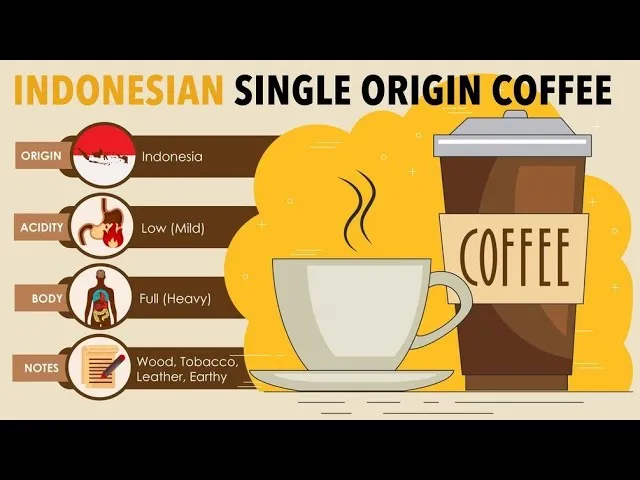
Indonesian coffee doesn’t taste like anything else in the world. Where most origins compete on acidity, fruit, and florals, Indonesia goes heavy: earthy, full-bodied, herbal, low-acid, and sometimes straight-up funky. If you’ve only tasted Latin American and African coffees, Indonesian coffee will feel like discovering a completely different beverage.
That distinctive character comes from a processing method found almost nowhere else on earth.
Giling Basah: The Processing Method That Defines Indonesian Coffee
Most coffee-producing countries dry their beans to 11-12% moisture content before removing the parchment shell. Indonesia’s giling basah (wet-hulling) strips the parchment off at 30-35% moisture and finishes drying the naked beans in open air.
This wasn’t a deliberate flavor innovation — it was a practical response to Indonesia’s equatorial humidity, which makes slow, even drying nearly impossible. But the flavor consequences are enormous:
- Heavy body: Exposed beans absorb and release moisture differently during drying, producing denser texture in the cup
- Low acidity: The extended drying and microbial activity reduce the bright acids that dominate washed coffees
- Earthy/herbal character: Naked beans interact with environmental conditions during drying, developing the cedar, tobacco, mushroom, and forest-floor notes that define Indonesian coffee
- Distinctive blue-green bean color you won’t see from any other origin
Not all Indonesian coffee uses giling basah — some specialty producers use full washed processing, which produces cleaner, brighter cups. But if you’re tasting the classic Indonesian profile, wet-hulling is responsible.
This puts Indonesian coffee at the complete opposite end of the spectrum from high-acidity origins like Kenya or Ethiopia. If those feel too sharp or bright, Indonesia may be exactly what you’re looking for.
The Varieties: Different from Most Origins
Indonesian coffee’s variety landscape is unlike Latin America’s Bourbon-and-Typica story. Most Indonesian production comes from Catimor and TimTim (Timor Hybrid) derivatives — varieties that carry Robusta genetics crossed into Arabica for disease resistance. The WCR Varieties Catalog classifies these as “introgressed” varieties.
This matters for flavor. Catimor and its relatives tend toward earthier, more roasty/chocolatey profiles compared to pure Arabica varieties. Combined with giling basah, you get a double-reinforcement of those earthy, heavy characteristics.
You’ll also find original Typica — the foundational Arabica variety the Dutch brought to Indonesia in the 1600s — in some specialty lots. Typica Indonesian coffees tend toward cleaner, more delicate cups even through wet-hulling.
Indonesia also produces significant Robusta (particularly from Lampung and East Java), mostly for commercial blends and instant coffee. Specialty Indonesian coffee is all Arabica.
Island by Island
How to Brew Indonesian Coffee
Indonesian coffees reward brew methods that showcase body:
French press: The best match. Full immersion brings out earthy, chocolate notes and maximizes that heavy body. 4-5 minutes, 200°F.
Espresso: Indonesian beans shine in espresso — the body translates beautifully, low acidity prevents sourness, and chocolate/earthy notes become rich and concentrated. Excellent as a blend base.
AeroPress: Good for extracting body while keeping some clarity. Use a metal filter to let oils through.
Pour-over: Works but requires attention. Slightly finer grind and slower pour to develop body. Use a thicker filter (Chemex) or metal filter to preserve Indonesian coffee’s character.
Roast level: Medium to medium-dark brings out the best. Lighter roasts can taste aggressively earthy without enough sweetness to balance — underdeveloped Indonesian coffee tastes like damp wood, which is unpleasant. Darker roasts push past earthy into bitter as chlorogenic acids decompose into harsh quinic acid. The sweet spot is medium, where Maillard reaction sweetness (chocolate, caramel, spice) develops alongside the terroir character.
Let the cup sit for a moment. Indonesian coffee’s earthy character can taste one-dimensionally heavy at full temperature. As the cup cools below 150°F, spice and chocolate notes emerge that balance the earthiness. This is especially true for Sulawesi Toraja, which develops surprising complexity with cooling.
Health Note: Cafestol and Indonesian Coffee
A quick note for people who drink Indonesian coffee daily, particularly via French press or metal filter: coffee oils contain cafestol, a compound that raises LDL (“bad”) cholesterol. Paper filters remove over 90% of cafestol. Metal filters and French press let it through.
This matters more with Indonesian coffee than most origins because:
- Indonesian coffee is oilier than most origins (giling basah produces oilier beans)
- The recommended brew methods (French press, metal filter) are the ones that preserve those oils
- People who love Indonesian coffee tend to drink it regularly
If you drink 3-4 cups of unfiltered Indonesian coffee daily and have cholesterol concerns, consider alternating with paper-filtered brew methods. Occasional French press consumption is not a concern for most people. But it’s worth knowing if Indonesian coffee becomes your daily driver.
Skip the Kopi Luwak
Civets eat coffee cherries, beans pass through their digestive tract, workers collect beans from feces. It’s marketed as the world’s most expensive coffee.
The reality: most commercial Kopi Luwak comes from caged civets in cruel conditions. Blind tastings (including James Hoffmann’s) found the cup quality unremarkable. And fraud is rampant — verification of “wild-sourced” claims is essentially impossible.
A $20-25/lb specialty Sumatra Mandheling or Sulawesi Toraja will taste better than any Kopi Luwak. Spend your money on traceable, ethically produced coffee instead.
What to Look For on the Bag
- Island and region (Sumatra Mandheling, Sulawesi Toraja, Java) not just “Indonesian”
- Grade 1 (fewer defects, cleaner cup) when listed
- Processing method — giling basah for classic character, washed for cleaner brightness
- Farm or cooperative name for traceability
- Roast date within 2-4 weeks
How Indonesian Coffee Compares
If you’re trying to figure out where Indonesia fits relative to origins you already know:
| Origin | Body | Acidity | Character |
|---|---|---|---|
| Indonesia (Sumatra) | Very heavy | Very low | Earthy, herbal, tobacco, chocolate |
| Indonesia (Sulawesi) | Heavy | Low-medium | Dark fruit, spice, earth with brightness |
| Indonesia (Java) | Full | Low-medium | Cinnamon, nutmeg, cocoa, sweet |
| Brazil | Heavy | Very low | Nutty, chocolate, clean, smooth |
| PNG | Heavy | Medium | Tropical fruit, earth, chocolate |
| Ethiopia | Light-medium | High | Floral, fruity, tea-like |
Indonesia is the origin for people who want the opposite of bright, fruity, acidic coffee. If you find Kenyan or Ethiopian coffee too intense and sharp, Indonesian coffee may be exactly what you’re looking for. Conversely, if you love brightness and florals, you’ll probably find Sumatran coffee flat and muddy. Neither reaction is wrong — it’s a matter of what you want from coffee.
For those curious about Indonesian Sumatra specifically, our Sumatra coffee reviews break down the best bags across price ranges.
Buying Guide
| You Want… | Buy This |
|---|---|
| The classic Indonesian experience | Sumatra Mandheling, medium roast, giling basah |
| Something more refined | Sulawesi Toraja, medium roast |
| Great espresso base | Java coffee, medium-dark roast |
| Cleaner Indonesian coffee | Any island, washed processing |
| Maximum earth and body | Sumatra Lintong or Mandheling, French press |
Freshness and storage: Peak flavor 7-21 days post-roast. Indonesian beans’ heavier oil content means they stale differently than lighter origins. Store airtight, cool, dark. Oily surface is more common with darker roasts and doesn’t necessarily indicate staleness — but if the beans smell flat or rancid, they’ve turned. Freeze portions in airtight bags if stocking up.
Price: Indonesian specialty coffee is moderately priced. Sumatra Mandheling and Sulawesi Toraja are widely available from specialty roasters at reasonable prices — significantly less than Kenyan or Ethiopian competition lots for a similarly distinctive experience.
Indonesian coffee is one of the most distinct experiences in specialty coffee. If you love bright, acidic, fruity coffees, it might not be for you — and that’s fine. But if you want something heavy, earthy, complex, and completely unlike anything from Latin America or Africa, Indonesia delivers like no other origin.
Some links above are affiliate links. If you purchase through them, we earn a small commission at no extra cost to you.
Frequently Asked Questions
- Why does Indonesian coffee taste so different from other origins?
- It's almost entirely due to giling basah (wet-hulling), a processing method unique to Indonesia. Most countries dry beans to 11-12% moisture before removing parchment. Indonesia strips parchment off at 30-35% moisture and finishes drying the naked beans in open air. This produces the characteristic heavy body, low acidity, and earthy/herbal notes. It was a practical response to Indonesia's equatorial humidity, not a deliberate flavor choice — but the results are unmistakable.
- What is Kopi Luwak and should I buy it?
- Kopi Luwak is coffee from beans that pass through a civet's digestive tract. Skip it. Most commercial Kopi Luwak comes from caged civets in cruel conditions, blind tastings find the cup quality unremarkable, and fraud is rampant — wild-sourced claims are essentially unverifiable. A $20-25/lb specialty Sumatra Mandheling or Sulawesi Toraja will taste better. Spend your money on traceable, ethically produced coffee instead.
- What's the difference between Sumatra Mandheling and Sulawesi Toraja?
- Sumatra Mandheling is the heavyweight — syrupy body, dark chocolate, tobacco, smoky wood, very low acidity. Sulawesi Toraja is more nuanced — equally full-bodied but with balanced acidity, dark fruit (plum, date), spice, and surprising brightness. If you find Sumatran coffee too one-dimensionally earthy, Toraja gives you the Indonesian body with more complexity.
- Is Indonesian coffee bad for cholesterol?
- Potentially, if consumed daily via French press or metal filter. Coffee oils contain cafestol, which raises LDL cholesterol, and Indonesian coffee is oilier than most origins due to wet-hulling. Paper filters remove over 90% of cafestol. If you drink 3-4 cups of unfiltered Indonesian coffee daily and have cholesterol concerns, consider alternating with paper-filtered methods. Occasional French press consumption is not a concern for most people.