The material your pour-over dripper is made from has a measurable effect on your coffee’s temperature and, by extension, its flavor. Jonathan Gagne’s thermal measurements show that a plastic V60 with 99 degrees C kettle water produces an average slurry temperature of roughly 84 degrees C during brewing. Ceramic steals more heat than that. Glass is the worst performer. This is not a minor difference — slurry temperature directly governs extraction rate, and a few degrees can shift whether your cup tastes bright and sweet or flat and underextracted.
Most people choose dripper material based on aesthetics or perceived quality. Ceramic looks handsome on a shelf. Glass feels sophisticated. But if you care about what ends up in the cup, the physics of heat transfer should inform the decision.
How Dripper Material Affects Your Coffee
The mechanism is straightforward. When hot water contacts the dripper, some thermal energy transfers from the water to the dripper body instead of staying in the coffee slurry. The amount of energy stolen depends on two properties: the material’s heat capacity (how much energy it absorbs per degree of temperature rise) and its thermal conductivity (how quickly it moves heat through its body and then radiates it away).
A heavy, conductive dripper absorbs heat from the brew water during the first pour, lowering slurry temperature during the critical early extraction phase when acids and sugars are dissolving fastest. Then, once the dripper body warms up, it conducts that heat to its outer surface and radiates it into the room air.
Gagne’s key insight is that slurry temperature runs 5 to 15 degrees C lower than kettle temperature in most pour-over setups. This means advice like “brew at 93 degrees C” is misleading without specifying what dripper material you are using. Your kettle may read 93, but your coffee slurry could be anywhere from 78 to 88 depending on the dripper. For the full discussion of brew temperature and how to target it, see the coffee brewing temperature guide.
Plastic: The Thermal Champion
Hario V60 Plastic
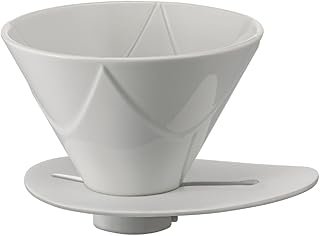
Measured slurry temperature with 99 degrees C kettle water in a plastic V60: average roughly 84 degrees C during the brew.
Plastic has the lowest heat capacity of any common dripper material and minimal thermal conductivity. It absorbs almost no heat from the brew water, and what little it absorbs stays in the plastic rather than radiating away. The result: the highest and most stable slurry temperatures of any material.
This is counterintuitive. People assume plastic is the cheap, inferior option. But from a physics standpoint, plastic gets out of the way and lets the water do its job. Gagne ranks the plastic V60 as the best thermal performer among all drippers he tested.
Pros:
- Highest, most stable slurry temperature
- Virtually indestructible — drop it, pack it, travel with it
- Lightest weight
- Cheapest (Hario V60 plastic: roughly $9 to $12)
- No preheating necessary (though it does not hurt)
Cons:
- Looks less premium on a countertop
- Can absorb coffee oils over time (wash regularly)
- Some people object to using plastic with hot water, though food-grade polypropylene (Hario V60 material) is considered safe at brewing temperatures
Best for: Maximizing extraction, travel, anyone who prioritizes flavor over aesthetics.
Ceramic: The Popular Compromise
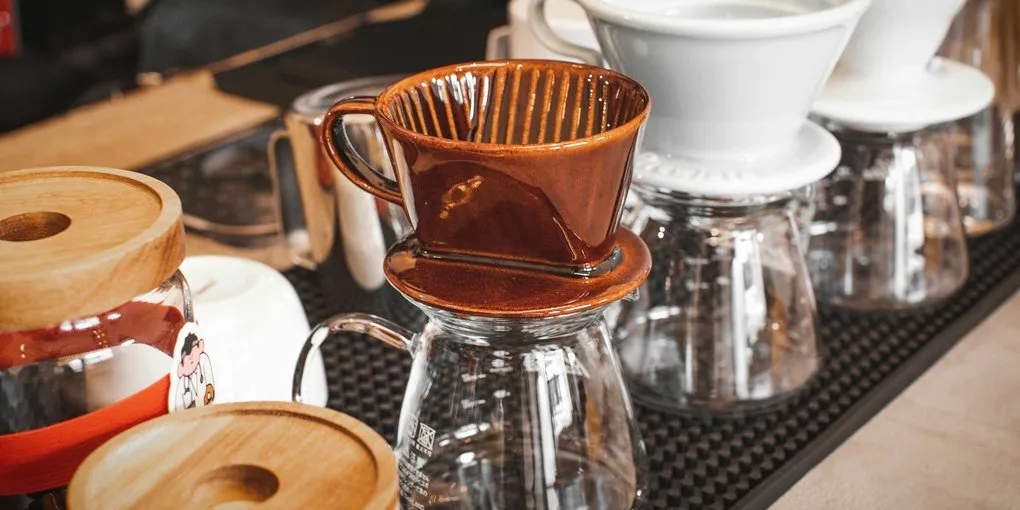
Ceramic drippers are the most common material in specialty coffee. The Hario V60 ceramic, Kalita Wave ceramic, and countless artisan drippers from small makers are all ceramic. The material feels substantial, looks attractive, and has a long tradition in coffee brewing.
The thermal downside is significant. Ceramic is dense and has high heat capacity — it absorbs a substantial amount of energy from the first pour. Your bloom and first main pour lose several degrees to heating the ceramic body. Even after preheating with hot water (which you should always do with ceramic), the thick walls continue to draw heat from the slurry.
After the ceramic body warms up, it then radiates heat away through its outer surface. The net effect is that ceramic drippers produce lower average slurry temperatures than plastic, and the temperature curve is less stable — starting lower (cold ceramic absorbs heat), rising (ceramic reaches equilibrium), then dropping (ceramic radiates heat).
Pros:
- Looks attractive, available in many colors and artisan designs
- Durable with reasonable care
- Good weight and feel in hand
- Retains some heat once warm, which helps in the late stages of a long brew
Cons:
- Steals the most heat in the early brew phase (highest heat capacity)
- Requires thorough preheating — pour boiling water through and discard before brewing
- Fragile — drops mean chips or breaks
- Heavier and bulkier than plastic
- Price: $20 to $40 for production models, $40 to $150+ for artisan
Best for: People who value aesthetics and are willing to preheat thoroughly, or who brew in warmer environments where heat loss is less impactful.
Glass: The Worst Thermal Performer
Glass drippers look beautiful, but they are the worst thermal performers in Gagne’s testing. Glass combines high heat capacity (it absorbs a lot of energy) with high thermal conductivity (it loses that energy quickly to the surrounding air). The result is the lowest and least stable slurry temperatures.
The Hario V60 glass and Chemex (which is a glass vessel, though more brewer than dripper) both suffer from this. The Chemex partially compensates with its thick paper filters, which provide some insulation and slow the brew, but the glass body itself is working against temperature stability.
Pros:
- Visually striking — you can watch the brew process
- Easy to see water level and coffee bed
- Does not absorb flavors or oils
- Easy to clean
Cons:
- Worst thermal performance of any material
- Very fragile — the most breakable option
- Requires aggressive preheating to partially compensate
- Expensive relative to plastic (Hario V60 glass: roughly $25 to $35)
- Heavy for its performance level
Best for: Aesthetics, visual learners who want to see the brew, or situations where you can compensate with higher water temperature.
Metal: High Conductivity, Low Mass
Metal drippers (stainless steel, copper, aluminum) present an interesting tradeoff. They have low heat capacity relative to ceramic — a thin metal cone does not absorb much energy because it has low mass. But they have extremely high thermal conductivity, meaning whatever heat they absorb moves quickly to the outer surface and radiates away.
The practical result depends on the specific design. Thin stainless steel drippers (like some aftermarket V60 copies) perform reasonably well because their low mass means they do not steal much heat initially. But they lose heat continuously through the brew as the metal efficiently conducts warmth to the outside air.
Fellow Stagg X / XF (Vacuum-Insulated)
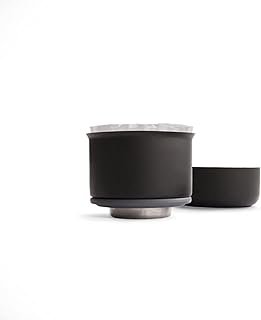
Vacuum-insulated metal drippers like the Fellow Stagg X and XF are a different category entirely. The vacuum layer between inner and outer walls blocks conductive heat loss, giving these drippers thermal performance close to or better than plastic. Gagne ranks the Fellow Stagg X/XF as the second-best thermal performer after the plastic V60.
Pros:
- Indestructible (no breaking, no chipping)
- Lightweight (thin steel or aluminum)
- Travel-friendly
- Vacuum-insulated versions offer excellent thermal stability
- Some models are dishwasher safe
Cons:
- Standard (non-insulated) metal loses heat quickly through conduction
- Can affect flavor if using reactive metals (copper) without coating
- Generally more expensive ($25 to $60 for standard, $40 to $80 for vacuum-insulated)
- Limited design variety compared to ceramic
Best for: Travel, durability, and (for vacuum-insulated models) top-tier thermal performance.
Head-to-Head Thermal Ranking
Gagne’s testing produces a clear ranking from best to worst thermal performance:
Does Material Matter for Every Brew?
The impact of dripper material scales with several factors:
Ambient temperature. In a cold kitchen (winter, unheated space), the temperature differential between the slurry and the air is larger. A ceramic or glass dripper radiates heat away faster. In a warm environment, the difference between materials shrinks.
Brew size. A large brew (30g+ coffee, 500g+ water) has more thermal mass than a small brew. The water’s thermal energy partially overwhelms the dripper’s heat theft. For a small single-cup brew (12 to 15g dose), the dripper’s thermal impact is proportionally larger — and choosing the right material matters more.
Water temperature. If you brew with water well above the ideal 91 to 96 degrees C range (boiling, for instance), you have a temperature buffer. The dripper steals some heat, but you end up in the ideal slurry range anyway. If you are already brewing at the low end of the temperature range, a heat-stealing dripper can push you below optimal extraction temperature.
Preheating. Thoroughly preheating a ceramic or glass dripper (pouring boiling water through it, discarding, then brewing immediately) partially compensates for the material’s thermal disadvantage. It will not match plastic, but it narrows the gap. Preheating is essential for ceramic and glass, optional for plastic, and helpful for standard metal.
Recommendations by Priority
If flavor optimization is your priority: Plastic V60 or vacuum-insulated metal (Fellow Stagg X/XF). The physics are unambiguous. These materials let you maintain the highest, most consistent slurry temperature.
If you want a balance of aesthetics and performance: Ceramic with diligent preheating. It will not match plastic, but the gap narrows with proper technique, and ceramic drippers are where the most design variety exists.
If you travel or brew outdoors: Plastic or non-insulated metal. Both are lightweight and indestructible. Plastic wins on thermal performance; metal wins on perceived durability.
If you want the best of both worlds: Some brewers keep a plastic V60 for daily use and a ceramic or glass dripper for the counter when guests come over. The V60’s interchangeable design makes this easy — all sizes and materials use the same filters and the same technique.
For more on dripper geometry (cone vs. flat-bottom) and its effect on extraction, see our flat-bottom vs cone comparison. For a complete pour-over technique guide, see the V60 brewing guide. To compare specific drippers head-to-head across shapes and sizes, our best pour over coffee makers guide is the buyer’s lens on the same equipment universe.
A Note on Filter Paper
The filter has its own thermal impact, separate from the dripper material. Paper filters are thin and have negligible thermal mass — they do not steal meaningful heat. But filter thickness affects flow rate, which affects contact time, which affects extraction.
Chemex filters are 20 to 30 percent thicker than standard V60 or Kalita filters. They slow the draw-down, which compensates somewhat for the Chemex’s poor glass thermal performance by giving the water more contact time.
Rinsing paper filters before brewing is important regardless of dripper material. It removes papery taste (brown unbleached filters actually taste more papery than white oxygen-bleached ones, contrary to what most people assume), creates a better seal between filter and dripper wall, and preheats the dripper slightly.
Bottom Line
The data points in one direction: plastic drippers produce the best thermal results, and temperature stability directly affects extraction quality. If you have been avoiding plastic because it feels like a downgrade, the physics say the opposite. A $10 plastic V60 maintains higher, more stable slurry temperatures than a $40 ceramic or $35 glass version of the exact same dripper shape.
That said, coffee is also ritual. If brewing with a handmade ceramic dripper makes your morning more enjoyable, the thermal penalty is a few degrees that you can partially offset with preheating and slightly hotter water. Just know what the tradeoffs are — and do not skip the preheat.
Frequently Asked Questions
- Why does a plastic dripper make better coffee than ceramic?
- Plastic has the lowest heat capacity and minimal thermal conductivity of common dripper materials. It absorbs almost no heat from the brew water, maintaining the highest and most stable slurry temperatures. Jonathan Gagne's measurements show a plastic V60 with 99 degrees C kettle water averages roughly 84 degrees C slurry temperature during the brew. Ceramic absorbs more heat initially (high heat capacity from its mass) and then radiates it away. The result is lower, less stable slurry temperatures that reduce extraction quality.
- Do I need to preheat my dripper?
- For ceramic and glass drippers, preheating is essential. Pour boiling water through the dripper (with the filter in place to rinse it simultaneously), discard the water, and brew immediately. This warms the dripper body so it steals less heat from the first pour. For plastic drippers, preheating is optional — the material absorbs so little heat that the benefit is marginal. For vacuum-insulated metal drippers, a quick preheat helps but is less critical than for ceramic.
- Is it safe to brew with a plastic dripper?
- The Hario V60 plastic is made from food-grade polypropylene (PP), which is rated for temperatures well above coffee brewing range. Polypropylene does not leach harmful chemicals at 100 degrees C. It is the same material used in food storage containers, baby bottles, and medical equipment. BPA concerns apply to polycarbonate plastics and some other types, not to polypropylene. If you have specific health concerns, vacuum-insulated stainless steel drippers offer comparable thermal performance without any plastic contact.
- How much does dripper material actually affect the taste?
- Gagne's data shows slurry temperature can differ by 5 to 15 degrees C from kettle temperature depending on dripper material and preheating. Temperature directly affects extraction rate — higher temperatures extract more soluble compounds. A few degrees of slurry temperature difference can shift extraction yield enough to make the difference between a balanced, sweet cup and a flat, underextracted one. The impact is most noticeable with small brews (single cup), cold environments, and light-roast coffees that need higher temperatures to extract properly.
- What about copper drippers?
- Copper has extremely high thermal conductivity (about 25 times that of stainless steel), which means it transfers heat away from the brew very quickly. Unlined copper drippers lose heat rapidly despite their low mass. Most copper drippers on the market are either lined or coated to prevent the copper from reacting with acidic coffee (pH 4.8 to 5.1). From a thermal standpoint, copper performs similarly to or slightly worse than standard stainless steel. The main appeal is aesthetic.
- Is the Fellow Stagg really as good as plastic for thermal performance?
- Close, but not identical. The Stagg X and XF use a vacuum-insulated double wall that blocks conductive heat loss almost entirely, putting them just behind the plastic V60 in Gagne's thermal ranking. The advantage of the Stagg over plastic is durability and aesthetics — it is unbreakable and looks premium. The advantage of plastic over the Stagg is price (about $10 vs $55 to $80) and weight. For best thermal performance per dollar, plastic wins; for best thermal performance with a premium feel, the Stagg is the pick.
Some links above are affiliate links. We may earn a small commission if you purchase through them, at no extra cost to you. We only recommend equipment we’d use ourselves.