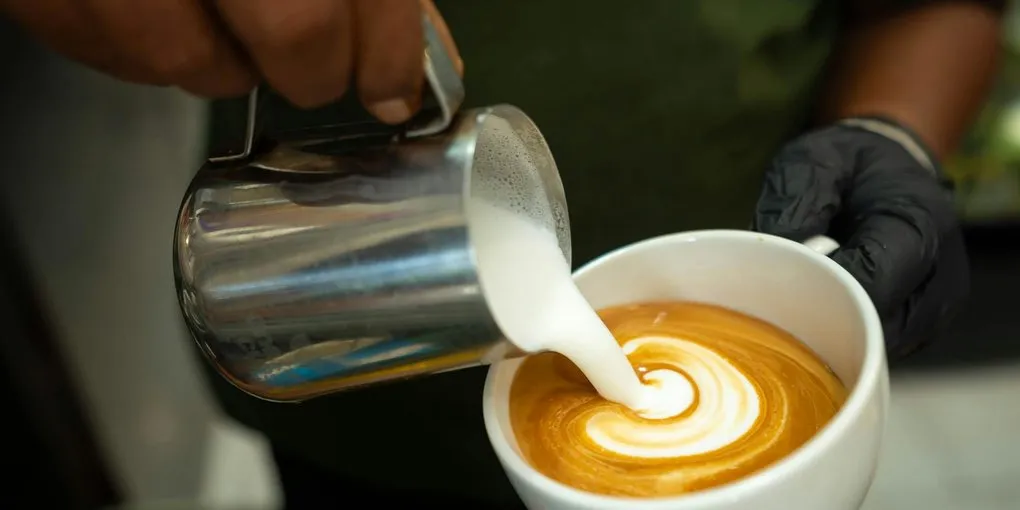
Most milk-frother buying guides skip the one thing that matters: what you actually want the machine to produce. A handheld wand that aerates cold milk for matcha is not the same tool as an electric jug that heats and froths on a button, and neither is the same as a steam wand that builds glassy microfoam tight enough to pour a rosetta. If you buy the wrong category for your drink, you will be disappointed no matter how much you spend.
Here is the honest version. Handheld whisk wands are cheap and convenient and will never make latte art. Electric jugs heat and aerate at the press of a button, which is great for cappuccinos you drink alone and useless if your goal is a proper flat white. Real microfoam — the glassy, paint-like texture that holds a design — requires either a steam wand or a mesh-aeration handheld like the Subminimal NanoFoamer. That is the category structure. Below, the best picks in each, plus a sleeper that nobody talks about but probably should.
If your milk has been failing more than your tool — flat foam, separation, that “cereal water” look — the carton matters more than the frother. The companion guide your $6 oat milk is wrecking your latte walks through the chemistry. The frother only finishes the job the milk has to start.
Microfoam comes from steam wands or mesh aeration — not from spinning whisks.
The physics are not negotiable. Microfoam is tiny, uniform bubbles suspended in a film of denatured whey proteins. The bubbles have to be created by high-velocity injection while the milk is still cold enough to stretch (Rao’s rule: complete all air introduction before about 100 F / 38 C), then folded into the rest of the pitcher as the milk heats toward 130-149 F (55-65 C). The stretching window is narrow, and the aeration has to happen fast enough to create millions of tiny bubbles instead of a few big ones.
Electric jug frothers can’t do this. Their whisks spin in heated milk, which means most of the aeration happens above the stretching temperature, which means the bubbles end up large and unstable. Standard battery-powered handhelds spin even slower, in even less control. What they produce is foam, not microfoam — and foam collapses. It looks like dish suds on top of your drink two minutes after you pour it.
If you want latte art, or you want the mouthfeel Hoffmann describes when properly steamed milk releases sweetness between 60 and 65 C, you need either a steam wand or a mesh-aeration tool like the NanoFoamer. Everyone else — people making cappuccinos, mochas, matcha lattes, and drinks where the foam is texture rather than canvas — can use something cheaper. For the underlying milk chemistry, see how to steam milk for lattes.
The Subminimal NanoFoamer V2 is the sleeper pick everyone overlooks.
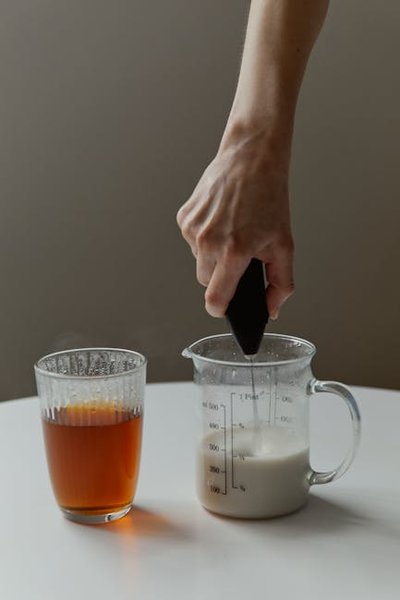
The NanoFoamer V2 is a battery-powered handheld built specifically for microfoam, and at $37 with two AA batteries it is the lowest-cost path to real pour-able foam outside of a steam wand. Unlike a standard PowerLix-style wand with a wire whisk, the NanoFoamer uses a shrouded mesh screen — a Fine and a Superfine NanoScreen ship in the box — that forces milk through a tiny aperture at high speed. That is the same physics a steam wand uses, just driven by a 3,000 RPM motor instead of steam pressure. The body is waterproof.
This is the single best tool in this entire guide for anyone who wants latte art but doesn’t own an espresso machine with a steam wand. You still heat the milk separately (microwave or stove — aim for about 140 F / 60 C, no higher), then foam with the NanoFoamer for 10-15 seconds. The output is genuinely pour-able microfoam, tight enough to sink a rough heart or a simple tulip.
What matters is the mechanism, not the brand. Mesh-aeration tools work because the screen geometry mimics steam injection at the bubble-formation stage. Anything that achieves the same physics — shrouded mesh, high RPM, fully submerged — would produce similar results. The NanoFoamer V2 just happens to be the cleanest off-the-shelf execution at a $37 price point.
The catch is that it’s more effort than an electric jug, and less forgiving than a steam wand. You have to get the milk temperature right before foaming, not during. But for $37, nothing else under $200 even comes close.
Check NanoFoamer V2 price on Amazon →The Subminimal NanoFoamer Lithium is the upgrade if you make milk drinks daily.
The NanoFoamer Lithium is the same physics with more torque. A 3.7 V lithium-ion battery drives the impeller at roughly 4,000 RPM at full submersion (versus 3,000 RPM for the V2), USB-C charging replaces AA batteries, and there are two speeds — the slower setting roughly equals the V2’s top speed. IP4 waterproof, stainless steel exterior. Around $50.
Whether the upgrade is worth it depends on how often you make milk drinks. For one or two cappuccinos a day, the V2 is more than enough. If you’re foaming for three or four drinks daily — or you live in a household that goes through batteries faster than groceries — the Lithium pays for itself in convenience over a year. The foam quality difference between V2 and Lithium is real but subtle: both produce pourable microfoam, the Lithium is just denser and faster.
Check NanoFoamer Lithium price on Amazon →The Breville Milk Café BMF600XL is the top electric jug for the automation crowd.

The Milk Café BMF600XL is a standalone, full-size milk frother with a magnetic whisk base, an induction heater, and a temperature dial that goes from cold stir through warm to a hot setting. It holds up to 25 oz, runs at 500 W, ships with both a latte disc and a cappuccino disc, and currently sells around $200 (Target, Abt, and Best Buy all show $199.95). One-year limited warranty. The jug is dishwasher-safe; the unit specifies hand wash for the body.
What works: temperature is precise, the pitcher is non-stick, and it produces the best foam you will get from any jug frother. What does not: the foam is still not microfoam. It’s close enough for casual cappuccinos. It is not close enough to pour a tulip.
The honest comparison: at $200, the Milk Café costs more than five-and-a-half NanoFoamer V2s. If your priority is hands-off convenience for cappuccino-style drinks and you genuinely don’t care about latte art, the Breville is the right answer. If pour-ability matters at all, spend $37 on the NanoFoamer V2 and microwave the milk yourself.
Check Breville Milk Café price on Amazon →The Nespresso Aeroccino 4 is the best set-and-forget mid-tier electric jug.
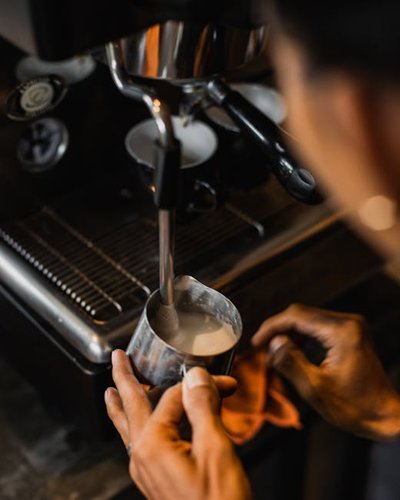
The Aeroccino 4 has four modes selected by dedicated buttons — hot dense foam (cappuccino), hot light foam (latte), hot milk with no foam (flat white), and cold foam for iced drinks. Capacity is 4.1 oz (120 ml) for foam and 8.1 oz (240 ml) for hot milk. Internal ceramic non-stick coating; the inner jug is dishwasher-safe. One-year limited warranty. Pricing varies $99-$160 depending on retailer and sale; MSRP sits around $160.
Nespresso designed it for people pulling pod shots who want a reliable milk component without any technique, and that’s exactly what it delivers: press a button, walk away, come back to textured warm milk. The cold-foam mode is genuinely useful for iced drinks and cold-foam toppings. Latte art is a hard no — the bubble structure is loose and unstable for the same reason every electric jug fails on this front.
If the buttons matter more than the foam quality, the Aeroccino 4 is the right pick. If the foam quality matters more than the buttons, save $120 and buy a NanoFoamer V2.
Check Aeroccino 4 price on Amazon →The Nespresso Aeroccino 3 is the cheaper sibling — but it overheats.
The Aeroccino 3 is the older single-button version — short press for hot milk and foam (the button glows red), long press for cold froth (the button glows blue). Capacity is the same 4.1 oz foam / 8.1 oz hot milk as the Aeroccino 4. Around $75 retail.
Two real concerns versus the 4. First, the Aeroccino 3 heats milk to roughly 160-170 F (71-77 C), which is above Hoffmann’s specialty-coffee ceiling of 65 C / 149 F. At those temperatures, milk proteins start denaturing past the working window — the foam stops holding cleanly and a cooked-milk taste develops. You will probably notice it in delicate drinks like flat whites; you may not notice it in milk-heavy drinks like a hot chocolate or a vanilla latte. Second, the Aeroccino 3 has a Teflon coating instead of the 4’s ceramic, and historically it’s been more prone to flaking. Hand wash only — it is not dishwasher-safe — and treat it gently.
For straight cappuccino-and-latte drinkers who don’t mind warmer-than-spec milk and want to save $85 versus the 4, this is a reasonable pick. For anyone chasing the 60-65 C texture window the specialty-coffee literature recommends, look elsewhere.
Check Aeroccino 3 price on Amazon →The PowerLix Handheld is the best $15 tool on the market.
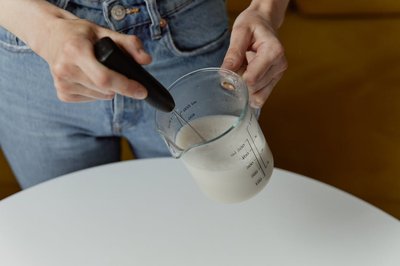
PowerLix’s battery-powered handheld runs on two AA batteries, spins a dual-spring stainless steel whisk at roughly 19,000 RPM, and aerates milk in about 15-20 seconds. Around $15 with the stainless stand. It will not heat your milk — you warm it separately in the microwave or on the stove — and it will not produce pour-able microfoam. What it will do is reliably create decent foam on top of warmed milk for cappuccinos, or cold foam for iced drinks.
What matters is the mechanism, not the brand. Aerolatte, Bonjour, the unbranded Amazon clones — they’re all the same product class: AA-powered spiral whisk in a wand. The PowerLix wins on price and stainless build. Any of them will do roughly the same job.
The honest limitation: volume. Handheld wands only work in narrow vessels, and they can only aerate the top third of whatever’s in the container. If you’re making drinks for two people, you’ll need to froth twice. If you are making one cappuccino at a time and don’t want latte art, this is $15 well spent.
Check PowerLix price on Amazon →The Bodum Latteo manual frother is the best low-tech option that lasts.

Bodum makes two milk frothers and they’re easy to confuse: the Latteo is the manual plunger — no batteries, no motor — and the Schiuma is the battery-powered handheld wand. The Latteo is the one to buy.
The Latteo is an 8 oz heat-resistant borosilicate glass carafe with a stainless mesh plunger and silk plastic lid. You fill it to the line with cold milk, pump the plunger 60-90 times for about 30 seconds, and get a textured foam that’s slightly tighter than what a battery-powered wand produces. After plunging, you remove the plunger assembly and microwave the carafe for 30-50 seconds to warm the milk. All parts are dishwasher-safe. Around $30.
Two advantages: it will outlast every battery-powered competitor in this guide, and you control the texture by how aggressively you pump. Two downsides: you have to heat the milk separately (microwave-after-plunge is the standard workflow), and it is slow. For a patient home barista who resents battery anxiety, it’s the right answer.
Check Bodum Latteo price on Amazon →The Instant Milk Frother is a solid 4-in-1 from a trusted brand.
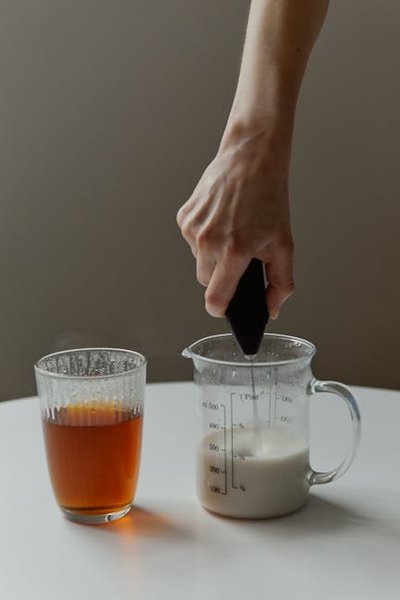
Instant Brands (the Instant Pot people) make a compact 4-in-1 electric jug frother with cold foam, light warm foam, dense warm foam, and a milk-warming-only mode for around $35. Total capacity is 17 oz: it heats up to 17 oz of milk or frothes up to 8.5 oz. The whisk and lid are dishwasher-safe; the main unit is not (it is electrical). One-year limited warranty.
Foam quality is in the same ballpark as the Aeroccino 3 — fine for cappuccinos, not microfoam. The 4-in-1 mode set is more flexible than the Aeroccino 3’s single button at less than half the price. Build quality is reasonable for the cost.
Honest con: 8.5 oz frothing capacity means one drink at a time. If you regularly make two lattes in one cycle, you will outgrow this frother fast and want the Breville Milk Café or an Aeroccino 4.
Check Instant Milk Frother price on Amazon →The Bellman CX-25P is the closest a stovetop tool gets to a steam wand.
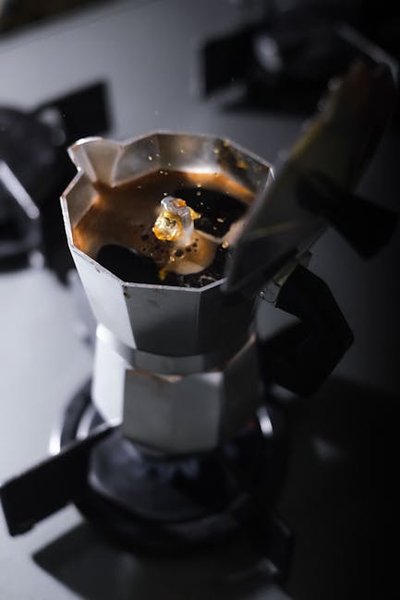
The Bellman CX-25P is a stovetop pressure steamer that brews 3-9 espresso shots and steams milk with a real 2-hole steam wand. 18/8 stainless steel construction, attached pressure gauge, Bakelite handles. Works on gas, electric, ceramic, and compatible induction. About $200 retail (Bellman lists at a $289 reference price with $199.95 sale being the prevailing actual price). One-year warranty.
What matters is the mechanism. Real steam pressure plus a real wand produces real microfoam — pourable, latte-art-grade, comparable to entry-level espresso machines. The catch is the workflow: it takes 5-10 minutes to come up to pressure on the stove, requires actual stovetop access, and the same wand-technique skills that apply to any espresso machine apply here too. For households that already own a manual lever or pour-over setup and want microfoam without buying an espresso machine, this is the right tool.
If you already own an espresso machine with a steam wand, the Bellman is redundant — use what you have.
Check Bellman CX-25P price on Amazon →Whole milk and skim milk foam differently — pick the right one for the drink.
Counterintuitively, skim milk foams more easily than whole milk. Lower fat content means a higher protein-to-fat ratio, which means more stable bubble walls and larger final foam volume. But whole milk produces denser, more velvety microfoam with substantially better mouthfeel, because the melted fat contributes richness and the casein-to-whey balance was, in effect, evolved for this exact job. Casein (about 80% of milk protein) provides the load-bearing scaffold; whey (about 20%) denatures during steaming and migrates to bubble surfaces, forming the films that lock microfoam together (Hoffmann).
Most serious baristas use whole milk for the texture tradeoff. If your frother is struggling to produce foam at all — which happens with weak handhelds and some budget electric jugs — switching to 2% or skim will help, at the cost of mouthfeel. Plant milks are a separate conversation: oat barista blends handle best, soy needs curdling-prevention care, and almond is a foaming disaster no matter what tool you use. The full chemistry — including the three-ingredient label test that predicts whether any plant milk will actually foam — is in your $6 oat milk is wrecking your latte and the broader best plant milks for coffee buy guide.
Serve the milk within 30 seconds of frothing.
This is the one rule Rao emphasizes that most home baristas miss. Steamed milk separates quickly — the liquid falls to the bottom, the foam rises — and the mouthfeel of a freshly foamed drink is dramatically better than the same drink a minute later. Pour immediately, serve immediately, and drink while the texture is still integrated.
The practical implication for equipment: if your tool takes a long time to froth, or if you froth before pulling the shot and let the milk sit, you’re losing the best part of the texture. Time the shot and the milk together. On a single-boiler espresso machine, steam first and pour immediately into the waiting cup. On a dual-boiler or an external frother, pull the shot while the milk is being foamed.
If you own a steam wand, skip this entire category.
If your espresso machine has a steam wand — and yours does if you own a Breville Bambino Plus, Gaggia Classic Pro, or anything prosumer — the right tool is already on your counter. The complete two-phase technique (stretch cold below 100 F / 38 C, then texture to 130-149 F / 55-65 C, pour within 30 seconds) is in how to steam milk for lattes, with the latte-art-specific mechanics in the latte art for beginners guide.
Short version: with practice, a built-in steam wand produces better foam than any $200 standalone frother ever will. None of the tools in this guide are an upgrade over a well-used wand. They exist because most people don’t own a steam wand — and for that population, the category structure above is what to buy.
The buying decision in one paragraph.
If you already have an espresso machine with a steam wand, learn to use it and skip this entire category. If you don’t and you want latte art at home, buy the Subminimal NanoFoamer V2 for $37 — it’s the only handheld that produces real microfoam, and it beats every electric jug in this guide for pour-ability. If you make milk drinks daily and want USB-C, step up to the NanoFoamer Lithium for $50. If you want pure convenience and don’t care about art, the Breville Milk Café BMF600XL at $200 is the best automatic jug, with the Aeroccino 4 a reasonable mid-tier alternative around $160. If you want decent foam for under $15, the PowerLix is fine. If you want a stovetop pressure tool that mimics a steam wand, the Bellman CX-25P at $200 is the right answer.
Do not buy an electric jug frother and expect latte art. That is the single most common disappointment in this category, and it is entirely preventable.
Frequently Asked Questions
- What's the difference between foam and microfoam?
- Foam is any aerated milk with visible bubbles — the loose, suds-like texture you get from handheld whisk wands and electric jug frothers. Microfoam is uniform, paint-like texture with bubbles so small you can barely see them, created by high-velocity steam or mesh aeration while the milk is still below 100 F / 38 C. Only microfoam pours latte art. Only steam wands, stovetop pressure steamers, and mesh-aeration tools like the Subminimal NanoFoamer reliably produce it.
- Can I make latte art with an Aeroccino or Breville Milk Café?
- No. Electric jug frothers produce pourable warm milk with a layer of loose foam on top, but the bubble structure is too large and too unstable to hold any design when poured. The latte-art-with-Aeroccino videos online are mostly using shaky cellphone framing to disguise what is really just a tan-colored drink with no clean line work. If latte art matters, buy a steam wand machine, a stovetop pressure steamer like the Bellman, or a NanoFoamer V2.
- Do milk frothers work with oat milk and other plant milks?
- Mostly yes, with caveats. Oat-milk barista editions (Oatly Barista, Califia Oat Barista, Minor Figures, Ripple) foam well in any tool because they're specifically formulated with added fat, a dipotassium-phosphate buffer, and emulsifiers like gellan gum. Soy-milk barista blends work but standard soy milk can curdle in acidic espresso (its isoelectric point sits around pH 4.6, very close to espresso's pH 4.85-5.13). Almond milk foams into large unstable bubbles no matter what tool you use — it has only 1g of protein per cup. The full ingredient-label test that predicts plant-milk performance is in our oat-milk guide.
- How hot should frothed milk be?
- Between 130 and 149 F / 55-65 C. Hoffmann notes that above 68 C / 154 F, milk proteins denature, perceived sweetness from lactose breakdown drops off, and the milk starts tasting cooked. Most automatic frothers target around 140 F / 60 C, which is the sweet spot. Worth noting: the Aeroccino 3 runs roughly 160-170 F (71-77 C) — measurably above the specialty-coffee ceiling, which can produce a faint cooked-milk note in delicate drinks. The Aeroccino 4 and Breville Milk Café both stop earlier. If you're using a handheld or manual tool, heat the milk to about 140 F before frothing and aim to serve within 30 seconds.
- Are stovetop milk steamers (Bellman, manual lever) worth considering?
- Yes, for a specific user. The Bellman CX-25P is a stovetop pressure steamer that produces genuine microfoam comparable to a semi-automatic espresso machine, currently around $200. It's the right tool for manual-lever or pour-over households that already have good coffee but no built-in steam wand. Downsides: it takes 5-10 minutes to come up to pressure, requires stovetop access, and the same steam-wand technique applies (stretch cold, texture to 60-65 C, pour within 30 seconds). Skip it if you already own an espresso machine with a wand.
- What is the difference between the Subminimal NanoFoamer V2 and the Lithium?
- The V2 ($37) runs on two AA batteries at roughly 3,000 RPM at full submersion. The Lithium ($50) uses a 3.7 V Li-ion battery, USB-C charging, two speeds, and runs roughly 4,000 RPM at full submersion (the slower of its two speeds is approximately the V2's top speed). Both produce pourable microfoam suitable for basic latte art; the Lithium is denser and faster. If you make milk drinks daily, the Lithium pays for itself in convenience over a year. For one or two drinks a day, the V2 is plenty.
- Bodum Schiuma vs Bodum Latteo — which one should I buy for foam?
- Different products. The Bodum Schiuma is a battery-powered handheld whisk wand — same category as the PowerLix. The Bodum Latteo is the 8 oz manual glass plunger frother — pump 60-90 times, then microwave to warm. For an electric quick-foam tool, the PowerLix outperforms the Schiuma for less. For a low-tech tool that lasts forever and gives you control over texture, the Latteo is the right pick at around $30.
Some links above are affiliate links. If you purchase through them, we earn a small commission at no extra cost to you. All product specs and pricing were verified against manufacturer pages and major retailer listings in April 2026; pricing may vary by retailer and sale period.