You pull a great shot. You buy good beans. You watch every steam-wand tutorial on the internet. And every single time you steam that six-dollar oat milk, your latte still comes out wrong — flat foam, weak texture, or the worst version, milk that separates into something that looks like cereal water before your eyes.
Here is the part nobody is telling you. The problem is not your technique. Different milks fail for completely different chemical reasons, and most of what’s on the grocery shelf was never designed to be steamed in the first place. The good news is that you can predict whether a plant milk will make a latte before you ever open the carton, by reading three things off the ingredient and nutrition panels in about five seconds.
What follows is the chemistry — the lab notes, the same-brand Califia reveal, and a complete failure-mode taxonomy by milk type.
Most plant milk wasn’t designed to be steamed in the first place.
The single most common mistake home baristas make is assuming “oat milk” is a category of product. It isn’t — it’s a category of marketing. Two cartons sitting next to each other on the same grocery shelf, both labeled “oat milk” by the same company, can be completely different formulations engineered for completely different applications. One was designed for cereal and smoothies. The other was designed to survive contact with hot acidic espresso under steam pressure. Same shelf, same brand, same word on the front. The chemistry tells the truth.
The good news is that the chemistry is on the label. Once you know what to look for, the difference between a latte and a curdled mess is roughly a 5-second glance at the side of the carton.
Milk has to do four chemistry jobs at once in a latte.
Before any tutorial about technique makes sense, it helps to be precise about what milk is actually being asked to do when it meets espresso. Four things, simultaneously:
- Foam. Build a stable network of tiny, uniform bubbles — microfoam — that pours and holds a design.
- Stay smooth. Keep oil and water held together as a single emulsion under heat and steam pressure, not separating into beads or layers.
- Taste sweet. Release perceptible sweetness when heat hits it (this is why properly steamed milk doesn’t need added sugar).
- Survive acidic coffee. Espresso lands at roughly pH 4.85 to 5.13 (Rao and Fuller, Scientific Reports, 2018). That is acidic enough to break unstable proteins the moment they touch.
Whole dairy milk does all four naturally. The chemistry was, in effect, evolved for this exact job — calves drink hot fat-and-protein emulsions before they’re ruminants, and the proteins in milk evolved to stay stable under pH and temperature stress. Plant milks weren’t evolved for anything coffee-shaped. Some plant milks are engineered to do the job. Most aren’t. The ingredient label tells you which is which, before you ever steam a drop.
Dairy works because casein and whey were built for this job.
Whole milk runs about 8 grams of protein per cup, around 3.25-3.5 percent fat (about 8g per cup), and 4.8 percent lactose, with the rest mostly water. The protein is the part that matters most for foam.
About 80 percent of milk protein is casein, which forms stable micelle structures that don’t denature easily and provide the foam’s load-bearing scaffold. The remaining 20 percent is whey — heat-sensitive proteins that denature during steaming, migrate to bubble surfaces, and form flexible films that lock microfoam together.
Two things happen between 60 and 65 degrees Celsius (140-149 degrees Fahrenheit). Whey denatures just enough to strengthen the foam. And lactose at this temperature contributes perceptibly more sweetness than cold milk does — which is why properly steamed milk does not need added sugar. Push past 68 degrees Celsius / 154 degrees Fahrenheit and you’ve cooked the proteins past their working window. The foam stops holding. Sweetness fades into the scalded, slightly grainy taste of overheated milk (Hoffmann).
Dairy’s operating window is tight, but it is forgiving inside that window. The casein network forgives a lot of mistakes. Which is why steaming dairy is hard to mess up — and why people who switch to plant milk and keep getting bad lattes assume they suddenly forgot how to steam. They didn’t. They changed the chemistry. For the full two-phase steaming technique, see how to steam milk for lattes.
The same brand can sell two cartons that are completely different drinks.
The cleanest demonstration of how much chemistry matters comes from a same-brand comparison within Califia Farms — both cartons sit on the same shelf at most grocery stores. Both say “oat milk” on the front. Two completely different products inside.
Califia Organic Oat Milk
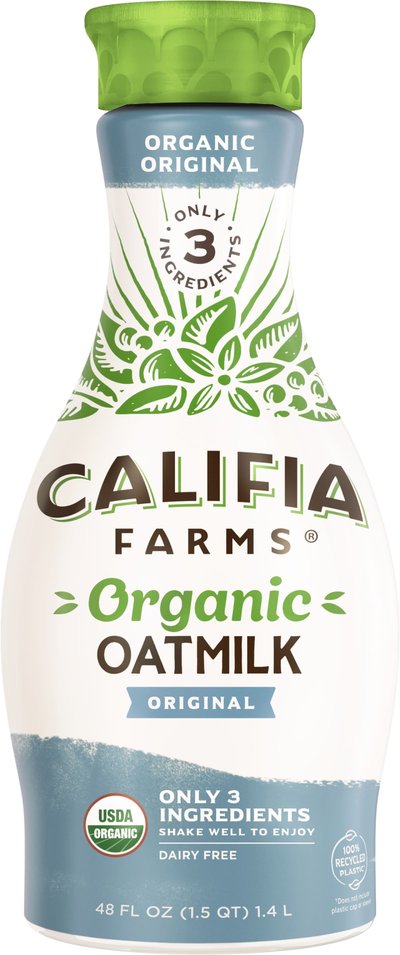
Three ingredients on the back: water, organic oats, sea salt. One gram of fat per cup. Three grams of protein. Nothing else. No buffer salts, no added oil, no fortification, no emulsion stabilizer. This is what a truly minimalist plant milk looks like — the marketing reads “clean label,” and that’s literal. It is engineered for cereal and drinking applications, not for coffee.
Check price on Amazon →Califia Oat Barista Blend
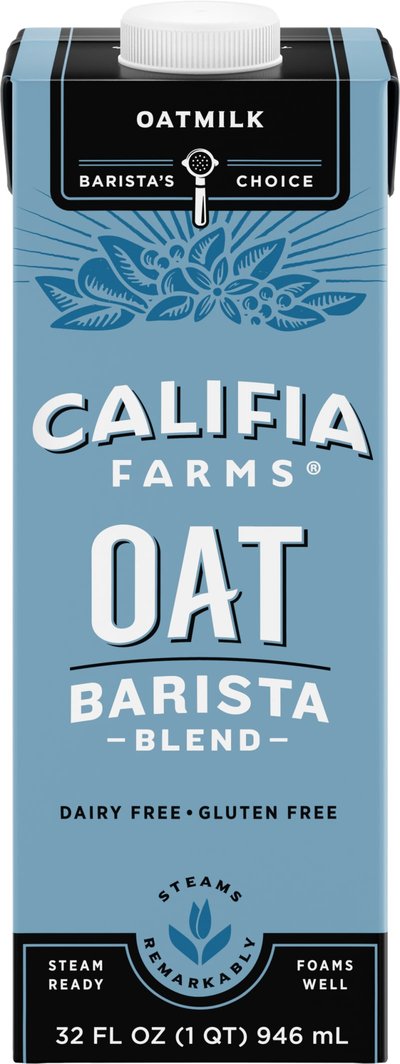
Five ingredients: oatmilk (water plus oats), sunflower oil, minerals (dipotassium phosphate, calcium carbonate, tricalcium phosphate), sea salt. Seven grams of fat per cup. Two grams of protein. Two added ingredients in functional terms — the sunflower oil and the dipotassium phosphate buffer — are the chemistry that makes one of these work in espresso and the other not.
The buffer keeps oat proteins from getting acid-shocked when espresso hits — it nudges the milk’s pH up and resists further drops on contact. Without it, oat protein clumps the moment acid touches it. The added oil is body and emulsion stability under steam pressure. Without it, the foam collapses as soon as steaming stops.
Same brand. Same shelf. Same word on the front. The label tells you everything before you ever steam.
Check price on Amazon →The 3-Ingredient Label Test predicts whether plant milk can make a latte.
Plant milk has to do three chemistry jobs to make a latte, and you can read all three off the label in about five seconds. This is the test to run in the grocery store before buying any new carton.
ONE: Buffer. Look for “dipotassium phosphate” — or a generic “minerals (dipotassium phosphate, calcium carbonate, …)” entry — in the ingredient list. Without a buffer, plant proteins clump on espresso contact. Most barista formulations have it. Many fortified regular plant milks do too — Oatly Original carries the same dipotassium phosphate as Oatly Barista. But truly minimalist clean-label cartons — Califia Organic Oat Milk, Oatly’s 4-Ingredient SKU, most “no additives” oat milks — do not. Standard soy milks (Silk Original, store-brand organic soymilks) typically do not.
TWO: Fat. Check the nutrition panel. Total fat per 8 fl oz / 1 cup. Anything under 5 grams per cup is structurally insufficient for latte body, regardless of what other tricks the formulation pulls. Barista oat milks run 6-8g (Califia Barista 7g, Oatly Barista 7g, Minor Figures Barista 4.5g — Minor Figures sits right at the borderline). Regular oat milks run 1-5g. Whole dairy milk runs about 8g.
THREE: Foam structure. This requires either ≥6g of functional protein per cup (which is how dairy, soy, and pea protein milks foam), OR enough fat plus an emulsion stabilizer to do the job mechanically (which is how barista oat milks foam — added oil plus, in many formulas, gellan gum or lecithin as an emulsifier). Almond and coconut have neither: ~1g of protein and no functional emulsifier system. They cannot build microfoam, period, regardless of brand or technique.
Three boxes. Check them on the carton. Predict the latte before you steam.
Soy curdles because espresso pH crosses its isoelectric point.
Soy milk has more protein than oat — about 7 to 8 grams per cup, nearly as much as dairy. So why does soy curdle when oat doesn’t?
It is not about how much protein is there. It is about where the protein gives up. Soy proteins (primarily glycinin and beta-conglycinin) have an isoelectric point around pH 4.6 — published values cluster between 4.5 and 4.9 depending on the subunit measured. That is the pH at which the proteins lose their net surface charge and stop electrostatically repelling each other. They aggregate fast — they clump into visible curds.
Espresso lands at pH 4.85 to 5.13. That’s close enough that when hot soy contacts hot espresso, localized pH at the interface can briefly drop past 4.6, and that’s all soy needs. Marbled stone on the surface. The curds are safe to drink — it’s an aesthetic problem, not a food safety problem — but the latte is over.
Heat amplifies the effect. Cold soy hitting cold coffee mostly survives. Hot soy hitting hot espresso curdles on contact.
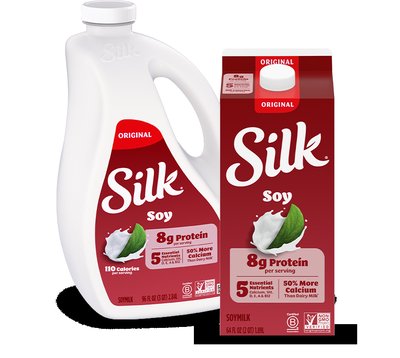
Now look at a typical regular soymilk — Silk Original. Ingredients: soymilk (water plus soybeans), cane sugar, vitamin and mineral blend (calcium phosphate, calcium carbonate, plus vitamin fortification), sea salt, gellan gum, sodium ascorbate, natural flavors. Gellan gum is the trap here. Gellan gum is a thickener and suspension agent. It makes the milk feel creamy and prevents settling in the carton. But gellan gum is not a buffer. It does not change pH. So when this milk hits espresso, the soy proteins clump exactly as they would without it. The gellan gum makes the visual result look slightly different — more suspended particle than fully separated layer — but does not prevent the chemistry. For more on plant-milk chemistry across the full category, see the oat milk vs dairy in coffee deep dive.
What you actually need for soy is a barista-edition formulation with real buffer salts.
Pacific Foods Barista Soy
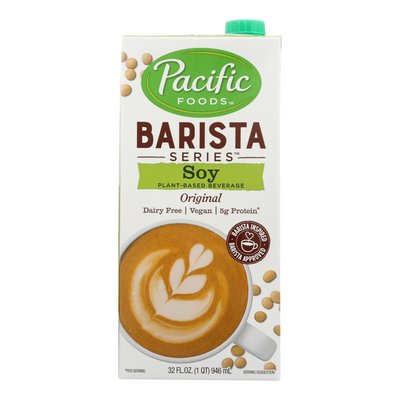
Organic soy base, cane sugar, carrageenan for body, dipotassium phosphate as the buffer, expeller-pressed canola oil, sea salt, sodium citrate. Five grams of protein per cup with a real buffer. The fat number on the label often reads zero per cup — the body comes from carrageenan and the protein structure rather than added oil. It works because the buffer prevents acid shock at the espresso interface; the foam comes from soy protein doing what soy protein does best.
Check price on Amazon →Silk Soy Barista Collection
The Silk Barista Collection runs a more aggressive buffer system — both dipotassium phosphate and monopotassium phosphate in the ingredient list, plus gellan gum for emulsion stability. Four grams of fat per cup. Pours dense; resists curdling under harder roasts.
Check price on Amazon →Or, with regular soymilk: warm it first to about 60 degrees Celsius, then pour the espresso slowly into the milk (not the other way around) to keep localized pH from crashing past 4.6. It works most of the time. A buffered barista soy works every time. Roast level helps too — see coffee roast levels explained for how darker roasts measurably reduce acidity.
Almond and coconut can’t make microfoam — there’s no structural protein.
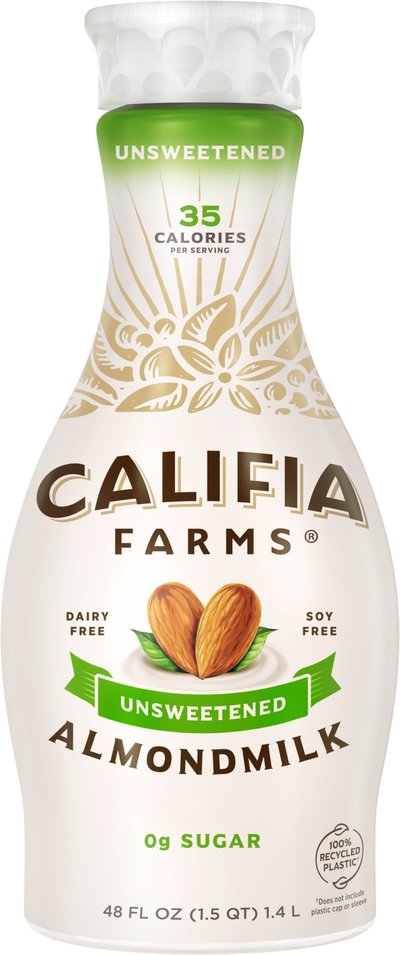
Almond milk has about 1 gram of protein per cup. That’s the whole story.
Microfoam is built from a protein-or-fat-or-stabilizer matrix that traps air bubbles in tiny, uniform pockets. Without enough functional protein and without an engineered emulsifier system, there is nothing structural to build the matrix from. Pour heated almond milk into espresso and the almond essentially disappears — no body, no structure, no foam. Whatever stabilizers the brand adds (gellan gum, sunflower lecithin, guar gum — Califia Almond has all three) cannot rescue a milk with one gram of protein. Almond milk works in iced drinks. It does not work in lattes.
Carton coconut milk — not the canned full-fat coconut milk used for cooking — is the same story from the opposite direction. It has fat but almost no protein. Tropical flavor. The foam dies in seconds. Best in cold-brew or iced applications where structure isn’t being asked of it.
Check price on Amazon →Pea protein milk is the sleeper pick almost nobody buys.
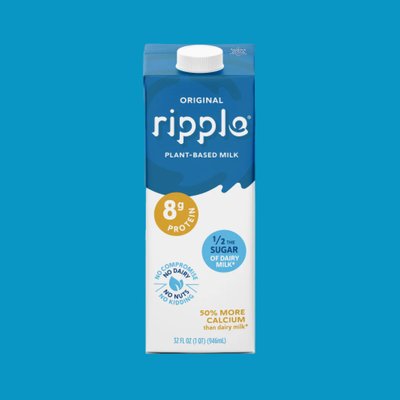
Pea protein milk — Ripple Barista is the most widely available example, Sproud Barista uses a similar pea base — delivers 8 grams of protein per cup with a buffered formulation specifically engineered for coffee. Same protein number as whole dairy milk. It actually foams. The mouthfeel is dairy-adjacent and the foam holds long enough to pour latte art.
The ingredient list runs deep — pea protein blend, vegetable oil (sunflower, safflower, or canola), cane sugar, dipotassium phosphate buffer, tricalcium phosphate, gum arabic, sea salt, mixed tocopherols, sunflower lecithin emulsifier, natural flavor, guar gum, gellan gum. That looks like a lot, but every line is doing functional work — buffer, emulsifier, body, micronutrients. The result is the closest plant alternative to dairy that exists at supermarket scale.
Most people don’t know it exists, partly because pea protein still carries a “weird sports nutrition” association that oat and almond have shed. In coffee, that association is wrong. By the structural metrics that matter — protein content, buffer system, fat for body — pea protein milk is the closest plant alternative to dairy that exists at supermarket scale.
If you’ve tried oat barista and don’t love the cereal-leaning flavor, pea protein is worth a shot.
For the broader plant-milk landscape across all eight common categories, see the best plant milks for coffee buy guide. For the dairy-vs-plant comparison at a metric level, see oat milk vs dairy in coffee.
Check price on Amazon →The Oatly cartons — when “Original” already has the chemistry built in.
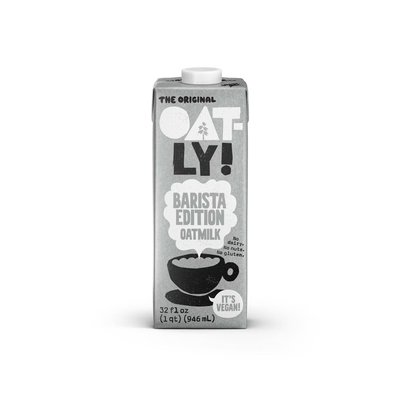
Oatly Barista Edition
The Barista carton runs oatmilk plus low-erucic-acid rapeseed (canola) oil, plus dipotassium phosphate, calcium carbonate, tricalcium phosphate, sea salt, dicalcium phosphate, riboflavin, vitamin A, vitamin D2, vitamin B12. Seven grams of fat per cup. The buffer system is the same dipotassium phosphate Califia Barista uses; the fortification is more aggressive. Most widely used barista oat at coffee shops in the US.
Check price on Amazon →Oatly Original Oatmilk
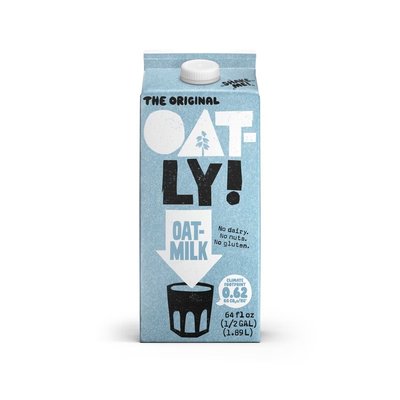
Oatly is unusual among major brands in that the regular Oatly Original carton carries the same buffer system as the Barista — dipotassium phosphate is right there on the label. The difference is fat. Original lands at 5g per cup; Barista at 7g. Five grams sits right at the borderline of the fat threshold — the foam forms but doesn’t pour as densely. Drinkable; not pourable for latte art.
Note this is the exception, not the rule. Most regular plant milks do not include the buffer their barista cousins do. Don’t generalize from Oatly.
Check price on Amazon →Minor Figures Barista Oat
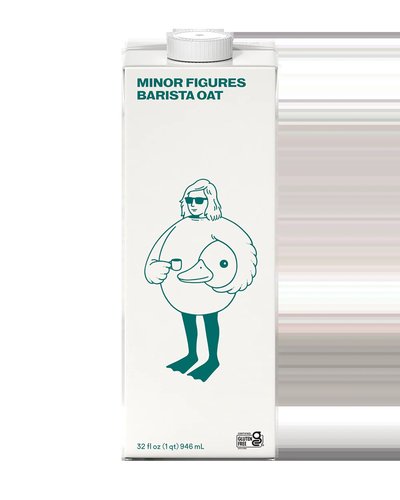
Minor Figures runs a deliberately short ingredient list — oats, water, sunflower oil, dipotassium phosphate, calcium carbonate. No gums, no other emulsifiers. Four-and-a-half grams of fat per cup, which is right at the borderline. The foam is thinner than Califia Barista or Oatly Barista (both 7g) but pours acceptably for at-home use. The clean ingredient list is the selling point if that matters to you.
Check price on Amazon →The morning protocol is four moves, in order.
Once you’ve solved the carton — once you have a plant milk that has the buffer, the fat, and the foam structure — the technique side is short. There are four moves, and they apply equally to dairy and to engineered plant milk.
ONE. Find the right carton. The single highest-leverage decision you make happens in the grocery store, not at the espresso machine. Most barista formulations have buffer + ≥5g fat. Most regular cartons don’t. The word “Barista” on the label is not pure marketing — for plant milks, it usually signals a completely different recipe engineered to survive steam and acid.
TWO. Finish stretching cold. All air introduction has to happen before the milk reaches about 100 degrees Fahrenheit / 38 degrees Celsius (Rao). By the time the pitcher feels warm in your hand, your window for adding air is already closed. Above this temperature, the milk is too fluid to hold the fine bubble structure you’re trying to build — you’ll get large, unstable bubbles instead of microfoam.
THREE. Stop steaming at the right temperature, by milk type. Dairy: 60-65 degrees Celsius / 140-149 degrees Fahrenheit. Oat: stop closer to 60 degrees Celsius — the texture window is narrower than dairy’s, and the emulsion breaks faster past the ceiling. Soy: stay moderate. Don’t guess by feel. A digital milk thermometer for $15-20 ends every temperature debate forever and matters more than any pitcher upgrade you could buy. For the complete two-phase technique, see the deep dive on how to steam milk for lattes.
FOUR. Pour within 30 seconds of cutting the steam. Wipe and purge the wand immediately, then pour fast. Steamed milk starts separating the moment the steam stops — mouthfeel is dramatically better in the first half-minute than it is a minute later (Rao). The pitcher does not benefit from sitting on the counter while you finish doing other things.
The buy list — and the one $20 tool that matters more than your pitcher.
Here are the picks, with the chemistry justification on each.
For oat: Califia Oat Barista Blend or Oatly Barista Edition. Both have the buffer, both run 7g of fat per cup. Califia Barista uses sunflower oil and skips gellan gum (unusually clean among barista oat milks). Oatly Barista uses rapeseed oil with the standard mineral salt buffer system and full vitamin fortification. Both produce smooth, pourable microfoam suitable for basic latte art. Avoid for lattes: the minimalist three-ingredient organic oat milks (Califia Organic Oat Milk, Oatly 4-Ingredient). Those are excellent for cereal — and that is literal, not metaphorical — but they have neither the buffer nor the fat to make a latte.
For soy: Pacific Foods Barista Soy or Silk Soy Barista Collection. Buffered. They foam well, hold well, don’t curdle. Don’t bother with regular soymilk for lattes — the gellan gum almost universally found in regular soymilk formulations doesn’t change pH, so it can’t save you from isoelectric precipitation.
For pea protein: Ripple Barista. 8g protein per cup, buffered, made for steaming. The sleeper pick.
For dairy (if you drink it): whole milk from any brand still outperforms every plant milk for pure steaming. Cows evolved milk to do exactly this job.
Avoid for hot lattes (full stop): regular almond milk, regular coconut carton milk, regular soymilk, and any oat milk without buffer salts on the label. They will all fail in hot acidic coffee for different chemical reasons. Most are fine in iced drinks where foam structure is irrelevant.
The one tool that matters more than any pitcher upgrade: a digital milk thermometer. Twenty dollars. Stops you at the right temperature every time. If you’re investing in milk equipment, the thermometer outranks the pitcher and the wand attachment.
If you don’t own an espresso machine with a steam wand, a separate frother handles the foaming step — but most of them can’t pour latte art. The category map (handheld, manual, electric jug, mesh-aeration, stovetop pressure) and the only sub-$200 tool that actually produces microfoam are in best milk frothers for home baristas.
Check thermometer prices on Amazon →Your hands weren’t broken — your milk was.
Remember that failed latte from the beginning. The flat foam. The cereal-water separation. The eighth carton in a row that produced something that looked nothing like the coffee shop drink you were trying to copy.
Your hands weren’t broken. Your milk was. You bought an ingredient that was never engineered to be steamed and you poured it into an ingredient that was already acidic enough to break it. The fix is not a longer tutorial or a fancier pitcher. The fix is the carton — and once you know what to read on the carton, the carton stops being a problem.
Swap the carton. Watch your temperature. Pour fast. The latte you’ve been trying to make for months just works.
If this fixed your lattes, two more things between the cup and the coffee bag are probably also broken. Your grinder is wasting a meaningful percentage of every bag you buy. And the beans you love are going stale faster than you think.
Fix the milk. Fix the grinder. Fix the beans. That’s the home latte.
Some links above are affiliate links. If you purchase through them, we earn a small commission at no extra cost to you. All ingredient lists were verified against manufacturer-published labels in April 2026; nutrition facts may vary slightly by package size or regional formulation.
Frequently Asked Questions
- Why does steamed dairy milk taste sweeter than cold milk if no sugar is added?
- Lactose is the disaccharide that gives milk its baseline sweetness, and at steaming temperatures around 60-65 degrees Celsius the perceived sweetness goes up significantly. Heat increases the bioavailability of the sugar to your taste receptors and at higher temperatures lactose partially breaks down into glucose and galactose, which read as sweeter. Above about 68 degrees Celsius the proteins start to denature and the perception flips — the same milk starts tasting cooked and slightly grainy. The window between sweet and scalded is narrow but reproducible.
- Can I add a buffer to regular oat milk myself to make it work for lattes?
- Technically yes, but it isn't worth it. A pinch of food-grade sodium bicarbonate (baking soda) raises pH and suppresses curdling, and home baristas have done this for years with soy milk. The problem is dosing: too little and you still curdle, too much and the milk tastes soapy. Barista-edition formulations cost roughly the same as regular cartons and have the buffer, the added fat, and (often) the emulsifier dialed in. The DIY route gets you a worse product for the same money.
- Does shaking the carton actually matter, or is that a barista myth?
- It matters more for plant milk than for dairy, and it isn't a myth. Barista formulations contain mineral-salt buffers, added oils, and (often) emulsifiers like gellan gum or lecithin that can settle if the carton sits on a warm shelf for a while. A vigorous shake before pouring redistributes the buffer salts evenly and re-emulsifies any oil that has separated. For dairy this is unnecessary — homogenized whole milk doesn't separate at refrigerator temperatures. For plant barista milks, a 5-second shake is genuinely the difference between an even pour and a dose of unbuffered milk hitting the espresso first.
- Why does homemade oat milk almost never work for lattes?
- Homemade oat milk lacks every functional ingredient that makes commercial barista oat milk work in coffee. There's no buffer, so it curdles on espresso contact. There's no added oil, so it has no body and the foam collapses on contact with steam. There's no emulsifier, so any fat that does come from the oats settles out. The DIY recipes that float around online — soaked oats, blender, strainer — produce a drinkable product that fails in espresso for predictable chemistry reasons. If you want the homemade-clean-label feel for hot coffee, the workable version is the same as it always was: a small amount of sodium bicarbonate plus a teaspoon of neutral oil per cup, which is essentially a hand-mixed barista formulation.
- Why do some barista oat milks foam better than others if they all have the buffer?
- The buffer keeps the foam from breaking on acid contact, but the fat content and the emulsifier load determine how dense and how long-holding the foam is. Oatly Barista and Califia Barista both run 7g fat per cup and produce thick, durable microfoam. Minor Figures Barista runs 4.5g fat and produces a thinner, faster-collapsing foam — drinkable, but less forgiving for latte art. Brands also differ in whether they include gellan gum or another emulsifier in addition to the buffer — Califia Barista does not, Minor Figures does not, and the difference shows up most as foam density. Within barista oat milk, fat content is the strongest predictor of foam quality and emulsifier presence is the second.
- Is Ripple really 8 grams of protein per cup — the same as dairy?
- Yes. Ripple's pea protein blend delivers 8 grams of protein per 8-ounce serving, matching whole dairy milk's 8 grams. That's why pea protein milk foams like dairy when most other plant milks don't. It also has the highest calcium fortification on the shelf — about 50% more per serving than dairy. The flavor carries a faint legume note some drinkers detect, especially in light roasts, which is why oat barista (with its mild cereal flavor) still outsells pea milk despite Ripple's structural performance edge.