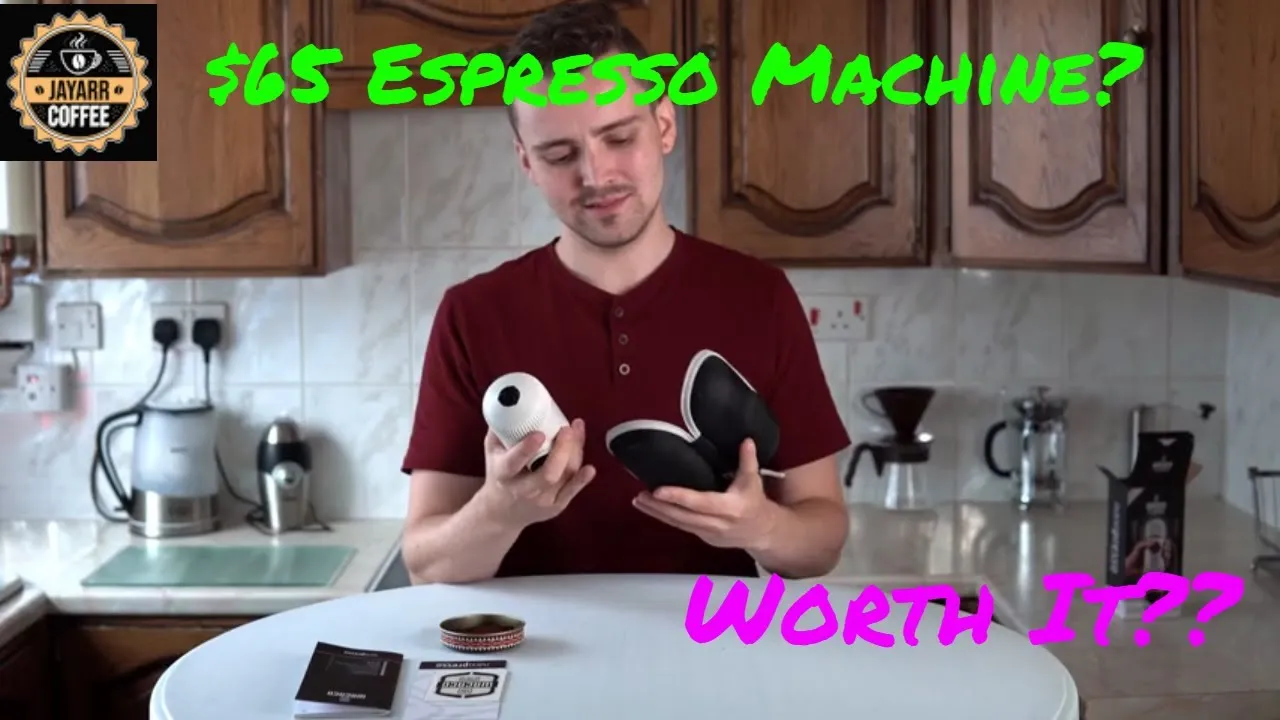
The Wacaco Nanopresso claims to deliver real espresso from a handheld device with no batteries and no electricity. We put it through a full unboxing, brew, and honest review.
What It Is
A mechanical pump system you operate by hand. No batteries, no electricity — just physics, leverage, and muscle power. Weighs 336 grams (about 12 ounces), fits in a backpack, and generates up to 18 bars of pressure — more than most home espresso machines.
What’s Inside
The design is clever. The base doubles as a drinking cup with storage for a cleaning brush and measuring scoop. The water chamber holds 80ml. The filter basket uses a reusable metal filter. Everything fits together snugly — it feels like a real product, not a gimmick.
How to Brew
- Grind: 8–10 grams, fine (between table salt and fine sand). The included scoop holds about 8g.
- Tamp: Use the scoop as a tamper. Firm and level.
- Water: Heat to 91–95°C (195–200°F). Fill to the safety line (about 80ml).
- Assemble and pump: About 8 pumps to build pressure, then 20 more to extract the full shot. One pump per second. Easier than expected.
Total extraction takes about 25–30 seconds — same timing as a proper espresso machine.
Does It Actually Taste Good?
Yes. Smooth, buttery, genuinely enjoyable. No bitterness, no watery thinness. Real crema formed on top — you can’t fake crema, and its presence confirms the machine is generating sufficient pressure for proper extraction.
Is it identical to a shot from a skilled barista on a $5,000 machine? No. Side by side, you’d notice the difference. But for a portable, hand-powered device, this is remarkably close to the real thing.
Versus the Competition
Vs. Minipresso (Wacaco’s older model): The Nanopresso generates 18 bars vs. 8 bars, requires less effort, and is smaller. Go with the Nanopresso.
Vs. budget home machines: The Nanopresso actually produces better espresso than most sub-$125 home machines. Sufficient pressure makes a real difference.
Vs. other portables (Cafflano, Staresso, Picopresso): The Nanopresso sits in the sweet spot of ease of use, pressure capability, and price.
Vs. the AeroPress: Different drinks entirely. The Nanopresso makes genuine espresso with crema and concentrated intensity. The AeroPress makes clean, smooth coffee that’s more like a strong filter brew. The AeroPress is more versatile; the Nanopresso is more specific. Choose based on whether you want espresso specifically or flexible manual brewing.
The Accessories
Barista Kit: Larger reservoir, 16g filter basket, better tamper, bigger cup. Makes double shots and lungo-style drinks possible.
Nespresso adapter: Use Original Line Nespresso pods. Practical for travel when you can’t grind fresh.
Practical Considerations
- You need hot water. The Nanopresso can’t heat it. Bring a kettle, thermos, or camping stove.
- Fresh grinding is best. A small hand grinder becomes part of your travel kit for the best results. See our coffee grind size guide for the right grind target (fine — between table salt and fine sand).
- There’s a learning curve. The first shot might not be perfect. By the third or fourth, you’ll have it dialed in.
- Cleaning is slightly tedious — more parts than ideal, but nothing difficult. The puck pops out cleanly.
Who Should Buy It
- Travelers who refuse to settle for hotel coffee
- Campers and hikers who want real espresso outdoors
- Curious enthusiasts who enjoy the hands-on ritual
Who Should Skip It
- Home espresso lovers — it won’t replace a proper machine. Our espresso machines under $500 guide covers the right options if a kitchen setup is what you need.
- Non-espresso drinkers — get a lightweight pour-over setup instead
- Ultralight backpackers — 336g matters when every ounce counts
The Bottom Line
At $60–90 USD, the Nanopresso is a solid investment for anyone who values good coffee on the move. It makes genuine espresso — not just something espresso-adjacent — from a device that fits in your hand. The crema is real, the pressure is sufficient, and the process is faster and easier than expected.
If your destination has a microwave or kettle (most hotel rooms do), hot water is a solved problem. Pair it with a good travel mug to keep the shot at drinking temperature, and you’ve got a complete travel espresso setup.
Some links above are affiliate links. If you purchase through them, we earn a small commission at no extra cost to you.
Frequently Asked Questions
- Does the Nanopresso make real espresso?
- Close to it. The Nanopresso generates up to 18 bars of pressure (more than most home machines) and produces a shot with real crema, proper extraction timing (25–30 seconds), and genuine body. Side by side with a $5,000 commercial machine, you'd notice the difference — but for a hand-powered portable device at $60–90, the quality is remarkably close. It's real enough that most people would call it espresso.
- Do you need electricity or batteries for the Nanopresso?
- No. It's entirely mechanical — you build pressure through a hand pump (about 28 pumps total). You do need hot water though, so bring a kettle, thermos, or camping stove. The lack of electronics makes it extremely reliable and travel-friendly. No batteries to die, no parts to break.
- Can you use Nespresso pods with the Nanopresso?
- Yes, with the optional Nespresso adapter accessory. It accepts Original Line Nespresso pods (not Vertuo). This is practical for travel when you can't grind fresh — though freshly ground coffee will always produce a better shot. The adapter sells separately.
- How does the Nanopresso compare to the AeroPress for travel?
- Different drinks. The Nanopresso makes genuine espresso with crema and concentrated intensity. The AeroPress makes clean, smooth coffee that's more like a strong filter brew. The Nanopresso is smaller and lighter (336g), but the AeroPress is more versatile — it makes a wider range of drink styles and is nearly indestructible. Choose based on whether you want espresso specifically or flexible manual brewing.