Everyone can taste the difference between terrible coffee and good coffee. The interesting question is whether you can taste the difference between good coffee and great coffee — and whether you can articulate why one cup from Ethiopia tastes like bergamot and citrus while another from the same country tastes like blueberry jam. That ability isn’t a gift. It’s a skill, and it follows a predictable learning curve.
James Hoffmann puts it simply: comparative tasting is the fastest way to develop your palate. Taste two coffees side by side and differences that would be invisible in isolation become obvious even to beginners. This guide lays out a structured 8-week progression that takes you from “I like this coffee” to “this is a washed Ethiopian with citric acidity and jasmine florals, probably Yirgacheffe, maybe 10 days post-roast.” No special equipment required beyond two cups and a willingness to pay attention.
What You’re Actually Training
Coffee contains over 900 identified flavor-producing molecules and more than 800 volatile aromatic compounds. Your nose and tongue are already capable of detecting these — the bottleneck is your brain’s ability to recognize, categorize, and name what it’s sensing.
Palate training is pattern recognition training. You’re building a mental library of sensory references that your brain can match against future cups. The first time you taste malic acidity in a Guatemalan coffee, it’s just “something tart.” After you’ve tasted a Granny Smith apple and then immediately tasted that same tartness in the cup, your brain permanently files that connection. The next Guatemalan that crosses your lips triggers the match instantly.
The five dimensions you’re learning to evaluate, as described by Hoffmann:
- Sweetness — The most important quality indicator in specialty coffee. All good coffee should taste sweet. If it doesn’t, something went wrong in the chain from farm to cup.
- Acidity — Desirable brightness, not sourness. Pleasant acidity tastes like fruit. Unpleasant acidity tastes like vinegar. The difference is both a quality signal and a roast/extraction indicator.
- Mouthfeel/Body — The tactile weight and texture of the liquid. Ranges from light and tea-like to heavy and syrupy. This is a physical sensation, not a flavor.
- Balance — How well the elements work together. A balanced cup doesn’t mean “middle of the road” — it means no single element dominates inappropriately.
- Flavor/Finish — Specific descriptors and aftertaste duration. This is where the SCA Flavor Wheel vocabulary becomes useful.
Weeks 1-2: Same Coffee, Different Brew Methods
Brew method comparison is the fastest way to understand what extraction actually does to flavor. Brew the same coffee two different ways on the same day. The ideal pairing is French press versus pour-over, because they produce the most dramatic difference in body and clarity from identical beans.
French press passes all oils and fine particles into the cup. The result is heavy, rich, and round — flavors blend together. Pour-over through a paper filter strips oils and fines, producing a lighter, brighter, more transparent cup where individual flavors separate and present distinctly.
Taste them side by side. Focus only on mouthfeel at first. Which feels heavier on your tongue? Which feels cleaner? Can you identify the moment the French press liquid leaves a slight coating compared to the pour-over’s clean finish? This body-vs-clarity axis is the foundation for everything else.
Do this at least 3 times in two weeks with different coffees. A light-roast African coffee will show the biggest contrast. A dark Brazilian will show less — heavy either way.
Weeks 3-4: Same Origin, Different Roast Levels
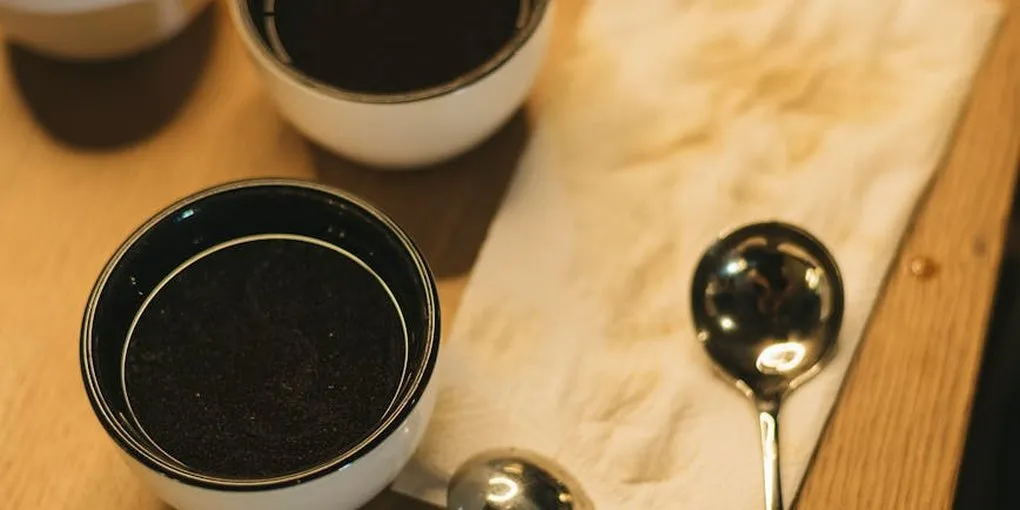
Roast level is the single biggest variable in how a coffee tastes, and side-by-side comparison makes the mechanism obvious. Buy the same single-origin coffee in two roast levels (light and medium-dark) from the same roaster if possible. Cup them side by side using the home cupping protocol.
The light roast will be brighter, more acidic, more origin-forward. You’ll taste more of the coffee’s inherent character — the flavors that come from variety, processing, and terroir. The darker roast will be sweeter in a caramelized way, with more bitterness, more body, and a longer finish. Origin character gets progressively buried under roast character as you go darker.
This is where you start to notice chlorogenic acid degradation in real time. Light roasts retain more chlorogenic acids (the primary source of bitterness and astringency in green coffee). As roasting continues, those acids break down into quinic acid and caffeic acid. The acidity-to-bitterness transition isn’t gradual — there’s a sweet spot in the middle where residual bright acids meet emerging caramelized sugars, and that’s where most people find their preference.
Write down three words for each cup. Don’t worry about being “right.” The act of forcing yourself to name what you taste builds the vocabulary pathways that make future identification faster.
Weeks 5-6: Side-by-Side Origins
Geographic fingerprints are real, and three sessions of comparative tasting are enough to make them unmistakable. The classic training trio is Ethiopian vs. Colombian vs. Sumatran. These three origins produce dramatically different cups that even beginners can tell apart after one or two sessions.
Ethiopian (washed): Citrus, bergamot, florals, candied fruit. The acidity is bright and complex. Yirgacheffe specifically is explosively aromatic — if you’ve never smelled a freshly ground washed Yirgacheffe, it’s genuinely startling.
Colombian: Balanced, nutty, caramel, pleasant acidity. Consistently centered in the Flavor Wheel’s “sugar browning” zone — chocolate, vanilla, honey, nuts. This is the baseline that most people think of as “good coffee.”
Sumatran: Earthy, woody, herbal, heavy body, low acidity. The giling basah (wet-hulled) processing produces a profile unlike anything else — dense, brooding, and savory where Ethiopians are bright and floral.
Taste all three in the same session. Focus on the acidity differences first (Ethiopian = bright, Sumatran = almost absent), then body (Sumatran = heaviest, Ethiopian = lightest if washed), then specific flavors. After two sessions with these three, you’ll reliably distinguish African, Central American, and Indonesian coffees.
Weeks 7-8: Blind Tasting
Blind tasting is where pattern recognition either proves itself or reveals its gaps. Have someone else prepare two or three cups without telling you the origin, roast level, or processing method. Taste each one and write down: origin guess, roast level guess, processing guess (washed/natural/honey), and three flavor descriptors.
You will be wrong about specifics. That’s fine. The point is whether your pattern matching has developed to the point where you can narrow down the continent, identify the roast range, and name actual flavor compounds rather than just saying “good” or “okay.”
If you can consistently distinguish an African coffee from a Central American from an Indonesian in blind tasting after 8 weeks of structured practice, you’ve developed a functional specialty coffee palate. That’s a real skill — most people who drink coffee daily for decades never develop it because they never taste comparatively.
Triangle Testing: The Professional Calibration Tool
Triangle testing (triangulation) is the core exercise that Q-Graders use to calibrate their palates. It’s brutally simple and remarkably effective.
Setup: Three cups. Two contain the same coffee, one contains a different coffee. All three look identical. Your job is to identify the odd one out.
Random guessing gets you a 33% success rate. You need 5 out of 6 correct across sessions for statistical significance. Track your results.
Progression:
- Easy: Ethiopian Natural vs. Brazilian (dramatically different — almost everyone gets this)
- Medium: Two different washed Central Americans (Guatemala vs. Costa Rica — similar but distinct)
- Hard: Same coffee, two different grind settings (only extraction differences, no origin cues)
- Expert: Same coffee, same grind, different water recipes (see water recipes compared)
Triangle testing exposes your actual discrimination threshold. You’ll discover which flavor dimensions you’re strongest at (most people start with acidity) and which need more training (body differences are typically hardest for beginners).
Build Your Own Flavor References
The professional tool for learning coffee flavor vocabulary is the Le Nez du Cafe kit — 36 aroma vials covering the range of coffee aromatics. It costs over $300. You can build a comparable DIY version from grocery store items for under $20.
Fruit references:
- Lemon peel: citric acidity (common in washed high-altitude coffees)
- Blueberry jam: Ethiopian natural process signature
- Dried apricot: stone fruit (Central American, honey-processed)
- Apple juice: malic acidity (Guatemalan, Costa Rican)
- Raisins: natural process sun-dried character
Nut and chocolate:
- Roasted almonds: Central and South American baseline
- Peanut butter: Brazilian, medium-roast signature
- Dark chocolate (70%+): bittersweet cocoa, common in Colombian and Guatemalan
Sweet references:
- Honey: light caramelization
- Brown sugar: medium roast caramelized sugars
- Molasses: dark, bitter-edged sweetness
- Maple syrup: woody, caramelized sweetness
Defect references:
- Cardboard: stale coffee (oxidized)
- Rubber band: processing defect
- Dilute white vinegar: over-fermentation
- Burnt toast: over-roasted
Smell each reference, then immediately taste a cup of coffee. The connection becomes permanent after just a few repetitions.
Organic Acid Training: The Four Acids That Matter
Four organic acids define the character of acidity in coffee, and they taste completely different from each other. A 2023 study found that only citric acid consistently exceeds its sensory detection threshold in brewed coffee — but training on all four teaches you to recognize the character of acidity even when individual acids fall below detection thresholds due to matrix synergism and pH effects.
Citric acid: Dissolve food-grade citric acid in water, or use diluted lemon juice. Bright, clean, lemony. This is the dominant perceivable acid in coffee and the primary contributor to what we call “brightness.” Washed high-altitude coffees from Kenya and Ethiopia are loaded with it.
Malic acid: Bite into a Granny Smith apple. The smooth, round tartness is malic acid. Common in Central American coffees — Guatemala, Costa Rica, Honduras.
Phosphoric acid: Drink a sip of Coca-Cola. That sparkling, almost sweet-sour brightness is phosphoric acid. Found prominently in Kenyan coffees — it’s part of what makes Kenyan SL-28 so electric and distinctive. Unlike other organic acids, phosphoric acid concentration stays constant regardless of roast level — it’s controlled entirely by sourcing and terroir.
Acetic acid: One teaspoon of white vinegar in a cup of water. Sharp, vinegary. At low levels this contributes to complexity; at high levels it indicates a fermentation defect. Learn to recognize it so you can distinguish intentional fermentation character from a processing problem.
After a few sessions with these references, “bright” stops being a vague compliment and becomes a specific identification: “strong citric acidity, low malic — probably African rather than Central American.”
Common Training Mistakes
Palate fatigue is real and cumulative. Limit yourself to 3-6 coffees per session. Spit rather than swallow if you’re tasting more than three. Cleanse between samples with room-temperature water and plain crackers.
Tasting too hot. Coffee reveals different notes at different temperatures. Start at about 155 degrees F for first impressions, 140 degrees F for sweetness and specific notes, and below 120 degrees F for defects. Tasting only at serving temperature misses two-thirds of the information.
Priming bias. If tasting with friends, write your notes independently before comparing. Hearing “I get blueberry” primes your brain to find blueberry whether it’s there or not. Professional cuppers taste in silence until all scores are submitted.
Not keeping a journal. Writing forces specificity. “Good” is useless. “Bright citric acidity, medium body, caramel sweetness fading into a clean finish” is a data point you learn from.
What Q-Grader Certification Looks Like
The Q-Grader is the coffee industry’s sommelier equivalent. Administered by the SCA, it’s a six-day course with about 20 exams across 9 modules: cupping, triangulation, olfactory identification (using a 36-aroma kit), organic acid ID, sensory skills, roast identification, green grading, and a written exam. About 30% pass on their first attempt. There are roughly 4,000 certified Q-Graders worldwide, and the certification costs $1,500-2,000.
You don’t need a Q-Grader certificate. But the skills in this guide — triangle testing, acid identification, flavor vocabulary — are simplified versions of exactly what the certification tests. You’re training with the same exercises professionals use, just at a gentler pace.
The 30-Day Milestone
Most people notice a shift after about 30 days of structured sessions 2-3 times per week. One morning you’ll pour your usual coffee and notice a specific note you’ve never registered before. That’s the pattern-matching system kicking in.
Specific note identification — naming “blackcurrant” versus just “fruity” — develops over 3-6 months. Don’t rush it. Descriptions like “bright fruit acidity, medium body, long sweet finish” are perfectly legitimate and more useful than forcing an inaccurate specific.
The goal isn’t to become a Q-Grader. It’s to taste coffee with enough resolution to identify what you like, diagnose what went wrong, and make better purchasing decisions from the information on a coffee bag label. That’s achievable for anyone willing to taste two cups side by side for a few weeks.
Frequently Asked Questions
- Can I train my palate if I'm a supertaster or have a very sensitive tongue?
- Supertasters (people with more taste papillae) actually have an advantage in palate training — they detect bitterness and other flavors at lower concentrations. The challenge is that strong flavors can be overwhelming. If coffee at full strength is too intense, dilute it slightly or focus on lighter roasts with lower bitterness. The training exercises work the same way regardless of baseline sensitivity. You're training pattern recognition, not detection threshold — and supertasters tend to develop specific note identification faster once they learn to manage intensity.
- How often should I practice to see real improvement?
- Two to three sessions per week of 15-30 minutes each is the sweet spot. Daily is even better during the early weeks (1-4), but consistency matters more than frequency. A single weekly session will still produce noticeable improvement over 2-3 months, just more slowly. The most important habit is comparative tasting — always taste at least two coffees in the same session, even if one is just your usual morning cup alongside a new bag.
- Does smoking or drinking alcohol affect palate development?
- Smoking significantly dulls both smell and taste receptors, which makes training harder and slower. If you smoke, you'll still improve with practice, but expect the timeline to stretch. Alcohol temporarily reduces taste acuity — avoid tasting sessions after drinking. Both effects are partially reversible: former smokers typically regain significant sensory sensitivity within 2-4 weeks of quitting.
- What's the best single exercise if I only do one thing?
- Triangle testing. Buy two different single-origin coffees, brew three cups (two of one, one of the other), have someone present them randomly, and identify the odd one out. Do this once a week for a month. Triangle testing forces your brain to discriminate between similar flavors under pressure, which accelerates pattern recognition faster than any other single exercise. Start with obviously different coffees (Ethiopian vs. Brazilian) and progressively narrow the gap.
- Should I use the SCA Flavor Wheel when writing tasting notes?
- The Flavor Wheel is useful as a reference but don't force yourself to match its vocabulary if a descriptor doesn't genuinely match what you're tasting. Start from the center (broad categories like 'fruity' or 'nutty') and only move outward to specific descriptors ('blackberry' or 'hazelnut') when you're confident the match is real. The worst thing you can do is write 'jasmine' because it sounds sophisticated when what you actually taste is 'something floral.' Honest vague notes are more useful training data than impressive-sounding inaccurate ones.