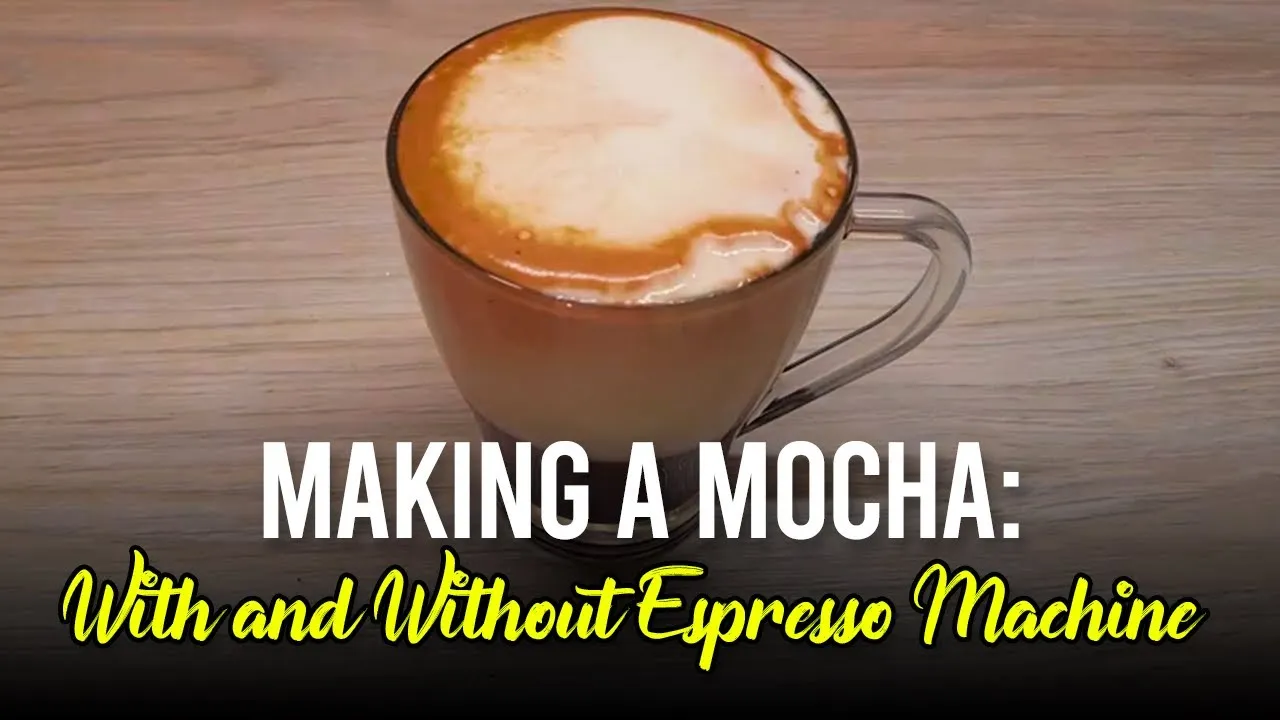
A mocha is espresso + chocolate + steamed milk. It’s one of the easiest espresso drinks to make at home — and one of the easiest to make badly, because most people use too much chocolate, not enough coffee, and end up with expensive hot chocolate.
Here’s how to get the balance right, with or without an espresso machine.
The Chocolate Decision
This is where most of the flavor comes from, so get it right:
Cocoa powder — Real chocolate flavor, minimal sweetness, cheap. Dutch-process cocoa is darker and more intense. Natural cocoa is slightly acidic and pairs well with coffee. The catch: it doesn’t dissolve in liquid. You need to bloom it first.
The bloom technique: Mix 1 tbsp cocoa powder with 2 tbsp hot water and 1 tbsp sugar or honey. Whisk until you get a smooth paste. This dissolves beautifully into espresso. Skip this step and you’ll get grainy clumps at the bottom of your cup.
Chocolate sauce/syrup — Convenient, dissolves instantly, consistent results. But most commercial syrups are mostly sugar with minimal chocolate flavor. Fine for a quick drink. Not great if you care about actual chocolate taste.
Best approach: Cocoa powder with the bloom technique. More flavor, less sugar, more control.
Method 1: With an Espresso Machine
Ingredients:
- 18g coffee, espresso grind
- 1 tbsp cocoa powder + 2 tbsp hot water + 1 tbsp sugar (or 1-2 tbsp chocolate syrup)
- 8 oz milk
Steps:
- Prepare your chocolate paste in the cup (bloom cocoa with hot water and sugar, whisk smooth)
- Pull a double shot directly into the chocolate paste
- Stir for 10 seconds — the chocolate and espresso must be fully integrated before milk goes in
- Steam milk to 150-155°F with light microfoam
- Pour steamed milk into the espresso-chocolate base
- Optional: dust with cocoa powder or add whipped cream
The key detail: Stir the espresso into the chocolate before adding milk. If you add milk first, the chocolate never fully dissolves and you get a sweet layer at the bottom.
Roast choice: Medium to medium-dark works best. The coffee needs enough intensity to stand up to chocolate. Light roasts get completely buried.
If you’re shopping for a machine, our espresso machine comparison covers the Gaggia, Breville Bambino, and Philips 3200 side by side.
Method 2: Without an Espresso Machine
You need concentrated coffee — regular drip won’t cut it. Three options:
Moka pot (best option): Fill the bottom chamber to just below the valve. Add medium-fine ground coffee to the basket, level but don’t tamp. Medium heat until you hear bubbling; remove from heat when the hissing gets loud. This produces about 2 oz of strong, espresso-like coffee.
AeroPress: Inverted method, 15g coffee to 60ml water (1:4 ratio), medium-fine grind, 1 minute steep, press slowly. Produces a concentrated shot.
French press: Use a much stronger ratio than normal — 1:10 coffee-to-water. 30g coffee to 300ml water, 4 minutes, press gently. Strain through a paper filter if you want a cleaner cup. Check our full French press guide for technique details.
Then: Same assembly as the espresso method — chocolate paste in cup, hot coffee in, stir, add heated milk.
Frothing Milk Without a Steam Wand
Handheld frother (about $15-25): Heat milk to 150°F in a saucepan, then froth just below the surface for 20-30 seconds. Best budget option.
Jar method: Microwave milk in a sealed jar for 45-60 seconds (not boiling). Cap tightly, shake vigorously for 15 seconds. Pour foam on top.
Just hot milk: Honestly? Heat milk in a pan to 150°F and pour it in. No foam. A mocha doesn’t need foam to taste great — the chocolate provides enough texture and richness on its own.
Ratio Guide
The balance between coffee, chocolate, and milk determines what kind of drink you get:
Start with the balanced version and adjust. More chocolate isn’t always better — at some point the coffee disappears and you’re just drinking hot chocolate with caffeine.
Variations Worth Trying
Iced mocha: Make the chocolate paste, add espresso, stir. Pour over a full glass of ice, then add cold milk. Works better with chocolate syrup (it dissolves more easily in cold liquid). You can also use Instant Pot cold brew concentrate in place of espresso.
Spiced mocha: Add a pinch of cinnamon or cayenne to your chocolate paste before adding espresso. Cinnamon is safe and pleasant. Cayenne adds subtle heat that works surprisingly well with dark chocolate.
White mocha: Replace cocoa with melted white chocolate or white chocolate syrup. Sweeter, creamier, pairs better with lighter roasts.
Troubleshooting
Tastes like hot chocolate, not mocha: Too much chocolate, not enough coffee. Cut chocolate by half or use a triple shot.
Chocolate sinks to the bottom: Didn’t stir the chocolate and espresso together before adding milk. Always integrate them first.
Too sweet: Switch from syrup to cocoa powder. Or reduce the sugar in your cocoa paste.
Coffee flavor is invisible: Your coffee isn’t strong enough. Use a double shot, a Moka pot, or a concentrated AeroPress brew. Regular drip coffee won’t work.
If you enjoy coffee drinks with a twist, the cortado is worth learning next — espresso cut with a small amount of warm milk, no chocolate required.
Some links above are affiliate links. If you purchase through them, we earn a small commission at no extra cost to you.
Frequently Asked Questions
- What's the difference between a mocha and hot chocolate?
- A mocha is espresso + chocolate + steamed milk — the coffee flavor should be at least equal to the chocolate. Hot chocolate is just chocolate + milk with no coffee. If your mocha tastes like hot chocolate with a hint of caffeine, you're using too much chocolate or not enough coffee. A double shot with 1 tablespoon of cocoa is the balanced sweet spot.
- Can you make a mocha without an espresso machine?
- Yes. You need concentrated coffee — regular drip is too weak. A Moka pot is the best substitute (produces about 2 oz of strong, espresso-like coffee). An AeroPress at a 1:4 ratio also works well. Even a French press at a very strong 1:10 ratio can do the job. The key is intensity — the coffee has to stand up to the chocolate and milk.
- Is cocoa powder or chocolate syrup better for mochas?
- Cocoa powder produces better flavor — more genuine chocolate taste with less sugar and more control. The catch is that it doesn't dissolve directly in liquid. You need to "bloom" it first: mix 1 tablespoon cocoa with 2 tablespoons hot water and 1 tablespoon sugar, whisk into a smooth paste, then add your espresso. Syrup is more convenient but most brands are mostly sugar with minimal chocolate flavor.
- What's the best coffee roast for a mocha?
- Medium to medium-dark. The coffee needs enough intensity to stand up to chocolate and milk. Light roasts get completely buried — their delicate flavors disappear behind the chocolate. A medium-dark roast with natural chocolate or nutty notes creates a cohesive drink where coffee and chocolate complement each other rather than competing.