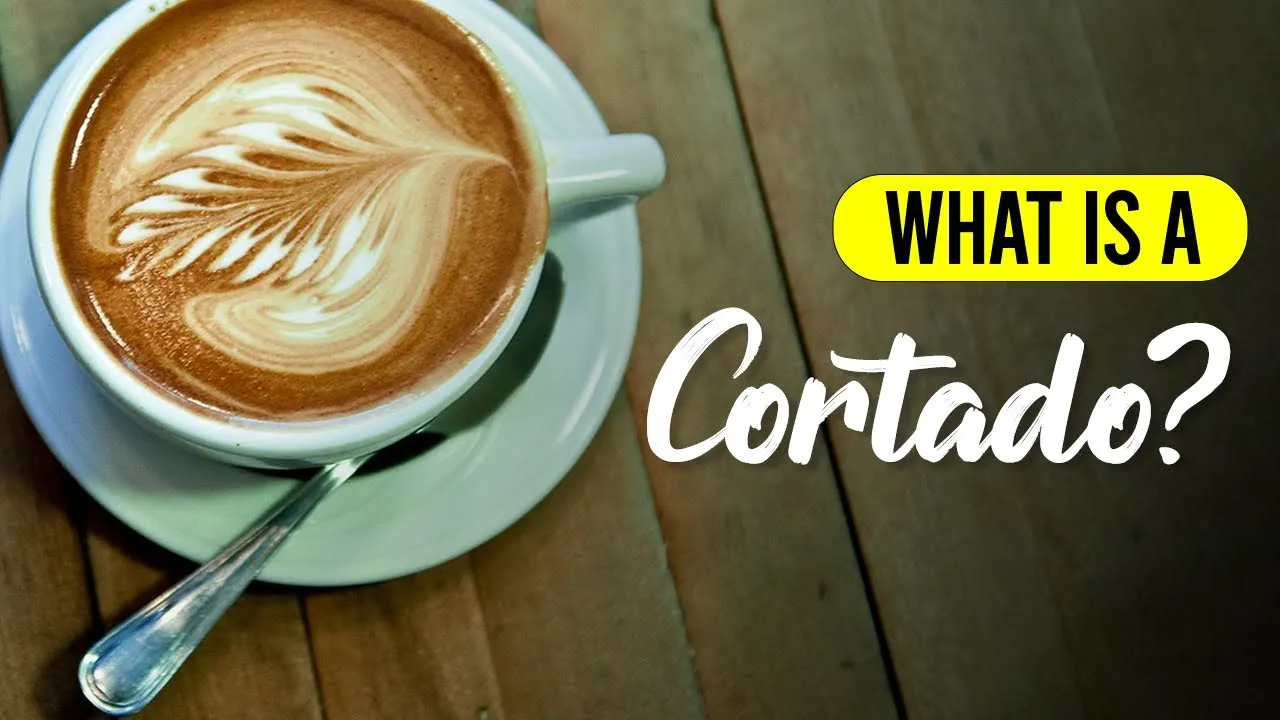
“Cortado” means “cut” in Spanish. That’s the whole concept: espresso cut with an equal measure of steamed milk. No foam, no flavoring, no 16-ounce cup. Just two ingredients in perfect balance.
What’s in a Cortado
- 2 oz espresso (a double shot)
- 2 oz steamed milk (warm and silky, minimal to no foam)
- Total volume: about 4 oz, served in a small glass
That’s it. The 1:1 ratio is what defines the drink. The milk softens the espresso’s intensity without burying the coffee flavor. You taste both ingredients working together, not one dominating the other.
Where It Came From
The cortado originated in Spain’s Basque region in the early 20th century. It spread through the Iberian Peninsula and into Latin America, where it remains a daily staple from Madrid to Buenos Aires. The Spanish approach to coffee — small, intentional, well-balanced — is the cortado philosophy in a nutshell.
In the US, it gained traction during the third-wave coffee movement. Blue Bottle Coffee in San Francisco popularized it in a specific 4.5-ounce Libbey glass called the “Gibraltar.” American baristas started using “cortado” and “Gibraltar” interchangeably — technically the Gibraltar is just the glass, but the drinks are identical.
How to Make One at Home
The espresso: Pull a double shot (about 2 oz). Use fresh beans, a medium-fine grind, and aim for clean extraction with visible crema. This shot won’t be hidden under milk, so quality matters more than in a latte.
The milk: Steam to 150–155°F (65–68°C) with minimal foam — think microfoam, not cappuccino froth. You want tiny, dissolved bubbles that create a silky texture, not a visible foam layer. The milk should look glossy, not puffy.
The pour: Pour steamed milk into the espresso slowly, letting them integrate. The finished drink should look uniform — not a layer of espresso under a layer of milk, but a single cohesive beverage.
Tip: The no-foam approach has a practical benefit beyond aesthetics. Without a thick foam cap insulating the top, a cortado cools to a comfortable drinking temperature almost immediately. No waiting, no burnt-tongue risk.
The Espresso Drink Spectrum
The cortado makes more sense when you see where it sits relative to other drinks. All of these use roughly the same amount of espresso — the difference is how much milk goes in and how it’s textured. If you’re curious how the flat white fits in, or the specifics of ristretto vs. lungo shots, those posts fill in the surrounding territory.
The cortado sits at the exact midpoint. Enough milk to take the edge off the espresso, not enough to make it a milk drink.
Why Order a Cortado
You actually taste the coffee. A 12-ounce latte contains so much milk that the espresso becomes a background flavor. At 4 ounces total, a cortado lets the espresso’s origin character, roast profile, and sweetness come through clearly. If your café uses excellent beans, this is the drink that shows them off.
It’s genuinely balanced. The milk doesn’t overpower the coffee. The coffee doesn’t overpower the milk. Neither ingredient is compromising — they’re complementing. It sounds like a small distinction, but once you taste it, you notice the difference.
It’s harder to fake. A latte can hide mediocre espresso under a gallon of steamed milk. A cortado can’t. Every element — the extraction quality, the milk texture, the integration — is exposed. When it’s done right, it’s one of the most satisfying coffee experiences available. When it’s done wrong, you know immediately.
No foam, no fuss. If you find cappuccino foam annoying (it doesn’t integrate with the drink, it just sits on top and gives you a milk mustache), the cortado solves that problem. The microfoam is dissolved into the milk, not floating above it.
How to Order If They Don’t Know
Most specialty shops know what a cortado is. If you get a blank stare:
“Double shot of espresso with an equal amount of steamed milk, no foam — about 4 ounces total.”
That’s clear enough for any barista to execute. Avoid asking for a “small latte” — that’ll get you 8 ounces of milk with espresso, which is a different drink entirely.
When to Choose Something Else
The cortado isn’t the right drink for every moment:
- Want to taste pure espresso? Order a macchiato or a straight shot.
- Want something to sip over 20 minutes? A latte or flat white gives you more volume.
- Adding flavored syrup? Don’t put it in a cortado. The whole point is tasting the espresso and milk, not vanilla syrup.
- Iced? Cortados work iced (espresso over ice with cold milk), but the traditional drink is hot.
The cortado works best as a quick, intentional coffee moment — not a beverage to nurse through a long meeting.
The Cortado Around the World
The cortado isn’t just a third-wave trend — it has deep roots:
Spain — Where it started. Still the default coffee order in many Spanish cafés. Ask for a “cortado” and you’ll get exactly the 1:1 ratio.
Cuba — The cortadito is a cafecito (moka pot espresso with espuma) cut with steamed milk. Same concept, different base coffee. Sweeter and more intense than a Spanish cortado.
Portugal — The galão is related but larger — more milk, closer to a latte in proportion but served in a glass.
Australia — The piccolo latte is essentially a cortado served in a small latte glass. Single ristretto shot with steamed milk, 3–4 oz total.
US — The Gibraltar (named after the Libbey Gibraltar glass Blue Bottle popularized) is functionally identical to a cortado. Some shops distinguish them; most treat the terms as interchangeable.
If you’re interested in home brewing equipment for pulling shots like these, this roundup of espresso machines under $500 covers solid options at every price point. And if you want to dial in grind size for better extraction, the coffee grind size guide is worth a read.
Some links above are affiliate links. If you purchase through them, we earn a small commission at no extra cost to you.
Frequently Asked Questions
- What's the difference between a cortado and a flat white?
- Size and milk texture. A cortado is 4 oz total (1:1 espresso to milk) with no foam — just steamed milk. A flat white is 5–6 oz with microfoam (velvety, glossy texture from tiny air bubbles). The cortado is smaller, more intense, and lets you taste the espresso more directly. The flat white has more milk volume and a creamier mouthfeel from the microfoam. Both are coffee-forward compared to a latte.
- Can you make a cortado without an espresso machine?
- You can approximate one. Use a Moka pot or a concentrated AeroPress shot (18g coffee, 60ml water, fine grind) as your base. Heat 2 oz of milk to 150°F without frothing it — a cortado has no foam, just warm steamed milk. Pour the milk into the concentrated coffee. It won't be identical (no crema, different extraction), but it captures the essential 1:1 balance.
- What is a Gibraltar coffee?
- A Gibraltar is functionally identical to a cortado. The name comes from the Libbey Gibraltar glass that Blue Bottle Coffee in San Francisco used to serve the drink. American baristas started using "cortado" and "Gibraltar" interchangeably. Some shops distinguish them (a Gibraltar may use a slightly different milk ratio), but in practice they're the same drink.
- Why is a cortado so small?
- Because the whole point is balance, not volume. At 4 oz with a 1:1 ratio, you taste both the espresso and the milk equally — neither dominates. Add more milk and the espresso becomes a background flavor (that's a latte). Reduce the milk and you're basically drinking a macchiato. The small size is the feature, not a limitation.