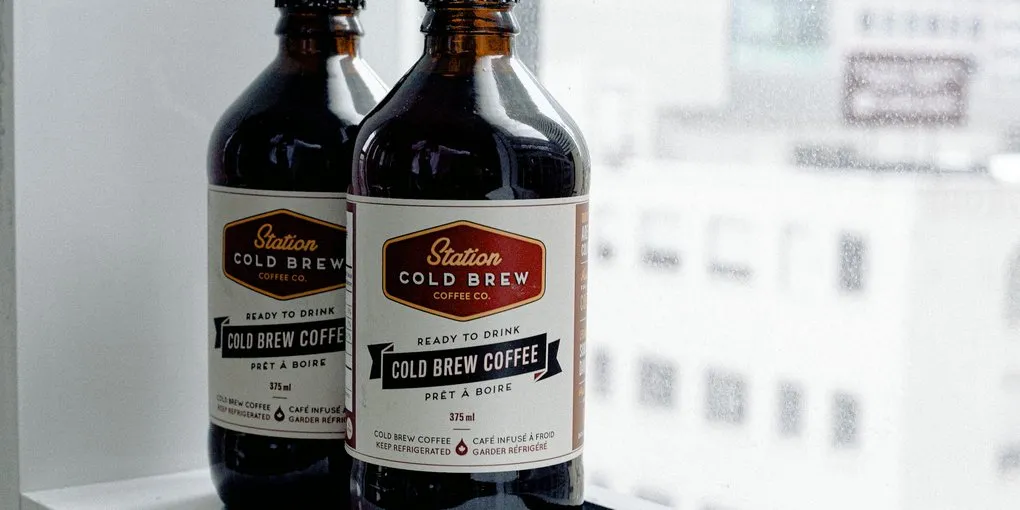
Cold brew is an immersion brewing method where ground coffee steeps in cold or room-temperature water for an extended period, typically 12 to 24 hours. Unlike every hot brewing method, cold brew never touches heated water. This single variable — temperature — changes the extraction chemistry fundamentally. Cold water extracts 28–50% fewer total acids (measured as titratable acidity) than hot water, produces fewer melanoidins, and dissolves fewer of the bitter volatile compounds that dominate hot-brewed coffee. The result is a smooth, sweet-leaning concentrate that, when properly diluted, showcases a coffee’s chocolate, nutty, and caramel notes while suppressing sharp acidity and harshness.
Cold brew concentrate is different from ready-to-drink cold brew. Concentrate uses a high coffee-to-water ratio (1:4 to 1:8 by weight) and is designed to be diluted before drinking. Ready-to-drink cold brew uses a lower ratio (1:12 to 1:15) and is consumed as-is. Understanding the difference — and the science behind steeping time, grind size, and dilution — means you can produce consistently excellent cold brew at home with nothing more than a jar, a grinder, and a filter.
The Science of Cold Extraction
Cold water extracts coffee compounds through the same dissolution process as hot water, but dramatically slower. Fuller and Rao’s 2017 research in Scientific Reports established the two-phase extraction kinetics:
Phase 1 — rapid surface extraction (0 to 3 hours): Soluble compounds on broken cell surfaces dissolve quickly even in cold water. Caffeine, chlorogenic acids, and easily accessible sugars enter the solution during this initial phase.
Phase 2 — slow diffusion (3 to 7+ hours): Extraction from intact cells requires compounds to diffuse through cell walls. This phase is governed by molecular diffusion, which is temperature-dependent — cold water diffuses slowly.
Equilibrium (~6 to 7 hours): Caffeine and chlorogenic acids reach equilibrium and stop extracting in meaningful quantities. Steeping beyond 7 hours does not significantly increase extraction of these primary compounds. However, larger molecules — melanoidins, lipids, and some bitter polyphenols — continue to dissolve slowly.
This timeline explains a finding from Cordoba et al. (2019): a 14-hour cold brew scored higher in blind tasting than a 22-hour brew for sweetness, fruity and floral notes, and creamy body. The longer extraction added undesirable bitterness from compounds that were still dissolving after the primary acids and sugars had already reached saturation. More time does not always mean more flavor. Past a point, it means worse flavor.
Why Cold Brew Tastes Different
The chemistry behind cold brew’s distinctive smoothness goes beyond “less acid.” Research using gas chromatography and mass spectrometry (GC-MS) has identified specific differences:
- 28–50% fewer total acids (titratable acidity) compared to hot brew, despite similar pH values (4.85–5.13 for both). This is a critical distinction. The “less acidic” reputation of cold brew comes from lower titratable acidity, not lower pH. A pH meter would show similar readings; your palate perceives a genuine difference because titratable acidity measures the total acid load, including buffered acids.
- Less quinic acid: Chlorogenic acid hydrolysis is temperature-dependent. Cold water produces less CGA breakdown, which means less quinic acid — the bitter, astringent compound responsible for pot coffee’s harsh taste.
- Fewer melanoidins: These high-molecular-weight Maillard products are poorly soluble in cold water. The result is lighter color, lower body, and lower antioxidant activity compared to hot brew (melanoidins are potent antioxidants).
- Fewer volatiles: GC-MS found 36 volatile compounds in cold brew, but 25 were present at higher concentrations in hot brew. The absence of certain bitter volatiles lets sweet and fruity notes emerge more clearly.
- Less oil extraction: Cold water extracts fewer lipids, producing a cleaner mouthfeel than hot immersion methods like French press.
The net effect is a cup profile that emphasizes chocolate, nut, and caramel while reducing brightness, bitterness, and complexity. This is why cold brew pairs well with darker roasts and blends — they bring body and sweetness that cold extraction highlights. Light-roast single origins often taste muted as cold brew because the floral and citrus volatiles that make them interesting in hot brewing largely stay behind.
Concentrate Ratios
The ratio of coffee to water determines whether you are making concentrate (needs dilution) or ready-to-drink cold brew. Concentrate is more versatile — you can dilute to your preferred strength, build iced lattes, or serve at varying strengths to different drinkers. It also stores more efficiently because the higher solute concentration takes up less fridge space and inhibits some degradation.
Concentrate ratios (1:4 to 1:8 by weight):
| Ratio | Coffee | Water | Strength | Dilution Needed |
|---|---|---|---|---|
| 1:4 | 100g | 400g | Very strong | Dilute 1:2 to 1:3 |
| 1:5 | 100g | 500g | Strong | Dilute 1:1.5 to 1:2 |
| 1:6 | 96g | 600g | Standard concentrate | Dilute 1:1 to 1:2 |
| 1:7 | 80g | 560g | Moderate concentrate | Dilute 1:1 |
| 1:8 | 75g | 600g | Light concentrate | Dilute 1:0.5 to 1:1 |
Ready-to-drink ratios (1:12 to 1:15 by weight):
| Ratio | Coffee | Water | Notes |
|---|---|---|---|
| 1:12 | 50g | 600g | Stronger, for those who like bold cold brew |
| 1:14 | 43g | 600g | Balanced |
| 1:15 | 40g | 600g | Closest to SCA hot brew standard (55g/L) |
The standard recommendation from coffee educator Jessica Easto is a 1:6 concentrate using a French press: 96 grams of coffee to 600 grams of cold water, steeped for 12 hours, then diluted 1:1 before serving. This produces a final drinking strength in the range of 1:12 to 1:15, comparable to the SCA’s hot brew standard. If this is your first batch, start there — 1:6 is the most forgiving ratio and produces a concentrate that tolerates a wide range of dilutions.
Grind Size
Grind size affects extraction speed, not what compounds extract. Finer grinds extract the same compounds faster; coarser grinds need more time to reach the same result.
Coarse grind (French press setting, ~1000–1400 microns): The standard recommendation. Steep 12–18 hours. This is the most forgiving approach — the wide timing window means a few hours more or less will not dramatically change the cup. Best sensory scores in research. Most cold brew guides default here for good reason.
Medium grind (~600–800 microns): Steep 8–12 hours. Extracts faster, produces richer body. The timing window is narrower — the difference between 8 and 12 hours is more noticeable than between 12 and 18 hours at coarse.
Medium-fine grind (~400–500 microns): Steep 6–8 hours. More complexity but higher risk of astringency and more sediment in the final product. Requires careful filtration.
For concentrate, coarse grind is the safest starting point. It gives you a wide margin of error on timing and produces a clean concentrate that filters easily. If you want to experiment with faster extraction, move to medium gradually and reduce steep time proportionally. The risk of overextraction increases with finer grinds and longer times because those slowly-dissolving bitter polyphenols continue extracting even after the desirable compounds plateau. A consistent burr grinder matters here — see the conical vs flat burr comparison for the choice that affects cold brew clarity.
Steeping Time: The 12-Hour Standard and Why It Works
The 12-hour steep has become the default recommendation across most cold brew guides, and the science supports it. By 12 hours at coarse grind, caffeine and chlorogenic acids have reached or nearly reached equilibrium. The desirable extraction is largely complete. A few more hours add subtle complexity from slowly dissolving compounds. Past 18 hours, the risk of overextraction begins to outweigh any marginal gains.
Practical time windows by grind:
| Grind | Minimum | Sweet Spot | Maximum |
|---|---|---|---|
| Coarse | 10 hours | 12–16 hours | 18–20 hours |
| Medium | 6 hours | 8–12 hours | 14 hours |
| Medium-fine | 4 hours | 6–8 hours | 10 hours |
Temperature also affects timing. Room temperature water (around 20–22 degrees Celsius) extracts faster than refrigerator temperature water (around 4 degrees Celsius). A fridge steep needs the longer end of the time range. A counter steep needs the shorter end. Most people steep in the refrigerator for food safety and convenience, so the 12-hour recommendation assumes cold temperatures.
The overnight method: Start the steep before bed, filter in the morning. This naturally lands at 8–12 hours depending on your sleep schedule, which falls squarely in the sweet spot for coarse and medium grinds. It is not coincidence that this timing is universally recommended — it is genuinely the optimal window for most setups.
How to Make Cold Brew Concentrate
Equipment needed:
- Any container (Mason jar, French press, pitcher, dedicated cold brew maker)
- Burr grinder
- Kitchen scale
- Filter (French press plunger, cheesecloth, paper filter, or fine-mesh sieve)
Method:
- Weigh 96 grams of coffee. Grind coarse (French press setting; reference: roughly Baratza Virtuoso 25 — see the grind size guide).
- Add the grounds to your container.
- Pour 600 grams of cold or room-temperature water over the grounds. Stir gently to ensure all grounds are saturated. Dry pockets produce uneven extraction.
- Cover and place in the refrigerator.
- Steep for 12–16 hours.
- Filter. If using a French press, press the plunger slowly to avoid pushing fines into the liquid. For a cleaner concentrate, pour through a paper filter after the initial strain — this removes oils and fine sediment. A paper-filtered cold brew is noticeably cleaner and stores longer.
- Transfer the concentrate to a clean, airtight container. Refrigerate.
If you want a device-specific walkthrough using purpose-built dual-filter equipment, the Toddy system tutorial covers a 1:5 immersion at scale (340g coffee / 1,680ml water) with felt + paper filtration. The CoffeeSock reusable filter is a lower-overhead alternative that produces a richer body than paper alone.
How to Dilute
The goal is a final drinking strength similar to what you would get from a hot brew method: roughly 1:15 to 1:18 coffee-to-water when all dilution is accounted for.
Standard 1:6 concentrate dilution:
| Serving Style | Concentrate | Dilutant | Result |
|---|---|---|---|
| Over ice | 100ml | 100–150ml water + ice | Refreshing, standard strength |
| With milk/cream | 80–100ml | 100ml milk | Creamy, latte-style |
| Mixed with tonic | 60ml | 150ml tonic water | Fizzy, citrus-forward (surprisingly good) |
| Hot (yes, really) | 80ml | 120ml hot water | Quick americano-style, smoother than hot brewed |
| Straight (no dilution) | 60ml | None | Intensely concentrated, espresso-like |
Start with a 1:1 dilution (equal parts concentrate and water or milk) and adjust from there. If it tastes thin, use less dilutant. If it tastes harsh or overwhelming, add more. Personal preference varies, and the beauty of concentrate is that you dial in each serving individually.
Shelf Life
Research by Lopane et al. (2024, Food Science & Nutrition) tested cold brew concentrate storage and found encouraging results: refrigerated, airtight concentrate remained microbiologically safe for 42 days. No pathogenic bacteria grew during the entire study period.
However, flavor degradation is the real limiting factor. The same study detected “strange flavors” and increased sourness after approximately 6 weeks. The primary degradation mechanism is lipid oxidation, which produces stale, cardboard-like off-flavors.
Practical storage rules:
- Concentrate (airtight, refrigerated): Good for 2 weeks at best quality, acceptable for up to 4 weeks. The 42-day safety window does not mean it will taste good for 42 days.
- Diluted cold brew: Consume within 2–3 days. Dilution accelerates oxidation and flavor loss.
- Paper-filtered concentrate stores longer than unfiltered because removing oils (the primary oxidation substrate) slows rancidity.
Cold Brew vs. Flash Brew (Japanese Iced Coffee)
These are fundamentally different methods that produce different results. Flash brew uses hot water brewed directly onto ice, preserving the full acid and aromatic profile of hot extraction. Cold brew never contacts hot water and produces a smooth, low-acid profile.
| Cold Brew | Flash Brew | |
|---|---|---|
| Flavor | Chocolate, nutty, smooth, heavy body | Bright, complex, aromatic, clean |
| Acidity | Low titratable acidity | Full acid profile preserved |
| Body | Full and heavy | Light and refined |
| Best for | Dark roasts, blends, milk-based drinks | Light roasts, single origins, black drinking |
| Time | 12–24 hours | 3–4 minutes |
If you want to showcase a high-altitude Ethiopian single origin’s floral and citrus character, flash brew preserves those volatiles while cold brew mutes them. If you want a smooth, heavy, chocolate-forward base for iced lattes using a darker roast or blend, cold brew concentrate is ideal.
Nitro Cold Brew: What Nitrogen Does
Nitro cold brew infuses cold brew concentrate with nitrogen gas under pressure. Nitrogen is less soluble than CO2, so it forms extremely small bubbles (microbubbles) that create a creamy, cascading visual effect and a velvety mouthfeel.
The nitrogen does three things to the sensory experience:
- Texture: The microbubble foam creates a Guinness-like creaminess that makes the palate perceive sweetness without any added sugar.
- Acidity suppression: The nitrogen smooths out remaining sharp edges and rounds bitterness.
- Preservation: Nitrogen displaces oxygen, slowing lipid oxidation. Nitro cold brew in a sealed keg stays fresher longer than still cold brew.
Nitro requires pressurized dispensing equipment (a keg system and nitrogen cartridge), making it more of a cafe or dedicated home setup. But the sensory effect is distinctive enough that it has become a permanent menu category at most specialty and chain coffee shops, including the canned versions now sold in grocery stores.
Troubleshooting
Too bitter or harsh: You overextracted. Reduce steep time by 2–4 hours, or use a coarser grind. If using medium or medium-fine grind, move one step coarser. Check that your water temperature was not elevated — counter-steeping in a warm kitchen accelerates extraction.
Too sour or thin: You underextracted. Increase steep time by 2–4 hours, or use slightly more coffee. Ensure all grounds were fully saturated — dry clumps at the top do not extract.
Cloudy or silty: Normal for unfiltered cold brew. For a cleaner product, strain through a fine-mesh sieve first, then pass through a paper coffee filter. Double filtration adds time but produces a concentrate that is clearer, stores longer, and has a lighter mouthfeel.
Tastes stale or cardboard-like: Your concentrate is past its prime. Batch smaller and more frequently. Paper-filter the concentrate to remove oils. Store in a fully sealed container with minimal headspace (air accelerates oxidation).
Cold brew concentrate is one of the most forgiving brewing methods in coffee. The low temperature provides a wide margin of error, and the concentrate format lets you fine-tune each serving at dilution time. A 96-gram batch makes enough concentrate for 4–6 servings and keeps in the refrigerator for two weeks. Once you dial in your preferred ratio and steep time, it runs on autopilot.
Frequently Asked Questions
- What's the difference between cold brew concentrate and ready-to-drink cold brew?
- Concentrate uses a high coffee-to-water ratio (1:4 to 1:8 by weight) and is designed to be diluted before drinking. Ready-to-drink cold brew uses a lower ratio (1:12 to 1:15) and is consumed as-is. Concentrate is more versatile — you can dilute it to your preferred strength, use it as a base for iced lattes, or serve it at varying strengths. It also stores more efficiently in the fridge and the higher solute concentration inhibits some flavor degradation.
- Is cold brew really less acidic than hot coffee?
- It depends on what you mean by 'acidic.' Cold brew and hot brew have similar pH values (4.85–5.13 for both), so by that measure, they are equally acidic. However, cold brew has 28–50% lower titratable acidity — meaning the total acid load is genuinely lower. Your palate perceives titratable acidity, not pH, which is why cold brew tastes smoother. The reduced acid load comes from temperature-dependent chemistry: cold water produces less chlorogenic acid hydrolysis, resulting in less quinic acid (the compound that makes stale hot coffee taste harsh) and lower concentrations of the organic acids that give hot brew its brightness.
- Does cold brew have more caffeine than regular coffee?
- Per milliliter, cold brew concentrate has more caffeine than a standard drip coffee because of the higher coffee-to-water ratio. But per typical serving, it depends entirely on dilution. A 1:6 concentrate diluted 1:1 and served as a 12-ounce glass contains roughly the same caffeine as a 12-ounce drip. The 'cold brew has more caffeine' reputation is largely a serving-size phenomenon — many cafes serve cold brew in 16–20 ounce cups, delivering more total caffeine simply due to volume. Research from Fuller and Rao found that caffeine reaches equilibrium after about 6–7 hours of steeping, so steeping longer does not meaningfully increase caffeine content.
- Can I use any coffee for cold brew concentrate?
- You can, but some choices work better than others. Cold extraction mutes bright, floral, citrus volatiles and emphasizes chocolate, nut, and caramel notes. This means dark-to-medium roasts and blends designed for body and sweetness tend to shine as cold brew, while light-roast single origins with delicate floral character often taste flat or muted. Brazilian, Colombian, and Guatemalan coffees with chocolate and nut profiles work exceptionally well. Skip premium washed Ethiopian Yirgacheffe — its bergamot and jasmine character will be lost in cold extraction. If you want to showcase a high-quality light roast, flash brew (Japanese iced coffee) is the better cold method.
- How long does cold brew concentrate keep in the fridge?
- Research from Lopane et al. (2024) found that sealed, refrigerated cold brew concentrate is microbiologically safe for up to 42 days — no pathogenic bacteria grew during the study period. However, flavor quality degrades well before the safety limit. Strange flavors and increased sourness develop after approximately 6 weeks. Practically, cold brew concentrate tastes best within the first 2 weeks and remains acceptable for up to 4 weeks. Diluted cold brew (mixed with water, milk, or ice) should be consumed within 2–3 days. Paper-filtering the concentrate before storage extends quality by removing the lipids that drive oxidative staling. Store in an airtight container with minimal headspace.
- What is the difference between cold brew concentrate and cold drip (Kyoto-style)?
- Cold brew is an immersion method — grounds sit in water for 12–24 hours. Kyoto (or Dutch) cold drip is a percolation method — cold water drips slowly through a bed of coffee over 3–5 hours, similar to how a pour-over works but at cold temperatures. The flavor profiles are distinct: immersion cold brew produces heavy body, chocolate, and nutty notes, while Kyoto drip produces a lighter, more refined cup with floral, fruity, bright character. Kyoto drip is better for showcasing light-roast single origins; immersion cold brew works best with dark roasts and blends. The equipment also differs significantly — Kyoto towers run $150–500+, while immersion cold brew requires nothing more than a jar.