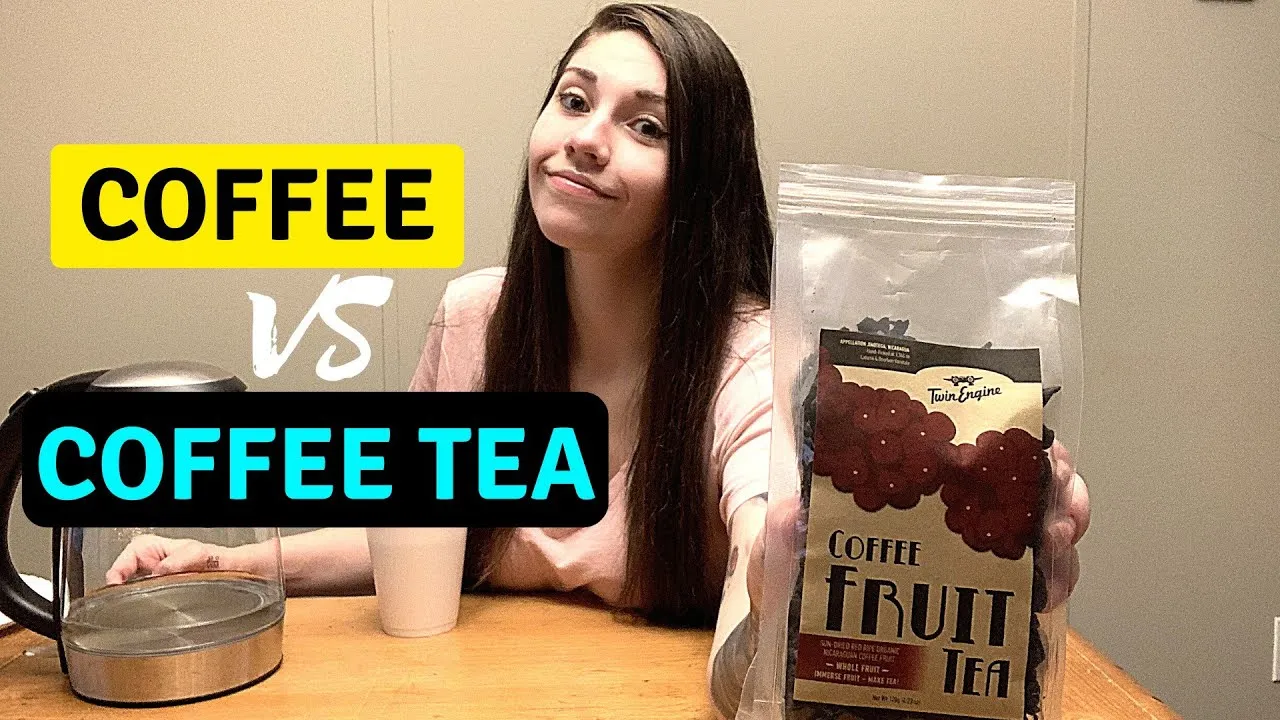
While browsing teas, we found something unusual: coffee fruit tea — a tea brewed from the dried fruit of the coffee plant. It supposedly tastes like coffee. We put that claim to a side-by-side test, and what we learned sent us down a much deeper rabbit hole.
What Is Coffee Fruit Tea?
Cascara (Spanish for “husk” or “skin”) is made from the dried fruit of the coffee cherry — the part that’s usually discarded after the bean is extracted. When coffee beans are harvested, the fruit pulp and skin are typically thrown away. Cascara turns that waste into a genuinely interesting beverage.
The pieces look like shriveled raisins with a deep reddish-brown color. The aroma is dried dates with subtle fruity, floral notes. Nothing bitter.
Brewing: Two tablespoons per 8 oz water. Hot brew: steep 5-10 minutes. Cold brew: steep 24 hours.
Why It Doesn’t Taste Like Coffee
The flavor difference comes down to one step: roasting. Coffee beans undergo 350-450°F+ heat that creates hundreds of chemical reactions — caramelizing sugars, breaking down proteins, generating the bitter, toasty, complex flavors we call “coffee.” You can read more about this process in our guide to how coffee is roasted.
The fruit never gets roasted. It’s dried at low temperatures, retaining its original bright, fruity, sweet character — the opposite profile of roasted coffee.
The Taste Test
Coffee Fruit Tea
Dominant flavor: a strong date-like sweetness — natural, not added. Very smooth, no bitterness, no harshness. The body was darker than most teas, giving it the visual appearance of coffee. Clean finish, slightly lingering, with subtle floral notes and a whisper of honey.
What impressed us most was the balance. Each sip reveals layers without being aggressive — refined rather than punchy.
Regular Brewed Coffee (Black)
Unmistakably coffee. Standard bitterness, typical body, characteristic aroma. But honestly? Not particularly exceptional on its own. It needed something — cream, sugar, time for your palate to adjust.
This isn’t a knock against coffee. It’s just an observation that most people don’t drink black coffee because they love the pure flavor. They drink it for the caffeine, the ritual, or because they’ve developed a taste for it.
The Surprise Verdict
Given the choice between plain black coffee and this coffee fruit tea, we’d pick the tea. That’s surprising coming from a coffee company.
The cascara is enjoyable on its own, without any additions. The regular coffee felt like it needed doctoring. When you have to alter a drink to make it satisfying, that tells you something.
Does It Actually Taste Like Coffee?
No. You’d know it wasn’t coffee. But you probably wouldn’t be disappointed. Think of it as a sophisticated, naturally sweet fruit tea that happens to come from the coffee plant.
After running the taste test, we kept asking the same question — what exactly is this stuff? The rest of this guide is the deeper answer: the botany, the history, how cascara is actually made, how it compares to other beverages, and where to find it.
Cherry, Husk, Pulp: Sorting the Terminology
The vocabulary around coffee cherry byproducts can be confusing because retailers use the words loosely. Strictly speaking:
- Coffee cherry — the whole fruit: skin, pulp, mucilage, parchment, and the seed (bean) inside.
- Pulp (mesocarp) — the fleshy fruit layer between the skin and the parchment.
- Husk / cascara — the dried fruit material left after the bean is removed: skin (exocarp) plus dried pulp, sometimes with parchment fragments attached.
- Coffee flour — finely ground dried cherry pulp, used in baking rather than steeping.
- Coffee fruit extract — concentrated polyphenol extract used in supplements. Not the same as cascara tea (more on that below).
If you want to nerd out on the layers, our coffee cherry anatomy guide walks through every layer from skin to seed.
A Centuries-Old Drink in Yemen and Ethiopia
Cascara isn’t a Western invention. In coffee-producing countries, the dried fruit has been brewed for centuries.
In Yemen, the traditional drink is qishr — coffee cherry husks steeped with cardamom and ginger. Qishr predates the global popularity of brewed coffee from the bean and was, for parts of Yemeni history, the more common preparation. It’s still served in homes and cafes across the country today.
In Ethiopia, the equivalent tradition is hashara, prepared as a simpler infusion of dried cherry husks. Latin American producing countries also have long histories of farmworkers brewing the dried pulp left from harvest — a way to make use of what was otherwise composted or dumped.
Modern Western specialty coffee discovered cascara around 2007, when roasters like Stumptown, Counter Culture, and Intelligentsia began importing small lots from origin. Salvadoran producer Aida Batlle is often credited with pushing cascara into the modern specialty market — selling dried cherries from her family’s Finca Kilimanjaro to early adopters in the US specialty scene.
How Cascara Is Made
Cascara is a byproduct of how coffee gets processed after harvest. To understand cascara, you have to understand processing.
After cherries are picked, producers separate the bean from the fruit using one of three main methods:
Our coffee processing methods guide goes deeper on the trade-offs of each method.
Caffeine: Less Than Coffee, Less Than Black Tea
Cascara contains about 25mg of caffeine per cup. For context, a standard cup of brewed coffee contains 80-100mg, and black tea runs about 47mg. Caffeine concentrates in the coffee seed, not the fruit — so the dried cherry husk delivers a fraction of what the bean does.
This makes cascara a practical option for afternoon drinking when you want something more interesting than water but don’t want the sleep-disrupting dose of a full cup of coffee. The 25mg is enough to register — comparable to a cup of green tea — without being enough to interfere with sleep for most people if consumed before 3-4 PM.
If you’re thinking about caffeine reduction more broadly, how coffee is decaffeinated walks through the alternatives.
How to Brew Cascara
Cascara is forgiving. Unlike coffee, where grind size, water temperature, ratio, and brew time interact in complex ways, cascara is steep-and-serve.
Hot brewing:
- Use about 2 tablespoons of cascara per 8 oz (240ml) of water
- Water temperature: 200-212°F (93-100°C) — boiling or just off the boil
- Steep time: 5-10 minutes
- Strain through a fine mesh strainer or tea infuser
Longer steeping produces a stronger, more concentrated brew with deeper sweetness. Unlike coffee, cascara doesn’t become unpleasantly bitter or astringent with extended steeping. You can push it to 15 minutes without penalty, though 5-10 minutes hits the sweet spot for most people.
Cold brewing:
- Same ratio: 2 tablespoons per 8 oz of cold water
- Steep in the refrigerator for 24 hours
- Strain and serve over ice
Cold-brewed cascara is exceptional in summer — it concentrates the dried fruit sweetness into something that reads almost like a light sangria without the alcohol. Add a squeeze of lemon or orange peel if you want to push the citrus notes.
As a syrup or mixer: Brew a double-strength batch (4 tablespoons per 8 oz), reduce slightly on the stovetop if desired, and use as a natural sweetener for cocktails, sparkling water, or drizzled over yogurt or oatmeal. The natural sugars make it a viable syrup base without adding refined sugar.
Caffeine, Polyphenols, and the “Superfood” Hype
Cascara’s nutritional profile is genuinely interesting, though some of the marketing around it outpaces the evidence.
What’s well-documented:
- The caffeine content (about 25mg per cup) is consistent across multiple analyses.
- Cascara is high in polyphenols — antioxidant compounds common to many plant foods.
- Dried cherry husks are about 21% fiber by weight, which is high. That number is most relevant for coffee flour (ground cascara used in baking), not the steeped tea, since most fiber stays in the husks rather than dissolving into the brew.
What’s preliminary:
- Some research has found that concentrated coffee fruit extracts may increase BDNF (brain-derived neurotrophic factor), a protein involved in neuroplasticity. The studies use far higher polyphenol concentrations than you’d get from casually drinking cascara tea, so the cognitive-benefit claim is real science but a stretch as a health recommendation for the beverage.
What’s marketing hype:
- “Cascara is a superfood” or “the next antioxidant supercharger.” The polyphenol content is high relative to cranberries, but plenty of fruit teas and dark berries deliver polyphenols. Cascara is a pleasant, antioxidant-rich beverage — not a magic compound.
We’re not making health claims. Drink cascara because it tastes good and the sustainability story is compelling, not because someone on the internet promised it would change your cognition.
The Sustainability Story
This is arguably the strongest case for cascara and the reason it has commercial momentum beyond novelty.
Coffee processing generates approximately 20 million tons of waste annually. The vast majority of that waste is coffee cherry pulp — the fruit layer that cascara comes from. In most producing countries, this pulp is dumped in rivers or left in piles to decompose, creating water pollution and methane emissions.
Turning that waste stream into a commercial product solves multiple problems simultaneously. Farmers get an additional revenue source from what was previously a disposal cost. The environmental impact of pulp dumping decreases. And consumers get a product that literally did not exist in the supply chain before — no additional land, water, or farming inputs are needed because the coffee cherries are already being harvested.
The economics aren’t revolutionary for farmers yet — cascara fetches modest prices compared to green coffee, and the drying infrastructure adds work. But as Western demand grows and supply chains mature, cascara represents one of the most straightforward examples of upcycling in the food industry.
Cascara vs. Coffee Cherry “Extracts” and Supplements
The supplement industry has noticed coffee cherry’s polyphenol content, and you’ll find “coffee fruit extract” capsules and powders marketed as nootropics and antioxidant supplements. These are different from cascara tea.
Supplements use concentrated extracts — the polyphenol content per serving is much higher than what you’d get from steeping dried husks. The BDNF research that gets cited in supplement marketing used these concentrated extracts, not brewed cascara. If your interest is the casual beverage, cascara tea is what you want. If your interest is the research-grade dosing, you’re looking at a supplement category — and the usual caveats apply.
The Legal and Regulatory Landscape
Cascara’s commercial journey has been complicated by classification questions. Is it a tea? A coffee product? A novel food?
The EU approved cascara as a novel food in 2022, which opened the European market. Before that, it existed in a regulatory gray zone — available at specialty shops but technically unapproved for commercial sale in some EU jurisdictions. The novel food approval required demonstrating safety data, which cascara cleared given its centuries-long consumption history in Yemen, Ethiopia, and other producing countries.
In the United States, cascara has cleared earlier import-classification issues and is now sold without restriction by specialty coffee roasters, tea companies, and health food retailers. Earlier in the 2010s, a major roaster’s New Dietary Ingredient Notification was challenged, which created confusion about whether cascara was a “new” food in the US — it isn’t, given its long global consumption history, and that question has been resolved in practice.
The bigger barrier today isn’t legal — it’s awareness. Most coffee drinkers have never heard of cascara, and many who have encountered it assume it’s a niche curiosity rather than a legitimate category. That’s changing, but slowly.
Where to Buy Cascara
Specialty coffee roasters are the most reliable source. Many roasters who source directly from farms already have relationships with producers who can supply dried cascara alongside green coffee. Look for cascara that:
- Lists the country of origin and, ideally, the farm or cooperative
- Was dried carefully (sun-dried on raised beds is standard)
- Comes in a sealed bag with a reasonable harvest or production date — dried cascara keeps well but not indefinitely (use within 6-12 months of purchase)
Online retailers carry cascara from various producers, though quality varies more than with established roasters. A 4-8 oz bag typically costs $8-15 and makes 15-30 cups depending on how strong you brew it — roughly comparable to mid-range loose-leaf tea pricing.
Who Should Try It
- Coffee lovers seeking variety — completely new experience from the same plant
- Afternoon drinkers — enough substance to feel like a real beverage, not enough caffeine to keep you up
- People reducing caffeine — a natural bridge between coffee and herbal tea
- Sustainability-minded buyers — cascara is upcycled fruit that would otherwise be waste
- Minimalists — requires nothing added to be satisfying
If you go in expecting coffee, you’ll be let down. If you go in expecting a sophisticated fruit tea, you’ll be delighted. For more context on everything the coffee cherry can become, our coffee processing methods guide explains the full spectrum, and espresso vs drip coffee covers the bean side of the same fruit.
The irony of cascara is that the coffee industry has been throwing it away for centuries while producing one of the world’s most popular beverages. The fruit that grows around the coffee bean turns out to be its own worthwhile drink — sweeter, gentler, and with a sustainability story that coffee itself can’t match. Worth a try, and for many people, worth keeping in the rotation permanently.
Frequently Asked Questions
- What is cascara and is it safe to drink?
- Cascara is the dried fruit skin and pulp of the coffee cherry — the part that's removed and usually discarded during coffee processing. It's been consumed for centuries in coffee-growing regions (as 'qishr' in Yemen, 'hashara' in Ethiopia). The EU approved it as a novel food in 2022. It's safe, naturally caffeinated, and increasingly available from specialty tea and coffee retailers.
- Does coffee fruit tea have less caffeine than coffee?
- Yes — about 25mg per cup compared to coffee's 80-100mg, and less than black tea's ~47mg. The caffeine concentrates in the seed (the coffee bean), not in the surrounding fruit. This makes cascara a good option for afternoon drinking or for people reducing caffeine intake. It's roughly comparable to green tea in caffeine content.
- What does cascara taste like compared to coffee?
- Nothing like coffee. Cascara tastes like a naturally sweet fruit tea — dominant dried date and raisin flavors with floral and honey notes. No bitterness, no roasted character. The coffee flavor we know comes entirely from roasting the seed at 350-450°F; since the fruit is only dried at low temperatures, it retains its original bright, fruity sweetness.
- Is cascara the same as coffee cherry tea or coffee fruit tea?
- Yes — these are all names for the same product. 'Cascara' (Spanish for 'husk') is the most common name in the specialty coffee world. 'Coffee cherry tea' and 'coffee fruit tea' are descriptive names used by some retailers. 'Qishr' is the traditional Yemeni name (typically with cardamom and ginger), and 'hashara' is the Ethiopian name. Regardless of labeling, you're looking for dried coffee cherry skins and pulp intended for steeping.
- Why doesn't cascara taste like coffee if it comes from the same plant?
- Coffee's characteristic flavor comes from roasting the seed — the Maillard reaction, caramelization, and pyrolysis at 350-450°F create hundreds of volatile aromatic compounds we associate with 'coffee flavor.' Cascara is the fruit surrounding that seed, dried at low temperatures rather than roasted. It never undergoes the chemical transformations that create roasted coffee flavor. By analogy: a grape and wine come from the same plant, but a dried grape (raisin) doesn't taste like wine.
- Does cascara go bad? How should I store it?
- Dried cascara keeps well in a cool, dry place for 6-12 months — similar to dried fruit or loose-leaf tea. Store it in an airtight container away from direct sunlight and moisture. You'll know it's past its prime if the dried husks lose their fruity aroma and take on a flat, stale smell. Unlike roasted coffee, which degrades quickly after grinding, cascara's shelf life is relatively forgiving because it's a dried whole fruit product rather than a volatile roasted seed.
- Where can I buy coffee fruit tea?
- Specialty coffee roasters and tea retailers are the best sources — look for brands like Verve, Stumptown, or dedicated cascara sellers online. Some grocery stores carry it in the specialty tea section. Check for a harvest or production date; like any dried fruit product, cascara loses flavor over time. Buy from sellers who move volume so you're getting a fresher product.