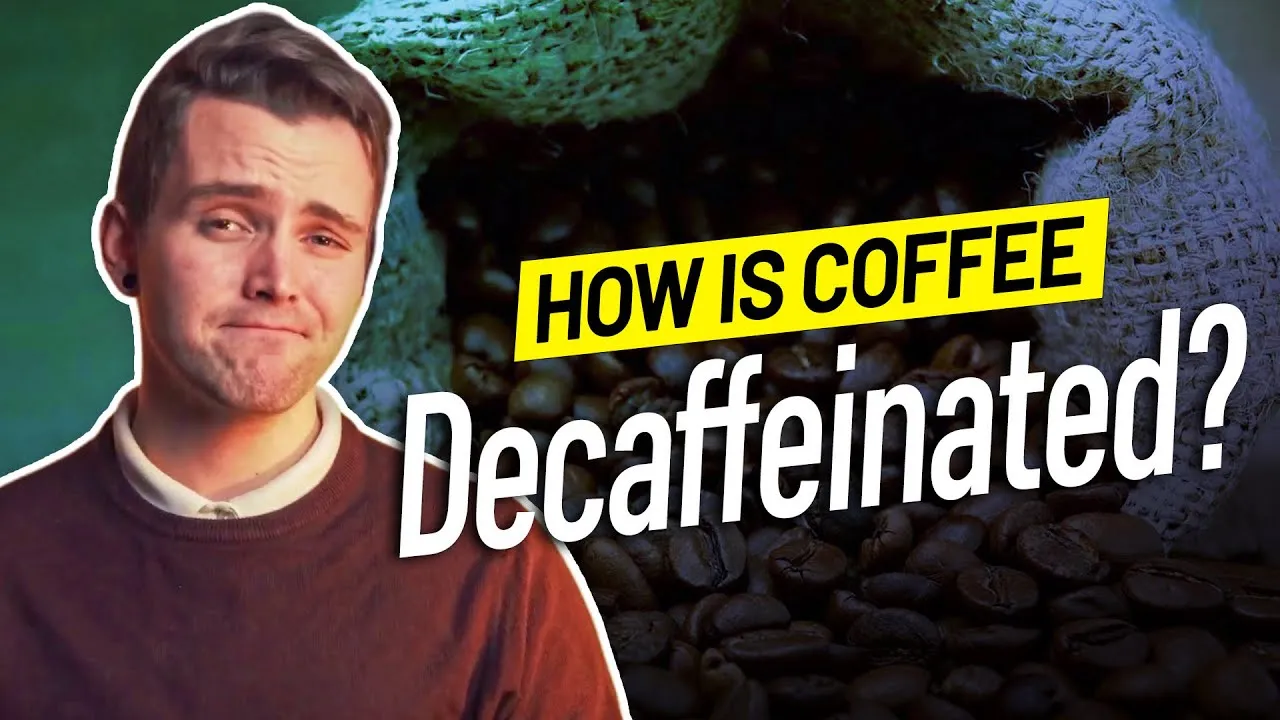
Decaf gets a bad reputation, and some of it is deserved — historically. But the process of removing caffeine from coffee beans is genuinely fascinating chemistry, and understanding how it works explains both why decaf used to taste terrible and why today’s best decaf can be excellent.
Why Decaf Tastes Different
Coffee contains around 1,000 chemical components that contribute to its taste and aroma. Caffeine itself is an astringent alkaloid — it adds bitterness and body but isn’t a major flavor compound. The challenge is that every decaffeination method has to selectively remove caffeine without stripping out the other 999 compounds. That’s like performing surgery with boxing gloves.
Some methods are better at this than others. The ones that use targeted chemistry to distinguish caffeine from flavor compounds produce excellent results. The ones that take a blunt-force approach inevitably strip some flavor along with the caffeine.
There’s another factor: decaffeinated beans behave differently during roasting and brewing. They have fewer available soluble compounds (roughly 19% extraction yield versus 20-21.5% for regular coffee), produce more fines when ground, and need a slightly coarser grind to compensate. Roasters who treat decaf beans exactly like regular beans will produce a worse cup — not because decaf is inherently bad, but because they haven’t adjusted their process. Understanding how coffee is roasted is part of understanding why decaf roasting requires extra care.
The Three Modern Methods
All three methods start the same way: green (unroasted) beans are steamed and soaked to soften them and open up their cellular structure. From there, the approaches diverge.
Method 1: Swiss Water Process
The Swiss Water Process is the gold standard in specialty decaf, and the science behind it is elegant.
How it works:
- An initial batch of beans is soaked in hot water, which strips out both caffeine and flavor compounds. This first batch is discarded.
- The water — now containing both caffeine and flavor molecules — is passed through an activated carbon filter that removes only the caffeine. The selectivity works because caffeine has a specific molecular affinity for carbon surfaces — it binds preferentially to the activated carbon while most flavor compounds pass through. What remains is a caffeine-free, flavor-saturated solution called Green Coffee Extract (GCE).
- A new batch of green beans is soaked in this GCE. Because the extract is already saturated with flavor compounds, those molecules have no concentration gradient to drive them out of the beans. Only caffeine moves — from high concentration (inside the bean) to low concentration (in the extract). The flavor stays put.
This is selective chemistry at its best. No chemical solvents touch the beans. Just water, carbon filtration, and the physics of diffusion.
Caffeine removal: 99.9%, per the Swiss Water Process company’s own data. The FDA requires at least 97% removal for the “decaffeinated” label, and Swiss Water far exceeds this threshold.
Flavor impact: Minimal. Origin characteristics and aromatics are well preserved, which is why specialty roasters gravitate toward Swiss Water decaf. If you care about single-origin coffee and want a decaf that still expresses its terroir, this is your method.
Who uses it: The Swiss Water Company operates in Vancouver, British Columbia. They process almost exclusively high-quality Arabica beans, and the premium shows in both cost and quality.
Method 2: Carbon Dioxide (CO2) Process
The CO2 method is the most technologically sophisticated and arguably the most selective.
After the initial steaming, beans are placed in an extraction vessel and exposed to supercritical carbon dioxide — CO2 compressed to 250-300 times atmospheric pressure. At this pressure, CO2 enters a “supercritical” state where it behaves simultaneously like a liquid (can dissolve compounds) and a gas (can penetrate deeply into the bean’s cellular structure).
This supercritical CO2 is remarkably selective for caffeine. It dissolves caffeine but leaves the larger flavor compounds essentially untouched. The caffeine-laden CO2 then passes through a filter, the caffeine is removed, and the CO2 is recycled.
When pressure is released, the CO2 simply evaporates back into gas. Nothing is left behind — no residue, no solvents, nothing.
Caffeine removal: 96-98%.
Flavor impact: The lowest of any method. Because supercritical CO2 is so selective, flavor compounds and aromatic oils remain almost entirely intact.
The catch: The equipment required for supercritical extraction is expensive. This is why CO2 decaf shows up on specialty shelves rather than in bulk supermarket coffee. The FDA classifies CO2 as “Generally Recognized As Safe” (GRAS), so there are zero safety concerns. Pure economics limits its adoption — the process works brilliantly, but the capital cost means processors need to charge more.
Method 3: Solvent-Based Processes
Two solvents dominate: ethyl acetate and methylene chloride. These methods are the most common globally because they’re fast and cost-effective.
Direct solvent method: The solvent circulates directly through the moistened beans, bonding with caffeine molecules. The beans are then rinsed and steamed to evaporate residual solvent. This is efficient but the solvent doesn’t only grab caffeine — it also strips some oils and aromatic compounds.
Indirect solvent method: Beans are soaked in hot water first, extracting both caffeine and flavor compounds. The water is separated and treated with a solvent that binds to caffeine. The solvent-caffeine mixture is removed. The remaining (now caffeine-free) flavor water is reunited with the beans so they can reabsorb their flavor compounds. The beans never directly touch the solvent, which preserves more flavor than the direct method.
Caffeine removal: 96-98%.
The safety question: Methylene chloride gets the most concern. The FDA mandates a maximum residue of 10 parts per million (0.001%) in roasted decaf. In practice, roasting evaporates virtually all of it — methylene chloride boils at 104F (40C), and coffee is roasted at 400F and above. The trace amounts remaining are genuinely negligible.
Ethyl acetate is sometimes marketed as “natural” decaffeination because it occurs naturally in fruits. This is technically true but practically meaningless — the ethyl acetate used in commercial decaffeination is synthetically produced, and the final product is chemically identical either way.
The honest take: Solvent methods produce acceptable results at lower cost, but they’re the most likely to flatten a coffee’s flavor profile. If a decaf tastes dull and one-dimensional, solvent processing is often (though not always) the reason.
Which Method Should You Choose?
For the best flavor: Swiss Water or CO2. These are the methods that preserve the most origin character and complexity. If a bag says “Swiss Water Process” or “CO2 decaffeinated,” it was chosen by a producer who cares about taste.
For the best value: Indirect solvent. Better flavor preservation than direct solvent, at a lower cost than Swiss Water or CO2.
The rule of thumb: If the bag doesn’t specify the decaffeination method, it’s almost certainly solvent-based. Producers who use Swiss Water or CO2 always advertise it — they’re paying a premium and they want you to know.
The Caffeine Question: Why You Might (or Might Not) Need Decaf
Understanding caffeine metabolism helps you decide whether decaf makes sense for you.
How caffeine works: It’s a competitive antagonist of adenosine receptors. Adenosine is the molecule that makes you feel sleepy as it accumulates during the day. Caffeine blocks adenosine from binding, which is why it makes you feel alert. Effects kick in within 15-60 minutes.
The half-life problem: Caffeine’s average half-life is about 5 hours, meaning half the caffeine from your afternoon coffee is still in your system at bedtime. But that’s just the average. Due to the CYP1A2 gene, caffeine clearance varies up to 40-fold between individuals. Some people are “fast metabolizers” who clear caffeine in 1.5 hours. Others are “slow metabolizers” who take 10 hours.
This genetic variation explains why some people can drink espresso after dinner and sleep fine, while others can’t have coffee past noon without lying awake. It’s not willpower — it’s enzymology. If you’re a slow metabolizer, afternoon decaf is a genuinely smart strategy.
What’s in a cup of decaf: Roughly 3-12 mg of caffeine per 8-ounce cup, compared to 95-200 mg in regular coffee. For most people, that residual amount is imperceptible.
The FDA standard: Coffee must have at least 97% of its original caffeine removed to be labeled “decaffeinated.” This is a regulatory requirement, not a suggestion.
Decaf and Health: The Surprising Science
Many of coffee’s health benefits come from compounds other than caffeine — and decaf retains most of them.
Type 2 diabetes: One of the most replicated findings in coffee epidemiology. Habitual coffee consumption reduces Type 2 diabetes risk by about 6% per cup per day (33% at 6 cups). Decaf works equally well — the benefit comes from chlorogenic acids and polyphenols, not caffeine.
The laxative effect: Coffee stimulates colonic motility (the “coffee makes me poop” phenomenon). This is caffeine-independent — decaf does it too. The responsible compounds are chlorogenic acids and N-alkanoyl-5-hydroxytryptamides. The effect can begin within 4 minutes of drinking.
Neuroprotection: Both caffeinated and decaf dark roast showed identical potency in neuroprotective studies. The protective compounds (phenylindanes, produced during roasting) are caffeine-independent.
Antioxidants: Decaf retains significant chlorogenic acid content, though less than regular coffee. Coffee is the number one source of antioxidants in many Western diets, and decaf contributes meaningfully.
What decaf loses: The caffeine-specific benefits — the acute alertness, the adenosine-blocking effects, and some of the cardiovascular protection that appears to be partly caffeine-driven.
Freshness Matters Even More with Decaf
Decaffeinated beans are more porous than regular beans — the decaffeination process opens up the cellular structure. This means they oxidize faster and stale sooner. All the freshness rules that apply to regular coffee apply double to decaf:
- Buy from roasters with roast dates on the bag. No roast date, no purchase.
- Use within 2-3 weeks of roasting. Decaf’s window is shorter than regular coffee’s.
- Store airtight, cool, dark, dry. Same rules, but more urgently.
- Freezing works. If you don’t go through decaf quickly, freeze single-dose portions in airtight bags. Oxidation drops roughly fifteen-fold in the freezer.
And since decaf produces more fines when ground, pair it with attention to your coffee grind size — a slightly coarser setting prevents muddiness and over-extraction.
What to Look for When Buying Decaf
1. Check the decaffeination method. Swiss Water and CO2 are your best bets for flavor. If the bag doesn’t say, it’s almost certainly solvent-based.
2. Verify the bean type. Arabica decaf will always taste better than Robusta decaf. Robusta has nearly double the caffeine of Arabica, so even after decaffeination, Robusta decaf contains more residual caffeine. Historically, inferior Robusta beans were preferentially selected for decaffeination because the extracted caffeine was sold as a byproduct for soft drinks and pharmaceuticals. Stick with Arabica. If you want to understand why bean quality matters so much, read our piece on organic coffee and what actually makes a great cup.
3. Look for specialty-grade. The quality ceiling for decaf has risen dramatically. Today’s specialty market includes excellent single-origin decaf, microlot decaf, and decaf from renowned roasters. The days of decaf meaning “bottom shelf” are genuinely over. If you’ve been impressed by the complexity of Ethiopian coffees, many of those farms now produce Swiss Water or CO2 decaf versions worth seeking out.
4. Grind slightly coarser. Decaf beans produce more fines when ground and have fewer available solubles. A slightly coarser grind prevents over-extraction and muddiness. If your decaf tastes harsh, try going one setting coarser before changing anything else. And watch your brewing temperature — decaf benefits from the same precision attention as regular coffee.
5. Consider a great starting option. A Swiss Water Process decaf from a specialty roaster is the easiest way to experience what quality decaf can taste like.
The Bottom Line
Decaffeination is a real engineering challenge: remove one specific molecule from a matrix of 1,000 without disturbing the rest. The Swiss Water and CO2 processes solve this elegantly. Solvent methods solve it adequately. All three have gotten dramatically better over the past two decades.
If you love coffee but caffeine doesn’t love you back — whether that’s genetics, pregnancy, medication interactions, or just wanting to enjoy a cup after 3 PM — today’s decaf is worth your time and your money. Find a specialty roaster, look for Swiss Water or CO2 on the label, and treat it with the same freshness standards you’d apply to regular coffee. The gap between decaf and regular has never been smaller.
Frequently Asked Questions
- Does decaf coffee have zero caffeine?
- No. Decaf contains roughly 3-12 mg of caffeine per 8-ounce cup, compared to 95-200 mg in regular coffee. The FDA requires at least 97% caffeine removal for the 'decaffeinated' label, but that last 3% stays.
- Is decaf coffee safe during pregnancy?
- Most medical guidelines suggest limiting caffeine to 200 mg per day during pregnancy. A cup of decaf at 3-12 mg is well within that limit. The bigger consideration is the decaffeination method — Swiss Water and CO2 use no chemical solvents, which some expectant parents prefer.
- Can you decaffeinate coffee beans at home?
- Not practically. All three commercial methods require specialized equipment — supercritical CO2 extraction vessels, Green Coffee Extract preparation, or industrial solvent handling. There's no reliable home method that removes caffeine without destroying flavor. If you want decaf, buy beans that were decaffeinated before roasting.
- Why does decaf coffee go stale faster than regular?
- The decaffeination process opens up the bean's cellular structure, making it more porous. More surface area is exposed to oxygen, so oxidation happens faster. Buy decaf with a roast date, use it within 2-3 weeks, and freeze single-dose portions if you don't go through it quickly.
- Does Robusta decaf have more caffeine than Arabica decaf?
- Yes. Robusta beans contain nearly double the caffeine of Arabica to begin with — roughly 2.2% vs. 1.2% by weight. Even after 97% removal, Robusta decaf retains more residual caffeine. Stick with Arabica decaf if minimizing caffeine is the goal.
Some links above are affiliate links. If you purchase through them, we earn a small commission at no extra cost to you.