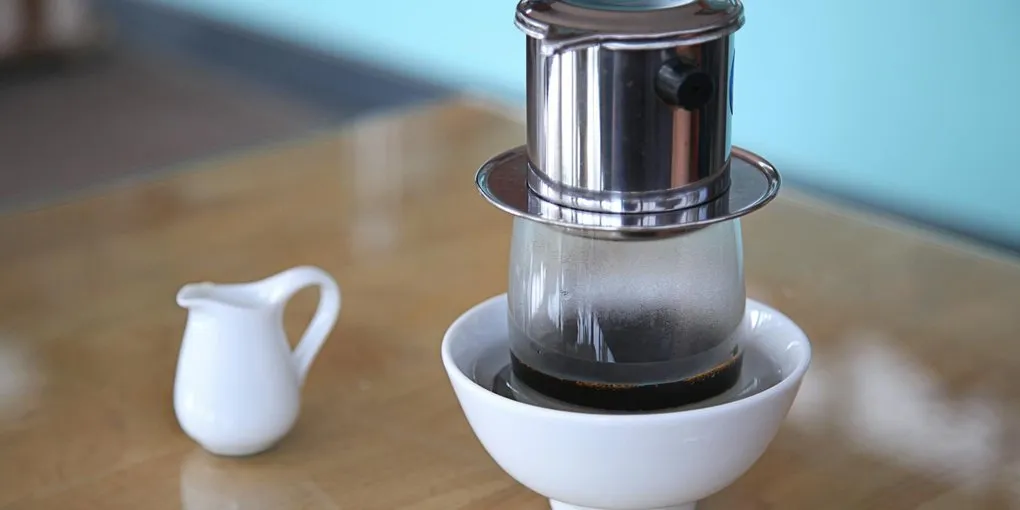
Vietnam is the world’s second-largest coffee producer, trailing only Brazil. That fact alone is remarkable — Vietnam barely produced coffee at commercial scale before the 1990s. In roughly three decades, the country went from a minor player to a global force that reshaped coffee economics, devastated farming communities in other countries, and is now — against all expectations — developing a specialty coffee scene.
This guide covers Vietnam as an origin: its production history, growing regions, economic impact, flavor profiles, and where it’s headed. For the iconic Vietnamese brewing method, see our Vietnamese phin guide.
How Vietnam Became a Coffee Superpower
Vietnam’s coffee story is one of speed and scale. After economic reforms (Doi Moi) in 1986, the government aggressively promoted coffee cultivation in the Central Highlands — particularly Dak Lak, Lam Dong, and Gia Lai provinces. World Bank loans funded the expansion. Farmers cleared land and planted Robusta at an unprecedented rate.
The numbers tell the story: Vietnam produced about 100,000 metric tons of coffee in 1990. By 2000, that number had exploded past 800,000 metric tons. Today, Vietnam produces roughly 30 million 60-kilogram bags annually, second only to Brazil’s approximately 55 million bags.
Nearly all of this production — approximately 95% — is Robusta. Vietnam didn’t try to compete with the high-altitude Arabica producers of East Africa or Central America. It went after the commodity market with a variety that grows at lower altitudes, tolerates more heat, resists more diseases, and yields significantly more per hectare.
The Robusta Question: Commodity, Not Defect
Robusta’s reputation in specialty coffee circles is poor, and some of that reputation is earned. Commodity-grade Vietnamese Robusta — the kind that goes into instant coffee and commercial blends — is often processed carelessly, dried on patios mixed with debris, and tastes harsh, rubbery, and bitter.
But Robusta is not inherently bad. It’s a different species with different characteristics. Understanding the differences between Arabica and Robusta is essential context for understanding Vietnam’s coffee.
Robusta contains roughly twice the caffeine of Arabica. It has a heavier body, lower acidity, and flavor notes that tend toward chocolate, earth, wood, and grain. In the right hands, with careful processing, Robusta can produce cups that score above 80 on the SCA scale — the threshold for specialty grade.
Vietnamese varieties like TR4, TR9, and TR11 achieve yields of 5,000-7,000 kg per hectare — far higher than most Arabica varieties, which is precisely why Robusta cultivation was so attractive for a developing agricultural economy.
The Price Crash: Vietnam’s Impact on Global Coffee
Vietnam’s explosive entry into the global market had devastating consequences for coffee farmers worldwide. The rapid supply increase — from near-zero to the world’s second-largest producer in under two decades — was a primary driver of the global coffee price crash in the late 1990s and early 2000s.
Coffee prices on the commodities exchange plummeted to historic lows. The C-price (the benchmark for Arabica) fell below $0.50 per pound — well below the cost of production for most farmers. Countries that had built their economies around coffee exports — particularly in Central America and East Africa — saw farming communities devastated. Farmers abandoned plots, switched to other crops, or faced severe poverty.
This price shock is one of several factors that feed into why coffee is so expensive now. The market eventually corrected, but the damage to producer communities was lasting, and the structural oversupply that Vietnam helped create remains a defining feature of global coffee economics.
Vietnam’s Growing Regions
Vietnam’s coffee production is concentrated in the Central Highlands, a plateau region with volcanic red basalt soils — rich in nutrients and well-suited to coffee cultivation.
Dak Lak Province
The heart of Vietnamese coffee. Dak Lak alone accounts for roughly 30% of the country’s total production. The capital, Buon Ma Thuot, is considered the coffee capital of Vietnam. Elevation ranges from 400 to 800 meters — low by specialty standards, but well within Robusta’s comfort zone. The climate delivers distinct wet and dry seasons that facilitate natural drying.
Lam Dong Province (including Dalat)
Dalat and its surrounding highlands sit at 1,000-1,500 meters — the highest coffee-growing elevations in Vietnam. This is where most of Vietnam’s Arabica is cultivated. The cooler temperatures at altitude produce slower cherry maturation and denser beans. Lam Dong is the epicenter of Vietnam’s emerging specialty coffee movement.
Gia Lai and Kon Tum Provinces
The northern reaches of the Central Highlands. Primarily Robusta production at 600-800 meters. These provinces have expanded rapidly in recent years and represent some of the newer plantation areas.
Son La and Dien Bien (Northwest)
A smaller but growing Arabica-producing region in the mountainous northwest, near the borders with Laos and China. Elevations reach 1,000-1,400 meters. Catimor varieties dominate, and the cooler climate produces coffees with more acidity and complexity than the lowland Robusta regions. Some specialty buyers are beginning to source from this area.
Flavor Profiles of Vietnamese Coffee
Vietnamese coffee varies dramatically depending on variety, altitude, and processing.
Commodity Robusta (Dak Lak, Gia Lai): Heavy body, low acidity, dark chocolate, peanut, woody, earthy. Often harsh when processed carelessly. This is what goes into instant coffee and many commercial espresso blends worldwide.
Better-processed Robusta: When Vietnamese Robusta is washed or carefully processed, it can deliver chocolate, brown sugar, and a pleasant full body without the harsh rubbery notes. Some lots approach Fine Robusta territory — scoring above 80 SCA points with chocolate, caramel, and even fruit notes.
Dalat Arabica: Coffees from the higher-altitude Lam Dong region show more complexity — citrus, stone fruit, caramel, and moderate acidity. They share some characteristics with other Asian Arabica producers (particularly Yunnan, China) but generally have softer acidity than Central American or East African coffees.
Northwest Arabica (Son La): The coolest-climate Vietnamese coffees, with brighter acidity and more floral/citrus character. Still a developing region with inconsistent quality, but the best lots show genuine specialty potential.
The Rise of Vietnamese Specialty Coffee
The narrative that Vietnam produces only cheap commodity Robusta is increasingly outdated. Several factors are driving a specialty movement.
Fine Robusta Recognition
The broader coffee industry is slowly acknowledging that Robusta can achieve specialty-grade quality. The Coffee Quality Institute developed the Fine Robusta Q Grading system. Brazilian variety BRS 2314 has peaked at 87.2 SCA points in a single sample (averaging around 80) — chocolate, caramel, and fruit notes that approach specialty Arabica territory. Vietnamese producers are paying attention and improving processing to capture this premium market.
Arabica Expansion at Altitude
Dalat’s high-altitude Arabica is attracting international attention. Vietnamese roasters like August Rare and specialty farms in Lam Dong are producing washed and natural Arabica that competes with other emerging Asian origins. The parallel story of Yunnan’s explosive specialty growth — from 8% to 31.6% specialty ratio in three years — shows how fast Asian origins can move when quality infrastructure develops.
Domestic Specialty Culture
Vietnam’s domestic coffee consumption is enormous and growing. A new generation of Vietnamese coffee professionals trained internationally is bringing specialty standards home. Specialty cafes in Ho Chi Minh City and Hanoi now serve single-origin Vietnamese pour-overs alongside traditional phin-brewed ca phe sua da.
Climate Considerations
Recent research has rewritten assumptions about Robusta’s climate resilience. A 2020 study by Kath et al. found that Robusta’s true optimal temperature is 20.5 degrees Celsius — far below the 22-30 degree range previously assumed. Every degree above optimal causes roughly 14% yield decline. Vietnam’s Central Highlands are warming, and this challenges the assumption that Robusta production can simply expand as a climate-proof alternative to Arabica.
Vietnamese Coffee Culture
Vietnam’s coffee culture is vibrant and entirely distinct from Western specialty norms. The Vietnamese phin filter — a small metal drip device — produces a strong, concentrated brew traditionally served with sweetened condensed milk (ca phe sua da when iced). Egg coffee (ca phe trung), made with egg yolks whipped with condensed milk into a rich custard-like foam, originated in Hanoi in the 1940s. Coconut coffee and yogurt coffee are other uniquely Vietnamese preparations that have no real equivalent in Western cafe culture.
This culture developed around Robusta’s strengths: its heavy body, intense bitterness, and high caffeine content (roughly twice that of Arabica) are assets when balanced with condensed milk’s sweetness and fat. Judging Vietnamese coffee by the standards applied to single-origin Ethiopian pour-over misses the point entirely. Vietnamese coffee preparations represent a legitimate and internally coherent approach to coffee — one that extracts maximum flavor impact from Robusta rather than pretending it’s something it isn’t.
Vietnam also has a deeply social coffee culture. Sidewalk coffee shops (quan ca phe) are gathering places where people spend hours over a single glass of ca phe sua da. The pace is intentionally slow — the phin filter drips for several minutes, and that waiting time is part of the experience.
The Economics Today
Vietnam’s coffee sector employs roughly 2.6 million people directly, with millions more in processing, trading, and export. The country exports predominantly to the EU (particularly Germany and Italy), Japan, and the United States. Most exports are green Robusta destined for instant coffee manufacturers (Nestle, JDE Peet’s) and commercial blend roasters.
The price differential tells the story of both the challenge and the opportunity: commodity Vietnamese Robusta has historically traded at far lower prices than Arabica on the London ICE exchange, though Robusta futures surged past $5,000 per metric ton in 2024-2025 due to supply shocks. Specialty-grade Arabica from the same country can sell for $10,000-15,000+ per ton when marketed directly to specialty buyers. The economic incentive to move up the quality chain remains enormous regardless of where commodity prices sit.
What to Look For When Buying Vietnamese Coffee
If you want to explore Vietnamese coffee beyond the commodity tier:
Look for origin specificity. “Vietnamese coffee” on a bag usually means commodity Robusta. Look for Dalat, Lam Dong, or Son La on the label — these indicate higher-quality growing regions.
Check the variety. Arabica or Catimor from high-altitude regions will taste dramatically different from lowland Robusta. Some bags now specify variety.
Consider the processing. Washed and honey-processed Vietnamese coffees show more complexity than the default natural/dry processing that dominates commodity production.
Try Fine Robusta intentionally. If you enjoy espresso blends, seek out roasters who use quality Vietnamese Robusta as a deliberate flavor component — not as cheap filler. Good Robusta adds body, crema, and chocolate depth that pure Arabica can lack.
Vietnam’s Coffee Future
Vietnam sits at a crossroads. Its commodity Robusta production underpins the global instant coffee industry and isn’t going away. But the specialty segment — both Arabica at altitude and Fine Robusta with improved processing — is where growth and profit potential lie.
Climate change adds urgency. If Robusta’s temperature sensitivity is closer to what recent research suggests, Vietnam’s lowland production could face the same pressures that are already reshaping Arabica cultivation worldwide. Adaptation strategies that work for other origins — shade growing, variety development, altitude migration — will apply to Vietnam as well.
The country that disrupted global coffee economics through sheer production volume may reshape the market again, this time through quality. The specialty world should be paying attention.
This article contains affiliate links. If you purchase through these links, we earn a small commission at no extra cost to you. We only recommend products we’ve tested or genuinely believe in. See our full affiliate disclosure for details.
Frequently Asked Questions
- Is Vietnamese coffee just Robusta?
- Approximately 95% of Vietnam's coffee production is Robusta, but the country also grows Arabica — primarily in the higher-altitude Lam Dong province (Dalat area) at 1,000-1,500 meters and in the northwest provinces of Son La and Dien Bien at 1,000-1,400 meters. These Arabica-producing regions are small relative to the massive Robusta output but are growing as Vietnam's specialty coffee sector develops. Catimor varieties dominate the Arabica side.
- Why is Vietnamese coffee often served with condensed milk?
- Vietnamese coffee culture developed around Robusta's flavor characteristics: intense bitterness, heavy body, and high caffeine (roughly twice that of Arabica). Sweetened condensed milk was widely available and shelf-stable in tropical climates where fresh dairy was less accessible. The combination — bitter, strong coffee balanced by sweet, fatty condensed milk — became the national standard. Ca phe sua da (iced coffee with condensed milk) is arguably the country's most iconic beverage.
- How did Vietnam's coffee expansion affect other countries?
- Vietnam's rapid growth from near-zero production to the world's second-largest producer in under two decades flooded the global market with cheap Robusta. This oversupply was a primary driver of the late 1990s-early 2000s coffee price crash, when commodity prices fell below $0.50 per pound — well below cost of production for many farmers. Coffee-dependent communities in Central America, East Africa, and other regions suffered severe economic hardship. Some farmers abandoned coffee entirely.
- Can I buy specialty-grade Vietnamese coffee?
- Yes, though it requires more effort than buying specialty coffee from established origins like Ethiopia or Colombia. Look for roasters specifically sourcing from Dalat/Lam Dong (Arabica) or marketing Fine Robusta from Vietnamese producers. August Rare and several smaller Vietnamese specialty roasters export directly. Some international specialty roasters also carry Vietnamese lots during harvest season (October through March in the Central Highlands). Single-origin Vietnamese coffee is increasingly available online.
- Is Robusta actually bad for you compared to Arabica?
- From a health perspective, Robusta and Arabica are comparable, with a few differences. Robusta contains roughly twice the caffeine (2.2-2.7% vs. 1.2-1.5%), so caffeine-sensitive individuals should be aware of that. Robusta also contains higher levels of chlorogenic acids (antioxidants), which is potentially beneficial. The diterpene content (cafestol and kahweol, which can raise LDL cholesterol in unfiltered brews) is similar between species. Using a paper filter removes more than 90% of diterpenes regardless of species. The biggest health variable isn't Arabica vs. Robusta — it's filtered vs. unfiltered brewing.