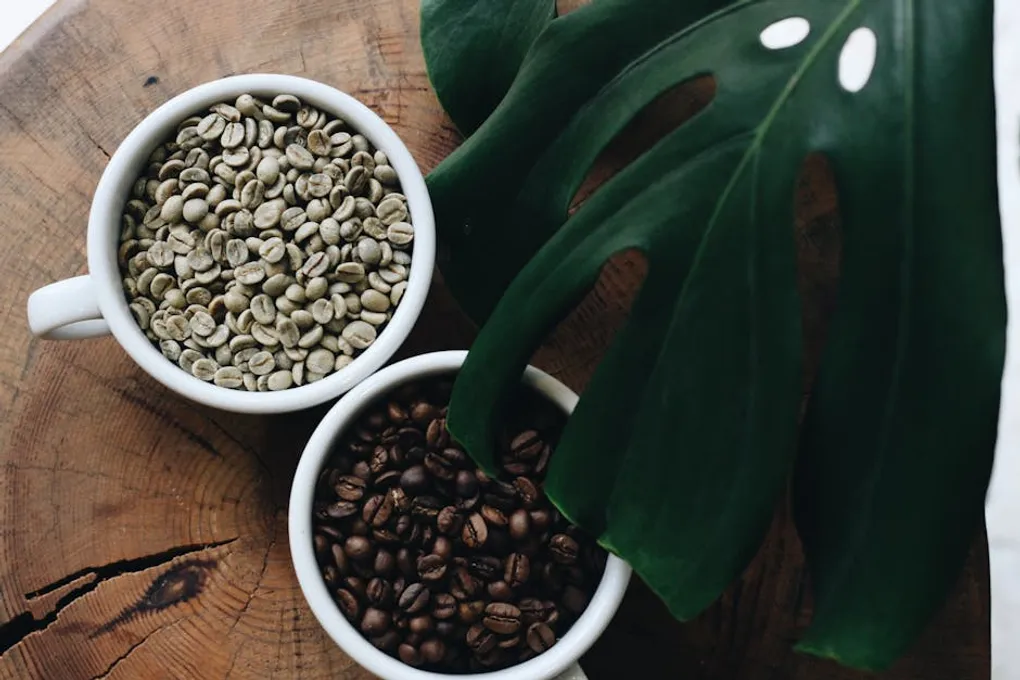
Walk into any specialty coffee shop and you’ll see “100% Arabica” displayed like a quality guarantee. The implication is clear: Arabica is premium coffee, Robusta is inferior, and the two don’t belong in the same conversation. This story is increasingly outdated — and understanding why requires going back to the genetics.
The distinction between Arabica and Robusta runs deep: different species, different chromosomes, different evolutionary histories, different flavor potential, and — critically — different futures as climate change reshapes where coffee can be grown.
The Genetic Foundations
Coffea arabica is a naturally occurring allotetraploid — it has four sets of chromosomes where most plant species have two. This happened roughly 10,000–15,000 years ago when two diploid species hybridized in the wild: Coffea canephora (the species we call Robusta) and Coffea eugenioides. James Hoffmann notes that Arabica is, at its core, a natural Robusta hybrid — which makes the coffee industry’s framing of them as opposites on a quality spectrum somewhat ironic.
The hybridization event that created Arabica is believed to have occurred in what is now southern Sudan or Ethiopia. That founding population was small, and the genetic bottleneck it created has enormous consequences for today’s coffee industry.
Arabica’s Genetic Vulnerability
Here is the most important thing the “100% Arabica” label doesn’t tell you: virtually all commercial Arabica traces back to an extraordinarily small founding population. According to the World Coffee Research Varieties Catalog, 97.55% of Brazil’s cultivated Arabica cultivars are derived from Typica and Bourbon — two closely related varieties that arrived in the Americas via narrow colonial-era seed transfers.
This isn’t a Brazilian problem specifically; it’s global. The diversity within commercial Arabica is a fraction of what the species is capable of. Wild Arabica populations in Ethiopia and South Sudan harbor tremendous genetic diversity that has barely been explored, let alone incorporated into commercial cultivation.
The practical consequence: Arabica is genetically uniform and highly vulnerable. When a pathogen adapts to one variety, it can sweep through plantations across continents because the plants are essentially identical in their defenses.
Robusta’s Underexplored Diversity
Coffea canephora — Robusta — tells the opposite genetic story. Robusta has maintained much broader genetic diversity than Arabica, and that diversity is only beginning to be systematically catalogued and utilized. WCR’s research indicates that Robusta’s genetic potential has been dramatically underexplored compared to what’s been applied to Arabica breeding programs.
There’s a structural reason for this: Robusta is self-incompatible, meaning it requires cross-pollination from a different plant. Unlike self-pollinating Arabica (where a single plant’s seeds preserve its genetics exactly), Robusta constantly recombines, generating diversity. This complicates breeding programs but maintains a rich gene pool that breeders are only beginning to mine seriously.
Flavor: What “Better” Actually Means
The conventional wisdom: Arabica is smooth, complex, and nuanced; Robusta is harsh, rubbery, and bitter. This is directionally accurate for commodity-grade coffee — but directional accuracy describes averages, not limits.
What drives Arabica’s flavor advantage in most contexts:
- Lower caffeine content (0.8–1.4%) — caffeine is bitter, so less caffeine means inherently lower bitterness
- Higher lipid content — contributes to perceived sweetness, body, and aromatic complexity
- More sucrose — higher sugar content that survives roasting as sweetness and caramelized notes
- Greater aromatic complexity — the precursors for hundreds of volatile aromatic compounds
What this ignores about Robusta’s potential: Caffeine in Robusta runs roughly 1.7–4.0% — approximately twice Arabica. That caffeine contributes bitterness, body, and the distinctive crema-forming properties that make Robusta valuable in Italian espresso blends (where 10–20% Robusta is traditional). The bitterness is a design feature in that context, not a defect.
More significantly: fine Robusta is a real and growing category. The World Coffee Research Varieties Catalog documents Brazilian BRS 2314, a Robusta variety that scored 87.2 SCA points with tasting notes of chocolate, caramel, and fruit. The SCA’s specialty threshold is 80 points. At 87.2, this Robusta scores higher than the majority of Arabica coffees on the market.
Uganda’s NARO-Kituza series of Robusta varieties reaches 70–82 SCA points — the higher end approaching specialty Arabica territory. Vietnamese varieties TR4, TR9, and TR11 produce 5,000–7,000 kg/ha — yields that dwarf most Arabica, which typically produces 800–1,500 kg/ha. Those yields don’t automatically mean worse quality; variety development is actively working to close the quality gap while retaining the yield advantage.
Caffeine: Double the Compound, Double the Function
Robusta contains roughly twice the caffeine of Arabica: 1.7–4.0% of dry matter versus 0.8–1.4%. This affects the cup in two direct ways.
First, bitterness: caffeine is intrinsically bitter, so higher caffeine content means more baseline bitterness in the cup regardless of roast level or brewing method.
Second, resilience: caffeine is a natural pesticide. Higher caffeine content is part of why Robusta is naturally resistant to many of the pests and pathogens that devastate Arabica. The plant produces more caffeine partly as a defense mechanism.
This explains the third category of caffeine significance: for drinkers who primarily want the functional effect rather than the flavor complexity, commodity Robusta delivers more caffeine per gram than any Arabica. That’s not a knock — for billions of people, that’s exactly the point.
Coffee Leaf Rust: Why Robusta Genes May Save Arabica
Coffee leaf rust (Hemileia vastatrix) is the most economically damaging coffee pathogen in history. It swept through Ceylon (Sri Lanka) in the 1870s, destroying the island’s Arabica industry and forcing the shift to tea that defines Sri Lankan culture today. It has periodically devastated Central American production, with a severe outbreak from 2012–2014 causing an estimated $1 billion in regional losses.
Arabica is genetically vulnerable to rust. Robusta is naturally resistant.
The bridge between them is the Timor Hybrid — a naturally occurring Arabica × Robusta cross discovered in East Timor in the 1940s. The Timor Hybrid carries Robusta’s rust resistance genes in an Arabica chromosomal context, making it compatible with Arabica breeding programs. It is the primary source of rust resistance genes used in modern Arabica breeding. Virtually every “rust-resistant Arabica” variety available today traces its resistance to the Timor Hybrid — meaning it traces ultimately to Robusta.
The coffee industry has built its Arabica rust-resistance strategy on Robusta genetics while simultaneously marketing “100% Arabica” as a premium distinction.
Altitude, Growing Conditions, and Flavor Development
The altitude difference between Arabica and Robusta cultivation zones is real and consequential:
- Arabica: typically grown at 800–2,200 meters above sea level
- Robusta: typically grown at 0–800 meters
The connection between altitude and flavor is direct. At high altitude, cooler temperatures slow the development of the coffee cherry, extending the period during which sugars and precursor compounds accumulate. This longer maturation produces denser beans with more complex flavor potential. High altitude also means greater diurnal temperature swings (hot days, cold nights), which further stresses the plant in ways that concentrate flavor compounds.
Robusta at sea level develops faster and hotter — adequate for high-yield commodity production but limiting for the flavor complexity that defines specialty coffee. This is a real constraint, not a marketing invention.
Climate Change and the Balance of Power
The altitude advantage that defines Arabica’s flavor profile is becoming a liability. Arabica requires specific temperature ranges — roughly 18–22°C — and is sensitive to temperature extremes, drought, and altered rainfall patterns. Climate models project that up to 50% of suitable Arabica growing land could be lost by 2050 under current emissions trajectories.
Meanwhile, Robusta’s share of global production has already shifted meaningfully: it now accounts for approximately 44% of global production, up from roughly 25% in the early 1990s. That shift reflects both market growth (Vietnam’s emergence as a major producer) and climatic pressure on Arabica-growing regions.
The long-term adaptation strategies all involve Robusta’s genetics. Direct expansion of Robusta cultivation into areas no longer suitable for Arabica. Introgression of Robusta genes into Arabica to improve heat and drought tolerance. Development of new Timor Hybrid descendants with better quality profiles. The future of coffee, increasingly, runs through Robusta.
What “100% Arabica” Actually Tells You
Nothing about quality. It tells you the species — and given that Arabica spans everything from commodity-grade Brazilian naturals sold at grocery store prices to award-winning gesha varietals priced at $100+ per 100g, “100% Arabica” has essentially no information content about cup quality.
Plenty of Arabica is bad. An increasing amount of Robusta is genuinely good. The label persists because it has marketing value, not because it reliably predicts your experience.
What actually tells you about quality: the variety (see the varietal guide), the origin and altitude, the processing method, the roast level, and how recently it was roasted (see coffee freshness). These variables predict the cup. “100% Arabica” does not.
Frequently Asked Questions
- Is Arabica always better than Robusta?
- No — 'better' depends on context. High-quality Arabica grown at altitude with careful processing produces more complex, nuanced flavors than commodity Robusta. But commodity Arabica is often mediocre, and fine Robusta varieties like Brazil's BRS 2314 score 87.2 on the SCA scale, which clears the specialty threshold of 80 points. The species label tells you less about cup quality than variety, origin, and processing method.
- Why does Robusta have more caffeine than Arabica?
- Caffeine functions as a natural pesticide for the coffee plant — it deters insects and inhibits the growth of competing plants. Robusta, which grows at lower altitudes with greater pest pressure, evolved to produce roughly twice the caffeine of Arabica (1.7–4.0% versus 0.8–1.4%). This higher caffeine contributes to Robusta's characteristic bitterness and is also why Robusta is naturally resistant to many pests that devastate Arabica.
- What is the Timor Hybrid and why does it matter?
- The Timor Hybrid is a naturally occurring Arabica × Robusta cross discovered in East Timor in the 1940s. It carries Robusta's coffee leaf rust resistance genes in an Arabica chromosome context, making it compatible with Arabica breeding. Nearly every modern rust-resistant Arabica variety traces its resistance through the Timor Hybrid — meaning the specialty coffee industry's disease resistance strategy is built entirely on Robusta genetics.
- Why does altitude affect coffee flavor so significantly?
- Higher altitude means cooler temperatures, which slows the maturation of the coffee cherry. This extended development period allows more sugars and flavor precursor compounds to accumulate in the bean. High altitude also creates larger day-to-night temperature swings, which stress the plant in ways that further concentrate flavor compounds. Arabica's altitude advantage (800–2,200m) over Robusta (0–800m) is a real and consequential flavor difference, not a marketing construct.
- Is 'fine Robusta' a real thing or marketing?
- It's real. The World Coffee Research Varieties Catalog documents BRS 2314, a Brazilian Robusta variety that scored 87.2 SCA points with chocolate, caramel, and fruit notes — above the 80-point specialty threshold. Uganda's NARO-Kituza varieties score 70–82 SCA points. Specialty-grade Robusta remains rare and niche, but the ceiling is higher than the commodity-grade reputation suggests, and the category is actively developing.
- How is climate change affecting the Arabica vs. Robusta balance?
- Climate projections indicate up to 50% of suitable Arabica growing land could be lost by 2050 as temperatures rise and rainfall patterns shift. Robusta, more tolerant of heat and lower altitude, is expanding. Its share of global production has already risen from roughly 25% in the early 1990s to approximately 44% today. Long-term adaptation strategies involve either expanding Robusta cultivation directly or introgressing Robusta genes into Arabica breeding lines to improve heat and drought tolerance.
- Does Arabica coffee really trace back to very few plants?
- Yes. The World Coffee Research Varieties Catalog documents that 97.55% of Brazil's cultivated Arabica cultivars are derived from Typica and Bourbon — two varieties that arrived in the Americas via narrow colonial-era seed transfers. The entire global Arabica industry is built on a remarkably small genetic foundation, creating both uniformity in the product and dangerous vulnerability to pathogens that can adapt and spread across genetically similar plants.