Let’s start with the truth: $200 buys you an espresso machine, not espresso mastery. The machines in this guide will pull shots. Some of them will pull decent shots. None of them will pull the shots you get at a good specialty cafe — and understanding why helps you buy the right one for where you actually are right now.
The biggest limiting factor at this price isn’t the machine. It’s the grinder. If you pair any machine in this guide with a blade grinder or a cheap whirling-blade chopper, you will not get good espresso. You’ll get bitter, hollow, channeled shots regardless of how much you paid for the machine. The grinder decision comes first — always. (More on this below.)
With that framing in place, here’s what the sub-$200 market actually offers, and who each machine is right for.
What $200 Buys (and What It Doesn’t)
Compromises you should expect
Pressurized (dual-wall) portafilters. Most machines in this price range use a pressurized basket rather than a standard single-wall basket. A pressurized basket has a second wall with a tiny hole that artificially increases pressure, which means the machine can produce espresso-like crema even with inconsistently ground coffee. This sounds like a feature — and for beginners it is — but it limits your ability to dial in shots precisely. The crema looks nice but is often coarser and less stable than what a quality single-wall basket produces.
Thermoblock boilers. A thermoblock heats water on-demand by passing it through a heated metal element. They’re fast to heat up (30–60 seconds), compact, and cheap to manufacture. The downside: temperature stability is worse than a proper boiler, and you generally can’t steam milk and pull a shot simultaneously. At $200, almost everything uses a thermoblock.
Steam wand limitations. Budget steam wands produce wetter, larger-bubbled steam. You can make a foam, but achieving the tight, glossy microfoam that latte art requires takes significant skill and is genuinely difficult on a panarello (the plastic frothing attachment). Machines with a “real” steam wand (a bare metal tip you control manually) let you practice proper technique.
Plastic internals. Boiler components and internal paths are often plastic rather than stainless steel. Not dangerous, but it affects longevity and can affect flavor over years.
What you can realistically get
A machine that pulls recognizable espresso from freshly-ground beans, with practice and a decent grinder. Strong enough for milk drinks when you dial it in. A legitimate learning platform to decide whether espresso is worth the $800–1500 investment in a proper setup later. If you want to see what the next tier looks like, our espresso machines under $500 guide covers machines with PID temperature control, commercial portafilters, and real upgrade paths.
The Grinder Matters More Than the Machine
Before the reviews: if you buy a $200 espresso machine and a blade grinder, you’ve wasted $200. Espresso requires a consistent, fine, repeatable grind that a blade grinder physically cannot produce. The particles need to be uniform in size or water finds the path of least resistance (channeling), pulls through too fast, and leaves you with a sour, thin shot with a thin crema that collapses immediately.
The minimum viable espresso grinder is something like the Baratza Encore ESP (about $195), which is specifically designed to reach espresso-fine grind settings the standard Encore can’t. If budget is tight, the 1Zpresso Q2 hand grinder ($70–80) is a genuine espresso-capable hand grinder. The Timemore Chestnut C2 Max ($60–70) is another strong option at this price.
A $150 machine + $80 hand grinder will beat a $300 machine + blade grinder in every meaningful way. See our electric grinder guide and manual grinder guide for more detail.
The Machines
1. De’Longhi Stilosa EC260BK — Best Overall Under $200
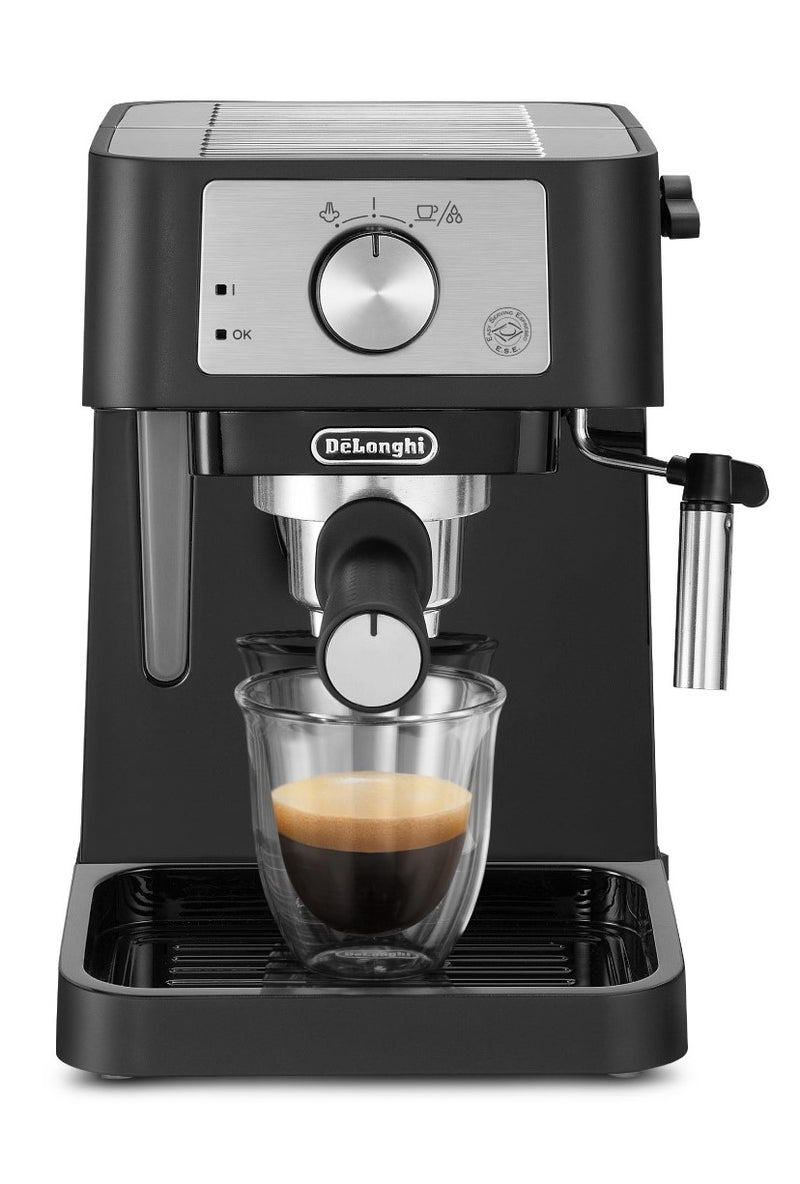
Price: $100–130 | Best for: First espresso machine, minimal footprint, honest beginner tool
The Stilosa is the machine we’d recommend to most people reading this guide. It’s compact, well-built for the price, and has a manual steam wand — not a panarello — which means you can actually practice real milk texturing technique. The 15-bar pump is standard (and largely marketing; 9 bars is what espresso actually uses, but the pump pressure matters for consistency not peak number). The portafilter accepts both pressurized and non-pressurized baskets if you want to upgrade later.
Key specs: Thermoblock, 15-bar pump, manual steam wand, 1L removable water tank, 1350W.
Biggest limitation: Temperature stability is average. Shot temperature can vary run-to-run, which makes dialing in inconsistent. Doesn’t have a gauge, so you’re flying somewhat blind.
Bottom line: For $100–130, this is genuinely good. Real steam wand. Takes standard 51mm portafilter baskets. Room to grow.
2. De’Longhi ECP3420 — Reliable Workhorse
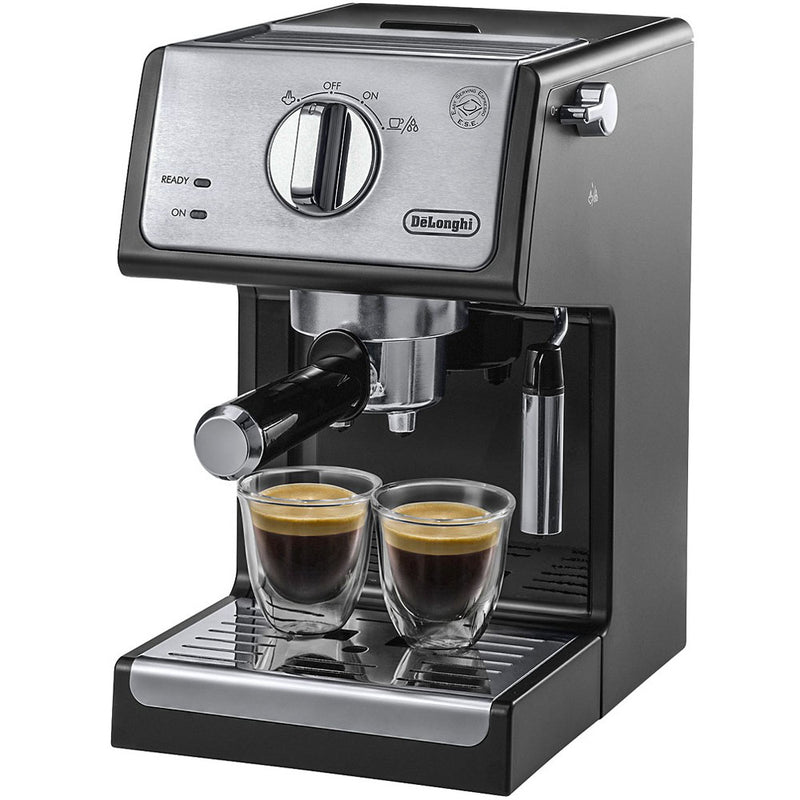
Price: $130–160 | Best for: Everyday milk drinks, someone who wants reliable and simple
The ECP3420 has been a fixture in the budget espresso market for years. It uses a pressurized portafilter (dual-wall basket), a panarello wand, and a 15-bar pump. The result: it consistently produces a reasonable espresso-style beverage with minimal user input, which is its strength and its limitation.
With the pressurized basket, you have less ability to dial in based on extraction — the second wall compensates for grind inconsistency. If you’re making lattes and cappuccinos and don’t care deeply about pulling technically correct shots, this is a low-fuss choice. If you want to learn espresso technique properly, the Stilosa’s real steam wand is the better teacher.
Key specs: Thermoblock, 15-bar pump, panarello wand, 1L water tank, pressurized portafilter.
Biggest limitation: Panarello wand makes real microfoam difficult. Pressurized basket limits dialing-in capability.
Bottom line: Dependable, consistent, but not a learning platform. Buy it if you want drinks, not craft.
3. Breville Bambino — Best Bang for Budget (On Sale/Refurb)
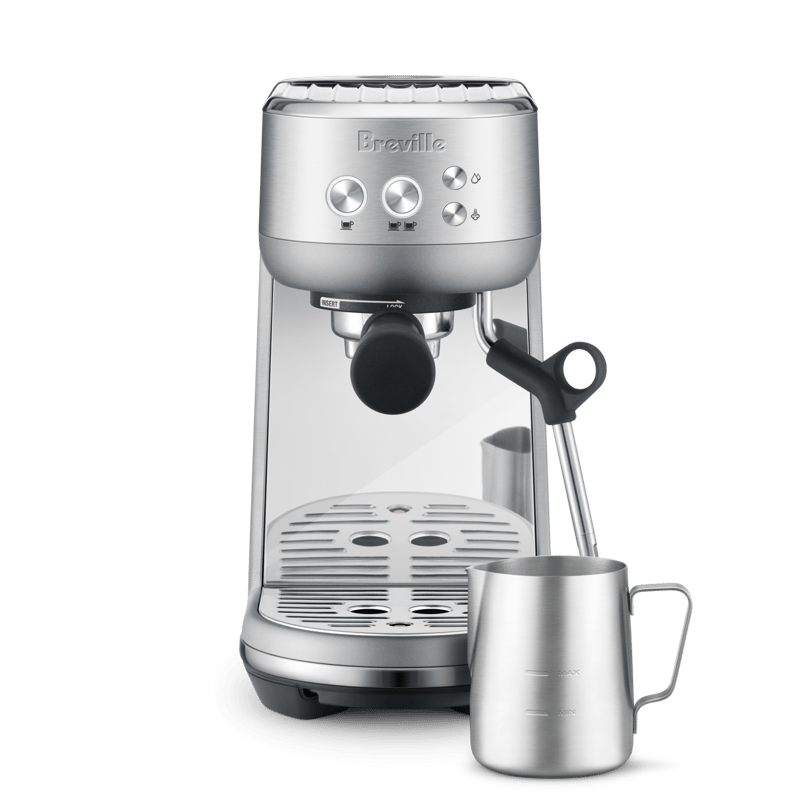
Price: $250 new, $180–200 refurb/sale | Best for: Someone who wants to learn real espresso technique without a $500 machine
The Bambino is technically above $200 at retail, but refurbished units and sale pricing regularly land it at $180–200. If you can get one at that price, it’s the best machine on this list by a meaningful margin.
Why: it uses a thermojet heating system that reaches temperature in 3 seconds, a real (non-pressurized) portafilter basket, a commercial-style steam wand, and automatic purge functionality. It produces cafe-quality shots when paired with a good grinder. It’s the machine specialty coffee people recommend to friends who ask “what should I get to learn espresso at home?” For a deeper look at how the Bambino stacks up against the Gaggia and Philips, see our espresso battle royale.
Key specs: Thermojet, 54mm portafilter (same as Breville Barista Express), real steam wand, 1.9L tank, 1600W.
Biggest limitation: Retail price exceeds $200. You need a good grinder separately (it has no built-in grinder). Steam wand requires technique.
Bottom line: If you find it under $200, buy it without hesitation. It’s a different class of machine.
4. Flair Neo — Best for People Who Don’t Need Steam
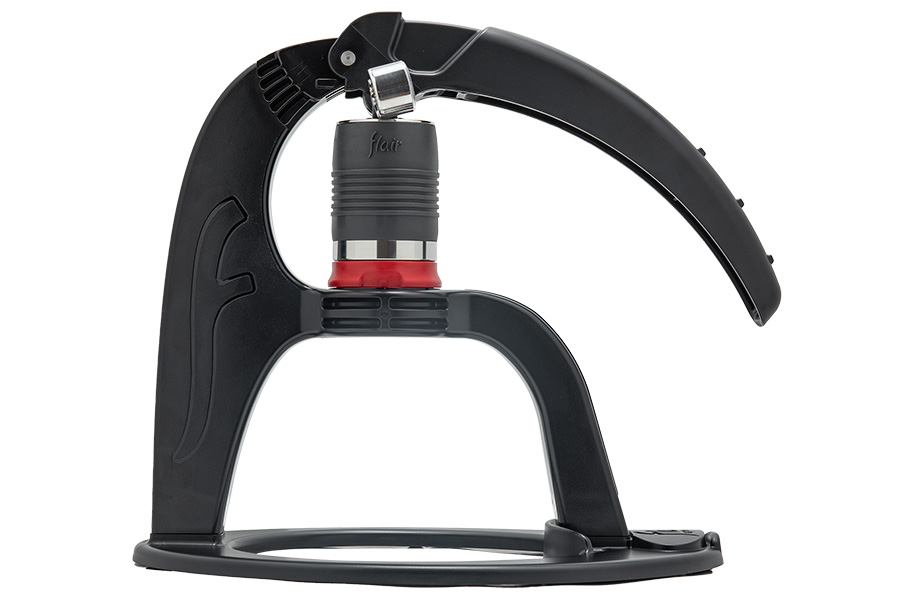
Price: $130–160 | Best for: Espresso purists on a budget, no-electricity situations, ultra-pure shot quality
The Flair Neo is a manual lever espresso maker — no electricity, no pump, no boiler. You heat water separately (kettle), load the grounds into a small portafilter, and press a lever down to generate 6–9 bars of pressure by hand. It produces some of the most transparent, clean espresso available at any price, because there’s no machine-induced heat variance — you control the entire pressure curve.
No steam wand. No milk drinks without a separate frother. No convenience. But the espresso quality ceiling is much higher than any pump machine in this price range.
Key specs: Manual lever, 6–9 bars (hand-controlled), stainless steel portafilter, compatible with 1Zpresso / Timemore hand grinders.
Biggest limitation: No milk frothing. Requires a kettle and separate heating. Slower workflow.
Bottom line: If you only drink black espresso or Americanos, the Flair Neo competes with machines three times its price. If you want milk drinks, look elsewhere.
5. Mr. Coffee Cafe Barista — Best for Hands-Off Convenience
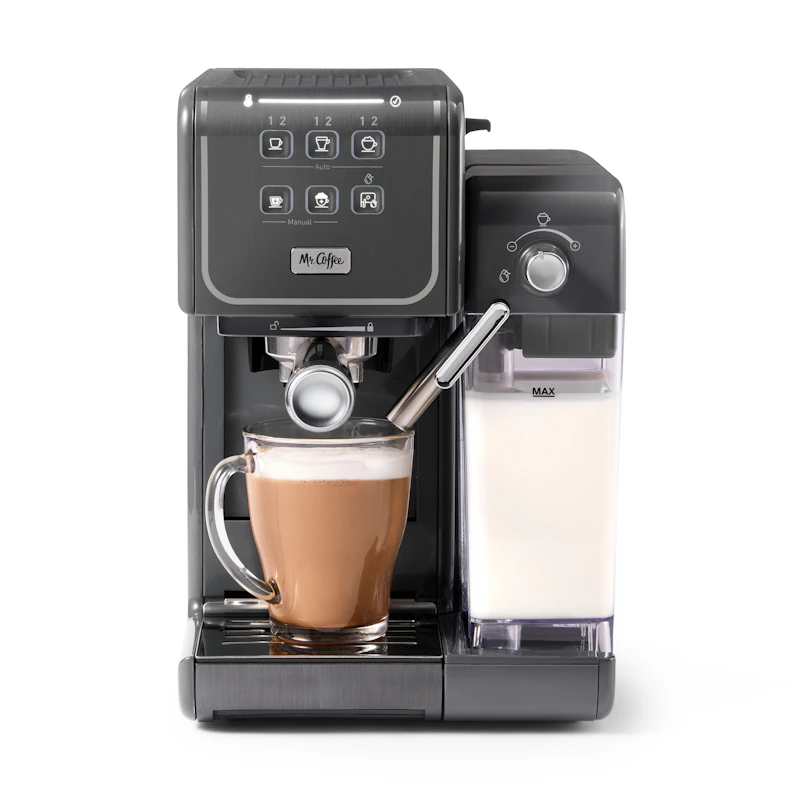
Price: $130–160 | Best for: Someone who wants one-touch lattes and cappuccinos without learning technique
The Cafe Barista has an integrated milk reservoir and one-touch buttons for espresso, latte, and cappuccino. You fill the milk container, press a button, and the machine steams and froths automatically. It’s the most convenient machine on this list.
It’s also the machine with the lowest espresso quality ceiling. The pressurized portafilter and fully automatic milk system prioritize convenience over craft. The milk froth is airy rather than silky. The espresso is serviceable rather than great.
Key specs: 15-bar pump, pressurized portafilter, automatic milk frother with reservoir, 40oz water tank.
Biggest limitation: Lowest quality ceiling on this list. Milk system difficult to clean thoroughly. No room to grow into better technique.
Bottom line: Buy this if you want the experience of fancy milk drinks with minimal fuss. Don’t buy it if you care about the espresso.
6. Gaggia Classic Pro — Best Long-Term Investment (Refurb Only)
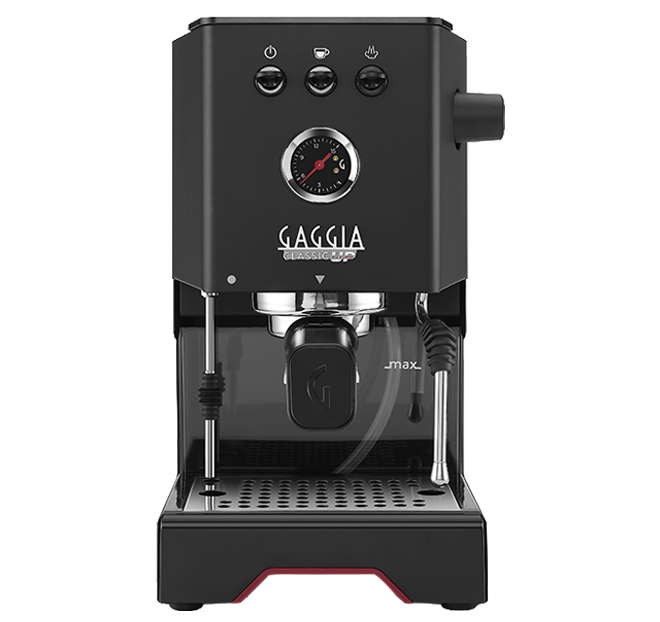
Price: $449 new, $180–250 refurb | Best for: Serious beginners who want a machine they’ll keep for a decade
The Gaggia Classic Pro is a commercial-grade home espresso machine with a genuine 58mm portafilter (the standard professional size), a brass boiler, a real steam wand, and a reputation for lasting 15+ years. It is not a budget machine — but refurbished units from authorized resellers (eBay certified refurb, Gaggia’s own refurb program) regularly appear at $180–250.
At that price, it’s not a $200 machine — it’s a $450 machine you got for $200. It requires more skill and more investment in a grinder (the 58mm standard means aftermarket basket upgrades are easy to find). But it won’t limit you as you improve. You’ll be dialing in this machine for years. For a complete breakdown of what the next price tier offers, see our equipment upgrade guide.
Key specs: Single boiler, 58mm commercial portafilter, 3-way solenoid valve, brass components, commercial steam wand.
Biggest limitation: Requires more technique than plug-and-play machines. Needs a proper grinder (the investment is higher). Refurb availability is inconsistent.
Bottom line: The machine to buy if you’re serious about espresso long-term and find it under $250.
The Upgrade Path
Here’s the honest arc most home espresso people follow:
- Buy a budget machine — understand what espresso is, practice technique, make milk drinks
- Invest in the grinder — the Encore ESP or a hand grinder like the 1Zpresso
- Upgrade the machine when the grinder reveals the machine’s limits (usually around 1–2 years in)
- Step to a mid-range machine — Breville Barista Express Pro, Breville Barista Touch, Profitec Go, or Rancilio Silvia Pro X depending on priorities
The machines we review at higher price points — our espresso machines under $500 guide and our espresso battle royale — cover the next tier in detail. Once you have a machine and a grinder, learning to dial in is the single most impactful skill to develop.
If you buy well in the first step, the upgrade path is clear and doesn’t feel like wasted money. If you buy a $200 machine plus a blade grinder, you’ll feel like espresso “isn’t for you” — when really it’s a calibration problem, not a capability problem.
Some links above are affiliate links. If you purchase through them, we earn a small commission at no extra cost to you.
Frequently Asked Questions
- Can you actually make good espresso with a $200 machine?
- Yes — with a good grinder. The machine is only half the equation. A $150 machine paired with a $80 capable hand grinder (like the 1Zpresso Q2) will produce better espresso than a $300 machine paired with a blade grinder. Grind consistency is the primary driver of espresso quality at every price point.
- What is a pressurized portafilter and why does it matter?
- A pressurized (dual-wall) portafilter has a second internal wall with a single tiny hole. This artificially increases pressure at the puck, which lets the machine produce crema-like foam even with inconsistently ground coffee. It's more forgiving of grind errors but limits your ability to dial in shots precisely, because the second wall masks feedback about what's actually happening during extraction.
- What's the difference between a thermoblock and a boiler?
- A thermoblock heats water on-demand by passing it through a heated metal element — it's fast (30–60 seconds) but less thermally stable than a traditional boiler. A boiler heats and holds a reservoir of water at temperature. Budget machines almost universally use thermoblocks. Machines with proper boilers (like the Gaggia Classic Pro) maintain more consistent shot temperature, which matters for repeatability.
- Is the Breville Bambino worth it at $250?
- At full retail, it's pushing the budget. At refurb pricing ($180–200), it's the strongest machine on this list by a clear margin. The thermojet heating, real non-pressurized basket, and commercial steam wand put it in a different performance tier. If your priority is learning real espresso technique without spending $400+, watch for refurb deals.
- Do I need an espresso machine to make espresso-style drinks at home?
- For true espresso (9 bars of pressure through finely-ground coffee), yes. But strong, concentrated coffee can be made with an AeroPress (which can approximate espresso), a Moka pot (stovetop brewer that produces 1.5–2 bars — not espresso but espresso-style), or a Nespresso (capsule-based, limited but convenient). None of these produce true espresso with the same crema and body as a pump machine.
- What grinder should I pair with a budget espresso machine?
- The minimum is a burr grinder capable of reaching espresso-fine settings. The Baratza Encore ESP (~$195) is the entry-level electric option designed for espresso. For less money, the 1Zpresso Q2 (~$75) or Timemore Chestnut C2 Max (~$65) are hand grinders that reach proper espresso fineness. Avoid the standard Baratza Encore for espresso — it doesn't grind fine enough.
- What's the steam wand difference between a panarello and a real wand?
- A panarello (the plastic frothing attachment on most budget machines) draws in air automatically and produces large-bubble foam that's airy and unstable. A real steam wand is a bare metal tube you control manually — you position it at the right angle and depth to roll the milk and incorporate air precisely, which produces tight, silky microfoam suitable for latte art. Real wands have a steeper learning curve but train you in actual barista technique.
- Should I buy new or refurbished?
- Refurbished units from manufacturer programs or eBay Certified Refurb are typically safe. The Breville and Gaggia refurb programs in particular are well-regarded. At the $200 budget, a refurb Breville Bambino or Gaggia Classic Pro represents dramatically better equipment than anything new at that price. Check Breville's factory reconditioned page and Gaggia's certified refurb listings before buying new at this tier.