Caffeine in Coffee: How Much Is in Your Cup, by Brew Method
How much caffeine is in drip, pour-over, French press, cold brew, espresso and decaf, by the serving and by the ounce, with what the FDA and EFSA say about daily amounts.
Match the upgrade to the problem: a burr grinder for sour-and-bitter cups, a scale for cups you can't repeat, water, a gooseneck for pour-over, and for espresso the grinder before the machine.
Strength is how concentrated your coffee is; extraction is how much of the grounds dissolved. Worked examples show how diluting differs from extracting, and which change fixes which cup.
Start filter coffee at 1:16 by weight: about 25 g of coffee and 406 g of water for a 12 fl oz mug. See the starting ratio for every brewer, and why espresso counts the drink instead of the water.
Channeling is water rushing through a few easy paths in the coffee, so one cup can taste sour and bitter at once. Here's how to spot it in pour-over and espresso, what causes it and how to fix it.
Turkish coffee is extra-fine coffee heated slowly with cold water in a cezve until it foams, then served with its grounds. Here are the amounts, temperatures and steps from its official description.
Brew a Vietnamese phin the way Nguyen Coffee Supply's guide does: 14 g of fine coffee, 4 oz of hot water, a 45-second bloom and about 5 minutes of drip. Then make cà phê sữa đá over ice.
Bolivia grows only about 80,000 bags of coffee a year, most of it in the Yungas around Caranavi. Here's where it grows, when it's harvested, why it's rare and what the best lots taste like.
Almost all of China's coffee grows in Yunnan, most of it Catimor. How the region grew with Nestlé and Starbucks, what its coffee tastes like, and what Yunnan's top-scoring lots are.
Does altitude make better coffee? What the studies found, why latitude changes what counts as high, what SHB and SHG mean in each country, and how to read the altitude on a bag.
What the Fairtrade, Fair Trade USA, USDA Organic, Rainforest Alliance and Bird Friendly seals require, from each certifier's current rules, and what Direct Trade and Cup of Excellence mean.
Extraction yield is the share of your coffee that dissolves into the cup. Learn to calculate it from dose, drink weight and TDS, what the SCA's 18–22% range means, and how to act on a result.
Harvest months for 20 coffee origins from Hoffmann's World Atlas and producer bodies, set against when a US importer expects each to land, and how to use the calendar to buy fresher coffee.
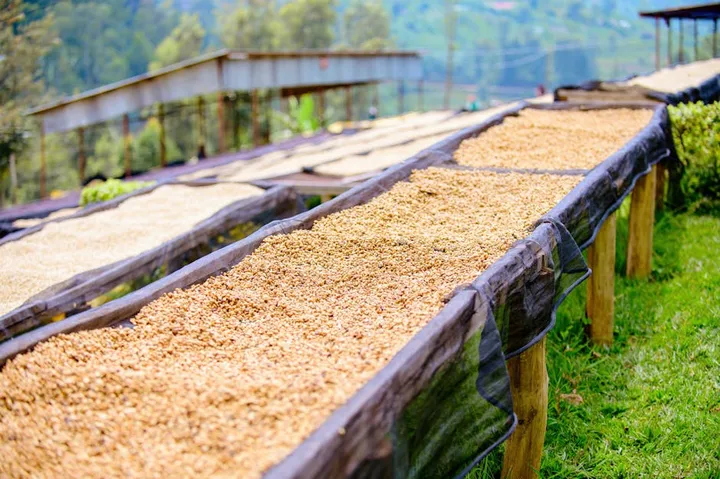
How coffee cherries become green beans: washed, natural, honey, wet-hulled, anaerobic and carbonic maceration explained, with the flavors each method tends to give and how to read them on a bag.
How coffee varieties are related, from Typica and Bourbon to Gesha, Catimors and F1 hybrids, with World Coffee Research's ratings for quality, yield and leaf rust, and what a variety tells you.