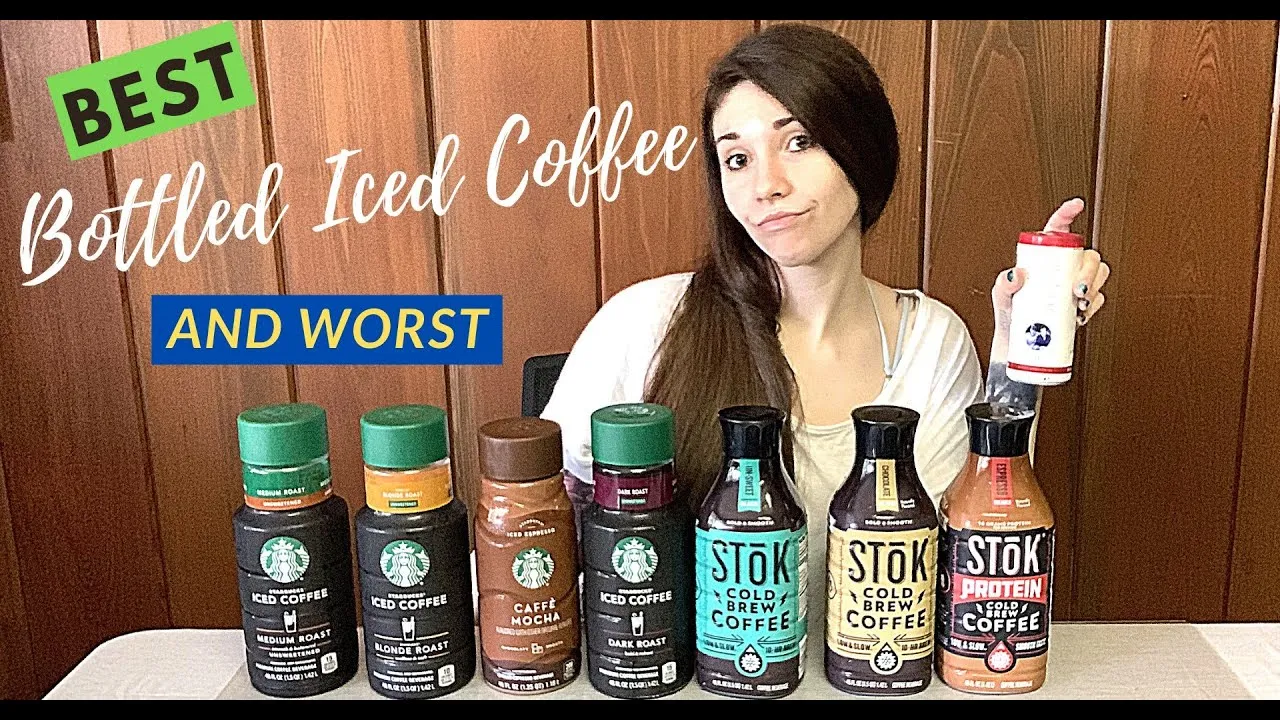
Bottled iced coffee should be smooth, rich, and refreshing. Many of them are watered-down and forgettable. We bought nine different brands and ranked them all on a scale of one to ten.
What We Looked For
Flavor: Does it taste fresh, or stale and burnt? Body: Many commercial iced coffees are watery — a good one should have weight and substance. Smoothness: Cold brew’s advantage is reduced acidity — we evaluated for harshness. Balance: Sweet shouldn’t mean syrupy; black shouldn’t mean bitter.
The Rankings
The Big Surprise
Stok dominated this test. Both the Chocolate Cold Brew and the Protein Coffee — brands we’d ranked near the bottom based on packaging alone — ended up among our top picks. Meanwhile, Starbucks’ Blonde Roast (which we expected to enjoy) fell flat.
The lesson: don’t judge a bottled coffee by its label.
Quick Picks
- Best flavor with some sweetness: Stok Black Chocolate (70 cal, no milk)
- Best straight black: Starbucks Dark Roast or Stok Unsweetened Black
- Best for fitness: Stok Protein Cold Brew
- Best dessert coffee: Starbucks Iced Espresso Mocha
If canned nitro specifically interests you, we also reviewed Starbucks’ canned nitro cold brew in depth — the nitrogen effect is real, but the bitterness is a deal-breaker without cream. Prefer making your own? Cold brew in an Instant Pot costs a fraction of any bottled option and takes 5 minutes of active effort.
What to Know About RTD Cold Brew
Cold brew’s “less acidic” reputation needs a nuance. Research shows cold brew and hot brew have comparable pH (4.85-5.13 for both). But cold brew has lower titratable acidity — meaning it tastes less acidic even though the pH is similar. It also has fewer bitter compounds because chlorogenic acid doesn’t break down as much without heat. That’s why good cold brew tastes smoother — it’s chemistry, not marketing.
The wateriness problem in many commercial brands likely comes from dilution to hit target caffeine or calorie numbers. When body is sacrificed for consistency, the result is thin coffee that’s technically cold brew but doesn’t deliver the experience.
Some links above are affiliate links. If you purchase through them, we earn a small commission at no extra cost to you.
Frequently Asked Questions
- How much caffeine is in bottled cold brew coffee?
- Most bottled cold brews contain 150-200mg of caffeine per bottle, though some concentrated brands push past 250mg. Cold brew's long steep time (12-24 hours) extracts more caffeine than hot brewing, so a single bottle often has more caffeine than a standard drip coffee. Always check the label — caffeine content varies significantly between brands and isn't regulated to a standard amount.
- How long does bottled cold brew last after opening?
- Once opened, bottled cold brew stays good for 7-10 days in the fridge. Sealed and pasteurized, most commercial bottles last 3-6 months (check the best-by date). The biggest quality risk isn't spoilage — it's oxidation. An opened bottle gradually loses its smooth character and develops stale, flat flavors. If it starts tasting papery or cardboard-like, it's past its prime even if it's still safe to drink.
- Is bottled cold brew better than making cold brew at home?
- Homemade cold brew is cheaper and fresher — a pound of whole beans makes roughly 8-10 servings at $1-2 each versus $3-5 per bottle. The tradeoff is convenience and time: homemade requires 12-24 hours of steeping and filtering. Quality-wise, fresh homemade cold brew with good beans will beat any shelf-stable bottle, because pasteurization and preservatives needed for shelf life dull some of the flavor complexity.
- Why does some bottled iced coffee taste watery?
- Brands dilute their cold brew concentrate to hit specific caffeine targets and calorie counts, and many over-dilute to keep costs down. The 'wateriness' is literally too much water relative to extracted coffee solids. Look for brands that list 'cold brew coffee' as the first and only ingredient rather than 'water, cold brew coffee concentrate' — the ingredient order tells you the ratio.