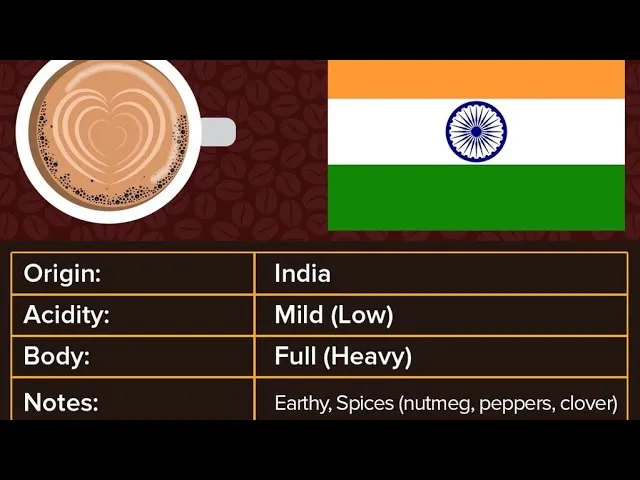
India produces about 6.7 million 60-kg bags of coffee per year (403,000 MT, Coffee Board of India 2025-26 post-blossom estimate), roughly 30% Arabica and 70% Robusta, and the flavor profile is genuinely unlike any other origin. Where Latin American coffees lead with acidity and African coffees lead with fruit, Indian coffee leads with body, spice, and deliberate low acidity. If you’ve never tried it, you’re missing one of the most distinctive cups in specialty coffee.
The Flavor Profile
Indian single-origin coffee delivers: full, creamy body, low acidity, and spice notes — nutmeg, black pepper, clove, cardamom. There’s often a chocolate undertone, sometimes tropical fruit, and a lingering finish that evolves as the cup cools.
The spice character isn’t added — it comes from the terroir. Coffee in India grows in the Western Ghats mountains alongside actual spice plantations. The shade trees that canopy the coffee often include cardamom, pepper, and other spice plants. The shared soil, microclimate, and ecosystem influence what ends up in the cup.
Indian coffee won’t shout at you. It whispers — layered, meditative, rewarding attention. The kind of coffee that tastes different at minute one and minute ten.
The Varieties
India grows two main varieties:
S795 — India’s signature Arabica variety, a cross of Kent (a Typica selection) with S288 (which carries some Liberica genetics). Clean, mild, balanced — the variety behind most Indian single-origin Arabica. The WCR Varieties Catalog lists it as an “introgressed (other)” variety; rust resistance is rated low/susceptible, though the variety holds up reasonably to coffee berry disease.
Kent — An older Typica selection originally developed in India for rust resistance (now largely superseded). Still grown on some estates. Produces mild, sweet cups.
Robusta — Roughly 70% of Indian production. Gets dismissed because of its association with cheap instant coffee, but Indian estate Robusta can be genuinely good: structured, clean, with chocolate and spice notes. Works beautifully in espresso blends.
Monsoon Malabar: The Happy Accident
India’s most famous processing method started as an accident. During colonial-era shipping, green coffee beans spent months at sea exposed to monsoon winds, humidity, and salt air along the Malabar Coast. The beans absorbed moisture, swelled, changed from green to pale gold — and tasted completely different when they arrived in Europe. Less acidity, heavier body, earthy-herbal character.
European customers loved it. Indian traders started replicating the process on purpose.
Today, Monsoon Malabar is a controlled 12-16 week process: green beans are spread on open warehouse floors during monsoon season, exposed to moisture-laden winds, periodically raked and turned. The beans can take 5-6 months total from harvest to export.
In the cup: Heavy, creamy body. Almost zero acidity. Earthy, herbal, sometimes funky. Distinctly different from any other coffee on earth. This is the Indian coffee most people recognize — and it’s excellent as espresso, especially in milk-based drinks where the body stands up to dairy without collapsing.
The Growing Regions
Karnataka (about 70% of production)
Chikmagalur — Where Indian coffee began. Altitude 2,000-6,000 feet, volcanic soil. Classic Indian profile: medium body, low acid, earthy-spicy. Newer specialty estates are experimenting with washed and natural processing, producing more fruit-forward cups.
Coorg (Kodagu) — Lower altitude, lush shade-grown estates under silver-oak canopy. Chocolate, mild fruit, comfortable body.
Kerala (about 21%)
Where Monsoon Malabar processing happens. The Wayanad plateau produces quality Arabica and premium Robusta. Kerala’s connection to spice production (cardamom, pepper, vanilla) permeates the coffee culture.
Tamil Nadu (about 5%)
The Nilgiri Hills, 3,000-6,000 feet. Produces lighter, slightly brighter coffees with floral notes that surprise people expecting the earthy Indian baseline.
Shade-Growing: More Than Marketing
Nearly all Indian coffee is shade-grown under native tree canopy — primarily silver oak. This isn’t just environmentally virtuous; it directly affects flavor:
- Slower cherry maturation under shade means more complex sugar and acid development
- Shared ecosystem with spice plants creates genuine terroir influence
- Healthier soil from diverse root systems adds mineral complexity to the cup
- Lower plant stress produces fewer bitter compounds
When you buy Indian estate coffee, you’re generally supporting a forest ecosystem, not a monoculture plantation.
How to Brew Indian Coffee
Indian coffee’s body-forward, low-acid profile pairs well with specific methods:
French press: Showcases the full body and lets spice notes develop. 200°F, 4-5 minutes. The metal filter lets all the oils through, which is exactly what you want with a body-forward origin like this.
Espresso: Excellent. The body holds up to milk, the low acidity prevents sourness, and the spice notes complement extraction sweetness. Works as both a single-origin shot and a blend component.
South Indian filter coffee: The traditional method — a gravity drip system using finely ground coffee over hot milk. If you want the full cultural experience, this is it.
Pour-over: Works with Arabica lots but use a slightly slower pour. The delicate spice and floral notes emerge more clearly with careful extraction.
Roast level: Medium is the sweet spot. Too light and the spice notes don’t develop. Too dark and you lose the nuance that makes Indian coffee interesting.
What to Look For
If you’re buying Indian coffee for the first time:
Start with Monsoon Malabar if you want the distinctly Indian experience — heavy body, no acidity, herbal earthiness. It’s unlike anything else. Monsoon Malabar on Amazon
Try a Chikmagalur or Coorg estate Arabica if you want something more nuanced — spice, mild fruit, clean balance. Chikmagalur Coffee on Amazon
Look for estate names rather than generic “Indian coffee.” Traceability matters. Araku Valley (a cooperative in Andhra Pradesh) is producing excellent specialty lots worth seeking out.
Indian coffee is one of the most underrated origins in specialty coffee. If you enjoy exploring what single-origin coffee can reveal about a place, India is essential. The quality is already there — it just needs more people paying attention. It rewards comparison with other body-forward origins like Indonesian coffee and contrasts beautifully with bright-acid origins like Ethiopian coffee.
Some links above are affiliate links. If you purchase through them, we earn a small commission at no extra cost to you.
Frequently Asked Questions
- What is Monsoon Malabar coffee?
- A uniquely Indian processing method where green coffee beans are spread on open warehouse floors during monsoon season and exposed to moisture-laden winds for 12-16 weeks. The beans swell, change from green to pale gold, and lose almost all acidity. The result is heavy, creamy body with earthy-herbal character — completely unlike any other coffee. It started as an accident during colonial-era ocean shipping and was deliberately replicated when European customers loved the flavor.
- Why does Indian coffee taste like spice?
- It's the terroir, not an additive. Coffee in India grows in the Western Ghats alongside actual spice plantations — cardamom, pepper, vanilla, and other spice plants share the shade canopy, soil, and microclimate. This ecosystem influence gives Indian coffee its characteristic nutmeg, black pepper, clove, and cardamom notes. The shared root systems and organic matter cycling create genuine flavor crossover.
- Is Indian coffee Arabica or Robusta?
- Roughly 30% Arabica, 70% Robusta. The Coffee Board of India's 2025-26 post-blossom estimate puts total output at 403,000 MT (about 6.7 million 60-kg bags) — 118,125 MT Arabica and 284,875 MT Robusta. All Indian specialty single-origin coffee is Arabica, primarily the S795 variety (a Kent x S288 cross). Indian estate Robusta is actually worth trying too — it's cleaner and more structured than most Robusta, with chocolate and spice notes, and works beautifully in espresso blends.
- What's the best Indian coffee to try first?
- Start with Monsoon Malabar if you want the distinctly Indian experience — heavy body, zero acidity, earthy-herbal character, completely unique. Start with a Chikmagalur or Coorg estate Arabica if you want something more nuanced — spice notes, mild fruit, clean balance. Either way, brew at medium roast in a French press or as espresso to showcase the body that defines Indian coffee.