Mushroom coffee is a billion-dollar category. Depending on which market research firm you ask, it was worth somewhere between $1.3 billion and $3.2 billion in 2025, with projections hitting $4 to $5.5 billion by 2035. The pitch is appealing: all the benefits of coffee, plus cognitive enhancement, immune support, reduced jitters, and adaptogenic stress relief, delivered in a convenient instant packet.
The question a coffee person asks is different from the question a wellness consumer asks. The wellness consumer asks: does this work? The coffee person asks: does this work, what am I drinking, and is there a better way to get there?
I spent time with the actual clinical literature, not the brand marketing pages. Here’s what I found.
What Mushroom Coffee Actually Is
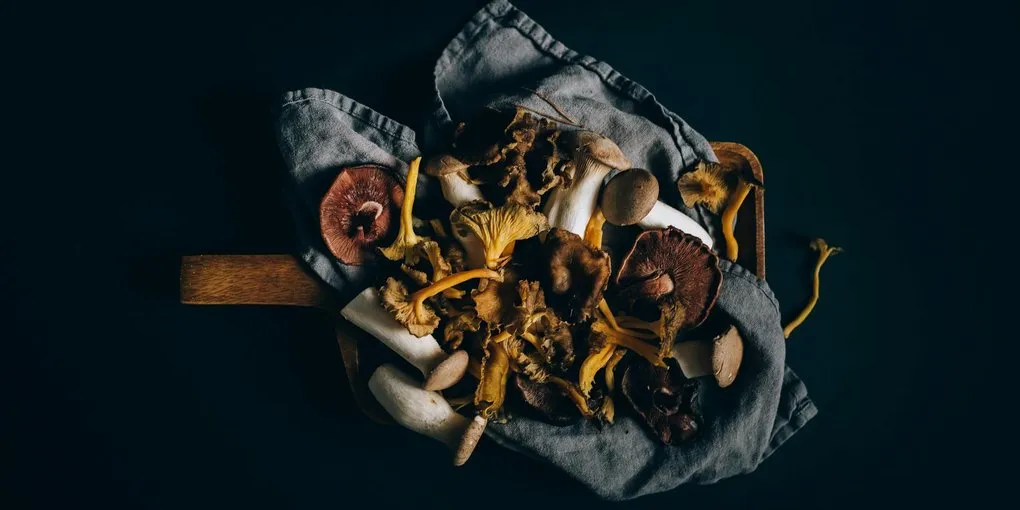
The product is simpler than the marketing suggests. Mushroom coffee is instant coffee (occasionally ground coffee) blended with powdered mushroom extracts. The extracts come from hot-water extraction, dual extraction (water plus alcohol), or sometimes dried mycelium grown on grain substrates.
The mushrooms most commonly used:
- Lion’s mane (Hericium erinaceus) — marketed for cognition and focus
- Chaga (Inonotus obliquus) — marketed for antioxidants
- Reishi (Ganoderma lucidum) — marketed for stress and sleep
- Cordyceps (Cordyceps militaris) — marketed for energy and endurance
- Turkey tail (Trametes versicolor) — marketed for immune support
A typical product contains about 2 grams of a mushroom blend split across four to six species, mixed with enough instant coffee to deliver around 48 to 50 mg of caffeine per serving. That’s roughly half what you’d get from a standard 8-ounce cup of brewed coffee, which runs 95 to 165 mg depending on brew method and can reach 180 mg with stronger extraction.
The reduced caffeine isn’t a special formulation. There’s simply less coffee in the packet because mushroom powder is taking up space.
Price-wise, you’re looking at about $1.20 per serving for RYZE or Everyday Dose, around $1.50 for MUD\WTR (which isn’t actually coffee — it’s a cacao-and-tea base), and roughly $2.25 for Four Sigmatic. Those are instant-coffee prices for what brands position as a functional upgrade.
The Evidence, Mushroom by Mushroom
Here’s where mushroom coffee marketing and mushroom coffee science diverge. The mushrooms in these blends do contain real bioactive compounds. The question is whether they do anything meaningful at the doses you’re actually consuming, in the format you’re consuming them.
Harvard Health put it plainly: “There is very little research on medicinal mushrooms that includes humans.” And more pointedly: “None of that research was conducted on mushroom coffee.”
Cleveland Clinic registered dietitian Beth Czerwony made a similar point — mushrooms have real benefits, but claims by mushroom coffee brands lack substantial scientific support.
That said, the individual mushrooms deserve a fair hearing.
Lion’s Mane (Cognition)
Lion’s mane contains hericenones and erinacines — compounds that stimulate nerve growth factor (NGF) production in cell cultures. This is real biochemistry. NGF is critical for neuronal health and plasticity. The problem is the gap between cell cultures and your morning cup.
The most-cited human study is Mori et al. (2009): 30 older adults with mild cognitive impairment took 3 grams per day for 16 weeks. Cognitive test scores improved compared to placebo. Promising — until you read that the gains reversed completely within four weeks of stopping supplementation. And 30 participants is a very small study.
Docherty et al. (2023) studied 41 healthy adults at 1.8 grams per day for 28 days. Participants performed faster on one specific task after a single dose, but after 28 days of supplementation, they actually scored worse on word recall compared to placebo.
Surendran et al. (2025) gave healthy younger adults a single dose and found no significant effect on cognitive function or mood.
The verdict on lion’s mane: mixed results in small studies, and the best result (Mori) used 3,000 mg per day of lion’s mane alone. Hold that number — it becomes important later.
Chaga (Antioxidants)
Chaga has high polyphenol content in laboratory assays. That’s real. What’s also real: there are zero completed human clinical trials on chaga supplementation.
In vitro antioxidant activity does not automatically translate to in vivo benefit. Your gut, liver, and bloodstream are not petri dishes. Compounds that scavenge free radicals in a test tube may be poorly absorbed, rapidly metabolized, or simply irrelevant at achievable blood concentrations.
There’s also a safety signal worth knowing about. Multiple case reports document chaga-induced oxalate nephropathy — kidney damage from oxalate accumulation. One published case involved a 69-year-old consuming 10 to 15 grams per day who developed acute kidney injury. That’s a high dose and probably not relevant to mushroom coffee quantities, but it does establish that chaga is not inherently benign at scale.
Reishi (Stress and Sleep)
Reishi has one large randomized controlled trial worth mentioning: a 2025 study with 499 participants that found benefit for stress and sleep outcomes. The catch? The intervention combined reishi with ashwagandha. You cannot attribute the benefit to reishi alone when the study design doesn’t isolate it.
A mouse study showed reishi affecting sleep pathways through gut microbiome modulation. Interesting mechanistically, not replicated in humans.
Safety matters here too. Reishi is an immunostimulant. Memorial Sloan Kettering specifically warns against its use with immunosuppressant medications, for organ transplant recipients, and for people with autoimmune conditions. If you’re healthy, this probably isn’t a concern at mushroom-coffee doses. But the blanket “reishi is safe and natural” messaging from brands omits real contraindications.
Cordyceps (Energy)
Cordyceps has the strongest human evidence of any mushroom in these blends. Yi et al. (2016) studied 28 participants taking 4 grams per day for three weeks and found VO2max improved by 4.8 ml/kg/min — a meaningful boost in aerobic capacity. Multiple randomized controlled trials and a meta-analysis support endurance benefits at 2 to 4 grams per day over 3 to 12 weeks.
This is real. Cordyceps appears to do something measurable for exercise performance at clinical doses.
The problem, again, is dose. Those studies used 2 to 4 grams of cordyceps alone. A mushroom coffee blend with 2 grams total of six different mushrooms delivers roughly 333 mg of cordyceps — one-sixth to one-twelfth of the effective dose.
Turkey Tail (Immune Support)
Turkey tail contains polysaccharide-K (PSK), which has been used as an adjunct cancer therapy in Japan. The immune-modulating research is mostly in oncology contexts at pharmaceutical-grade doses. For general “immune support” in healthy adults from a scoop of blended powder, the evidence base is essentially nonexistent.
The Dosing Problem
This is the single most important criticism of mushroom coffee, and brands have no good answer for it.
Clinical studies that found benefits used 1.5 to 4 grams per day of a single mushroom extract. Lion’s mane cognition studies used 3,000 mg. Cordyceps endurance studies used 2,000 to 4,000 mg. These doses were of one species, taken alone, standardized for specific bioactive compounds.
A mushroom coffee product typically contains about 2 grams of a blend of four to six mushrooms. Simple division: that’s roughly 333 to 500 mg of each mushroom. For lion’s mane, that’s about one-sixth to one-ninth of the dose used in the Mori study. For cordyceps, it’s one-sixth to one-twelfth of the clinical dose.
Brands get around this with “proprietary blend” labels that don’t disclose individual mushroom amounts. You can’t verify whether the blend is evenly split or heavily weighted toward cheaper species. You can’t compare what you’re taking to what was studied because you don’t know what you’re taking.
Even if every mushroom in the blend worked perfectly at every dose — and the evidence does not support that — the math doesn’t get you to clinical relevance.
The Coffee Quality Trade-Off
This is where I have a perspective that wellness reviewers don’t.
RYZE uses Mexican Arabica instant coffee. Four Sigmatic uses Honduran Arabica. None of these brands publish SCA cupping scores, processing details, roast dates, or origin lot information. The word “Arabica” on a label tells you almost nothing — the majority of the world’s commodity coffee is Arabica. It’s like labeling wine “made from grapes.”
Instant coffee is pre-brewed, concentrated, and then freeze-dried or spray-dried. The process strips volatile aromatic compounds, flattens acidity, and eliminates the extraction variables that define specialty coffee. You lose roast freshness, grind quality, water temperature control, brew ratio management, and every element of terroir that distinguishes a good coffee from a generic one.
At $1.20 to $2.25 per serving, you could be buying exceptional specialty beans with SCA scores above 85 — coffee with traceable origin, recent roast dates, and actual flavor complexity. A 12-ounce bag of specialty whole bean at $18 to $22 yields roughly 20 to 24 servings at $0.75 to $1.10 per cup. Better coffee, for less money, with well-documented health benefits that come from coffee’s 1,000-plus bioactive compounds — including potent antioxidants, chlorogenic acids, and melanoidins that contribute up to 70% of total antioxidant intake in some Western diets.
If caffeine sensitivity is the appeal, half-caf blends, decaf options, or naturally lower-caffeine origins achieve the same result without sacrificing extraction quality.
What It Actually Tastes Like
Consumer reviews cluster around a few consistent descriptions: earthy, nutty, mild, less bitter than regular coffee. That tracks — you’re drinking weaker instant coffee with mushroom powder mixed in.
Less consistently, you’ll also find: gritty texture, thin body, dirt-like aftertaste, and watery. RYZE tends to read grainier and more mushroom-forward. Four Sigmatic generally gets better taste ratings among the instant options.
If you enjoy the taste, that’s a valid reason to drink it. Taste is subjective and doesn’t need clinical evidence to justify. But if you’re drinking it despite the taste because you believe in the functional benefits, the evidence section above should recalibrate that calculation.
Nobody who’s tasted a properly extracted pour-over of a washed Ethiopian Yirgacheffe would describe instant mushroom coffee as a flavor upgrade. The comparison isn’t close.
The Verdict
Mushroom coffee is not a scam in the way that some supplements are. The mushrooms in these products contain real bioactive compounds. Lion’s mane does stimulate NGF in lab conditions. Cordyceps does improve endurance at clinical doses. These are real organisms with real biochemistry.
But the products as sold have three fundamental problems:
The doses don’t match the science. Every positive human study used single-mushroom doses far above what any blend delivers. Proprietary labels hide this gap.
The coffee is bad. Not bad-for-you — just bad coffee. Commodity instant beans with no traceability, no freshness, no extraction control. From a specialty coffee perspective, you’re paying a premium for a downgrade.
There’s a better alternative. If you want the health benefits of coffee, drink good coffee. The evidence base for coffee’s protective effects against cardiovascular disease, type 2 diabetes, neurodegeneration, and several cancers is orders of magnitude stronger than any mushroom supplement research. If you also want mushroom benefits, buy standalone mushroom supplements at clinical doses from brands that test for beta-glucan content and use fruiting body extracts. You’ll spend roughly the same money and actually hit the doses the studies used.
Harvard Health said it well: “You would be better off serving a side of shiitakes alongside your morning eggs.”
That’s not a bad idea. Good coffee in one hand, actual mushrooms on your plate, and your money spent where the evidence actually supports the investment.
Frequently Asked Questions
- Is mushroom coffee better for you than regular coffee?
- No. Regular coffee has a vastly larger evidence base — over 1,000 human studies supporting protective effects against cardiovascular disease, type 2 diabetes, neurodegeneration, and several cancers. Mushroom coffee adds mushroom extracts at sub-clinical doses to commodity-grade instant coffee. No mushroom coffee product has been studied as a complete product in any human trial. You get weaker coffee with unproven additions.
- Does mushroom coffee have less caffeine?
- Yes — most mushroom coffees contain about 48 to 50mg of caffeine per serving, roughly half the 80 to 100mg in a standard brewed cup. But this isn't because mushrooms reduce caffeine. There's simply less coffee in the packet because mushroom powder displaces it. You'd get the same caffeine reduction by using half a scoop of regular instant coffee.
- What does mushroom coffee taste like?
- Common descriptions: earthy, nutty, mild, less bitter than regular coffee. Some users also report gritty texture, thin body, watery mouthfeel, and a dirt-like aftertaste. RYZE tends to be grainier and more mushroom-forward. Four Sigmatic generally gets better taste ratings. None of these products compare favorably to properly extracted specialty coffee.
- Is mushroom coffee safe?
- For most healthy adults, yes, in the amounts present in mushroom coffee products. However, reishi is an immunostimulant — Memorial Sloan Kettering warns against use with immunosuppressants, for transplant recipients, and for people with autoimmune conditions. Chaga has case reports of oxalate nephropathy (kidney damage) at high doses. If you take medications or have immune-related conditions, check with your doctor before adding mushroom supplements.
- Which mushroom coffee brand is best?
- If you're going to try mushroom coffee, Four Sigmatic generally receives the best taste ratings among instant options. RYZE and Everyday Dose are more affordable at about $1.20 per serving. MUD/WTR is not actually coffee — it's a cacao-and-tea base. None of these brands publish individual mushroom amounts, SCA cupping scores, or third-party clinical data on their finished products.
- Can I just add mushroom powder to my own coffee?
- Yes, and this is the more rational approach if you want both good coffee and mushroom compounds. Buy quality specialty beans and brew them properly. Then add standalone mushroom extract powder (lion's mane, cordyceps, or whichever species you want) at the dose the research actually used — 1.5 to 4 grams of a single species. Look for fruiting body extracts with tested beta-glucan content, not mycelium-on-grain products.
- Does mushroom coffee actually help with focus?
- The evidence does not support this claim at the doses mushroom coffee delivers. The best lion's mane study (Mori 2009) used 3,000mg per day in older adults with mild cognitive impairment and found modest improvement that reversed when supplementation stopped. A mushroom coffee blend delivers roughly 333mg of lion's mane — about one-ninth of that dose. A 2023 study (Docherty) found healthy adults on 1,800mg per day actually performed worse on word recall after 28 days. A 2025 study (Surendran) found no cognitive effect from a single dose in healthy younger adults.