When people talk about African coffee, they mean Ethiopia and Kenya. Maybe Rwanda. If they’re adventurous, Tanzania or Burundi. Nobody mentions Malawi. The country doesn’t even register in most specialty coffee conversations — its total annual production is so small that some trade databases don’t bother tracking it separately.
That’s a shame, because the coffee coming out of Malawi’s northern highlands is quietly exceptional. Grown at 1,200—1,800 meters near the shores of Lake Malawi, the country’s best lots deliver a profile that’s distinctly East African — bright acidity, floral notes, berry — but with a delicacy and tea-like refinement that’s entirely its own. If Kenya is a bold espresso, Malawi is a rare single-estate tea.
The country has serious structural challenges (infrastructure, scale, market access), but for adventurous coffee drinkers willing to seek out the unusual, Malawi offers a genuinely unique experience.
Coffee in Malawi: A Brief History
Coffee was introduced to Malawi (then Nyasaland) by Scottish missionaries in the late 1800s, around the same time that tea cultivation began. For most of the 20th century, tea dominated the country’s hot beverage exports — Malawi remains one of Africa’s largest tea producers — while coffee remained a minor crop.
Large-estate coffee production existed through the colonial and post-independence periods, with companies like Mzuzu Coffee and the Sable Farming Company operating plantations in the northern highlands. But the combination of low commodity prices, limited processing infrastructure, and competition from tea kept the sector small.
The shift toward specialty began in the 2000s when international development programs (USAID, EU-funded initiatives, and organizations like TechnoServe) invested in smallholder cooperatives, processing equipment, and farmer training. The Mzuzu Coffee Cooperative Union — representing thousands of small farmers in the northern region — became the primary vehicle for quality improvement and market access.
Today, Malawi produces an estimated 5,000—7,000 bags annually — even smaller than most people realize. But the quality trajectory is sharply upward. In 2017, the Mzuzu Coffee Cooperative Union won 8 of the top 10 spots at the African Fine Coffee Association’s Taste of Harvest competition — a result that put Malawi on the specialty map overnight.
Growing Regions
Mzuzu / Northern Region
The Mzuzu region in northern Malawi is the country’s coffee heartland. Farms spread across the highlands between Lake Malawi to the east and the Nyika Plateau to the west, at 1,200—1,700 meters. The lake’s massive thermal mass moderates temperatures and generates moisture that sustains the region’s lush vegetation.
The Mzuzu Coffee Cooperative Union organizes production from smallholder members scattered across the northern highlands. Processing has improved significantly with the introduction of centralized wet mills where cherry can be properly depulped, fermented, and washed before drying.
Flavor profile: Bright acidity, citrus, floral notes, tea-like body, clean sweetness, delicate.
Misuku Hills
The Misuku Hills, in the far north near the Tanzanian border, represent Malawi’s highest coffee-growing area — farms here reach 1,700—2,300 meters, with deep brown and red clay soils receiving 1,500—2,000mm of annual rainfall. Misuku produces over half of the Mzuzu cooperative’s coffee. The hills are remote, access is difficult, and production volumes are minuscule. But the combination of altitude, volcanic soil, and abundant cloud cover creates conditions that produce some of Malawi’s most complex lots.
Coffee from Misuku shows more fruit complexity than the broader Mzuzu area, with berry notes, stone fruit, and a brighter acidity that hints at Kenyan intensity without the power.
Flavor profile: Berry, stone fruit, bright acidity, more complexity than lowland lots, floral.
Nkhata Bay / Central Lakeshore
Some coffee grows at lower altitudes (800—1,200 meters) along the central lakeshore, though quality is generally below the northern highlands. These lots tend toward commercial grade — mild, clean, but lacking the complexity that altitude brings.
Flavor profile: Mild, clean, low acidity, nutty, undistinguished.
Varieties
Malawi’s varietal landscape reflects its colonial and post-colonial agricultural history:
- Nyasaland: One of the oldest Arabica varieties in Africa — a Bourbon/Typica derivative introduced to Malawi in the 1870s by Dr. John Buchanan, who brought it from Jamaica via Edinburgh’s Royal Botanic Gardens. This heritage variety has been growing in Malawian soil for over 150 years.
- Agaro: An Ethiopian-origin variety introduced through regional agricultural programs. Well-adapted to local conditions, produces clean cups with moderate acidity.
- Catimor (including Catimor 129): Introduced for disease resistance. Present in newer plantings, particularly at lower altitudes. Cup quality variable.
- Geisha: Highly prized in the northern highlands, where the altitude supports the variety’s potential. Small volumes but growing interest.
- SL28: Some presence, reflecting Kenya’s influence on regional agronomy. The Kenyan Scott Labs selection can produce exceptional cups at Malawian altitudes.
- Bourbon: Limited presence but produces some of the region’s sweetest lots.
The varietal mix is eclectic — a consequence of Malawi’s coffee sector developing through various aid programs and agricultural initiatives rather than through a single national research institute. This creates inconsistency but also the potential for surprises.
Processing
Washed: The dominant method, particularly for specialty-grade lots processed through the cooperative system. Malawian washed coffees are characteristically clean and delicate — the processing preserves the tea-like quality that distinguishes the origin.
Natural: Limited but growing. Some producers are experimenting with natural processing to add fruit complexity. The results are mixed — Malawi’s humid climate makes controlled drying more challenging than in drier East African origins.
Honey: Very limited. A few progressive farms are exploring honey processing as a differentiation strategy.
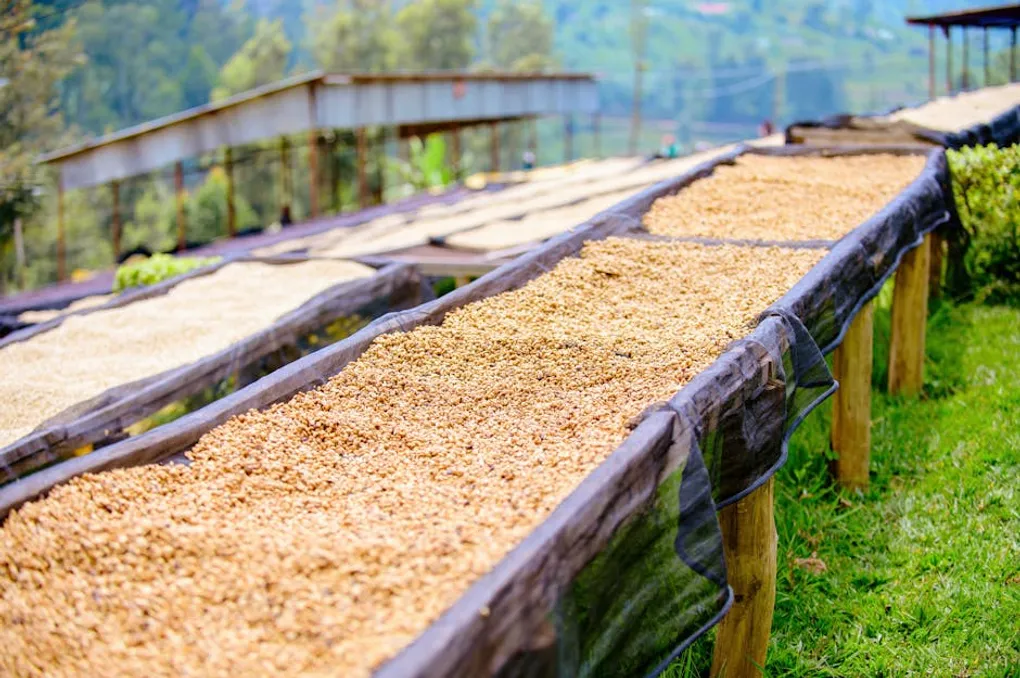
The biggest processing challenge remains infrastructure. Many smallholder farms are remote, and getting cherry to a wet mill quickly enough to prevent degradation is an ongoing logistical problem. Investment in decentralized processing (farm-level depulpers and raised drying beds) is the highest-leverage quality improvement available.
What Malawian Coffee Tastes Like
The signature of well-processed Malawian coffee is delicacy:
- Acidity: Bright, clean, citric to malic. Present but never overpowering — more Kenyan in character than Ethiopian, but gentler.
- Florals: Subtle floral notes, particularly in higher-altitude Misuku lots. Not as intense as Ethiopian florals, but a clear presence.
- Fruit: Citrus (lemon, orange), sometimes berry. More restrained than Kenyan fruit bombs.
- Body: Light to medium. Tea-like is the most common descriptor, and it’s genuinely apt — there’s a refined, almost translucent quality to the best lots.
- Sweetness: Clean and gentle. Brown sugar, light honey.
- Finish: Clean, quick, pleasantly bright.
The overall impression is of a coffee that’s polished and elegant rather than powerful or intense. It won’t punch you in the face like a Kenyan AA or overwhelm you with fruit like a natural Ethiopian. But for drinkers who appreciate nuance, restraint, and clarity, Malawian coffee offers something special.
The Tea Connection
Malawi’s identity as a tea-producing country actually informs its coffee character in interesting ways. The same highlands that produce excellent tea — cool temperatures, abundant moisture, well-drained acidic soils — also happen to produce coffee with tea-like qualities. The terroir creates a through-line: whether the plant is Camellia sinensis or Coffea arabica, the Malawian highlands impart a delicacy and refinement that feels connected.
Some of Malawi’s most progressive coffee farmers are former tea growers who brought their agricultural discipline and quality orientation to coffee. The tea industry’s infrastructure (roads, processing facilities, export networks) has also indirectly benefited the coffee sector.
Challenges and Potential
Malawi’s coffee sector faces real obstacles:
- Scale: Total production is negligible in global terms. This limits marketing budgets, trade relationships, and buyer awareness.
- Infrastructure: Remote farms, poor roads, limited processing facilities.
- Climate risk: Changing rainfall patterns and increasing temperatures threaten the narrow altitude band where quality coffee grows.
- Market competition: Malawian coffee competes for attention against its much larger East African neighbors (Ethiopia, Kenya, Tanzania, Uganda), all of which have established reputations and trade infrastructure.
But the potential is genuine. The altitude is there. The terroir produces distinctive flavor. The cooperative model provides a framework for quality improvement. And the “undiscovered African origin” narrative — when backed by genuinely good coffee — resonates with specialty buyers who prize novelty alongside quality.
Where to Buy Malawian Coffee
Malawian coffee appears sporadically in specialty roaster catalogs. It’s not a standard offering anywhere — you’ll need to watch for seasonal releases and limited runs. Key things to look for:
- Mzuzu or Misuku regional designation (avoid generic “Malawi” without specifics)
- Washed process for the cleanest expression
- Roast date within 2—3 weeks
- Specialty importers like Cafe Imports and Atlas Coffee occasionally carry Malawian lots
Search for Malawi specialty coffee to find current offerings from roasters who source this rare origin.
Brew as pour-over — the light body and delicate florals are best served by a method that prioritizes clarity. Chemex, with its thick paper filter, is an excellent choice for Malawian coffee’s tea-like refinement.
Final Thoughts
Malawi is the origin you recommend when someone says they’ve tried everything. It’s not going to convert non-coffee drinkers or wow an espresso purist, but for the palate that’s calibrated to appreciate subtlety — the difference between a good pour-over and a great one — Malawian coffee from the Mzuzu highlands offers a rare and genuine pleasure.
The country’s coffee sector is young, small, and fragile. Every bag purchased from Malawian cooperatives directly supports an industry that’s fighting to establish itself against enormous structural odds. That’s not a reason to buy mediocre coffee, of course. But when the cup is genuinely good — delicate, bright, clean, floral, and unlike anything else on your shelf — the story behind it makes it even better.
Some links above are affiliate links. If you purchase through them, we earn a small commission at no extra cost to you.
Frequently Asked Questions
- What does Malawi coffee taste like?
- Malawian coffee from the northern highlands is characterized by delicacy and refinement. Expect bright, clean acidity (citrus to malic), subtle floral notes, light-to-medium tea-like body, and gentle sweetness (brown sugar, light honey). The overall impression is polished and elegant -- more restrained than Kenyan or Ethiopian coffee, but with a nuance and clarity that rewards attentive tasting.
- Where does coffee grow in Malawi?
- Almost all Malawian coffee grows in the northern highlands, particularly the Mzuzu region (1,200--1,700m) between Lake Malawi and the Nyika Plateau, and the Misuku Hills (1,700--2,300m) near the Tanzanian border. Lake Malawi's massive thermal mass moderates temperatures and generates moisture that sustains the region's lush growing conditions. Some lower-altitude coffee grows along the central lakeshore, but it's generally commercial grade.
- Why is Malawi coffee described as 'tea-like'?
- It's no coincidence. Malawi is one of Africa's largest tea producers, and the same highland conditions that produce excellent tea -- cool temperatures, abundant moisture, well-drained acidic soils -- also produce coffee with a refined, delicate, almost translucent quality. The terroir creates a through-line between the two crops: light body, clean brightness, and an elegance that's immediately recognizable.
- Is Malawi coffee hard to find?
- Yes. Malawi produces only an estimated 5,000--7,000 bags annually, making it one of the world's smallest coffee origins. It appears sporadically in specialty roaster catalogs as seasonal or limited-release offerings. Watch for lots from named regions (Mzuzu, Misuku Hills) at specialty roasters who source from African origins. Importers like Cafe Imports and Atlas Coffee occasionally carry Malawian lots.
- How should I brew Malawi coffee?
- Pour-over is ideal -- the light body and delicate floral/citrus notes are best showcased by clarity-focused methods. Chemex, with its thick paper filter, is an excellent match. V60 works well too. Use water at 200--205 degrees F, medium grind, and a standard 1:16 ratio. Avoid heavy-body methods (French press) or dark roasts that would overpower the origin's signature delicacy.