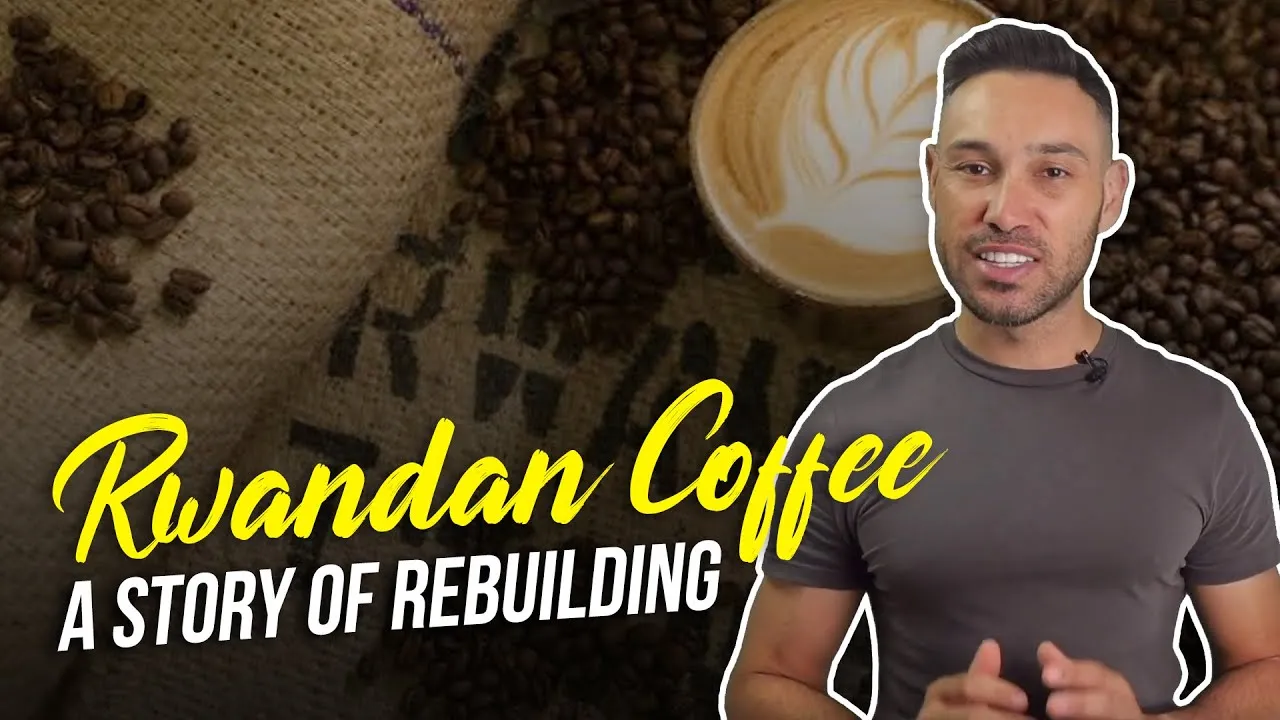
Rwanda transformed from producing forgettable bulk coffee into consistently placing finalists at the Cup of Excellence — one of the most remarkable turnarounds in specialty coffee history. The country produces 220,000 bags per year, modest by global standards, but the story behind those beans involves national rebuilding, deliberate quality investment, and the Bourbon variety at its finest.
The Flavor Profile
Most Rwandan coffee is the Bourbon variety — an heirloom Arabica cultivar that naturally produces lower yields but exceptional flavor complexity. Bourbon yields 20-30% more than Typica but remains susceptible to disease, meaning Rwandan farmers accept risk for quality.
In the cup: Full-bodied with a heavy, syrupy mouthfeel. Bright notes of lime and citrus accompanied by red apple, grape, berry, or floral flavors. The acidity is clean and crisp rather than sharp, with a caramel aftertaste that lingers pleasantly. Depending on the lot, you might encounter white chocolate, mandarin orange, cinnamon, clove, dates, or stone fruits.
| What to Expect | Notes |
|---|---|
| Body | Full, syrupy — heavier than most African coffees |
| Acidity | Clean citrus, lime — present but not aggressive |
| Sweetness | Caramel, red apple, grape |
| Florals | Jasmine, honeysuckle in lighter roasts |
| Finish | Long caramel aftertaste |
What makes Rwandan coffee distinctive is how the acidity presents itself. It’s structured and complex without being difficult — approachable for everyday drinking but revealing new layers when you slow down and pay attention. If Kenyan coffee is the intense, opinionated choice and Colombian coffee is the smooth, approachable one, Rwanda sits in between — complex enough to reward attention, balanced enough to enjoy casually.
How Rwanda Compares
| Origin | Body | Acidity | Character |
|---|---|---|---|
| Rwanda | Full, syrupy | Medium (clean citrus) | Red apple, berry, caramel |
| Kenya | Full | High (phosphoric, sparkling) | Blackcurrant, grapefruit, intense |
| Ethiopia (washed) | Light-medium | High (citric) | Floral, bergamot, tea-like |
| Burundi | Medium-full | High | Complex berry, juicy |
| Colombia | Medium | Low-moderate | Chocolate, caramel, nutty |
Rwanda is often the origin that converts people who find Kenyan coffee too intense or Ethiopian coffee too delicate. The body gives it substance, the acidity gives it life, and the caramel sweetness makes it immediately likeable.
The Transformation Story
Missionaries introduced coffee to Rwanda in the early 1900s, but for decades the country produced low-grade, high-volume commodity coffee with no attention to quality. Then came 1994 and the genocide that devastated the country’s entire infrastructure — agricultural, social, and economic.
In the early 2000s, the Rwandan government made a deliberate philosophical shift: quality over quantity. Programs like SPREAD (Strengthening the Competitiveness of Rwanda’s Coffee and Tea) invested in:
- Farmer education — teaching smallholders to pick only ripe cherries, not strip-harvest
- Washing station infrastructure — centralized processing facilities with trained workers and quality standards
- Cupping and grading — introducing quality evaluation so farmers could understand what made their coffee valuable
- Direct trade connections — linking Rwandan cooperatives with specialty buyers who would pay premiums for quality
The results speak for themselves. Within two decades, Rwanda went from negligible specialty producer to Cup of Excellence competitor, with multiple coffees commanding premium auction prices. The country’s quality trajectory is one of the steepest in coffee history.
The Growing Regions
Rwanda sits at 1,400 to 2,000 meters — high altitude that produces dense, flavor-concentrated beans. Research shows that about 25.6% of variation in extraction yield is explained by elevation alone. At Rwanda’s altitudes, cherries mature slowly, allowing more complex sugars and acids to develop. The volcanic soil across the country adds mineral complexity.
The entire country is effectively a high-altitude coffee region — there’s no lowland Rwandan coffee. This is unusual (most producing countries have wide altitude ranges) and contributes to Rwanda’s consistent baseline quality.
Processing
Rwanda has invested heavily in washing stations — over 300 centralized processing facilities where farmers deliver freshly picked cherries. Trained workers then manage:
- Cherry sorting — removing underripe and damaged cherries
- Depulping — mechanical removal of the fruit skin
- Fermentation — 12-24 hours in water tanks to break down mucilage
- Washing — multiple rinses to ensure clean parchment
- Drying — on raised African beds for even airflow, typically 10-15 days
This infrastructure sounds mundane but it’s absolutely critical for quality. The difference between a good Rwandan coffee and a great one often comes down to what happens at the washing station — proper fermentation times, careful washing, and slow, controlled drying all contribute to the clarity and brightness in the final cup.
Some stations are experimenting with natural processing (drying the whole cherry) and honey processing (partial mucilage left on), producing fruitier, more experimental lots. But washed Bourbon remains Rwanda’s signature and strength.
The Potato Defect — What You Need to Know
There’s one thing every Rwandan coffee buyer should understand: the potato defect. This is a specific, distinctive off-flavor — it literally smells and tastes like raw potato — caused by a bacterium (Lelliottia species, formerly attributed to the antestia bug) that infects individual cherries before harvest.
Key facts:
- It affects individual beans, not entire lots — one bean in a batch can taint a whole cup
- It occurs almost exclusively in Rwanda and Burundi (the only two origins with this specific risk)
- It’s not dangerous — just unpleasant
- Well-sorted specialty lots have dramatically reduced the incidence
- If you catch the smell while grinding, remove the affected beans and proceed — the rest of the batch is fine
Don’t let the potato defect scare you away from Rwandan coffee. It’s much less common than it used to be, and the rare occurrence is a small price for access to coffee this good. Just know what it is so you don’t blame your technique if one cup tastes mysteriously off.
How to Brew Rwandan Coffee
Pour-over (V60, Chemex, Kalita Wave): The best method. Clean extraction highlights the bright citrus and floral notes while preserving the syrupy body. Medium-fine grind, 200-205°F water. A flat-bottom dripper (Kalita Wave) will emphasize sweetness and produce more uniform extraction — ideal for showcasing Rwanda’s caramel notes.
French press: Excellent — captures more of the heavy body and lets the caramel aftertaste develop fully. The metal filter preserves oils that contribute to that syrupy mouthfeel. 4-minute steep, medium-coarse grind.
AeroPress: Good middle ground. Concentrates the fruit notes while maintaining body. Medium grind, 1:30-2:00 steep.
Espresso: Medium-roast Rwandan Bourbon pulls a sweet, complex shot. The body translates beautifully to concentrated brewing. Good both straight and with milk — the caramel sweetness plays well with steamed milk.
Roast level: Light to medium. The Bourbon variety’s natural sweetness and complexity show best with minimal roast interference. Dark roasts bury everything that makes Rwandan coffee special.
Let the cup cool. Like most high-altitude African coffees, Rwandan beans are temperature-dynamic — the red apple and grape notes often emerge most clearly below 140°F.
Buying Tips
| You Want… | Look For |
|---|---|
| Classic Rwandan character | Lake Kivu or Huye, washed Bourbon, medium roast |
| Maximum fruit and complexity | Higher elevation lots, light-medium roast |
| Good everyday coffee | Any named washing station, medium roast |
| Something experimental | Natural or honey processed lots (less common) |
Freshness matters. Peak flavor is 7-21 days post-roast. Store airtight, cool, dark. Never refrigerate. If you find an exceptional lot, freeze portions in airtight bags — oxidation drops roughly fifteen-fold when properly frozen.
Look for the washing station name on the bag. Rwanda’s quality infrastructure means specific stations produce consistently recognizable profiles. Finding one you like is the start of a repeatable relationship with Rwandan coffee.
Price context: Rwandan coffee is moderately priced for African specialty — less expensive than top Kenyan AA lots, more than commodity Brazilian. The quality-to-price ratio is excellent.
The Bourbon Variety: Rwanda’s Genetic Advantage
Nearly all Rwandan coffee is Bourbon — and understanding this variety explains a lot about why Rwandan coffee tastes the way it does.
Bourbon is one of the two original Arabica varieties (alongside Typica). Its journey to Rwanda traces a remarkable path: Ethiopia to Yemen to Réunion Island (the French tried to establish it three times: 1708, 1715, 1718) to Zanzibar via Spiritan missionaries (1859) to Bagamoyo, Tanzania (1862) to Kenya, and eventually to Rwanda and the broader Great Lakes region.
The World Coffee Research Varieties Catalog rates Bourbon’s cup quality as “Very Good” — sweet, complex, delicate, with crisp acidity. It yields 20-30% more than Typica but remains highly susceptible to coffee leaf rust and coffee berry disease. This susceptibility is a real concern: as climate change pushes temperatures higher, disease pressure on Bourbon will intensify.
Rwanda has begun exploring introgressed varieties (crosses with Timor Hybrid genetics) for rust resistance, but Bourbon remains the quality standard. The tension between heritage quality and climate resilience is the defining challenge for Rwandan coffee’s future.
When you brew Rwandan coffee, you’re tasting the direct result of deliberate choices to pursue excellence — made by farmers, processors, and a nation rebuilding itself through quality. That story is in every cup.
Some links above are affiliate links. If you purchase through them, we earn a small commission at no extra cost to you.
Frequently Asked Questions
- What is the potato defect in Rwandan coffee?
- A specific off-flavor that smells and tastes like raw potato, caused by a bacterium that infects individual cherries before harvest. It affects individual beans, not entire lots — one bad bean can taint a whole cup. It occurs almost exclusively in Rwanda and Burundi. It's not dangerous, just unpleasant. Well-sorted specialty lots have dramatically reduced the incidence. If you catch the smell while grinding, remove the affected beans and proceed normally.
- How does Rwandan coffee compare to Kenyan?
- Both are high-altitude East African coffees, but they're quite different in the cup. Kenyan coffee has intense, sparkling phosphoric acidity with blackcurrant and grapefruit notes — it's bold and opinionated. Rwandan coffee has cleaner, gentler citrus acidity with red apple, berry, and caramel sweetness. Rwanda is often the origin that converts people who find Kenyan coffee too intense. Think of it as the approachable middle ground between Kenya's intensity and Colombia's smoothness.
- Is Rwandan coffee Bourbon variety?
- Almost entirely, yes. Bourbon is an heirloom Arabica cultivar rated 'Very Good' for cup quality by World Coffee Research. It naturally produces lower yields but exceptional flavor complexity — sweet, delicate, with crisp acidity. Rwanda's commitment to Bourbon despite its disease susceptibility is a deliberate quality-over-quantity decision that directly shapes the country's distinctive flavor profile.
- What's the best way to brew Rwandan coffee?
- Pour-over through a paper filter, light to medium roast. This showcases the bright citrus and floral notes while preserving the syrupy body. Use 200-205°F water and a medium-fine grind. Let the cup cool — Rwandan coffee is temperature-dynamic, and the red apple and grape notes often emerge most clearly below 140°F. French press is also excellent if you want to emphasize the full body and caramel aftertaste.