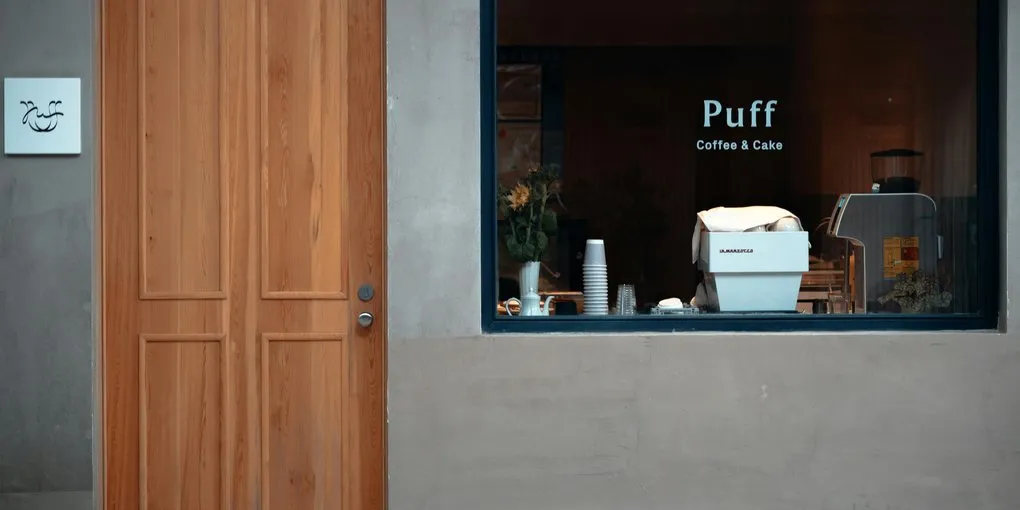
In June 2006, a soft-spoken Dane named Klaus Thomsen stood behind a competition espresso bar in Bern, Switzerland, and beat the rest of the world. He was 26. The trophy he took home from the World Barista Championship that year was, in retrospect, the smaller of the two things he carried back to Copenhagen. The bigger one was an idea — that you could build a roaster that paid farmers what their coffee was actually worth, told customers exactly what it cost, and served the result on a quiet residential street in Nørrebro instead of in a chain. A year later, with two co-founders and a hand-me-down roaster, he started doing it.
Two decades on, Coffee Collective is one of the most influential specialty roasters in Europe. It operates nine locations across Denmark — eight in Copenhagen plus one in Aarhus — a B Corp certification, an annual transparency report that competitors quietly photocopy, and a green-buying program that helped define the modern Nordic style of light roasting. Thomsen’s career arc — from a competition stage in Switzerland to a roastery on the southwestern edge of Copenhagen — is the cleanest case study the industry has of how a single barista win, handled correctly, becomes a multi-decade institution.
The 2006 World Barista Championship in Bern
The World Barista Championship was a different event in 2006 than it is now. It had been running for less than six years. The Specialty Coffee Association of Europe and the SCAA jointly owned and organized it. There was no global broadcast, no sponsor-thick stage, no eight-figure prize-money debate. Competitors brought their own beans, their own water, sometimes their own milk; the winning routines tended to come from people who roasted at small operations whose names few outside the trade had heard. Bern hosted the 2006 edition, and the Danish national champion who walked into it had been pulling shots professionally for only a few years.
Thomsen’s win mattered for two reasons that were not obvious in the moment. First, it cemented Denmark — a country with no coffee-growing colonies, no espresso heritage, and a small domestic market — as a serious node on the specialty coffee map. Second, his routine reflected an aesthetic that the Nordic countries were already beginning to define: very lightly roasted single-origin coffee, prepared with rigorous attention to extraction, served without ceremony. It was the opposite of the Italian dark-roast bar tradition that had dominated competitive espresso through the 1990s. By 2010, that aesthetic was the global default for specialty.
Thomsen has talked, in subsequent interviews including a long FLTR Magazine profile, about the win as a permission slip rather than an arrival. The trophy gave him standing to do something more durable than competition coffee.
Founding Coffee Collective in 2007
He found the partners almost immediately. Casper Engel Rasmussen and Peter Dupont were already deep in the small Copenhagen specialty scene, and the three of them — sometimes joined in the early-press accounts by a fourth collaborator, Linus Castanho-Törsäter, depending on the source — incorporated Coffee Collective in August 2007. They started by roasting on a borrowed machine in a unit near Kastrup Airport and selling at a Saturday farmers’ market on Jægersborggade in Nørrebro, the residential street that would soon become Copenhagen’s most-photographed culinary block.
In February 2008, they opened their first retail bar at Jægersborggade 10. It was small — a counter, a La Marzocco espresso machine, a few stools by the window. But the choices the three founders made in that first year set the operation’s trajectory. They committed to publishing the green-coffee price they paid on the bag of every coffee they roasted — a transparency move so unusual at the time that competitors initially treated it as a stunt. They committed to direct trade with farms they had visited personally rather than relying on importers’ standing offer lists. They picked Kieni, a cooperative wet-mill factory in Nyeri, Kenya — part of the larger Mugaga cooperative society of around 1,000 smallholder members — as a recurring lot they would buy every harvest, and built a multi-year relationship with the factory rather than swapping in whichever Kenyan AA showed up cheapest that season. And they committed to a roast profile light enough that the cup tasted like the green — a profile that, in 2008, still made some Danish customers ask if the coffee was under-roasted.
The bet they were making was that a small but growing audience of Copenhageners would pay 40 to 50 percent more for a bag of coffee if the bag explained, in detail, why it cost what it did. They were right. By 2012, Coffee Collective had outgrown its first roastery and moved to a larger facility on Godthåbsvej, which remains its production headquarters and roastery today.
The Direct Trade Model
“Direct trade” in 2007 was an aspirational phrase rather than a defined standard. Stumptown in Portland, Counter Culture in North Carolina, and Intelligentsia in Chicago had been building origin relationships for several years; Coffee Collective formalized a particularly Northern European version of the practice. According to the company’s own transparency portal, the operation pays at least 25 percent above the local Fair Trade reference price on every direct-trade lot — a quality bonus stacked on top of the spot market that has, in good years, doubled what the producer would have netted through conventional channels.
The annual transparency report names every farm, lists the FOB price paid, the green cost-per-kilo, the volume purchased, and the years the relationship has been in place. Kieni and Daterra in Brazil’s Cerrado recur in the reports, alongside a rotating cast of producers in Ethiopia, Peru, Colombia, Mexico, Bolivia, and Guatemala. The report is dry, technical, and — by the standards of food-industry sustainability marketing — almost subversively honest. When prices fall at origin, the report says so. When a relationship ends, it says why.
That document became a category-defining piece of writing. By the late 2010s, dozens of specialty roasters in Europe and North America were publishing their own annual transparency reports, many of them visibly echoing Coffee Collective’s template — Counter Culture, Tim Wendelboe, the Crown, and others helped normalize the format that Coffee Collective had pioneered. Coffee Collective signed the industry-wide Transparency Pledge in 2019, but had effectively been writing the pledge for a decade before it existed.
For a primer on what direct trade actually means in practice — and how it differs from Fair Trade certification — our coffee cities guide walks through the broader specialty supply-chain context.
Mikaela Wallgren and the Coffee Jobs Podcast
In late September 2016, James Hoffmann released Episode 7 of his short-lived Coffee Jobs Podcast, a series built around long-form conversations about how coffee careers actually work. The episode paired Klaus Thomsen with Mikaela Wallgren, then a brewer at Coffee Collective and one of the most decorated competition baristas in Scandinavia. Wallgren had won the 2016 Brewers Cup Champion of Finland title that spring and had taken silver at the 2016 World Brewers Cup, finishing less than a tenth of a point behind champion Tetsu Kasuya. Her competition coffee was Coffee Collective’s Kieni.
That detail mattered. Hoffmann’s podcast was not a celebrity-circuit interview show; it was a working interrogation of how people stayed in coffee long enough to build a career. Putting Thomsen — the founder, the older champion, the person who had built a working roaster — across the table from Wallgren — a younger competition champion who had moved from Stockholm to Copenhagen because she wanted to work for that specific roaster — let listeners see two generations of the same problem at once. Thomsen talked about hiring; Wallgren talked about being hired. Both talked about the weird halfway-house economics of competitive barista work, and what a specialty roaster owes a barista who wins on its beans.
JavaPresse’s “Best Coffee Podcasts for Students” roundup later named that conversation as their pick of the entire Coffee Jobs catalogue — calling out the Thomsen-Wallgren pairing specifically as the episode worth listening to first. The original podcast file is preserved on the Internet Archive. For the broader Hoffmann thesis the podcast was built around — the argument that coffee doesn’t have to be a dead-end job — see our companion piece on coffee industry careers.
By 2016, Barista Magazine was already describing Wallgren as both a brewer and an HR coordinator at Coffee Collective — exactly the kind of in-house, two-track career progression Hoffmann’s podcast was hunting for evidence of.
The Nordic Specialty Cluster
Coffee Collective did not arrive in a vacuum. By the time Thomsen won in Bern, the Nordic specialty scene had been compounding for several years, and the operations that grew up around Coffee Collective form one of the most interconnected regional clusters in modern coffee.
Tim Wendelboe opened his eponymous Oslo bar and roastery in 2007 — the same year Coffee Collective incorporated. Wendelboe had won the World Barista Championship in 2004 and the World Cup Tasters Championship in 2005, two years before Thomsen’s title; the two men competed against each other repeatedly through the early 2000s. Wendelboe’s house style — extremely light roasts, single-origin focus, a refusal to chase milk-drink margins — set the regional template that Coffee Collective and a dozen others built on.
Square Mile Coffee Roasters in London, co-founded by James Hoffmann after his own 2007 World Barista Championship win, became the English-speaking outpost of the same aesthetic. The Nordic-London axis the two operations created is what most contemporary specialty buyers think of when they hear “European specialty coffee.”
The next generation arrived around 2016. Patrik Rolf, a Swedish barista who had run roasting at Berlin’s Five Elephants and finished runner-up at the 2019 World Brewers Cup, founded April Coffee Roasters in Copenhagen — a small, design-led operation explicitly built on the Coffee Collective template, with light roasting, transparent sourcing, and a strong subscription business. Esben Piper had founded La Cabra in Aarhus, Denmark’s second city, in 2012 with head roaster Mikkel Selmer; La Cabra has since grown into one of the most globally recognized Nordic roasters, with locations in New York, Bangkok, and Oman. Anne Lunell at Koppi in Helsingborg, Sweden, and Joanna Alm at Drop Coffee in Stockholm — Alm runs Drop with her partner Stephen Leighton, a UK roaster (Has Bean) and Tamper Tantrum co-host — round out the cluster.
What ties these operations together is not a single style — Coffee Collective’s roasts are slightly more developed than Wendelboe’s; April pushes harder on filter brewing; La Cabra builds around bakery integration — but a shared assumption that customers will pay for traceability and that quality scales through trust rather than through volume. That assumption was unproven in 2007. It is foundational now.
Coffee Collective in 2026
The operation Thomsen, Rasmussen, and Dupont own and run today has grown substantially without losing the texture of the original. As of early 2026 Coffee Collective operates nine locations across Denmark — eight cafes and the Collective Bakery in Copenhagen (the original Jægersborggade bar, Bernikow, Carlsberg Byen, Sankt Hans Torv, Torvehallerne, Trianglen, the Godthåbsvej roastery, and the 2021 Collective Bakery), plus one cafe in Aarhus on Guldsmedgade. The company holds B Corp certification. Rebecca Vang joined as CEO during a recent operational restructure, with the three founders still 100% owners of the business.
The transparency reports continue, longer and more detailed each year. The Kieni relationship is in its second decade. The roasting style has nudged slightly more developed but is still recognizably Nordic. New product extensions — the bakery, occasional beer and ice-cream collaborations, a coffee-in-a-can line — sit alongside the core green-buying business that has remained the company’s spine for two decades.
What Thomsen built is also, increasingly, what other people have built downstream of him. Patrik Rolf trained at Coffee Collective before opening April. Several current competition champions cite the company’s training program as a formative experience. The Copenhagen scene Coffee Collective effectively created — Jægersborggade as a cafe street, Nørrebro as a coffee neighborhood, the Danish customer’s expectation that a 100-kroner bag of coffee will name its farmer — is now what new visitors to the city expect to find.
A 2006 World Barista Championship trophy, in retrospect, looks like a small object compared to all of that. Twenty years on, it is the smaller object Klaus Thomsen carried home from Bern.
Sources & Further Reading
- Coffee Collective, About Us — official founder timeline and locations.
- Coffee Collective, Transparency portal — annual transparency reports and direct-trade pricing data.
- Sprudge, “The Coffee Collective: Back to the Beginning and Looking Forward” — long-form 2017 profile covering the founding and early growth.
- FLTR Magazine, “Klaus Thomsen: The FLTR Interview” — 2023 interview on the post-WBC arc.
- Barista Magazine, “10 Minutes With 2016 World Brewers Cup Runner-Up Mikaela Wallgren”.
- Fresh Cup Magazine, “A Successful World Brewers Cup” — Wallgren’s silver-medal recipe.
- Coffee Jobs Podcast, “Episode 7 — Mikaela Wallgren & Klaus Thomsen” — Internet Archive preservation of the original September 2016 episode.
- Sprudge, “Meet April Coffee, The New Nordic Roaster From Patrik Rolf Karlsson” — context on the next-generation Copenhagen scene.
- Collected Coffee, Esben Piper / La Cabra interview — La Cabra Aarhus founder profile.
- Wonderful Copenhagen, “Klaus Thomsen: Copenhagen’s Coffee Pioneer” — Danish tourist board press kit on Thomsen.
- Transparency.coffee, common code of best practice in green-coffee transparency reporting — the industry pledge Coffee Collective signed in 2019.
Frequently Asked Questions
- Who is Klaus Thomsen?
- Klaus Thomsen is the 2006 World Barista Champion, representing Denmark. He won the title at the World Barista Championship in Bern, Switzerland in June 2006, and the following year he co-founded Coffee Collective in Copenhagen with Casper Engel Rasmussen and Peter Dupont. He remains a co-owner of the company today.
- When was Coffee Collective founded?
- Coffee Collective was incorporated in August 2007 by Klaus Thomsen, Casper Engel Rasmussen, and Peter Dupont (with some early accounts also citing Linus Castanho-Törsäter as a fourth co-founder). Their first retail cafe opened at Jægersborggade 10 in the Nørrebro neighborhood of Copenhagen in February 2008.
- What is direct trade coffee, and what is Coffee Collective's role in it?
- Direct trade is a sourcing model in which a roaster buys green coffee directly from the producer rather than through a commodity-market broker, paying a quality premium and maintaining a multi-year relationship with the farm. Coffee Collective was one of the earliest European roasters to adopt direct trade as its core sourcing model, and the company's annual transparency reports — which list every farm, FOB price, and volume purchased — became a template the rest of the specialty industry has copied.
- Who is Mikaela Wallgren?
- Mikaela Wallgren is a Swedish-Finnish brewer who won the 2016 Finnish Brewers Cup and took silver at the 2016 World Brewers Cup. She works at Coffee Collective in Copenhagen as a brewer and HR coordinator. Wallgren and Klaus Thomsen were the two guests on Episode 7 of James Hoffmann's Coffee Jobs Podcast in September 2016.
- How many Coffee Collective locations are there?
- Coffee Collective operates nine locations across Denmark as of 2026 — eight in Copenhagen (the original Jægersborggade cafe, the Godthåbsvej roastery and headquarters, Trianglen, Bernikow, Carlsberg Byen, Sankt Hans Torv, Torvehallerne, and the Collective Bakery that opened in 2021) plus one cafe in Aarhus on Guldsmedgade.