Nicaragua is the 12th largest coffee-producing country on the planet, and its beans are some of the most reliable in specialty coffee. The country has maintained that position for over a century despite a civil war, multiple Category 4 hurricanes (including Hurricane Mitch in 1998), and a prior US embargo. That resilience tells you something about how seriously Nicaraguan farmers take their craft.
The Short Answer
Yes. Nicaraguan coffee is genuinely good — balanced, sweet, forgiving across brew methods, and one of the best values in specialty coffee. It doesn’t have the name recognition of Colombian or Ethiopian coffee, which means you get better quality for less money.
The Flavor Profile
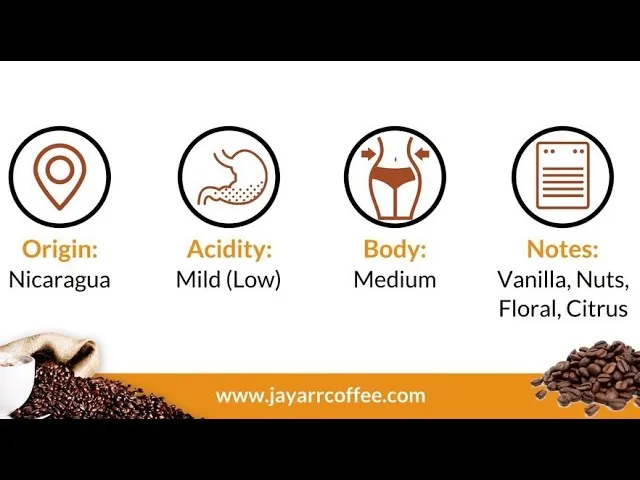
Nicaraguan coffee delivers a characteristic balance: vanilla and nut flavors, medium body, fruity sweetness, and low acidity. The sweetness is the standout — natural sugars in Nicaraguan beans produce excellent caramel notes in medium roasts and complex layered sweetness at lighter levels.
Common tasting notes across the range:
| Grade | What You’ll Taste |
|---|---|
| Higher-grade specialty | Bright floral, citrus, tropical fruit |
| Mid-grade specialty | Chocolate, cocoa, subtle stone fruit |
| Commercial grade | Nutty, mild, clean, straightforward |
The acidity is predominantly malic — the smooth, round tartness of an apple rather than the sharp citric zing of Guatemalan coffee or the sparkling phosphoric brightness of Kenya. It makes the cup come alive without any harshness. This gentle acidity is why Nicaraguan coffee works for people who think they “don’t like acidic coffee” — they probably do, they just don’t like sharp acidity.
Nicaraguan coffee is approachable for newer coffee drinkers while still rewarding experienced ones. It works across brew methods and roast levels without demanding special attention — a sign of well-structured beans with solid fundamentals.
The Four Regions
Jinotega — Start Here
The most famous Nicaraguan region. Northern highlands, 1,200-1,500 meters. Clean, balanced, full-bodied with excellent sweetness, prominent chocolate and nutty notes, and subtle citrus hints. This is the archetypal Nicaraguan cup — if you’re trying Nicaraguan coffee for the first time, Jinotega is the reliable entry point.
The altitude range contributes directly to quality. Research from Jonathan Gagné shows that about 25.6% of variation in extraction yield is explained by elevation alone. At 1,200-1,500 meters, Jinotega beans develop slowly enough to pack in real complexity but not so high that the plants struggle with productivity. It’s a productive sweet spot.
Matagalpa — The Fruit-Forward One
Just south of Jinotega, 1,100-1,400 meters. Volcanic soil gives these coffees a mineral complexity that Jinotega doesn’t quite match. Slightly more fruit-forward — stone fruit, berries, and sometimes wine-like qualities in lighter roasts. Think of Matagalpa as Jinotega’s bolder, fruitier sibling. Gaining significant recognition in recent Cup of Excellence competitions.
Nueva Segovia — The Complex One
Far north near Honduras, exceeding 1,400 meters in places. The coolest growing environment in Nicaragua produces the densest beans with the slowest maturation. More nuanced and complex flavors — balanced acidity and floral notes that are unusual in Nicaraguan coffee, closer to what you’d expect from a high-grown Honduran or Guatemalan lot.
If you’ve already tried Jinotega and want to explore further, Nueva Segovia is where Nicaraguan coffee gets exciting.
Madriz — The Bold One
The smallest major region, northwestern highlands. Bold and full-bodied with deep chocolate and brown sugar notes. Less widely exported but producing increasingly interesting lots as specialty attention expands.
The Varieties
Bourbon — The heritage variety that dominates premium Nicaraguan production. Sweet, complex, delicate cups with crisp acidity. Yields 20-30% more than Typica. Susceptible to coffee leaf rust, which makes it increasingly risky.
Typica — The original variety. Clean, sweet, with gentle malic acidity. Lower yielding and increasingly rare as farmers replant with more productive options. When you find a Nicaraguan Typica, it’s worth trying.
Caturra — A Bourbon mutation with brighter citric acidity and higher density planting. More productive than Bourbon on steep terrain. The citric acid adds a different brightness dimension than the Bourbon/Typica malic character.
Catimor/Hybrid varieties — Rust-resistant crosses bred for production security. Earlier Catimor selections had simpler cup profiles, but newer generations are improving. Some Nicaraguan producers use a smart strategy: Catimor at lower elevations where rust pressure is highest, heritage Bourbon and Typica at higher altitudes where conditions still favor traditional varieties.
The variety and the region together determine what you taste. A Bourbon from Nueva Segovia at 1,400 meters is a completely different cup than a Catimor from Matagalpa at 1,100 meters — even though both say “Nicaraguan coffee.”
Processing
Washed — Dominates and produces the clean, bright coffees Nicaragua is known for. Fruit is removed before drying, resulting in high clarity. When you taste chocolate and vanilla in a washed Nicaraguan coffee, that’s the bean’s inherent character and terroir, not residual fruit sugars.
Natural — Becoming more common. Whole cherries dry on the bean, contributing fruit sugars and fermentation complexity. Natural Nicaraguan coffees amplify the stone fruit notes into something bolder and more vivid. Quality depends entirely on careful cherry selection and controlled drying — poorly managed naturals taste fermenty.
Honey — A middle ground: more body and sweetness than washed, cleaner presentation than natural. This technique has spread from Costa Rica through Central America, and some Nicaraguan producers are turning out excellent honey-processed lots.
Cup of Excellence Results
Nicaragua has made strong Cup of Excellence showings, with multiple coffees placing at the top and commanding premium auction prices. When Jinotega and Nueva Segovia lots score alongside celebrated origins like Colombia and Ethiopia in blind cuppings, it confirms what specialty roasters have been discovering: Nicaragua can compete with anyone. The CoE system also creates direct buyer-producer connections that help the best Nicaraguan farmers earn prices reflecting their quality.
How to Brew It
Nicaraguan coffee’s balanced, moderate character makes it genuinely forgiving:
Drip brewer / pour-over — Excellent. The clean sweetness translates beautifully. A flat-bottom dripper (Kalita Wave) emphasizes sweetness — research shows flat-bottom drippers produce more uniform extraction than conical ones. Medium-fine grind, 200°F. For a full breakdown of grind settings, see our coffee grind size guide.
French press — Brings out more body and chocolate/nutty notes. If you want the most comforting cup, this is the method. Our French press guide walks through the technique in full. Medium-coarse grind, 4 minutes.
AeroPress — Great for medium roasts. The combination of immersion and pressure gives you a concentrated, sweet cup. Short steep, medium-fine grind.
Espresso — Medium-roast Nicaraguan pulls smooth, sweet shots. It’s assertive enough for milk drinks without being aggressive or bitter — an ideal everyday espresso origin. The natural sweetness means you get caramel notes without needing to go dark.
Roast level: Medium is the sweet spot — it brings out the caramel and chocolate that define Nicaraguan coffee at its best. Light roasts are interesting with high-altitude Nueva Segovia lots. Dark roasts work but mask the origin qualities that make it worth buying as a single origin.
How Nicaragua Compares
If you’re trying to figure out where Nicaragua fits relative to origins you already know:
| Origin | Body | Acidity | Character |
|---|---|---|---|
| Nicaragua | Medium | Low (malic) | Vanilla, nuts, caramel, balanced |
| Colombia | Medium | Low-moderate (citric) | Chocolate, caramel, versatile |
| Guatemala | Medium | Moderate-high (citric) | Chocolate, nuts, bright fruit |
| Honduras | Medium | Medium | Fruity, sweet, improving rapidly |
| Costa Rica | Light-medium | Mild (malic) | Floral, sweet, honey richness |
Nicaragua is closest to Colombian coffee in personality — both are smooth, sweet, versatile, and work across brew methods. The key difference: Nicaragua leans more toward vanilla and nut, while Colombia leans more toward citrus and chocolate. Nicaragua’s acidity is gentler (malic vs. citric), making it marginally more approachable for people sensitive to brightness.
Honduras is the closest Central American neighbor in quality trajectory — both are rapidly improving, both offer excellent value. But Nicaragua has more established identity in specialty circles and more clearly differentiated regions.
Buying Guide
Look for the region on the bag. “Nicaraguan coffee” is generic. “Jinotega” or “Nueva Segovia” tells you what to expect.
| You Want… | Buy This |
|---|---|
| Classic balanced Nicaraguan | Jinotega Bourbon, medium roast, washed |
| Something fruitier and bolder | Matagalpa, medium roast, natural or honey |
| Complex and interesting | Nueva Segovia, light-medium roast |
| Great everyday espresso | Jinotega, medium roast |
| Best value | Any Nicaraguan specialty — the origin is underpriced |
Best value in specialty: Because Nicaragua doesn’t carry the prestige pricing of Kenya or Ethiopia, you can find genuinely excellent coffee at reasonable prices. A well-sourced Jinotega Bourbon offers quality comparable to Colombian specialty at a lower price point. This is one of the last underpriced origins in specialty coffee.
Freshness: Peak flavor is 7-21 days post-roast, with 3-4 days of rest after roasting for CO2 to off-gas. Store airtight, cool, and dark. Never refrigerate — coffee absorbs odors and moisture condenses. Freeze portions in airtight bags if you want to stock up — oxidation drops roughly fifteen-fold when properly frozen.
Start here: Jinotega or Matagalpa from a specialty roaster. Jinotega for the classic balanced Nicaraguan experience, Matagalpa for something fruitier. Medium roast either way. Once you taste the regional difference, you’ll start looking for the region on every bag.
Some links above are affiliate links. If you purchase through them, we earn a small commission at no extra cost to you.
Frequently Asked Questions
- Is Nicaraguan coffee similar to Colombian coffee?
- Very similar in personality — both are smooth, sweet, versatile, and work across brew methods. The key difference is acidity type: Nicaragua's is malic (apple-like, round), while Colombia's is citric (brighter, sharper). Nicaragua also leans more toward vanilla and nut, while Colombia leans toward citrus and chocolate. If you find Colombian coffee slightly too bright, Nicaraguan is the gentler option.
- What does "malic acidity" mean in coffee?
- Malic acid is the smooth, round tartness found in apples and stone fruits. In Nicaraguan coffee, it creates a gentle brightness that makes the cup come alive without any sharpness. This is different from citric acidity (sharp, like citrus) common in Guatemalan coffee or phosphoric acidity (sparkling, sweet) found in Kenyan coffee. Malic acidity is why Nicaraguan coffee works well for people who think they don't like acidic coffee.
- What's the best Nicaraguan coffee region for beginners?
- Jinotega. It's the most established region, grown at 1,200-1,500 meters, and produces the archetypal Nicaraguan cup: clean, balanced, full-bodied with chocolate, vanilla, and nut notes. Buy a medium-roast washed Bourbon from Jinotega as your first Nicaraguan coffee, then explore Matagalpa for fruitier options or Nueva Segovia for more complexity.
- Is Nicaraguan coffee good for espresso?
- Excellent. Medium-roast Nicaraguan pulls smooth, sweet shots with natural caramel notes — assertive enough for milk drinks without being aggressive or bitter. The low acidity means no sourness in short extractions. It's one of the best-value single-origin espresso options in specialty coffee.