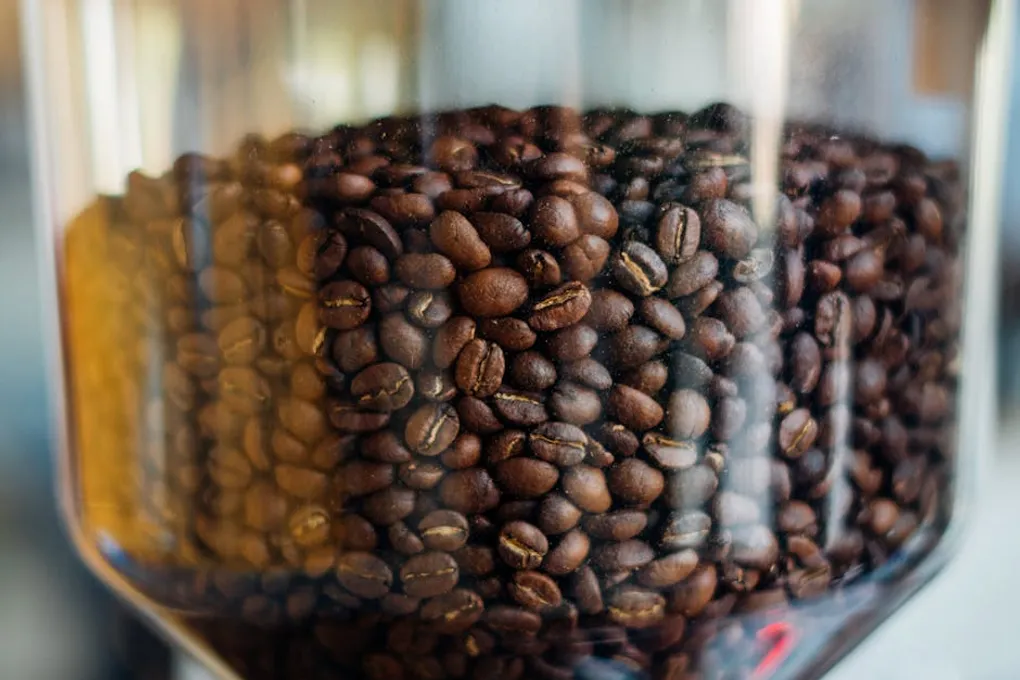
You paid $18 for a bag of freshly roasted single-origin beans. You’ve read about the origin, the processing method, the altitude. The roaster sent a card about the farm. And then you set the bag on the counter next to the stove, or dropped it into the fridge, or poured the beans into a decorative glass jar in direct sunlight.
That coffee is dying faster than it needs to.
Coffee staling is not mysterious or inevitable — it follows predictable chemistry. Once you understand what’s actually happening at a molecular level, the right storage decisions become obvious. Here’s the full picture.
The Four Enemies of Freshness
Coffee staling is not one process. It’s four simultaneous degradation pathways, each driven by a different environmental factor. All four operate constantly from the moment roasting ends. Storage strategy means minimizing as many of them as possible.
1. Oxygen: The Primary Villain
The most damaging thing touching your coffee is oxygen. Roasting creates hundreds of volatile aromatic compounds through Maillard reactions and caramelization. Many of these are lipid-based — fatty acids and their derivatives that carry the fruit, floral, and chocolate notes we associate with good coffee. These lipids oxidize when exposed to oxygen, breaking down into shorter-chain compounds that smell and taste rancid, papery, or flat.
This is called lipid oxidation or rancidification, and it’s the same process that makes butter go rancid or nuts smell stale. The rate of oxidation depends on temperature, surface area, and how much oxygen is present. Room temperature oxidation of coffee lipids proceeds relatively slowly in whole beans — but accelerates dramatically when you grind (exponentially more surface area exposed) or when heat is added.
The practical implication: every second your coffee is exposed to air, oxidation is running. Airtight storage slows this. Nothing stops it entirely at room temperature.
2. Moisture: Silent Accelerant
Coffee is hygroscopic — it readily absorbs water vapor from the surrounding air. This isn’t just a matter of beans getting “wet.” Water molecules are extraordinarily good at catalyzing oxidation. Even small amounts of absorbed moisture accelerate lipid oxidation by an order of magnitude.
Moisture also damages coffee through a separate pathway: it can hydrolyze (chemically break down with water) some of the organic compounds responsible for specific flavor notes. High-grown washed coffees with delicate acid profiles are particularly vulnerable — absorbed moisture degrades the malic and citric acids that give those coffees their brightness.
Additionally, moisture absorption affects grind behavior. Beans that have absorbed humidity grind differently — particles clump, distribution changes, and extraction becomes less predictable. If your coffee has been sitting in a humid environment, you’ll often notice it grinding unevenly or producing a duller-sounding grind.
3. Heat: The Rate Multiplier
Heat doesn’t destroy coffee flavor directly so much as it accelerates every other degradation reaction. Chemical reaction rates roughly double with every 10°C (18°F) increase in temperature — a rule of thumb called the Q10 coefficient. Coffee stored at 30°C (86°F) stales approximately twice as fast as coffee stored at 20°C (68°F).
This is why “room temperature” is acceptable but “next to the stove” is not. A counter that regularly hits 30°C from cooking, dishwasher heat, or direct afternoon sun is dramatically accelerating staling. The ideal storage temperature is cool and consistent — a pantry or cabinet, away from appliances that generate heat.
4. Light: The Overlooked Destroyer
UV and visible light break down organic compounds through photodegradation — the same process that causes foods, plastics, and pigments to fade and degrade over time. Chlorogenic acids, the main phenolic antioxidants in coffee, are particularly vulnerable to UV degradation. These acids contribute to coffee’s perceived brightness and body; their breakdown produces flavor-dulling byproducts.
This is why specialty coffee bags are typically opaque. That clear glass canister on your countertop that looks beautiful and lets you admire the beans? It’s actively degrading them with every hour of light exposure. If you use glass storage, keep it in a cabinet.
The Freshness Timeline
Understanding the enemies means understanding the timeline. Coffee does not stale uniformly from roast day forward — it follows a curve shaped by degassing, the peak aromatic window, and accelerating oxidation.
One critical note: this timeline assumes whole beans. Ground coffee doesn’t follow this curve — it skips most of it. Grinding shatters beans into thousands of particles, increasing surface area by a factor of roughly 10,000x. Oxygen contacts all that new surface simultaneously. Ground coffee begins staling within 15-30 minutes. Within hours, the difference is detectable in the cup. This single fact is the strongest argument for owning a grinder and grinding immediately before brewing.
Storage Containers, Ranked
Not all containers are equal. Here’s an honest hierarchy based on what the engineering actually delivers.
Fellow Atmos: The Best Room-Temperature Option
The Fellow Atmos actively pumps air out of the container through a twist-lock lid mechanism. A few twists creates a genuine low-oxygen environment inside — you can see the indicator dot sink when a vacuum is achieved. The borosilicate glass version keeps light out (though it comes in opaque versions too). It’s one of the few room-temperature containers that meaningfully extends the freshness window rather than just slowing airflow.
The limitation: the lid seal is mechanical and degrades over time, especially with heavy use. After a year or two, the pump may not achieve the same vacuum. Check the seal occasionally by trying to open it — genuine vacuum resistance means it’s working.
Airscape: Strong Value for Daily Use
The Airscape canister uses a pressure-lock lid with an inner plunger that you press down onto the surface of the beans, physically displacing air before sealing. It’s a simple mechanism but effective when used correctly. The most common user error: not pressing the plunger all the way down to contact the beans, leaving an air gap.
Available in 32 oz (holds about 1 lb of whole beans), stainless steel construction keeps light out. Good durability. This is the container we’d recommend for most home brewers who buy 1 lb bags weekly or biweekly.
Original Bag with One-Way Valve: Underrated
Most specialty roasters now package beans in bags with one-way degassing valves — the small circular disc on the front. These valves allow CO2 to escape from the beans (necessary — beans off-gas for weeks after roasting) while preventing outside oxygen from entering. This is smart design, and the bags do their job well — until you break the seal.
Once you open the bag and start using it, the valve still works but the zip seal is the weak link. Press out as much air as possible before resealing. For beans you’re using within two weeks, the original bag is completely adequate storage.
Mason Jars: Fine If Stored Dark
A good mason jar with a proper lid seal is reasonably airtight — enough for short-term storage if you keep it in a cabinet. The main issue is glass is transparent, so countertop placement means constant light exposure. Put it in a pantry, it’s fine for a week or two. Leave it on the counter in sunlight, you’re actively degrading the beans.
The Freezer Protocol: This Actually Works
The freezer is the most misunderstood storage method in home coffee. A generation of advice says “never freeze coffee.” That advice is wrong — based on a legitimate problem (improper freezing technique) that, when corrected, disappears entirely.
Scott Rao, who wrote the textbook on professional coffee extraction, has been a public advocate for freezing coffee for years. He’s reported that a Kenya AA he froze and retrieved six years later was “really good.” Christopher Hendon’s research at the University of Bath found that grinding cold (from frozen) produces more uniform particle size distribution than grinding at room temperature. The science and the coffee authorities both say the same thing: properly frozen coffee is excellent.
The word “properly” is doing significant work in that sentence.
Why Improper Freezing Fails
Tossing an open bag or a poorly sealed container into the freezer fails for two reasons:
Moisture migration. Freezers are cold but not dry — they contain moisture, and that moisture moves toward cold objects. Coffee left in a non-vacuum-sealed container in the freezer will slowly absorb freezer moisture, accelerating oxidation once the coffee returns to room temperature.
Odor absorption. Coffee is extraordinarily good at absorbing aromatic compounds from its surroundings. Stored next to last month’s salmon or garlic bread in the freezer, it will absorb those odors. Freeze-thaw-flavored coffee is real, and it’s the origin of the “never freeze” advice.
Both problems are completely solved by vacuum sealing.
The Single-Dose Freezer Method
This is the correct protocol, used by competition baristas and home enthusiasts who have tested it carefully:
Step 1: Portion immediately. Divide your beans into single-dose quantities the day you open the bag, or when you receive beans fresh from the roaster. For filter coffee, single doses are typically 15-20g. For espresso, 17-19g. Measure and portion all of them at once — do not return beans to the freezer after they’ve been portioned and thawed.
Step 2: Vacuum seal each dose. Use a vacuum sealer and small bags, or pack doses tightly into small resealable bags with as much air removed as possible. The goal is near-zero oxygen environment around the beans. Zip-locks with air removed are acceptable but not ideal. A FoodSaver or similar vacuum sealer with small bags is the proper tool.
Step 3: Label each dose. Write the coffee name and roast date. Frozen coffee is easy to forget — labeling helps you use older doses first and track how long specific lots have been stored.
Step 4: Place in the freezer. Store toward the back where temperature is most stable, away from the freezer door. Consistent temperature matters — temperature fluctuations cause micro-condensation cycles even inside sealed bags.
Step 5: Grind from frozen. When you’re ready to brew, pull one dose and grind immediately without thawing. Do not let the frozen beans sit at room temperature first — you want to grind them while they’re still cold. The reason: cold coffee beans are more brittle and fracture more cleanly and uniformly than room-temperature beans. Hendon’s research showed measurably tighter particle size distribution from cold grinding. You get a better grind and you skip the thawing step entirely.
Step 6: Never refreeze. Use what you pull. Each freeze-thaw cycle that occurs outside a vacuum seal introduces condensation. One thaw is fine. Two is degradation.
Oxidation slows by approximately 15-fold under proper vacuum freezer conditions. This is why Rao’s six-year Kenya AA still tasted good. For practical purposes: properly frozen, vacuum-sealed coffee will remain excellent for 6-12 months with negligible decline. It is the best long-term storage option available to home brewers.
Myths Worth Killing
“Refrigerate your coffee.” No. The fridge is arguably the worst storage option available. It’s damp — humidity levels in refrigerators are high and variable. It’s full of aromatic compounds from other foods that coffee readily absorbs (garlic, onion, leftovers, cheese). And it cycles between temperatures every time you open the door, causing repeated condensation cycles on the beans. The fridge makes coffee stale faster than a sealed canister at room temperature and adds off-flavors in the process. Every major coffee authority — Rao, Hoffmann, Gagne, the SCA — agrees on this. Never refrigerate coffee.
“Best by dates tell you something meaningful.” They tell you almost nothing. A “best by” date without a roast date could mean the coffee was roasted eight months ago and has been sitting in a warehouse. The only date that matters is the roast date. If there’s no roast date on the bag, that’s a red flag about the roaster’s relationship to freshness. A good roaster prints the roast date prominently and ships within days of roasting. Look for roast date; ignore best by.
“Oily beans are fresh beans.” The opposite is often true. Coffee oils are contained inside the bean’s cellular structure when the bean is fresh. Over time — and accelerated by dark roasting, which breaks down cell structure during second crack — oils migrate through capillary action to the bean’s surface. A glossy, oily-looking bean surface means oils have already left the cell interior and are now oxidizing on the surface. Fresh whole beans, including dark roasts shortly after roasting, have a dry, matte appearance. Heavy surface oil typically indicates either a very dark roast that has been sitting for a while, or beans that are past their peak. This is why the coffee freshness timeline matters more than visual appearance.
“Pre-ground coffee from the store is fine if you use it quickly.” Ground coffee loses volatile aromatics within 15-30 minutes of grinding. Supermarket pre-ground coffee was likely ground weeks to months before you bought it. There is no storage method that compensates for pre-grinding — the surface area exposure happened the moment the beans were ground. The single biggest quality upgrade most home brewers can make is buying whole beans and grinding immediately before brewing.
The Buying Strategy That Makes Storage Easier
Storage optimization is easier if you buy smart:
Buy 2-3 weeks worth at a time, not a month or more. If you brew one cup a day, you use roughly 15g per day. A two-week supply is 210g — slightly less than half a pound. Buying a one-pound bag at a time is common and convenient, but plan to use it within 3-4 weeks of the roast date.
Always buy from roasters who print roast dates. If a bag doesn’t have a roast date, the roaster is hiding information that affects your purchase decision. Quality specialty roasters print roast dates prominently. Look for them on the bag, not in fine print.
Allow rest time appropriate to roast level. You don’t need to brew beans the day they arrive. Dark roasts peak at 4-7 days post-roast, medium roasts at 7-10 days, light roasts at 10-14 days. If beans arrive fresh, rest them appropriately before evaluating. If you’ve ordered a light roast and they’ve shipped 2 days post-roast, plan to wait another week before your first serious brew.
For subscriptions or bulk buying, freeze the excess. If you want to stock up on a seasonal lot or take advantage of subscription pricing, the freezer protocol above means you can buy more than you’d use in a month without sacrificing quality. Single-dose vacuum seal on arrival, then pull doses as you need them.
Frequently Asked Questions
- How long do coffee beans last?
- Whole beans stored in an airtight container at room temperature are at their best between 7-14 days after roasting, hold well through 28 days, and decline noticeably after a month. By 6-8 weeks, origin character and roast nuance are largely gone, though the coffee is safe to drink. Properly vacuum-sealed and frozen beans can remain excellent for 6-12 months. Ground coffee follows a much more severe timeline — measurable aroma loss begins within 30 minutes of grinding.
- Should you freeze coffee beans?
- Yes, when done correctly. Vacuum seal beans in single-dose portions (15-20g each), freeze, and grind directly from frozen without thawing. This slows oxidation approximately 15-fold and can preserve coffee quality for 6-12 months. The common reason this advice is disputed — freezer moisture and odor absorption — is entirely solved by vacuum sealing. Never thaw and refreeze. This method is used by competition baristas and is backed by research from coffee scientist Christopher Hendon.
- Can you store coffee beans in the fridge?
- No. The fridge is one of the worst storage environments for coffee. It's humid (moisture accelerates oxidation), full of food odors that coffee readily absorbs (garlic, leftovers, cheese), and temperature-cycles every time you open the door, causing condensation on the beans. The fridge makes coffee stale faster than a sealed room-temperature canister and adds off-flavors. Every major coffee authority — Scott Rao, James Hoffmann, Jonathan Gagne — agrees: never refrigerate coffee.
- What is the best coffee storage container?
- For room-temperature storage, the Fellow Atmos vacuum canister is the best option — it actively pumps air out rather than just blocking it. The Airscape canister is an excellent, slightly less expensive alternative. For long-term storage, vacuum-sealed single-dose bags in the freezer outperform any room-temperature container. The original bag with a one-way degassing valve is perfectly adequate for beans you'll use within 2 weeks.
- How do you know if coffee beans have gone stale?
- Several signs: the aroma from the bag is flat, faint, or smells papery and woody rather than complex. The bloom during brewing is minimal or nonexistent (CO2 has escaped). The cup tastes one-dimensional, flat, or has a papery/woody note where fruit, floral, or chocolate notes should be. Surface oil on the beans that wasn't there when you first opened the bag. Check the roast date — if it's more than 4 weeks ago and the beans have been stored at room temperature, they're likely past their prime.
- Does roast level affect how long beans stay fresh?
- Yes, significantly. Dark roasts degas and peak faster because second crack during roasting fractures the bean's cellular structure, creating a porous matrix through which CO2 and oils escape quickly. Dark roasts peak at 4-7 days post-roast and decline noticeably by 2 weeks. Medium roasts peak at 7-10 days and hold through 3 weeks. Light roasts peak at 10-14 days but stale most slowly — their intact, dense cell structure holds CO2 longest and provides the best protection against oxidation.
- Is pre-ground coffee as good as grinding fresh?
- No. Grinding shatters whole beans into thousands of particles, increasing surface area by roughly 10,000x. All of that new surface is immediately exposed to oxygen. Volatile aromatics — the floral, fruity, and delicate notes — begin escaping within minutes. Most of them are gone within an hour. Pre-ground supermarket coffee was ground weeks to months before purchase; it has already lost the compounds that make specialty coffee worth buying. Grinding fresh immediately before brewing is the single highest-impact quality upgrade for most home brewers.
Some links above are affiliate links. If you purchase through them, we earn a small commission at no extra cost to you.