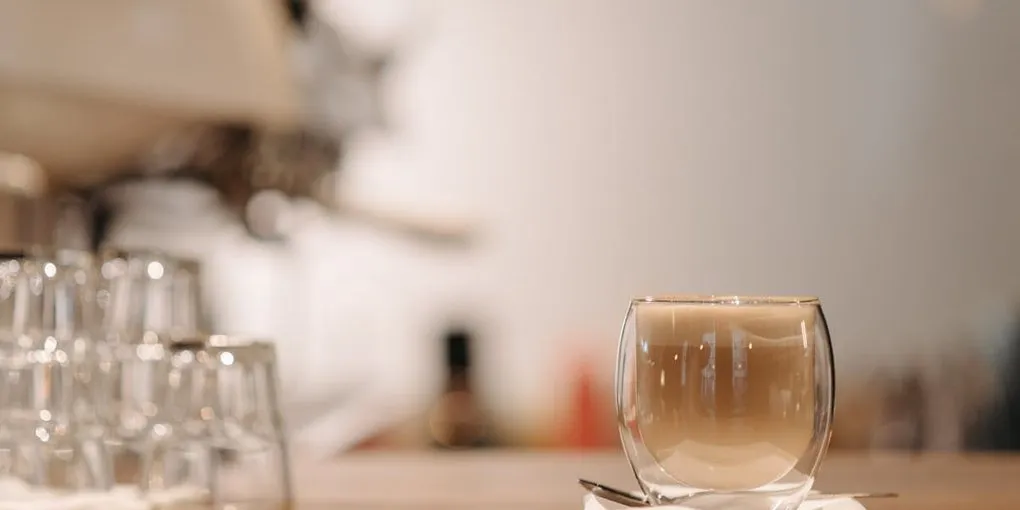
A cortado is equal parts espresso and steamed milk. Four to four and a half ounces total. No foam art requirement. No six-dollar upcharge. It is the simplest espresso drink there is — and the glass you serve it in matters more than you might expect.
Shape affects latte art. Wall construction affects heat retention. Weight affects mouthfeel. And if the glass is the wrong size, the whole drink changes — too big and you add more milk (turning it into a flat white), too small and it overflows.
We tested eight cortado glasses across every price point and ranked them on five criteria: size accuracy for a real cortado, heat retention, build quality, latte art friendliness, and whether they actually improve the drink or just look good on Instagram.
How the Cortado Glass Became a Thing
The cortado’s American origin story starts with a happy accident at a San Francisco coffee bar. In 2005, a barista at Blue Bottle Coffee grabbed the wrong glass. It was a Libbey Gibraltar — a four-and-a-half-ounce rocks glass designed for whiskey. They poured a shot of espresso into it, topped it with equal parts steamed milk, and something clicked.
They called it a Gibraltar. Spain had been making this drink for decades under the name cortado — from the Spanish “cortar,” meaning to cut. Equal parts espresso and milk. The espresso is “cut” with just enough milk to soften the intensity without burying it.
That four-dollar rocks glass became the specialty coffee industry standard almost overnight. Today, purpose-built cortado glasses cost up to twenty-three dollars. Here is whether any of them are worth it.
What to Look For in a Cortado Glass
Capacity: A real cortado is four to four and a half ounces. Anything over five ounces tempts you to add more milk, which fundamentally changes the drink. Anything under three and a half ounces doesn’t leave room for even a thin layer of microfoam.
Wall construction: Single-wall glass transfers heat to your hands. Double-wall glass insulates — the drink stays hotter longer and your fingers stay cool. Double-wall also creates the “floating” visual effect where the drink appears suspended inside the glass. The trade-off is durability: double-wall glass is more fragile because the inner wall is thinner.
Interior shape: A curved interior helps crema rise to the surface and gives latte art a canvas to hold its shape. Straight-sided glasses work fine for drinking but make latte art harder to execute and hold.
Material: Glass shows the drink’s color layering — the espresso settling below the milk is part of the cortado’s visual appeal. Ceramic hides the layers but retains heat better and feels more substantial in the hand.
The 8 Best Cortado Glasses, Ranked by Price
#1. Duralex Picardie — about $3
A French bistro tumbler in continuous production since the 1940s. Before specialty coffee existed. Before cortados were trendy. Costa Coffee uses these for their cortados across Europe.
Tempered glass. Nearly indestructible — you can drop it on tile and it will probably survive. Stackable. Dishwasher safe. At three dollars, you can buy six of them for less than one premium option.
The honest take: There is nothing cortado-specific about the shape. No curved interior for latte art. No double wall. It is a glass that happens to be the right size. If you just want something cheap that works, this is it.
Best for: Budget buyers, breakage-prone households, buying in bulk for events.
Check price on Amazon →#2. Libbey Gibraltar DuraTuff — about $4
This is the glass that launched the American cortado movement. The exact glass from the Blue Bottle story. Four and a half ounces, faceted sides, heavy base, DuraTuff treatment for commercial durability. Every specialty coffee shop in America has used these at some point.
A twelve-pack runs around fifty dollars. That is four dollars a glass for the most iconic cortado vessel ever made. Tempered, commercial-dishwasher safe, and the thick glass retains heat better than you would expect for a single-wall design.
The honest take: It is still a rocks glass. The straight sides are not optimized for latte art. The heavy base means the drink cools from the top down rather than evenly. But if you want the authentic experience, this is what a cortado is supposed to look like.
Best for: Anyone who wants the original, coffee shops on a budget, purists.
Check price on Amazon →#3. Loveramics Twisted — about $9
Underrated in the US but well-established in Asian and European specialty scenes. Designer Simon Stevens created a twisted exterior that refracts light through the espresso and milk layers. The interior is curved for crema development. Four ounces. Stackable. Dishwasher safe.
It also works with Loveramics’ Egg and Tulip saucer systems if you are already in that ecosystem.
The honest take: Single-wall, so it transfers heat to your hands. The twisted shape is divisive — some people love the look, others think it is too busy for a minimalist drink. At nine dollars, it is the most interesting-looking glass on this list for under ten dollars.
Best for: Design-conscious buyers, anyone already using Loveramics cups.
Check price on Amazon →#4. Hearth Double-Wall — about $8
The cheapest double-wall option worth buying. Handmade borosilicate glass, kiln-fired, shatter-resistant. Keeps your hands cool while the drink stays hot. A set of two runs about sixteen dollars.
Compact at sixty-seven millimeters tall. Fits under virtually any espresso machine spout. Available in a Smoke color option with gift packaging.
The honest take: Hand wash only. At four ounces, it is tight for a cortado with any foam — you will want to pour carefully. But at eight dollars for the floating visual effect and insulated comfort, nothing else comes close at this price.
Best for: Budget double-wall buyers, gift shoppers, small-kitchen setups.
Check price on Amazon →#5. notNeutral VERO — about $20 (Best Overall)
What most high-end specialty shops have upgraded to from the Gibraltar. Designed by Rios Clementi Hale Studios, an LA architecture firm. Hand-pressed in the USA. Four and a quarter ounces.
The interior curve is specifically shaped for latte art in a small format. The facets are exaggerated compared to the Gibraltar. The weight feels intentional. Competition baristas use these. Available in six colors: Clear, Smoke, Amethyst, Ocean, Amber, and Emerald Green.
The honest take: Twenty dollars for a single glass is a lot. Hand-pressed means slight variation between pieces — either charming or annoying depending on your personality. But the latte art performance in a cortado format is unmatched. If you care about presentation and want to support American manufacturing, this is the one.
Best for: Home baristas who care about latte art, specialty coffee enthusiasts, anyone upgrading from a Gibraltar.
Check price on Amazon →#6. FLUR — about $20
The Instagram glass lives up to the hype for photographers. Double-walled borosilicate with a floating visual effect that photographs extremely well. Your cortado looks like it is suspended in air. FLUR has grown fast enough to land in Crate and Barrel.
Four ounces. Handblown. Available in five colors. Fits under standard espresso machine spouts. One-year warranty, which is unusual for glassware.
The honest take: Handblown double-wall glass is fragile. It will not survive being dropped. Forty dollars for two glasses is a real commitment for something that can shatter. If aesthetics matter to you and you treat your glassware carefully, FLUR delivers. If you are clumsy or have kids, look elsewhere.
Best for: Instagram/content creators, photography-focused coffee setups, careful households.
Check price on Amazon →#7. KRUVE IMAGINE — about $20
KRUVE is known for their coffee sifters. The IMAGINE glass uses a spherical inner wall designed to maintain consistent surface area as you pour. The idea is that latte art holds its shape better in a curved vessel than a straight-sided one. Laboratory-grade borosilicate. Double-walled. Vacuum sealed.
The honest take: At five ounces, it is oversized for a traditional cortado. A real cortado is four to four and a half ounces. Five ounces gives you room, but it also tempts you to add more milk, which changes the drink. The science behind the shape is legitimate — if latte art is your priority and you don’t mind the extra half-ounce, the spherical design works.
Best for: Latte art enthusiasts who want maximum canvas, people who prefer a slightly larger drink.
Check price on Amazon →#8. Fellow Monty — about $23
The only ceramic option on this list adds a different dimension to the cortado experience. Double-wall construction with a hidden parabolic slope inside that lifts crema toward the surface for latte art. Matte White with copper base or Matte Black with graphite base. Stackable with Fellow’s other Monty sizes (espresso, cappuccino, latte).
Fits the Stagg, Ode, Atmos ecosystem if you are already in deep with Fellow gear.
The honest take: Not dishwasher safe. Twenty-three dollars for a single cup that requires hand washing. And because it is ceramic, you lose the visual layering that makes a cortado in glass so appealing. The best cortado cup for people who prefer ceramic over glass. Everyone else should look at the VERO.
Best for: Fellow ecosystem buyers, ceramic preference, gift-worthy presentation.
Check price on Amazon →Our Top 3 Picks
Best Overall: notNeutral VERO (about $20). It is what the best coffee shops in the country use. The latte art performance in a cortado format is unmatched. Twenty dollars is steep for a glass, but you will use it every day.
Best Value: Libbey Gibraltar (about $4). The original. The icon. Nothing else needs to be said. Four dollars for the glass that launched the cortado movement in American specialty coffee.
Best Double-Wall: Hearth (about $8). The floating look, hand comfort, and borosilicate durability without the twenty-dollar premium of FLUR or KRUVE. Best value in the double-wall category by a wide margin.
Single-Wall vs. Double-Wall: Which Is Better?
Single-wall glasses (Duralex, Gibraltar, Loveramics, VERO) are simpler, more durable, and show the drink’s layering directly. You feel the warmth of the drink through the glass — some people find this pleasant, others find it too hot to hold comfortably.
Double-wall glasses (Hearth, FLUR, KRUVE) insulate the drink, keeping it warmer longer while keeping the exterior cool to the touch. The floating visual effect is striking. The downside is fragility — the inner wall is thinner by necessity, and a drop usually means a shatter rather than a bounce.
For daily home use where durability matters, single-wall wins. For presentation, photography, or comfort, double-wall has the edge. Both produce the same drink — the choice is about how you want to experience it.
How to Make a Proper Cortado
A cortado is one of the simplest espresso drinks to make, but the ratio matters. If you are new to pulling shots at home, our espresso dialing-in guide covers the fundamentals.
The ratio: One part espresso to one part steamed milk. For a standard double shot (about 2 oz), that means about 2 oz of steamed milk. Total drink: approximately 4 oz.
The milk: Steamed to around 55-65°C (130-149°F). Light texture — you want microfoam, not cappuccino froth. The milk should pour smoothly, not sit on top in a mound. Pour within 30 seconds of steaming for the best mouthfeel.
The glass: Anything in the 4-4.5 oz range. Pre-warm it with hot water if you are using single-wall glass — the thermal mass of a cold glass will drop the drink temperature noticeably.
Common mistake: Ordering a “cortado” in a 6-8 oz cup. At that size, with the milk ratio adjusted to fill the vessel, you have made a flat white. There is nothing wrong with a flat white — but it is a different drink.
If you are still building your home espresso setup, our best espresso machines under $500 guide covers machines at every price point.
The Bottom Line
You do not need a twenty-dollar glass to enjoy a cortado. A four-dollar Libbey Gibraltar has been the industry standard for twenty years for a reason. But if you care about latte art, heat retention, or the visual experience, there are purpose-built options at every price point that genuinely improve the drink.
Start with what fits your budget. If you are unsure, buy a Gibraltar. You will understand immediately why this drink works — and whether you want to invest in something more specialized.
This article contains affiliate links. We earn a small commission on purchases made through these links, at no cost to you. We only recommend products we have tested and believe in.
Frequently Asked Questions
- What size glass should a cortado be served in?
- A cortado is equal parts espresso and steamed milk — typically 4 to 4.5 ounces total. A glass in the 4-5 oz range is ideal. Anything over 5 oz encourages adding more milk, which turns it into a different drink (closer to a flat white). Anything under 3.5 oz doesn't leave room for microfoam.
- What is the difference between a cortado and a flat white?
- Ratio and volume. A cortado is 1:1 espresso to milk in a 4 oz glass. A flat white is a double shot with more textured milk, typically 5-6 oz total. The cortado is denser and more espresso-forward. If you make a cortado in a 6 oz glass and fill it with milk to compensate, you have made a flat white.
- Why do specialty coffee shops use the Libbey Gibraltar for cortados?
- In 2005, a barista at Blue Bottle Coffee in San Francisco used a Libbey Gibraltar rocks glass (a whiskey glass) for an espresso-and-milk drink. It became their house drink — the Gibraltar. The glass was cheap, durable, commercial-dishwasher safe, and the right size. Shops copied it. The drink was already common in Spain as a cortado, but the Libbey Gibraltar became the standard vessel in American specialty coffee.
- Is a double-wall cortado glass better than single-wall?
- Neither is objectively better. Double-wall keeps the drink warmer longer and keeps the exterior cool to the touch, plus creates a floating visual effect. Single-wall is more durable, shows the drink's layering directly, and is cheaper. For daily home use, single-wall wins on durability. For presentation or comfort, double-wall has the edge.
- Can I use a regular espresso cup for a cortado?
- A standard espresso demitasse is typically 2-3 oz — too small for a cortado, which needs 4-4.5 oz. A cappuccino cup (5-6 oz) is slightly too large and encourages overfilling. The cortado sits in an awkward middle ground that most standard cup sets don't cover, which is why purpose-built cortado glasses exist.
- What is the notNeutral VERO and why is it so popular?
- The notNeutral VERO is a hand-pressed glass made in the USA, designed by the LA architecture firm Rios Clementi Hale Studios. It has a curved interior specifically shaped for latte art in small-format drinks. Competition baristas use them, and most high-end specialty shops have upgraded to them from the Libbey Gibraltar. It comes in six colors. At $20 per glass, it is the premium option — but the latte art performance is genuinely better than cheaper alternatives.
- Do I need to pre-warm my cortado glass?
- For single-wall glass, yes — rinsing with hot water before pulling your shot makes a noticeable difference. A cold glass absorbs thermal energy from the espresso, dropping the drink temperature by several degrees. This matters less with double-wall glasses since the insulating air gap reduces heat transfer to the glass itself. It takes five seconds and improves the first few sips.
- How do I care for double-wall glass?
- Most double-wall cortado glasses (Hearth, FLUR, KRUVE) are handmade borosilicate. Hand wash with warm water and mild soap — avoid extreme temperature shocks (don't put a hot glass under cold water). Some brands claim dishwasher safety, but hand washing extends the lifespan significantly. The inner wall is thin by design, and thermal cycling in a dishwasher stresses the glass over time.