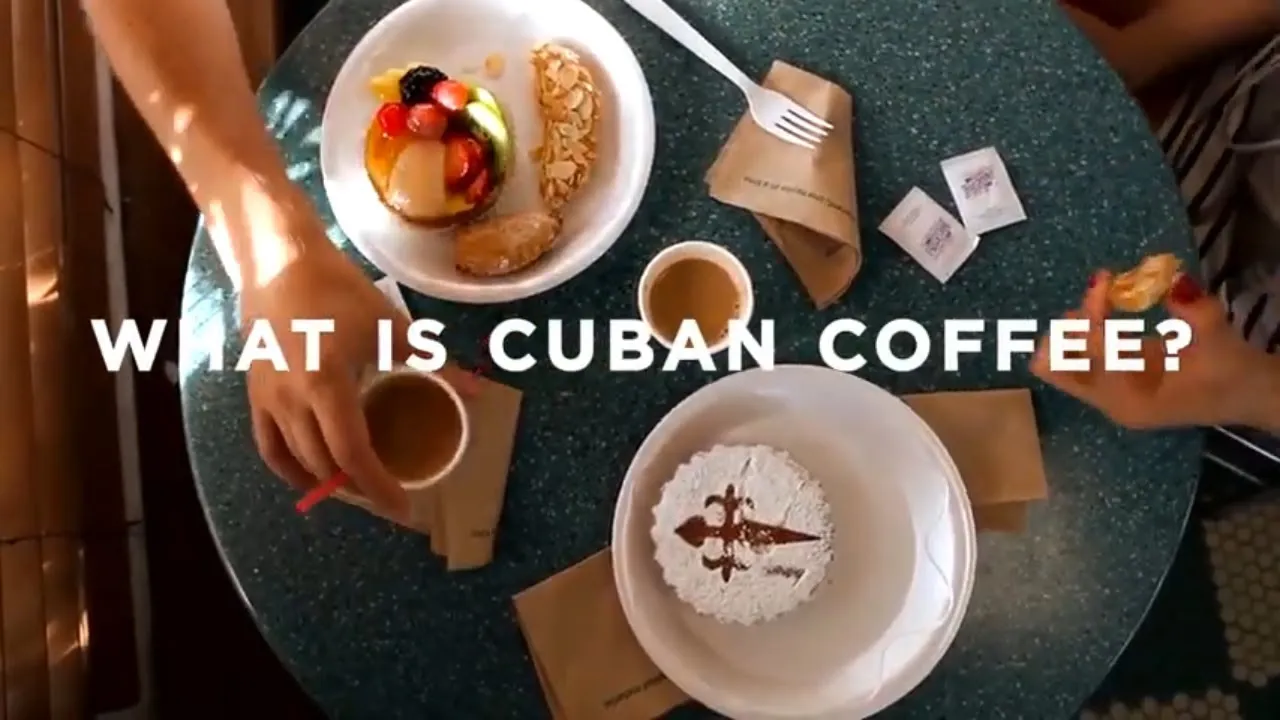
“Cuban coffee” usually means the cafecito — a shot of strong moka pot coffee whipped with sugar to create a thick caramel foam called espuma, served in a tiny demitasse cup. It’s sweet, intense, and deeply tied to Cuban history. Every element of it — the tiny cup, the foam, the sugar — reflects a story of resourcefulness under scarcity.
The History in the Cup
Coffee arrived in Cuba in 1748. The industry exploded after the Haitian Revolution (1791), when French colonists fled to Cuba bringing coffee plants and cultivation knowledge. Cuba became Spain’s chief coffee exporter. Havana alone had over 150 cafes — ventanitas — where people gathered for cafecitos and conversation.
Then came the 1959 revolution, the 1962 U.S. embargo, and the collapse of the Soviet Union. Each blow devastated Cuba’s coffee industry. By 2007, Cuba produced just 7,000 bags of coffee — a 98% decline from its peak of 444,000 bags per year. The government rationed coffee to four ounces per person every 30 days.
That rationing explains everything about Cuban coffee culture: the tiny cups (because that’s all you had), the espuma (imitating the crema of espresso machines Cubans couldn’t afford), and the sugar (making the most of each precious ounce). Cuban coffee is a monument to making something beautiful out of almost nothing.
Production has recovered to about 120,000 bags per year. Independent cafes are reappearing. But the culture forged during scarcity — small, intense, shared — remains.
The Espuma Technique
The espuma is what makes Cuban coffee Cuban. Here’s the science: when you vigorously whip the first, most concentrated drops of moka pot coffee with granulated sugar, you create an emulsion. The coffee’s dissolved solids and oils stabilize air bubbles in the sugar, producing thick, caramel-colored foam.
The key details:
- Use the first tablespoon of coffee from the moka pot — it’s the most concentrated
- About 1 teaspoon sugar per demitasse cup
- Whisk aggressively for 30-60 seconds — this isn’t gentle stirring, it’s vigorous whipping
- The mixture should go from dark liquid to thick, mousse-like paste with visible foam
- Too much coffee means it won’t foam. Too little means you can’t whip. One tablespoon per teaspoon of sugar is the sweet spot.
The espuma isn’t decorative — it traps aroma, delivers sweetness with every sip, and adds a rich mouthfeel to what would otherwise be a harsh, concentrated shot.
How to Make a Cafecito at Home
You need: A moka pot, a spoon or small whisk, demitasse cups, Cuban-style finely ground coffee (Cafe Bustelo is the standard), sugar.
- Fill the moka pot’s bottom chamber with water to just below the safety valve
- Add coffee to the basket — level, don’t tamp (moka pots don’t like compacted grounds)
- Medium heat. Don’t rush it — slow extraction yields richer flavor
- While it brews, put 1 tsp sugar in each demitasse cup
- When the first coffee appears, pour about 1 tbsp into the sugar
- Whip vigorously until thick and foamy (this is the espuma)
- Pour remaining coffee into the cups, dividing evenly
- Spoon espuma on top
- Serve immediately — espuma settles quickly
The Four Cuban Coffee Drinks
Cortadito — Cafecito with a splash of steamed milk. Softer than a straight cafecito, still sweet. Often served as an after-dinner digestif.
Cafe con Leche — Unsweetened espresso served alongside a separate cup of hot milk. You pour the coffee into the milk and stir. Traditional breakfast drink, paired with buttered toast or Cuban pastries. Some add a pinch of salt to heighten complexity.
Colada — 3-6 cafecito shots in a styrofoam cup with small plastic cups for sharing. The communal Cuban coffee experience — meant to be passed around among coworkers or friends. Coffee as a social act, not a solo one.
The Right Coffee to Use
Cafe Bustelo is the standard — dark roast, finely ground, formulated for moka pot brewing. Cafe Pilon is another good option. Both are widely available in the U.S.
What makes these work: the fine grind (finer than drip, not as fine as espresso) and the dark roast profile. The coffee needs to be intense enough to punch through the sugar and still taste like coffee. A light-roast specialty bean would get completely buried.
Don’t use pre-ground that’s been sitting open for months. Cuban coffee should be fragrant and bold. Stale grounds produce flat, bitter results that no amount of espuma can save.
Common Mistakes and How to Fix Them
| Problem | Cause | Fix |
|---|---|---|
| Espuma won’t foam | Too much coffee in the sugar | Use only 1 tablespoon per teaspoon of sugar |
| Espuma is thin/runny | Not whisking hard enough | Whip aggressively for 60+ seconds |
| Coffee tastes burnt | Heat too high on moka pot | Use medium heat, listen for the gurgle |
| Coffee is watery | Too much water, too little coffee | Fill basket fully, level with grounds |
| Bitter without sweetness | Espuma wasn’t made properly | The foam is essential — it delivers the sweetness |
The Moka Pot: Your Essential Tool
You can’t make authentic Cuban coffee without a moka pot (also called a stovetop espresso maker). The two brands you’ll see everywhere in Cuban households:
Bialetti — The Italian original. Aluminum or stainless steel, every size from 1-cup to 12-cup. The 3-cup or 6-cup is ideal for cafecitos.
Imusa — The brand Cuban families actually use. Cheaper, functional, widely available at Latin grocery stores.
A few moka pot tips specific to Cuban coffee:
- Don’t tamp the grounds. Unlike an espresso machine, moka pots create pressure by steam — compacted grounds can cause dangerous pressure buildup or block flow
- Use medium heat. High heat extracts too fast, producing bitter, thin coffee. Slow extraction produces richer, more concentrated brew
- Remove from heat as soon as you hear gurgling. Leaving it on past this point pushes steam through the grounds, extracting harsh compounds
- The first few drops are the most concentrated. This is why you catch them for the espuma
Cuban Coffee vs. Espresso
People often call Cuban coffee “Cuban espresso,” but there are real differences:
| Cuban Coffee (Cafecito) | True Espresso | |
|---|---|---|
| Brewing device | Moka pot (stovetop) | Espresso machine |
| Pressure | about 1.5 bars | 9 bars |
| Temperature | Varies (stovetop) | 200-205°F (precise) |
| Sugar | Whipped in (espuma) | Added after (optional) |
| Serving | With espuma on top | With crema on top |
| Cost to make | about $0.15/cup | Machine: $300-2,000+ |
The moka pot produces about 1.5 bars of pressure versus espresso’s 9 bars. It’s concentrated coffee, but it’s not technically espresso. The espuma compensates for the lack of crema — it provides the rich, foamy top layer and mouthfeel that an espresso machine’s crema would naturally create. It’s an ingenious workaround born from necessity.
Where to Find Cuban Coffee in the US
Miami is the capital of Cuban coffee culture in the US. The ventanita tradition is alive and well — walk-up windows at bakeries and restaurants serve cafecitos for $1-2. Little Havana’s Calle Ocho is lined with them.
Anywhere else: Cafe Bustelo and Cafe Pilon are available at most grocery stores. A moka pot costs $15-30. The ingredients are simple and cheap — the technique is the only barrier, and it takes one or two tries to get right.
If you’re exploring coffee cultures beyond your usual cup, Cuban coffee pairs well with understanding what single-origin coffee from the Caribbean and Latin America can offer. Mexico’s café de olla tradition is a fascinating parallel — another culture building ceremony around modest ingredients. And if you’re curious how coffee is roasted and why dark roast works so well for the cafecito, that’s worth exploring too.
Some links above are affiliate links. If you purchase through them, we earn a small commission at no extra cost to you.
Frequently Asked Questions
- Is Cuban coffee the same as espresso?
- No. Cuban coffee (cafecito) is made in a moka pot, which generates about 1.5 bars of pressure versus espresso's 9 bars. It's concentrated coffee, not technically espresso. The espuma — sugar whipped with the first concentrated drops of coffee — compensates for the lack of true crema, providing the rich foam top layer and mouthfeel. It's an ingenious workaround born from necessity when Cubans couldn't afford espresso machines.
- What sugar do you use for Cuban coffee espuma?
- Regular white granulated sugar. The key isn't the sugar type — it's the technique. Take only the first tablespoon of coffee from the moka pot (the most concentrated drops), add about 1 teaspoon of sugar per cup, and whisk aggressively for 30-60 seconds until the mixture transforms from dark liquid to a thick, mousse-like caramel-colored paste. Too much coffee and it won't foam; not enough whisking and it stays thin.
- What coffee brand do Cubans actually use?
- Cafe Bustelo is the standard — dark roast, finely ground, formulated for moka pot brewing. Cafe Pilon is another popular choice. Both are widely available in US grocery stores. The fine grind and dark roast are important because the coffee needs to be intense enough to punch through the sugar and still taste like coffee. Light-roast specialty beans would get completely buried.
- What's the difference between a cafecito, cortadito, and cafe con leche?
- A cafecito is a straight shot of moka pot coffee with espuma (sugar foam) — small, sweet, intense. A cortadito adds a splash of steamed milk to a cafecito — softer but still sweet. Cafe con leche is unsweetened coffee served alongside a separate cup of hot milk — you combine them yourself. The cafecito is a quick shot, the cortadito an after-dinner drink, and cafe con leche a breakfast staple.