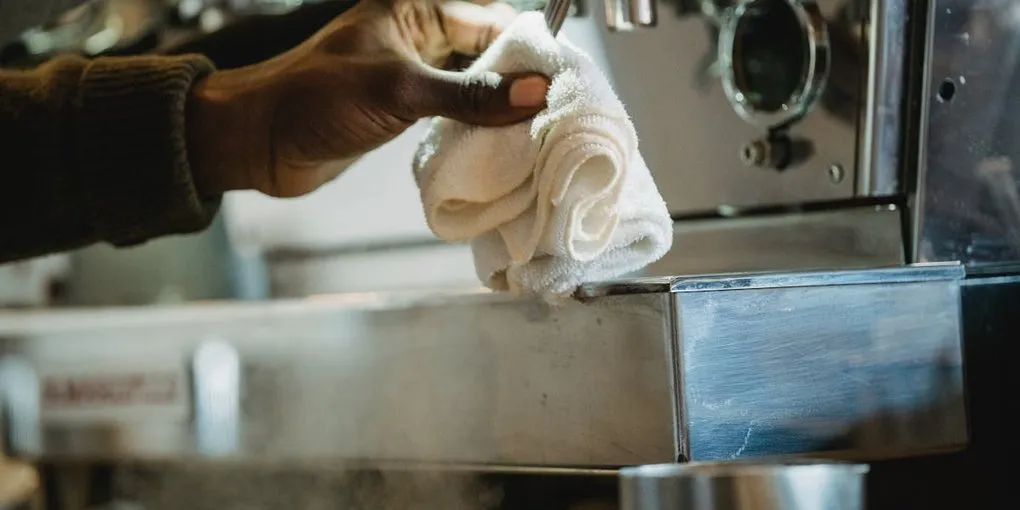
Your espresso machine is a precision instrument that forces water at 7-9 bar through a compressed bed of finely ground coffee. Every shot leaves behind oils, fines, and mineral deposits. Without regular cleaning, those residues accumulate — and the result is rancid-tasting shots, inconsistent flow, and eventually a machine that stops working entirely.
The good news: espresso machine maintenance follows a simple schedule. Daily tasks take under two minutes. Weekly tasks take five. And the deeper cleanings that actually prevent costly damage happen monthly or quarterly. Here’s the complete protocol.
Why Clean Espresso Machines Break Down
Espresso machines fail for two primary reasons: oil buildup and scale accumulation. Coffee oils are lipids that coat every surface the brew water touches — the shower screen, the group gasket, the basket, and the internal tubing. At room temperature, these oils oxidize and turn rancid within days. That rancidity doesn’t just produce off-flavors; it creates a sticky residue that traps coffee fines, further restricting flow and compounding the problem.
Scale is the other threat. Water hardness of 70+ mg/L CaCO3 will deposit calcium carbonate inside a steam boiler at operating temperatures. Scale narrows tubing, reduces boiler capacity, insulates heating elements (forcing them to work harder), and eventually blocks flow entirely. Descaling reverses existing deposits, but prevention through proper water treatment is always better than cure. For a deep dive into why water chemistry matters so much, see our guide on why water matters more than your coffee beans.
Both problems are cumulative and invisible until they’re serious.
The Daily Routine (2 Minutes)
A consistent daily cleaning routine prevents 90% of maintenance problems before they start. These steps should happen every time you finish pulling shots for the day.
Purge the Group Head
Run water through the group head for 2-3 seconds before and after every shot. This flushes stale water sitting in the thermosyphon circuit and clears loose grounds from the shower screen. The pre-shot purge also stabilizes brew temperature — pulling shots immediately after machine startup, before full thermal equilibrium, is one of the most common home espresso mistakes.
Wipe the Portafilter and Basket
Knock out the spent puck, rinse the basket under hot water, and wipe the inside of the portafilter with a clean cloth. Coffee oils start oxidizing immediately. Leaving a spent puck in the portafilter overnight means tomorrow’s first shot passes through yesterday’s rancid oils.
Clean the Steam Wand
Purge the steam wand immediately after steaming milk — a quick burst of steam blasts out residual milk from inside the tip. Then wipe the exterior with a damp cloth. Milk proteins denature above 68C (154F) and bake onto metal surfaces quickly. Once baked on, milk residue is difficult to remove and creates a breeding ground for bacteria.
If milk has dried onto the wand, soak the tip in hot water for a few minutes, then scrub with a non-abrasive pad.
Wipe the Drip Tray and Exterior
Empty and rinse the drip tray. Wipe down the machine exterior. Standing water in the drip tray grows mold. Coffee splatter on the housing stains permanently if left.
Weekly Backflushing (5 Minutes)
Backflushing is the single most important maintenance task for any espresso machine with a three-way solenoid valve. This valve redirects brew pressure after a shot, releasing it through the drip tray drain instead of back through the coffee. It’s what creates that signature hiss when you stop a shot. Machines without a three-way valve (most entry-level models like the basic Gaggia Classic or manual lever machines) cannot be backflushed — and don’t need to be, because there’s no solenoid to clean.
Water-Only Backflush (After Every Session)
Insert a blind (backflush) basket or rubber disc into your portafilter. Run the pump for 10 seconds, then stop for 10 seconds. Repeat 5 times. The pressure forces water backward through the group, flushing out oils and fines lodged in the solenoid valve and the space above the shower screen.
Detergent Backflush (Weekly)
Use the same process, but add about 1/2 teaspoon of espresso machine cleaning powder (Cafiza, Biocaf, or Puly Caff are the standard options) to the blind basket. Run and stop the pump in 10-second cycles, 5-6 times. You’ll see the expelled water turn brown, then yellow, then gradually clear. Once it runs clear, remove the blind basket and flush the group with fresh water for 10-15 seconds to purge any detergent residue.
Pull a blank shot (water only, no coffee) through a regular basket afterward and taste it. If you detect any soapy flavor, flush again. Detergent residue tastes far worse than coffee oil residue.
Soak the Basket and Shower Screen
Remove the shower screen (usually held by a single screw) and drop it along with your basket into a bowl of hot water with a teaspoon of cleaning powder. Soak for 15-20 minutes, then scrub lightly and rinse. The perforations in both the screen and basket accumulate compacted coffee fines that restrict flow over time. Regular soaking keeps these clear.
This is also a good time to inspect the group gasket — the rubber seal that the portafilter locks into. If it’s cracked, hard, or doesn’t create a tight seal, replace it. Gaskets typically last 6-12 months with daily use.
Monthly Deep Cleaning
Once a month, go beyond the weekly backflush with a more thorough cleaning of the brew circuit.
Group Head Soak
Remove the shower screen, dispersion plate (if your machine has a separate one), and group gasket if it’s easily removable. Soak all parts in cleaning solution for 30 minutes. Use a group head brush (a stiff nylon brush shaped to fit the recessed area) to scrub inside the group cavity where the screen normally sits. Rinse thoroughly.
Portafilter Deep Clean
Soak the entire portafilter (without the handle if plastic) and all baskets in cleaning solution for 30 minutes. Scrub the spouts — coffee oils accumulate inside the split channels of a double-spouted portafilter and are invisible until you look inside with a flashlight.
Steam Wand Deep Clean
If milk residue has built up inside the steam tip despite daily wiping, remove the tip and soak it in a milk-specific cleaner (like Rinza or Urnex Milk Cleaner) for 20-30 minutes. Milk residue requires enzymatic cleaners or alkaline solutions — standard espresso detergent is designed for coffee oils and is less effective on milk proteins.
Descaling: When and How
Descaling removes mineral scale deposits from the boiler and internal water passages. How often you need to descale depends entirely on your water hardness.
How Often to Descale
- Soft water (under 50 ppm hardness): Every 6-12 months
- Medium water (50-100 ppm): Every 3-4 months
- Hard water (100+ ppm): Monthly, or switch to treated water
If you’re using properly treated water — reverse osmosis with added minerals, or a recipe like Third Wave Water — scale accumulation is minimal. For specific recipes and how to build your own water, see our coffee water recipes comparison. But if you’re using unfiltered tap water in a hard-water area, scale is your machine’s biggest threat.
Signs your machine needs descaling: slower flow rate, reduced steam pressure, longer heat-up times, or visible white deposits around the group head or steam wand openings.
Descaling Procedure
Important: Always follow your machine manufacturer’s instructions. Some machines (particularly those with aluminum boilers) have specific descaling requirements. Most modern espresso machines use brass or stainless steel boilers and tolerate standard citric acid descaling.
- Mix the solution. Use a commercial descaler (Durgol, Dezcal, or your manufacturer’s recommended product) or dissolve 25-30g of food-grade citric acid per liter of water.
- Fill the reservoir with the descaling solution.
- Run solution through the group head. Dispense about 1/3 of the tank, then pause for 15-20 minutes to let the solution work inside the boiler.
- Run solution through the steam wand. Open the steam valve and run another 1/3 of the solution through the steam circuit.
- Dispense the remainder through the group head.
- Rinse thoroughly. Fill the reservoir with fresh water and run the full tank through both the group head and steam wand. Repeat with a second full tank. Citric acid residue affects taste and can damage gaskets if left.
Choosing the right machine matters too — compare features and price with our Espresso Machine Finder.
Preventing Scale in the First Place
Prevention is far more effective than treatment. At steam boiler temperatures, water with hardness above 70 mg/L CaCO3 will inevitably deposit scale. The best approaches:
- Use a carbon filter at minimum — removes chlorine and chloramine, which corrode internal components
- Third Wave Water or similar mineral packets added to distilled water give you full control over hardness and alkalinity while keeping scale-forming minerals low
- In-line water filters designed for espresso machines (BWT, Pentair Everpure) reduce hardness while maintaining enough minerals for good extraction
If your tap water TDS is above 250 ppm, building water from distilled is almost certainly worth the effort for both machine longevity and espresso quality.
Seasonal and Annual Maintenance
Some tasks only need attention a few times per year but make a significant difference in machine longevity.
Replace the Group Gasket (Every 6-12 Months)
The rubber group gasket hardens over time from heat cycling. A hardened gasket doesn’t seal properly, causing leaks around the portafilter and requiring excessive force to lock in. Replacement gaskets cost about $5-10 and take two minutes to swap — pull the old one out with a flathead screwdriver or gasket pick, press the new one in.
Inspect and Replace the Shower Screen (Annually)
Shower screens can become corroded or permanently clogged. If yours doesn’t come clean with soaking, replace it. Aftermarket precision screens (like the IMS or VST screens) improve water distribution over stock screens and cost about $15-30.
Check the Water Softener or Filter (Per Manufacturer Schedule)
If your machine has an internal softener cartridge or you use an external filter, replace it on schedule. An exhausted filter provides zero protection and may release trapped contaminants back into the water.
Lubricate Moving Parts
E61 group heads and lever machines have moving parts that benefit from food-safe silicone lubricant. Apply a thin coat to the lever cam or E61 cam mechanism during deep cleaning. Refer to your machine’s manual for specific lubrication points.
Maintenance Schedule Quick Reference
| Task | Frequency | Time | Tools Needed |
|---|---|---|---|
| Purge group head | Every shot | 5 sec | None |
| Wipe steam wand | After every use | 10 sec | Damp cloth |
| Rinse portafilter/basket | After every session | 30 sec | Water |
| Water-only backflush | After every session | 2 min | Blind basket |
| Detergent backflush | Weekly | 5 min | Blind basket, Cafiza |
| Soak screen and baskets | Weekly | 20 min | Cleaning powder, bowl |
| Group head deep clean | Monthly | 15 min | Group brush, cleaner |
| Steam wand deep clean | Monthly | 10 min | Milk cleaner |
| Descale | Per water hardness | 30-45 min | Descaler or citric acid |
| Replace group gasket | 6-12 months | 2 min | Flathead screwdriver |
| Replace shower screen | Annually | 2 min | Screwdriver |
What Happens When You Skip Maintenance
The consequences are cumulative and expensive. Within 1-2 weeks without cleaning, rancid oils coat the group and shots taste progressively bitter. Within a month or two without backflushing, the solenoid valve accumulates buildup and flow becomes uneven. After 3-6 months without descaling in hard water areas, scale narrows boiler passages, drops steam pressure, and degrades temperature stability. After a year of full neglect, repair costs often approach the machine’s replacement price.
A well-maintained espresso machine lasts 10-20 years. A neglected one rarely survives 3-5.
Cleaning Products Worth Buying
You don’t need many products, but you need the right ones:
- Espresso machine detergent (Cafiza, Puly Caff, Biocaf) — for backflushing and soaking brew components. These are alkaline and designed to dissolve coffee oils. About $10-15 for a tub that lasts 6-12 months.
- Descaler (Durgol, Dezcal, or food-grade citric acid) — for removing mineral scale. About $8-12 per treatment, or about $5/lb for bulk citric acid.
- Milk system cleaner (Rinza, Urnex Milk Cleaner) — enzymatic formula designed for milk proteins. About $10-12. Not essential if you only steam occasionally and wipe diligently.
- Group head brush — stiff nylon bristles shaped to fit inside the group cavity. About $5-8. Lasts years.
- Blind basket/backflush disc — usually included with the machine. Replacements are about $5-10.
For more on choosing the right machine for your budget, see our guides to the best espresso machines under $200 and best espresso machines under $500. If you’re troubleshooting shot quality, start with our espresso dial-in guide — sometimes what seems like a machine problem is actually a grind or distribution issue. And for a head-to-head look at popular entry-level machines, check our Gaggia vs. Bambino vs. Philips battle royale.
Some links above are affiliate links. If you purchase through them, we earn a small commission at no extra cost to you.
Frequently Asked Questions
- Can I use vinegar to descale my espresso machine?
- Vinegar is a weak acid that can technically dissolve scale, but it's a poor choice for espresso machines. The acetic acid leaves a persistent flavor that requires extensive rinsing — far more than citric acid or commercial descalers. Vinegar can also damage rubber gaskets and seals over time. Some manufacturers explicitly void the warranty if vinegar is used. Food-grade citric acid (about $5/lb in bulk) is equally cheap, more effective, and rinses clean in two tank flushes.
- My machine doesn't have a three-way solenoid valve. How do I clean it?
- Machines without a three-way valve (many entry-level models and all manual lever machines) cannot be backflushed because there's no mechanism to redirect pressurized water backward through the group. Instead, focus on regular soaking of the basket and shower screen in espresso detergent, wiping out the group cavity with a damp cloth, and running blank water shots through the group. These machines are actually simpler to maintain because the brew path has fewer components where oils can accumulate.
- How do I know if my water is hard enough to cause scale problems?
- Test your tap water with an inexpensive TDS meter (about $10) and an aquarium GH/KH test kit (about $8 from a pet store). If your general hardness exceeds 70 mg/L CaCO3, scale will accumulate at steam boiler temperatures. If your TDS is above 250 ppm, consider building water from distilled with added minerals — this protects the machine while also improving espresso flavor.
- Should I leave the portafilter locked in when the machine is idle?
- Keeping the portafilter locked in keeps the group gasket compressed in one position, which can cause it to deform and harden faster on one side. Removing it between sessions allows the gasket to relax. A reasonable compromise: leave it in during active brewing sessions, remove it overnight.
- What's the difference between Cafiza, Puly Caff, and Biocaf?
- All three are alkaline detergents designed to dissolve coffee oils. Cafiza (by Urnex) is the most widely used in commercial settings and is the default recommendation from most machine manufacturers. Puly Caff is an Italian-made alternative popular in Europe. Biocaf is Urnex's biodegradable, phosphate-free version of Cafiza — slightly less aggressive but better for septic systems and environmentally sensitive areas. For home use, any of the three works well. The key is using one of them consistently, not which brand you choose.