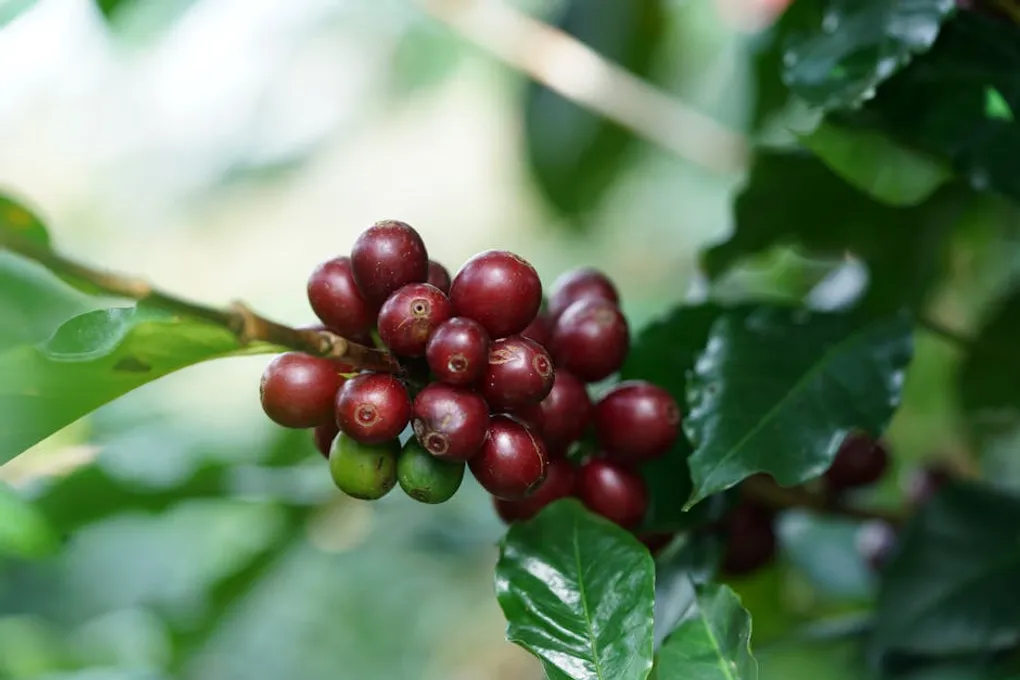
El Salvador is the smallest country in Central America, and it produces some of the continent’s most distinctive coffee. That seems like a stretch until you taste a well-grown Pacamara — a variety that exists nowhere else, produces absurdly large beans, and delivers a cup profile so floral and complex that it routinely wins Cup of Excellence competitions across the Americas.
But the Pacamara story is actually the smaller story. The bigger one is about Bourbon. El Salvador is one of the last countries on Earth where traditional Bourbon varieties still dominate production — roughly 68% of the country’s coffee. In most other origins, Bourbon has been replaced by higher-yielding, rust-resistant cultivars. In El Salvador, it endured. The reason is tragically ironic: a twelve-year civil war (1980 to 1992) left farmers too poor to replant with modern varieties. The war preserved what economics would have destroyed.
The result is a country that grows coffee the old way — heirloom Bourbon on volcanic slopes at altitude — and happens to have invented a variety that belongs in a different league entirely.
Coffee History in El Salvador
Coffee has shaped El Salvador more profoundly than perhaps any other commodity. By the late 1800s, coffee accounted for 95% of the country’s export revenue. The Salvadoran elite — the so-called “Fourteen Families” — built their fortunes on coffee, and the resulting wealth inequality became one of the driving forces behind the civil war.
During the conflict, coffee farms were abandoned, damaged, or seized. Production collapsed. But the silver lining — visible only in retrospect — was that Salvadoran farmers couldn’t afford to tear out their old Bourbon trees and replant with Catimor or other modern varieties, as their neighbors in Honduras and Costa Rica were doing. When the war ended in 1992, El Salvador’s coffee sector still had its genetic heritage intact.
The other critical development came from El Salvador’s national coffee research institute (ISIC, now CENTA). In 1958, researchers crossed the Pacas variety (a natural Bourbon mutation found on a Salvadoran farm in 1949) with Maragogype (a Typica mutation known for its giant beans). The result was Pacamara — a variety that combined Bourbon’s flavor complexity with Maragogype’s remarkable bean size. It would take decades for the specialty market to recognize what ISIC had created.
Growing Regions
El Salvador’s coffee zones are defined by a chain of volcanoes running east-west across the country. The volcanic soil is rich in minerals, and the altitude ranges (1,200 to 1,800 meters) along the volcanic flanks provide ideal growing conditions.
Apaneca-Ilamatepec
The country’s premier coffee region, centered on the Santa Ana and Cerro Verde volcanoes in western El Salvador. Farms here sit at 1,200 to 1,800 meters on steep volcanic slopes with rich, well-drained soil and consistent rainfall. This is where most of El Salvador’s competition-winning lots originate.
Finca El Carmen, one of the country’s most celebrated estates, has operated continuously in Apaneca-Ilamatepec since the 1890s. The region also hosts several Cup of Excellence-winning farms that have put Salvadoran Pacamara on the global specialty map.
Flavor profile: Complex, floral, citrus acidity, stone fruit, chocolate, silky body.
Santa Ana
The broader Santa Ana region surrounds the Santa Ana volcano at 1,000 to 1,600 meters. Coffee here tends to be slightly less intense than the highest-altitude Apaneca lots but still delivers excellent balance, clean sweetness, and the caramel-chocolate notes that characterize Salvadoran Bourbon.
Flavor profile: Balanced, caramel, milk chocolate, clean sweetness, moderate acidity.
Tecapa-Chinameca
In eastern El Salvador, the Tecapa and San Miguel volcanoes create a distinct growing zone at 1,200 to 1,500 meters. Less celebrated than the western regions, Tecapa-Chinameca is producing increasingly interesting lots — particularly from farms experimenting with honey and natural processing.
Flavor profile: Fuller body, brown sugar, dried fruit, lower acidity.
El Balsamo-Quezaltepec
Named for the San Salvador volcano (Quezaltepec) and the coastal Balsamo mountain range, this region sits at 900 to 1,400 meters. Proximity to the Pacific Ocean creates a distinct microclimate. Historically more commercial-grade, but quality is improving as farms invest in better processing.
Flavor profile: Mild, nutty, chocolate, approachable, moderate body.
Varieties
Pacamara
Pacamara is El Salvador’s signature contribution to the coffee world. Created by crossing Pacas (a compact Bourbon mutation) with Maragogype (known for its unusually large beans), Pacamara produces beans that are visibly, almost comically large — among the biggest of any commercial variety.
But the bean size isn’t just a curiosity. World Coffee Research rates Pacamara’s cup quality as “Very Good” and notes its “very large” bean size as a distinguishing feature. In the cup, Pacamara delivers intense floral aromatics, bright acidity, tropical and stone fruit, and a complexity that makes it a competition darling. El Salvador’s best Pacamara lots regularly score 88 to 92+ SCA points.
There’s a catch: Pacamara is highly susceptible to coffee leaf rust, produces medium yields, and — according to the WCR catalog — is not fully uniform or genetically stable. It requires specific altitude and care to express its full potential. This limits production and keeps prices elevated.
Bourbon
The foundation of Salvadoran coffee. El Salvador’s Bourbon trees are among the oldest and most genetically preserved in the world, thanks to the civil war’s unintended conservation effect. Bourbon produces sweet, complex cups with delicate acidity and lower body than Pacamara — the classic Central American profile at its most refined.
Tekisic (sometimes called “Bourbon Tekisic”) is an improved Bourbon selection developed in El Salvador, bred for slightly higher yields while maintaining cup quality. It’s increasingly planted as farms look for Bourbon-quality genetics with better economics.
Pacas
The other parent of Pacamara, Pacas was discovered on a single farm in the Santa Ana region in 1949 — a natural mutation of Bourbon that produced a more compact plant. Pacas offers very good cup quality (comparable to Bourbon), moderate yields, and slightly better disease tolerance. It’s widely planted across El Salvador.
Caturra
Present but less dominant than in Honduras or Colombia. Salvadoran Caturra delivers bright citric acidity and clean sweetness.
Processing
Washed: The dominant method, accounting for most of El Salvador’s specialty production. Salvadoran washed coffees are characteristically clean, sweet, and transparent — the processing lets the variety speak.
Honey: Growing rapidly. El Salvador’s honey-processed lots — particularly yellow and red honey Pacamara — have become specialty market favorites. The residual mucilage adds body and fruit sweetness without sacrificing the clarity that washed Salvadoran coffee is known for.
Natural: Still a smaller segment, but natural-process Bourbon and Pacamara from El Salvador can be extraordinary — concentrated dried fruit, berry, and wine-like fermentation notes balanced by the varieties’ inherent sweetness.
Why El Salvador Coffee Stands Out
The Pacamara Factor
No other country has a variety quite like Pacamara. It’s El Salvador’s intellectual property in a global market where most origins grow the same handful of cultivars. When you see “El Salvador Pacamara” on a bag, you know you’re getting something that literally can’t be replicated elsewhere with the same terroir and genetic combination. This is exactly what single origin coffee is about — tasting a place.
Bourbon Purity
El Salvador’s Bourbon heritage is genuinely rare. In most origins, traditional Bourbon has been replaced by higher-yielding hybrids. Salvadoran Bourbon — particularly Tekisic selections grown above 1,400 meters — represents the variety at its most refined: sweet, delicate, and complex in ways that modern cultivars can’t match.
Volcanic Terroir
The entire country sits on a volcanic chain, and the mineral-rich soil contributes to the clean sweetness and balanced acidity that characterizes even El Salvador’s mid-grade coffees. You rarely get a harsh or unbalanced Salvadoran cup — the terroir smooths the edges.
Value
Salvadoran specialty coffee typically costs $16 to $28 per bag — less than equivalent quality from Panama, Costa Rica, or Kenya. Pacamara lots from named farms run $22 to $40 depending on processing and score. For the variety’s uniqueness and the cup quality delivered, that’s genuinely good value.
Best Salvadoran Coffees to Buy
- Entry point ($16-22): Bourbon or Pacas from Santa Ana or El Balsamo. Clean, sweet, balanced.
- Mid-range ($22-35): Pacamara from Apaneca-Ilamatepec, washed or honey. This is the sweet spot where El Salvador’s uniqueness shines.
- Splurge ($35-50+): Competition-lot Pacamara, natural or honey process, from named estates. Floral, fruit-bomb complexity.
Brew Salvadoran Pacamara as pour-over to capture the floral aromatics, or as espresso where the full body and sweetness translate into a layered, complex shot. Bourbon lots work beautifully across all methods. Pacamara’s larger beans may benefit from a slightly finer grind than you’d use for other varieties — the bigger particle size at the same setting can lead to under-extraction.
Final Thoughts
El Salvador proves that greatness in coffee doesn’t require scale. The country produces roughly 700,000 bags annually — a rounding error by Brazilian or Vietnamese standards — but the quality per bag is extraordinary. Pacamara is a world-class variety that deserves the same recognition as Geisha. And the country’s preserved Bourbon heritage represents a genetic treasure that most other origins lost decades ago.
If you haven’t explored Salvadoran coffee, start with a Pacamara from a reputable roaster. The beans will be visibly larger than anything else in your grinder. The cup will be unmistakably different. And you’ll understand why this tiny country punches so far above its weight.
Some links above are affiliate links. If you purchase through them, we earn a small commission at no extra cost to you.
Frequently Asked Questions
- What is Pacamara coffee and why is it special?
- Pacamara is a coffee variety created in El Salvador in 1958 by crossing Pacas (a Bourbon mutation) with Maragogype (known for giant beans). The result is a variety that produces unusually large beans with intense floral aromatics, bright acidity, and tropical fruit complexity. Pacamara regularly scores 88 to 92+ SCA points in competition and has become a favorite among specialty roasters. No other country produces Pacamara at El Salvador's scale or quality.
- What does El Salvador coffee taste like?
- Salvadoran coffee is characteristically sweet, balanced, and clean. Bourbon lots -- which make up about 68% of production -- deliver caramel, milk chocolate, delicate acidity, and a smooth finish. Pacamara adds another dimension: intense floral notes, stone fruit, tropical fruit, and fuller body. The volcanic terroir across all regions contributes a clean sweetness that smooths any rough edges.
- How did El Salvador's civil war affect its coffee?
- The twelve-year civil war (1980 to 1992) devastated El Salvador's coffee sector -- farms were abandoned, production collapsed, and farmers lost income. But the war had an unintended positive consequence: farmers couldn't afford to replant with modern, rust-resistant varieties (as neighboring countries were doing), so El Salvador's heirloom Bourbon trees survived intact. Today, this preserved genetic heritage is one of the country's greatest coffee assets.
- Is El Salvador Pacamara good value?
- Yes. Pacamara from named Salvadoran farms typically costs $22 to $40 per bag -- significantly less than Panamanian Geisha with comparable or even higher SCA scores. Bourbon lots from good farms run $16 to $28. For the variety's uniqueness and the cup quality delivered, Salvadoran specialty coffee is genuinely well-priced relative to its quality level.
- How should I brew El Salvador Pacamara?
- Pour-over (V60 or Chemex) is ideal for capturing Pacamara's floral aromatics and fruit complexity. Use a medium-fine grind, water at 200 degrees F, and a 1:16 ratio. Pacamara's larger beans may benefit from a slightly finer grind than you'd use for other varieties -- the bigger particle size at the same setting can lead to under-extraction. For espresso, Pacamara's full body and sweetness make excellent, layered shots.