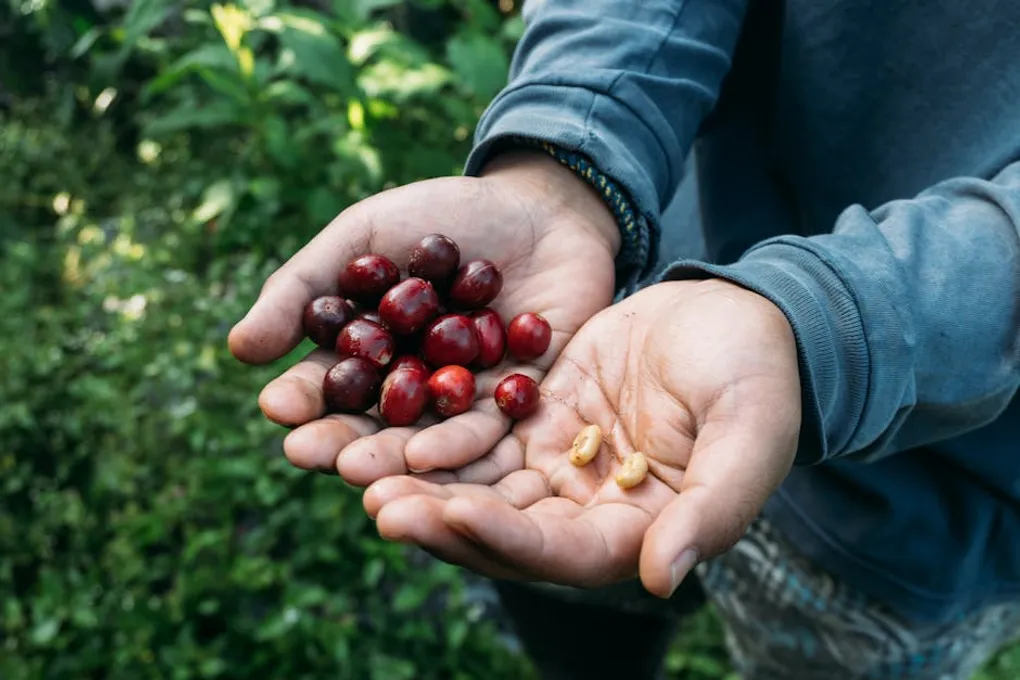
Every coffee you drink starts with a plant, and not all coffee plants are the same. The variety — or cultivar — determines the genetic ceiling for what that coffee can taste like. A Gesha grown poorly will still taste more interesting than a Catimor grown perfectly. But a well-processed Catimor at high altitude will outperform a neglected Bourbon every time.
The word “varietal” technically refers to the wine made from a grape variety, not the variety itself. Coffee borrowed the term from wine culture. Most of the industry uses “varietal” and “variety” interchangeably. We’ll do the same here, but know that “cultivar” (cultivated variety) is the most precise term for what’s on your bag.
This guide covers 25+ cultivars organized by genetic lineage, using the World Coffee Research (WCR) classification system. For each one, you’ll get the lineage, where it grows, what it tastes like, and whether you should care when you see it on a label.
The Arabica Genetic Crisis
Before we get into individual varieties, you need to understand the single most important fact about coffee genetics: almost all cultivated Arabica descends from a handful of plants taken from Ethiopia and Yemen centuries ago.
In Brazil alone, 97.55% of coffee cultivars trace back to Typica and Bourbon — two varieties that are themselves closely related. This is dangerously low genetic diversity, comparable to a single-crop monoculture. When coffee leaf rust swept through Central America in 2012-2013, it devastated farms precisely because so many plantings shared the same genetic vulnerabilities.
Arabica itself is a natural hybrid of two other coffee species — Coffea canephora (Robusta) and C. eugenioides — that originated in southern Sudan. It’s already less genetically diverse than either parent species. Centuries of cultivation from a tiny founder population made that problem dramatically worse.
This is why disease-resistant hybrids and F1 cultivars matter so much. They’re not just about yield — they’re about whether Arabica coffee survives the next century.
The Typica Family
Typica is the original cultivated Arabica variety — the ancestor of most coffee grown in the Americas. The Dutch brought seeds from India to Java in 1696, then to Amsterdam in 1706, and from there a single plant gifted to France’s Louis XIV in 1714 became the ancestor of virtually all Typica-lineage coffee in the Western Hemisphere.
Typica
WCR Group: Bourbon-Typica (Typica related) | Stature: Tall | Yield: Low | Rust Resistance: Susceptible
The original. Clean cup, malic acidity (think green apple), sweet, transparent. Typica lets terroir speak clearly — which is both its strength and its limitation. Low yields make it economically unviable for most producers, and it’s being replaced across the tropics. You’ll still find it in Jamaica (Blue Mountain), parts of Central America, and Peru.
Why you should care: Typica on a bag means a producer chose quality over productivity. At altitude, it produces exceptionally clean, sweet cups. But the variety alone doesn’t guarantee greatness — processing and care matter more.
Maragogype
WCR Group: Bourbon-Typica (Typica related) | Stature: Tall | Yield: Low | Rust Resistance: Susceptible
A Typica mutation that produces enormous beans — visually striking and unmistakable in a lineup. Cup quality ranges from genuinely excellent to surprisingly bland. Low yields keep it rare. Guatemala, Nicaragua, and Brazil are the most common origins.
Why you should care: Maragogype is polarizing. At its best, it’s smooth, sweet, and complex. At its worst, it’s a novelty with giant beans and little flavor. The variety’s main contribution is as a parent of Pacamara.
SL34
WCR Group: Bourbon-Typica (Typica related) | Stature: Tall | Yield: Medium | Rust Resistance: Susceptible
Selected by Kenya’s Scott Agricultural Laboratories in the 1930s. Similar cup quality to SL28 — intense, sweet, complex — but slightly less electric. More productive and marginally more disease-tolerant, which is why many Kenyan farmers grow both.
Why you should care: SL34 on a Kenyan bag is a mark of quality. Large beans, high sweetness, and that signature Kenyan intensity.
Kent
WCR Group: Bourbon-Typica (Typica related) | Stature: Tall | Yield: Medium | Rust Resistance: Low
Selected from Typica plantings in India. Mild, balanced, clean. It’s grown primarily in India and Tanzania. Not flashy, but reliable. Tanzanian Kent lots at altitude can deliver bright, berry-toned cups comparable to good Kenyan coffee.
The Bourbon Family
Bourbon is the other great founding lineage, named for the island of Reunion (formerly Ile Bourbon) where the French planted seeds from Yemen in the early 1700s. Bourbon spread to East Africa via missionaries and to Brazil by the 1860s. It produces 20-30% more than Typica with comparable or better cup quality — which is why it became the backbone of Latin American coffee.
Bourbon
WCR Group: Bourbon-Typica (Bourbon related) | Stature: Tall | Yield: Medium | Rust Resistance: Susceptible
Sweet, complex, delicate, with crisp acidity. Bourbon is the standard against which other cultivars are measured for cup quality. Red Bourbon is the most common. El Salvador’s civil war accidentally preserved some of the best Bourbon plantings in the world — farmers couldn’t afford to replant with newer varieties, and those heirloom trees now produce exceptional coffee.
Why you should care: Bourbon on a bag from Rwanda, Burundi, Guatemala, or El Salvador is a strong quality signal. It’s one of the few varieties where the name alone shifts expectations upward.
Yellow Bourbon
A color mutation of Bourbon where cherries ripen yellow instead of red. Widely grown in Brazil, where it’s become associated with sweeter, less acidic cups — though whether that’s genetics or terroir is debated. Some competition-winning Brazilian lots are Yellow Bourbon.
Pink Bourbon
Not actually a Bourbon at all. Genetic testing has revealed that Pink Bourbon is likely an Ethiopian landrace variety that was misidentified. It produces pink-skinned cherries and, at its best, strikingly floral and complex cups. It has become a darling of competition coffee in Colombia. Prices reflect the hype — and the hype is sometimes justified.
Caturra
WCR Group: Bourbon-Typica (Bourbon related) | Stature: Dwarf | Yield: High | Rust Resistance: Susceptible
A natural dwarf mutation of Bourbon discovered in Brazil. Caturra changed coffee farming: compact trees allow higher-density planting and easier harvesting. Bright citric acidity, low-to-medium body. It became the workhorse of Central and South American coffee. The standard reference variety for yield comparisons in the WCR catalog.
Why you should care: Caturra is everywhere in Colombia, Costa Rica, and Central America. Very good cup quality at altitude — not exceptional, but consistently solid.
Pacas
WCR Group: Bourbon-Typica (Bourbon related) | Stature: Dwarf | Yield: Medium | Rust Resistance: Susceptible
Another dwarf Bourbon mutation, discovered in El Salvador in 1949. Very similar to Caturra in size and growth habit. Sweet, balanced. Its main legacy is as a parent of Pacamara.
Villa Sarchi
WCR Group: Bourbon-Typica (Bourbon related) | Stature: Dwarf | Yield: Medium | Rust Resistance: Susceptible
A Bourbon mutation from Costa Rica. Compact plant, very good cup quality. Its real importance is genetic: Villa Sarchi crossed with the Timor Hybrid produced the entire Sarchimor family of disease-resistant varieties. Many of the most promising modern cultivars trace back to Villa Sarchi.
SL28
WCR Group: Bourbon-Typica (Bourbon related) | Stature: Tall | Yield: Low | Rust Resistance: Susceptible
The star of Kenyan coffee. Selected by Scott Agricultural Laboratories, SL28 produces what many consider the most exciting cups in the world: intense blackcurrant, bright citrus, profound sweetness. It’s the standard reference for cup quality in the WCR catalog. The trade-off is punishing — low yields and total susceptibility to coffee leaf rust and CBD (Coffee Berry Disease).
Why you should care: SL28 on a Kenyan bag is about as close to a guaranteed exceptional cup as coffee gets. It’s also grown in small amounts in Central America, where it produces different but still outstanding results. If you’re exploring Kenyan single-origin coffee, understanding SL28 helps you know what you’re tasting.
Tekisic
WCR Group: Bourbon-Typica (Bourbon related) | Stature: Tall | Yield: Medium | Rust Resistance: Susceptible
An improved Bourbon selection from El Salvador, sometimes called “Bourbon Tekisic.” Very good cup quality — sweet, clean, balanced. A refinement of Bourbon rather than a departure from it.
Bourbon-Typica Crosses
When you cross Typica-lineage varieties with Bourbon-lineage varieties, you get some of the most commercially important cultivars in the world.
Mundo Novo
WCR Group: Bourbon-Typica (Both) | Stature: Tall | Yield: High | Rust Resistance: Susceptible
A natural Typica-Bourbon cross that accounts for roughly 40% of Brazil’s coffee production. Dark berries, chocolate, citrus. 30% more productive than pure Bourbon. It’s the backbone of Brazilian commodity and specialty coffee alike.
Why you should care: You’ve almost certainly drunk Mundo Novo without knowing it. Solid, reliable, occasionally excellent at altitude.
Catuai
WCR Group: Bourbon-Typica (Both) | Stature: Dwarf | Yield: Very High | Rust Resistance: Susceptible
Mundo Novo crossed with Caturra — a high-yield, compact plant bred for production efficiency. Very high yields, good (not great) cup quality. Susceptible to every major coffee disease. Dominant in Brazil and Costa Rica.
Why you should care: Catuai is a production workhorse. Rarely exciting on a bag label, but capable of good cups at altitude with careful processing.
Pacamara
WCR Group: Bourbon-Typica (Both) | Stature: Tall | Yield: Medium | Rust Resistance: Susceptible
Pacas crossed with Maragogype, created in El Salvador. Very large beans, floral, complex, lots of acidity. Pacamara is El Salvador’s signature contribution to coffee genetics and a frequent competitor on the specialty stage. It’s genetically unstable — one of the few varieties in the WCR catalog noted as neither uniform nor stable, meaning plant-to-plant variation is higher than normal.
Why you should care: Pacamara from El Salvador is one of the most distinctive cups you can buy. Competition lots regularly command high prices. It’s also very susceptible to rust, so its long-term future is uncertain.
Ethiopian Landraces
Ethiopia is coffee’s birthplace, and its forests contain more genetic diversity than the rest of the coffee-growing world combined. The problem: most of it is unstudied and uncatalogued. When a bag says “heirloom varieties,” it usually means “we don’t know which specific varieties are in this lot.” Ethiopian coffees consistently produce the hardest, most brittle beans — they shatter into more fine particles when ground, which affects extraction.
Gesha (Geisha)
WCR Group: Ethiopian Landrace | Stature: Tall | Yield: Low | Rust Resistance: Intermediate
Collected from Ethiopia’s Gesha village in 1931 and largely ignored for 73 years. In 2004, Hacienda La Esmeralda in Panama entered a Gesha lot in competition and the coffee world changed overnight. Jasmine, bergamot, tropical fruit, tea-like body. It’s the most important variety discovery in modern specialty coffee, commanding the highest auction prices in history — from $21/lb in 2004 to $350.25/lb by 2013 at the Best of Panama auction.
Why you should care: Gesha is the pinnacle of what coffee can taste like. Even mediocre Gesha is interesting. Great Gesha is transcendent. The low yields and tall stature make it expensive to produce, which is why prices are high and will stay high.
Java (the variety)
WCR Group: Ethiopian Landrace | Stature: Tall | Yield: Low-Medium | Rust Resistance: Intermediate
Not to be confused with the Indonesian island. Java is an Ethiopian landrace variety with some natural rust tolerance. It’s grown in small quantities in Central America, particularly Cameroon. The variety is a parent of some promising F1 hybrids.
Ethiopian Heirloom (Regional Landraces)
The vast majority of Ethiopian coffee comes from uncatalogued local varieties, often grown in semi-wild forest conditions. Flavor profiles vary enormously by region — Yirgacheffe is explosively floral and citric, Sidamo is berry-forward and sweet, Guji is complex and tropical, and Harrar naturals are wild and fruity. The genetic diversity here dwarfs everything else in this guide combined. This is why Ethiopian coffee remains the most exciting origin in specialty coffee.
Disease-Resistant Varieties: The Introgressed Group
In the 1920s, a natural cross between Arabica and Robusta was discovered on the island of Timor — the Timor Hybrid. This accident gave breeders access to Robusta’s disease resistance genes while maintaining some Arabica cup quality. Almost every modern rust-resistant variety descends from this single cross.
The WCR divides these into Catimor-related (Timor Hybrid x Caturra), Sarchimor-related (Timor Hybrid x Villa Sarchi), and other introgressed varieties.
Critical clarification: “Catimor” and “Sarchimor” are not individual varieties. They’re families of many distinct varieties with similar parentage. Saying “this is a Catimor” is like saying “this is a European” — technically accurate but covering enormous diversity.
Catimor Group
WCR Group: Introgressed (Catimor related) | Stature: Dwarf | Yield: High-Very High | Rust Resistance: Intermediate to High
Timor Hybrid crossed with Caturra. Very productive, compact, disease-resistant. The trade-off: Robusta genes can show in the cup as roasty, earthy, or astringent notes, particularly at lower altitudes. At high elevation with careful processing, some Catimor selections produce surprisingly good cups. Includes Costa Rica 95, Lempira, IHCAFE 90, and many others.
The rust resistance problem: In the early 21st century, historically resistant Catimor varieties started getting infected. Lempira in Honduras and Costa Rica 95 in Costa Rica are both losing their resistance. Because most introgressed varieties share the Timor Hybrid as their resistance source, experts believe most existing rust-resistant varieties will eventually become susceptible again. The disease evolves faster than breeding programs can respond.
Castillo
WCR Group: Introgressed (Sarchimor related) | Stature: Dwarf | Yield: High | Rust Resistance: Intermediate
Colombia’s answer to the 2008-2013 rust crisis. The Colombian Coffee Federation (FNC) pushed Castillo aggressively as a replacement for susceptible Caturra and Bourbon. This was controversial — many specialty buyers considered Castillo inferior. The debate has softened as quality has improved with better processing and altitude selection, but it remains one of the more polarizing varieties in specialty coffee.
Why you should care: If you drink Colombian coffee, you’re almost certainly drinking some Castillo. Its quality ceiling is lower than Bourbon or Caturra, but the floor is higher — more consistent, more resilient.
Sarchimor Group
WCR Group: Introgressed (Sarchimor related) | Stature: Varies | Yield: High-Very High | Rust Resistance: High
Timor Hybrid crossed with Villa Sarchi. Includes Marsellesa (very high yield, highly rust-resistant, bred by CIRAD/Ecom as a direct replacement for susceptible varieties), Parainema (rust and nematode resistant, from Honduras), and IAPAR 59 (rust and nematode resistant, smaller beans, grown in Brazil and Peru). Generally better cup quality potential than Catimors.
Batian
WCR Group: Introgressed (Other) | Stature: Tall | Yield: High | Rust Resistance: Intermediate
Kenya’s most complex breeding achievement. Batian combines genetics from SL28, SL34, Rume Sudan, N39, K7, SL4, and the Timor Hybrid. Very large beans, very good cup quality, some rust resistance. It’s Kenya’s attempt to preserve its legendary cup character while giving farmers a fighting chance against disease. Early results are promising.
Why you should care: Batian represents the future of Kenyan coffee — an attempt to keep SL28-level quality with real-world disease tolerance.
F1 Hybrids: The New Frontier
F1 hybrids are first-generation crosses between two genetically distinct Arabica parents. They combine high cup quality, high yields, and disease resistance — the holy trinity that conventional breeding has struggled to deliver simultaneously.
The catch: F1 hybrid seeds don’t breed true. Plant the seed from an F1 hybrid and the offspring will segregate — wildly different plants, unpredictable quality. Farmers must buy clonally propagated seedlings (tissue culture or cuttings) from licensed nurseries. This makes F1 hybrids more expensive to establish and keeps control in the hands of breeding organizations.
Centroamericano (H1)
WCR Group: F1 Hybrid (introgressed) | Stature: Tall | Yield: Very High | Rust Resistance: Highly Resistant
The star of the F1 hybrid world. A cross between Sarchimor T5296 and Rume Sudan (an Ethiopian landrace). Exceptional cup quality — rated “Exceptional” at high altitude in the WCR catalog, the same rating as Gesha and SL28. Very high yields. Highly rust-resistant. First production in year 2 (versus year 4 for Typica or Bourbon). Must be clonally propagated.
Why you should care: Centroamericano represents what the future of coffee might look like — specialty-grade quality at commodity-level productivity with genuine disease resistance.
Starmaya
WCR Group: F1 Hybrid (introgressed) | Stature: Tall | Yield: Very High | Rust Resistance: Highly Resistant
Marsellesa crossed with Rume Sudan. What makes Starmaya unique among F1 hybrids: it uses a male-sterile line that allows seed reproduction. Farmers don’t need tissue culture — they can plant seeds and get true-to-type offspring. This dramatically reduces the cost barrier that limits F1 hybrid adoption.
Ruiru 11
WCR Group: F1 Hybrid (introgressed) | Stature: Dwarf | Yield: Very High | Rust Resistance: Highly Resistant
Kenya’s composite variety — a controlled cross rather than a single genetic line. Compact, extremely productive, highly resistant to rust and CBD. Cup quality is rated “Good” — noticeably below SL28 — but the yield and disease resistance advantages are enormous. Must be seed-propagated from controlled crosses at specific stations.
Why Varietals Matter Less Than You Think
Processing and terroir routinely override varietal character. A natural-processed Caturra from a good Ethiopian-altitude farm can taste more “interesting” than a washed Bourbon from a low-altitude Brazilian operation. Fermentation choices — anaerobic, carbonic maceration, extended cherry contact — can transform a neutral variety into something exotic-tasting. The same SL28 grown in Kenya versus Guatemala produces radically different cups despite identical genetics.
For most coffee drinkers, origin, altitude, and processing method are better predictors of what your cup will taste like than varietal alone. If you see “Caturra, washed, 1,800 meters, Huila” on a bag, the last three descriptors tell you more than the first. Understanding how coffee is roasted is equally important — a careless roaster can flatten the best Gesha genetics.
Why Varietals Matter More Than You Think
Genetics set the ceiling. No amount of perfect processing will make a low-altitude Catimor taste like SL28. Certain varieties — Gesha, SL28, Pacamara, Bourbon — have a genetic capacity for complexity, sweetness, and aromatic intensity that others simply lack. This is why competition coffee is dominated by a tiny handful of varieties.
The 2024 World Barista Championship and other major competitions continue to feature Gesha, Pink Bourbon (whatever it actually is genetically), and SL28 at disproportionate rates. Centroamericano is emerging as a competition contender. Catimor almost never wins. The genetics matter — they just don’t matter in isolation.
Think of it this way: varietal is the instrument, processing is the performance, and terroir is the concert hall. A Stradivarius played poorly in a parking garage still sounds like a parking garage. But give a great violinist a Stradivarius in a good hall, and nothing else comes close.
Competition Trends and What’s Next
The varieties dominating specialty coffee competitions right now: Gesha (still king), Pink Bourbon (Colombia’s competition darling), SL28 (Kenya’s perennial champion), and Pacamara (El Salvador’s pride). Centroamericano (H1) is the F1 hybrid most likely to break into the top tier — its WCR quality rating matches Gesha and SL28.
The biggest shift in the next decade won’t be a new variety discovery. It will be whether F1 hybrids can scale. If Centroamericano and Starmaya reach millions of farms instead of thousands, they could reshape the economics of specialty coffee — making exceptional quality available at lower prices while protecting farmers from the diseases that are systematically dismantling traditional varieties.
The Arabica genetic bottleneck makes this urgent. Rust resistance is breaking down. Climate change is pushing viable growing zones higher. The varieties that built specialty coffee — Bourbon, Typica, SL28 — are genetically defenseless against these threats. The future of great-tasting coffee depends on whether breeding programs can deliver new varieties fast enough to replace the ones we’re losing.
If you’re ready to taste the difference varietals make, an excellent starting point is a high-quality single-origin Ethiopian or Kenyan — two origins where the variety-terroir combination is most distinct and recognizable. Pair it with attention to your grind size and brew temperature to give the genetics every chance to show themselves.
Frequently Asked Questions
- What is the difference between Gesha and Geisha coffee?
- Same variety, two spellings. 'Gesha' refers to the village in Ethiopia where the variety was originally collected in 1931. 'Geisha' is the more common commercial spelling, popularized after Hacienda La Esmeralda in Panama made it famous in 2004. Purists prefer 'Gesha' because the Ethiopian origin has nothing to do with the Japanese word. Both refer to the same jasmine-and-bergamot-flavored cultivar that commands the highest prices in specialty coffee.
- Does the coffee variety on the bag actually affect the taste?
- Yes, but less than most marketing suggests. Variety sets the genetic ceiling for flavor potential — SL28 and Gesha have higher ceilings for complexity and sweetness than Catimor or Catuai. But processing method, altitude, and terroir routinely dominate varietal character. A washed SL28 from Kenya and a washed SL28 from Guatemala taste completely different. Use variety as one signal among several, not the deciding factor.
- What are F1 hybrid coffee varieties?
- F1 hybrids are first-generation crosses between two genetically distinct Arabica parents. They combine high cup quality, high yields, and disease resistance — something conventional breeding has struggled to deliver in a single plant. The most promising is Centroamericano (H1), which scores 'Exceptional' for cup quality while producing very high yields. The catch: most F1 hybrid seeds don't breed true, so farmers must buy clonally propagated seedlings rather than saving seeds.
- Why is coffee genetically vulnerable?
- Nearly all cultivated Arabica descends from a handful of plants taken from Ethiopia and Yemen centuries ago. In Brazil, 97.55% of cultivars trace to just Typica and Bourbon. This extremely narrow genetic base means most of the world's coffee shares the same disease vulnerabilities. Coffee leaf rust has already devastated Central American farms, and historically resistant varieties like Lempira and Costa Rica 95 are losing their resistance. The Timor Hybrid — a natural Arabica-Robusta cross — is the primary source of resistance genes, but the disease is evolving faster than breeding programs.
- What coffee varieties win competitions?
- Gesha dominates barista competitions worldwide, followed by SL28 (Kenya's champion variety), Pacamara (El Salvador), and Pink Bourbon (Colombia, though genetic testing suggests it's actually an Ethiopian landrace, not a true Bourbon). The F1 hybrid Centroamericano is emerging as a competitor. These varieties share a genetic capacity for aromatic complexity and sweetness that conventional production varieties lack — which is why competition coffee skews heavily toward a small number of cultivars.
Some links above are affiliate links. If you purchase through them, we earn a small commission at no extra cost to you.