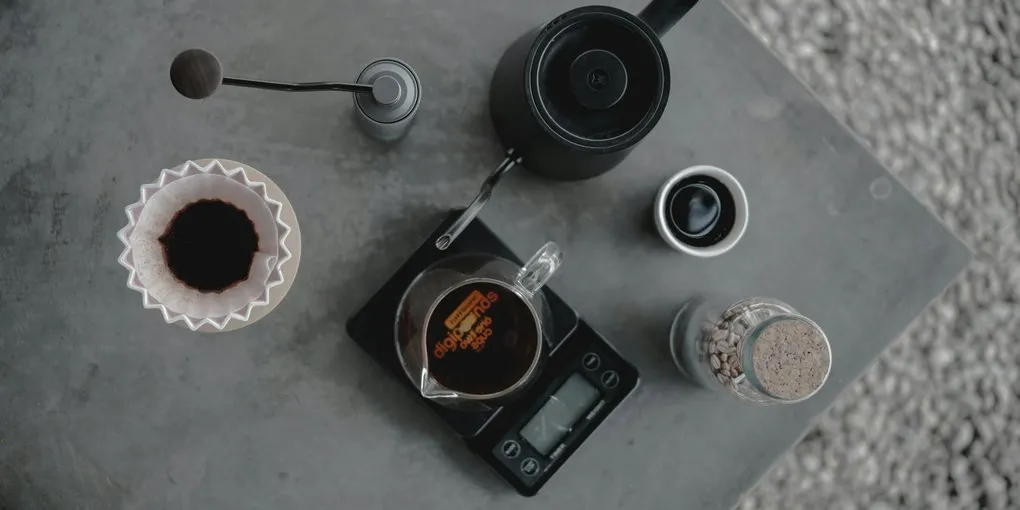
Black coffee does not break a fast. You probably already knew that. But here’s the part most fasting guides skip: not all black coffee is the same number of calories, and the brew method you choose changes what happens to your insulin, your cholesterol, and your gut during a fasting window.
A paper-filtered drip coffee runs about 2 calories per 8 oz cup. That’s trace dissolved solids and essentially zero fat. A French press, brewed the same way with the same beans, delivers more. An espresso pulls even more dissolved material into the cup. And the moment you add anything white or sweet, the fasting math shifts.
If you’re practicing intermittent fasting and coffee is part of your morning, the brew method deserves more attention than most fasting guides give it.
What “Breaking a Fast” Actually Means
The phrase gets used loosely, which is part of the problem. There are at least three different working definitions in the fasting community, and they don’t agree with each other.
The caloric definition is the simplest: any calories break the fast. By this standard, even black coffee technically breaks it, because 2 calories is not zero. Most fasting practitioners consider this overly strict and clinically meaningless. A commonly cited rule of thumb in the popular fasting literature places the practical threshold at roughly 50 calories — but that number is community folklore rather than a peer-reviewed metabolic cutoff. Stricter physicians like Dr. Jason Fung argue that any caloric intake breaks a fast; more permissive practitioners like Dr. Mindy Pelz allow small amounts of fat or protein depending on goals.
The insulin definition is more useful for most people. Fasting’s primary metabolic benefit comes from sustained low insulin levels, which allows your body to access stored fat and triggers cellular repair processes. Anything that provokes a meaningful insulin response disrupts this. Pure fat provokes almost no insulin response. Protein provokes a moderate one. Carbohydrates (including sugar, milk lactose, and most sweeteners) provoke the strongest response.
The autophagy definition is the strictest. Autophagy is cellular self-cleaning — your body breaking down and recycling damaged proteins and organelles. It ramps up during extended fasts and appears to be disrupted by even small amounts of protein. The mechanism is amino-acid sensing through the mTOR (mechanistic target of rapamycin) pathway, which detects amino acids and switches off the autophagy program. By this standard, collagen powder in your coffee absolutely interrupts the process, even though it might not spike insulin much.
Which definition matters depends on why you’re fasting. For weight management, the insulin definition is the practical one. For longevity research enthusiasts chasing autophagy, the amino acid threshold matters more. For most people doing 16:8 fasting? The insulin response is the one to pay attention to.
Not All Black Coffee Is Equal
This is where brew science meets fasting science in a way most health content ignores entirely.
Coffee extraction pulls four categories of material from the grounds: soluble solids (the stuff that determines taste), soluble gases (aroma), insoluble solids (proteins, fines), and insoluble oils. That last category matters for fasting because oils carry calories, and different brew methods let wildly different amounts through.
Paper-filtered drip or pour-over: About 2 calories per 8 oz cup. Paper filters trap insoluble oils, including the diterpene lipids cafestol and kahweol. The result is a clean, low-calorie, low-fat cup. Cafestol levels in paper-filtered coffee measure around 12 mg/L. From a fasting perspective, this is as close to zero-impact as coffee gets.
French press: Slightly more calories per cup. Metal mesh filters let all those insoluble oils pass straight through, which is why French press has its characteristic heavy, buttery mouthfeel. Cafestol jumps to around 90 mg/L. The extra oils add a small caloric load and, over time, can raise LDL cholesterol — paper filters trap >90% of cafestol, and switching from unfiltered to filtered drops LDL within weeks. For a single cup during a fasting window, the caloric difference is marginal. Over three or four cups, it starts to add up.
Espresso: Roughly 5 calories per double shot. Espresso extracts at 8–12% TDS (total dissolved solids), compared to drip’s 1.15–1.45%. That high concentration pulls more of everything into the cup, including oils and dissolved solids. A double shot is only about 2 oz of liquid, but it’s dense with extracted material. The portafilter basket acts as a metal filter, so oils pass through freely.
Cold brew (black): Comparable to drip in calories when consumed at ready-to-drink strength. Cold water extracts fewer oils and fewer melanoidins than hot water, which is part of why cold brew tastes smoother. If you’re drinking concentrate diluted to normal strength, the calorie picture is similar to paper-filtered drip. Undiluted concentrate is a different story — higher coffee-to-water ratios mean more dissolved material per sip. Cold brew typically delivers roughly 100–200 mg of caffeine per 8 oz serving, with concentrates running considerably higher.
The practical takeaway: if minimizing caloric intake during your fasting window matters to you, paper-filtered methods are the cleanest option. The difference between brew methods is small enough that one cup of French press won’t derail anything, but the gap widens with multiple cups.
The Additives Spectrum
Black coffee is one thing. What people actually put in their coffee is another.
A splash of whole milk (1 fl oz): About 19 calories per USDA data, with some lactose (sugar) and a gram of protein. Enough to provoke a small insulin response. Whether this “breaks” a fast depends on how strict your definition is. For most 16:8 practitioners, a single ounce probably doesn’t meaningfully disrupt fat oxidation. Two or three ounces starts to matter.
Heavy cream (1 fl oz): About 102 calories per USDA, almost entirely from fat. Fat is the macronutrient least likely to spike insulin, which is why some fasting advocates give cream a relative pass. But 102 calories is 102 calories, and if your fasting protocol is calorie-based, that matters. (Note: 1 tablespoon of heavy cream is roughly 50 calories — half a fluid ounce, so the math depends on what you actually pour.) Two tablespoons in your morning cup puts you at around 100 calories before you’ve eaten anything.
Sugar (1 teaspoon): About 16 calories of pure carbohydrate. This is the clearest fast-breaker on the list. Sugar triggers a direct insulin response. One teaspoon might seem trivial, but insulin sensitivity is heightened during a fasted state, so even small carbohydrate loads produce a proportionally larger response than they would after a meal.
Bulletproof-style coffee (butter + MCT oil): 200–400+ calories depending on the recipe. This breaks any reasonable definition of a fast. The marketing claim that pure fat “doesn’t count” because it doesn’t spike insulin misses the point: you’re consuming hundreds of calories, your body is burning the dietary fat instead of stored fat, and autophagy is disrupted by the caloric load. If you enjoy it, that’s fine — but calling it fasting-compatible is a stretch.
Collagen peptides: Low calorie (typically 35–50 per scoop) but high in amino acids, which are the specific trigger for disrupting autophagy through mTOR activation. If autophagy is your goal, collagen in your fasting window defeats the purpose.
Artificial and non-nutritive sweeteners: The research is mixed and method-dependent. Some sweeteners (notably sucralose) appear to trigger a cephalic-phase insulin response in at least a subset of people — your body tastes sweet, anticipates sugar, and releases a small amount of insulin even though no sugar arrived. Stevia and monk fruit show minimal metabolic impact in most published studies. If you want to be conservative, skip them during the fast.
Caffeine, Blood Sugar, and the CGA Paradox
Here’s where coffee and fasting science gets genuinely interesting, because the short-term data seems to contradict the long-term data.
Caffeine works by blocking adenosine receptors (A1 and A2A). Adenosine normally has an inhibitory, calming effect on the nervous system. Block it, and you get increased release of norepinephrine, dopamine, and other stimulatory neurotransmitters. Effects kick in within 15–60 minutes and last according to caffeine’s half-life, which averages about 5 hours but ranges from 1.5 to 10 hours depending on your genetics.
That genetic variability is enormous. The CYP1A2 gene handles roughly 95% of caffeine metabolism, and a single polymorphism divides people into fast and slow metabolizers, with up to 40-fold variance in clearance rates. If caffeine keeps you wired for 8 hours, you’re probably a slow metabolizer. If you can drink a cup after dinner and sleep fine, you’re fast. (How CYP1A2 actually works gets the full treatment in our caffeine metabolism article.)
Acutely, caffeine raises blood glucose. A 2018 systematic review and meta-analysis found that acute caffeine ingestion reduces insulin sensitivity in healthy subjects, which means a single dose can transiently bump glucose. The mechanism appears to involve cortisol and adrenaline release, which signals the liver to release glycogen. During a fasted state, this effect can be more pronounced because there’s no food in the system to buffer the response. Some people notice their continuous glucose monitors spiking after morning coffee even with nothing else consumed.
But here’s the paradox: habitual coffee consumption is one of the most consistently replicated protective factors against type 2 diabetes in nutritional epidemiology. A widely cited 2014 dose-response meta-analysis (Ding et al., Diabetes Care) covering 28 prospective studies and 1,109,272 participants found a roughly 8–9% risk reduction per cup per day for caffeinated coffee, with the largest reduction (~33%) at six cups daily. A more recent 2018 systematic review (Carlström and Larsson, Nutrition Reviews) covering 30 studies and 1.18 million participants put the per-cup figure at 6%. Decaf works essentially as well as caffeinated, which points strongly at non-caffeine compounds driving the benefit.
The leading candidates are chlorogenic acids (CGAs) and other polyphenols. A cup of coffee contains 15–325 mg of CGAs depending on the roast and preparation method, with light roasts retaining the highest concentrations. These compounds appear to activate AMPK (a cellular energy sensor), reduce hepatic glucose production, and improve insulin signaling over time — even though the caffeine in the same cup transiently does the opposite.
For fasters, the practical read is: yes, your coffee might cause a small acute glucose bump. No, that doesn’t mean it’s harmful during your fasting window. The long-term metabolic picture is strongly positive, and the acute effect is temporary and minor for most people.
What About Autophagy?
The autophagy question deserves its own paragraph because the available evidence is more interesting than most fasting articles let on.
A 2014 paper by Pietrocola and colleagues in Cell Cycle (“Coffee induces autophagy in vivo”) found that both regular and decaffeinated coffee rapidly induced autophagy in mouse liver, muscle, and heart tissue, accompanied by inhibition of mTORC1 (the same mTOR complex that responds to amino acids). The effect was caffeine-independent, which again points at polyphenols — chlorogenic acids in particular — as the active drivers.
This is a mouse study, not a human RCT. Dr. Peter Attia, who has been outspoken on fasting and autophagy, has noted that “we cannot measure autophagy in humans yet” and that he personally avoids coffee during water-only fasts out of caution: “My intuition is, the less I’m consuming, the better.” That’s a reasonable personal call. But the available animal evidence does not suggest black coffee disrupts autophagy — and may suggest the opposite.
What clearly disrupts autophagy is amino-acid intake (collagen, protein powder, bone broth) and significant caloric load (bulletproof coffee). A black cup of paper-filtered drip is, by the available evidence, the cleanest possible fasting beverage besides water itself.
A Practical Fasting Coffee Protocol
Based on the extraction science and health data, here’s what an optimized fasting coffee approach looks like:
Brew method: Paper-filtered pour-over or drip for the lowest caloric load and cleanest metabolic profile. The full drip-vs-espresso comparison lives here. If you prefer French press, one cup is fine. Multiple cups during a fasting window pushes more oils and calories into your system than necessary.
Additions: Nothing, if you can manage it. If you can’t drink it black, a small splash of heavy cream (half a tablespoon or less) is the lowest-insulin option. Skip sugar entirely. Skip collagen. Skip sweeteners if you want to be conservative.
Timing: Caffeine’s half-life means a cup at 7 AM still has roughly a quarter of its caffeine circulating at 5 PM. If your eating window opens at noon, morning coffee is fine. If you’re doing longer fasts, be aware of cumulative caffeine accumulation across the day.
Amount: The FDA’s 400 mg daily caffeine guideline still applies. That’s roughly 3–4 cups of drip coffee. During fasting, there’s no reason to adjust this number. Your individual caffeine tolerance depends on your CYP1A2 genotype and your overall metabolism more than on whether you’ve eaten.
Roast level for CGAs: If you want to maximize the chlorogenic acid intake that drives coffee’s metabolic benefits, light roasts retain the highest CGA concentrations. Dark roasts lose over 90% of original CGAs during roasting. A light or medium roast pour-over is, by the numbers, the most metabolically favorable fasting coffee.
The Bigger Picture: Coffee as a Health Food
Fasting and coffee share an unusual overlap in the health research: both are independently associated with reduced disease risk, and combining them doesn’t appear to cancel out either benefit.
Coffee contributes up to 70% of total antioxidant intake in some Western diets. That number sounds implausible until you consider that most people drink coffee daily and don’t eat enough fruits and vegetables to compete. The antioxidant contribution comes primarily from CGAs and melanoidins (Maillard reaction products formed during roasting).
The longevity data is striking. A 2025 NHANES analysis (Yan et al., Public Health Nutrition) found that participants who consumed 1–2 cups per day had an average gain of 2.02 years in life expectancy compared with non-coffee drinkers, with most of the benefit coming from a reduction in cardiovascular disease deaths. Larger meta-analyses covering roughly 3.8 million participants found the lowest all-cause mortality at about 3.5 cups per day, representing a ~15% risk reduction. Black coffee showed the strongest associations. Heavy sugar and cream may attenuate the benefits.
Cardiovascular data follows a J-shaped curve, with the lowest risk at 3–5 cups per day. A 2024 umbrella review covering roughly 12 million participants found up to 4 cups per day reduced stroke risk by 12%. And the 2025 DECAF randomized clinical trial (Marcus et al., JAMA), published at AHA 2025, found that adults with persistent atrial fibrillation who drank coffee daily after cardioversion were 39% less likely to have a recurrence than abstainers — overturning decades of advice to avoid coffee with heart rhythm issues.
The point for fasters is simpler: coffee during a fasting window is not just neutral. The evidence suggests it’s actively beneficial, provided you’re not loading it with sugar and cream.
If you’re concerned about coffee acidity and stomach sensitivity during fasting, a cold brew or dark roast will be gentler — though you’ll trade away some of those CGA benefits in the process. And if you’re using coffee primarily for the cognitive side, the productivity-and-coffee picture has its own subtleties around adenosine, sleep debt, and afternoon timing.
Your morning cup isn’t the enemy of your fast. It might be one of the best things in it.
This article is for general education and is not medical advice. If you have diabetes, are pregnant, take medications that interact with caffeine (oral contraceptives, ciprofloxacin, fluvoxamine, or others), have an arrhythmia, an eating disorder, or a history of disordered eating around fasting, talk to your physician or a registered dietitian before changing your fasting practices. Individual metabolic responses vary, and these statements have not been evaluated by the FDA. Coffee and intermittent fasting are not intended to diagnose, treat, cure, or prevent any disease.
Sources & Further Reading
- Ding, M. et al. (2014). “Caffeinated and Decaffeinated Coffee Consumption and Risk of Type 2 Diabetes: A Systematic Review and a Dose-Response Meta-analysis.” Diabetes Care 37(2):569–86.
- Carlström, M. & Larsson, S.C. (2018). “Coffee consumption and reduced risk of developing type 2 diabetes: a systematic review with meta-analysis.” Nutrition Reviews 76(6):395–417.
- Pietrocola, F. et al. (2014). “Coffee induces autophagy in vivo.” Cell Cycle 13(12):1987–94.
- Reis, C.E.G. et al. (2018). “Acute caffeine ingestion reduces insulin sensitivity in healthy subjects: a systematic review and meta-analysis.” Nutrition & Diabetes 8:54.
- de Cabo, R. & Mattson, M.P. (2019). “Effects of Intermittent Fasting on Health, Aging, and Disease.” New England Journal of Medicine 381:2541–2551.
- Marcus, G.M. et al. (2025). “Caffeinated Coffee Consumption or Abstinence to Reduce Atrial Fibrillation: The DECAF Randomized Clinical Trial.” JAMA.
- Yan, G. et al. (2025). “Association between coffee consumption and life expectancy: a prospective cohort study from NHANES 2001–2018.” Public Health Nutrition.
- USDA FoodData Central — heavy whipping cream and whole milk nutrient panels.
Frequently Asked Questions
- Does black coffee break a fast?
- Not in any practical sense. Black paper-filtered coffee has about 2 calories per cup, which is well below any meaningful metabolic threshold. It does not provoke a significant insulin response and does not disrupt fat oxidation. Most fasting practitioners and researchers consider black coffee compatible with all common fasting protocols, including 16:8, 20:4, and longer fasts. The strictest interpretation — water-only fasting for autophagy purposes — is the only protocol where some practitioners (notably Dr. Peter Attia) personally avoid coffee, and even there the available animal evidence does not suggest black coffee disrupts autophagy.
- Does cream in coffee break a fast?
- It depends on the amount and your definition. One fluid ounce (2 tablespoons) of heavy cream adds about 102 calories per USDA data, almost entirely from fat. Fat produces the lowest insulin response of any macronutrient, so a small splash may not meaningfully disrupt fat burning. However, those calories add up, and if you're pursuing autophagy, even small caloric loads can interfere. For strict fasting, skip it. For practical 16:8 fasting focused on weight management, half a tablespoon (~25 calories) is unlikely to meaningfully matter.
- What's the best brew method for fasting?
- Paper-filtered methods — drip, pour-over, Chemex, AeroPress with a paper filter — produce the lowest-calorie black coffee (about 2 calories per cup) because paper traps the insoluble oils that add caloric content. French press and espresso let more oils through. Cafestol levels (a diterpene linked to LDL cholesterol when consumed long-term) jump from ~12 mg/L in paper-filtered to ~90 mg/L in French press. For one cup the difference is negligible, but over multiple cups during a fasting window, paper-filtered is the cleanest option.
- Does coffee spike insulin or blood sugar during a fast?
- Acute caffeine ingestion can reduce insulin sensitivity transiently and cause a small bump in blood glucose, likely via cortisol- and adrenaline-mediated glycogen release from the liver. A 2018 meta-analysis confirmed this acute effect. However, the long-term picture is the opposite: habitual coffee consumption is associated with a 6–9% reduction in type 2 diabetes risk per cup per day, driven by non-caffeine compounds (chlorogenic acids and other polyphenols) that activate AMPK and improve insulin signaling. Decaf provides essentially the same long-term benefit.
- Can you drink coffee during 16:8 intermittent fasting?
- Yes. Black coffee is widely considered compatible with 16:8 fasting by both practitioners and the available evidence. Drink it during your fasting window without sugar, milk, or cream for the cleanest metabolic profile. The caffeine may actually support fasting by increasing alertness and mildly elevating metabolic rate. Keep total intake within the FDA guideline of 400 mg of caffeine per day, roughly 3–4 cups of drip coffee.
- Does bulletproof coffee break a fast?
- Yes. Bulletproof coffee — typically butter and MCT oil blended into coffee — contains 200–400+ calories per serving. Even though the calories come primarily from fat, which minimizes the insulin response, you're consuming a substantial caloric load. Your body will preferentially burn the ingested dietary fat rather than stored body fat, which undermines the primary weight-loss mechanism of fasting. Autophagy is also disrupted by this caloric intake. If you enjoy bulletproof coffee, it's a perfectly reasonable breakfast — just not a fasting beverage.
- Is decaf okay during intermittent fasting?
- Yes, and it may offer essentially the same long-term metabolic benefits as regular coffee. Research on type 2 diabetes risk reduction shows decaf works comparably to caffeinated coffee, suggesting the protective compounds — chlorogenic acids and other polyphenols — are responsible rather than caffeine. Decaf contains 3–6 mg of caffeine per 6 oz cup (not truly zero), the same low calorie count as regular black coffee, and similar antioxidant content.
- What about coffee and autophagy?
- Autophagy is the strictest fasting consideration. The 2014 Pietrocola study in Cell Cycle showed that both regular and decaffeinated coffee rapidly induced autophagy in mice, accompanied by inhibition of mTORC1 — the cellular pathway that detects amino acids and switches off autophagy. This was a mouse study, and human autophagy is not directly measurable yet, so caution is warranted. What clearly disrupts autophagy is amino-acid intake (collagen, protein powder, bone broth) and significant caloric load (bulletproof coffee). Black paper-filtered coffee is, by the available evidence, the cleanest fasting beverage besides water itself.