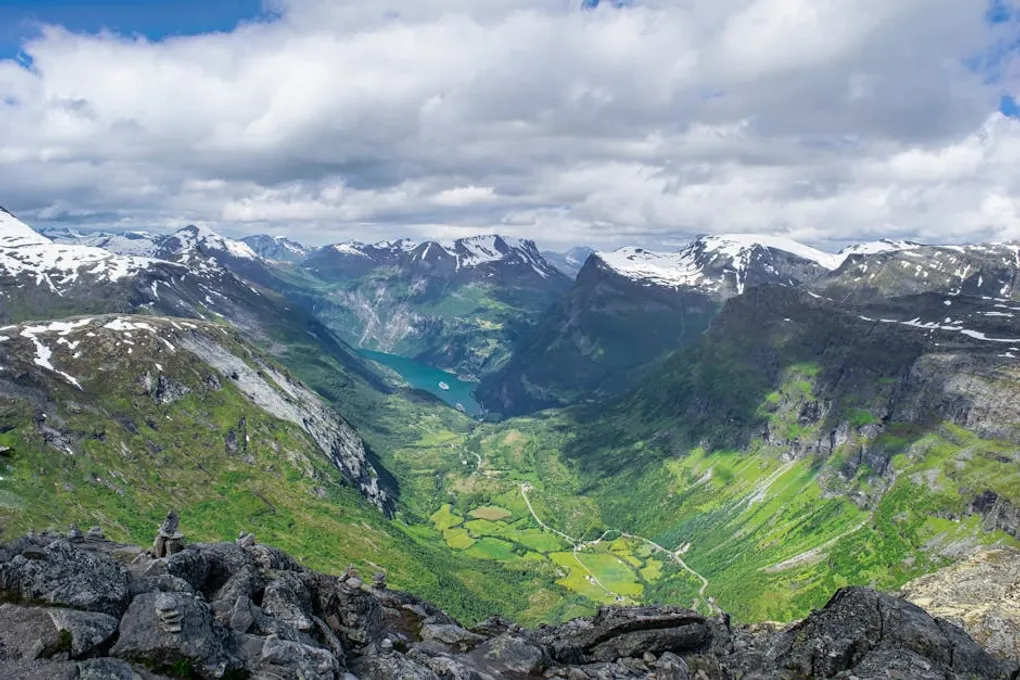
When specialty coffee bags advertise “grown at 1800 meters,” they’re telling you something real. Altitude is one of the strongest predictors of coffee quality — not because height itself does anything magical, but because of what happens to a coffee cherry when it matures slowly in cool, thin air.
But altitude alone doesn’t tell the full story. A coffee grown at 1500 meters in Colombia and a coffee grown at 1500 meters in Brazil are experiencing fundamentally different conditions. Latitude, cloud cover, soil, and processing all interact with elevation in ways that most “higher is better” narratives ignore.
Here’s what altitude actually does, how the grading systems work, and what to expect from different elevation tiers across major origins.
The Science: Why Altitude Matters
The mechanism is straightforward. Temperature drops approximately 6.5 degrees Celsius for every 1000 meters of altitude gained (the environmental lapse rate). Cooler temperatures slow cherry maturation. Slower maturation gives the coffee cherry more time to develop complex sugars, organic acids, and aromatic precursors.
The result: denser beans with more soluble material packed inside. When you grind and brew them, there’s simply more flavor to extract.
This isn’t just theory. Jonathan Gagne’s research found that approximately 25.6% of the variation in extraction yield across coffees can be explained by elevation alone. That’s a remarkably large effect for a single variable. Coffees from high-altitude origins like Kenya, Ethiopia, and Burundi consistently extract at higher rates than coffees from lower-elevation origins — because the beans are physically denser and contain more solubles per gram.
The density connection matters at the grinder too. Higher-altitude beans are harder and more brittle. Ethiopian coffees, grown at some of the world’s highest elevations, produce the most fines when ground. If you’re switching from a Brazilian to an Ethiopian, you may need to coarsen your coffee grind size to compensate.
Altitude Classifications: The SHB System
The coffee industry doesn’t just say “high” or “low.” Several countries have formalized altitude into grading systems.
The Standard Classification:
- SHB / Strictly Hard Bean: Above 1,370m (above 4,500 ft)
- HB / Hard Bean: 1,000-1,370m (3,300-4,500 ft)
- Semi-Hard Bean: 760-1,000m (2,500-3,300 ft)
- Standard / Low Grown: Below 760m (below 2,500 ft)
Some countries use “SHG” (Strictly High Grown) instead of SHB, and specific thresholds vary by origin. Costa Rica and Guatemala, for instance, use slightly different altitude cutoffs than the standard classification above.
“Hard bean” refers to density. Higher altitude produces denser, harder beans — literally more difficult to crack open. This isn’t metaphorical. You can feel the difference between a soft Brazilian Santos and a hard Kenyan SL28 when you squeeze them between your fingers.
Costa Rica uses a straightforward altitude-based system: SHB is the top grade, reserved for coffee grown above roughly 1,200 meters by their national standard. Their micro-mill revolution means many Costa Rican lots now carry precise farm-level altitude on the bag — often 1400-1800m from regions like Tarrazu and the Central Valley.
Guatemala classifies by both altitude and region, with their own threshold definitions. Their most celebrated designations — Strictly Hard Bean from Huehuetenango (1500-2000m) and Antigua (1500-1700m) — carry specific flavor expectations. Huehuetenango coffees benefit from dry hot winds from Mexico’s Tehuantepec plain that protect against frost at high elevation, allowing coffee to grow higher than it otherwise could.
The Latitude-Altitude Interaction
Here is where most coffee altitude discussions fall short. Stating that a coffee was grown at 1500 meters means almost nothing without knowing the latitude.
The World Coffee Research (WCR) catalog provides a precise framework:
Near the equator (5 degrees N to 5 degrees S):
- Low: 1000-1200m
- Medium: 1200-1600m
- High: Above 1600m
Mid-latitude (5-15 degrees N or S):
- Low: 700-900m
- Medium: 900-1300m
- High: Above 1300m
Subtropical (beyond 15 degrees N or S):
- Low: 400-700m
- Medium: 700-1000m
- High: Above 1000m
This scaling exists because two forces compound. Temperature drops with both altitude and distance from the equator. A farm at 1000m near the equator in Colombia (roughly 5 degrees N) experiences conditions comparable to a farm at 600m in subtropical Brazil (roughly 23 degrees S). Both achieve the slow-maturation effect that develops complexity — they just reach it at different elevations.
The equator also has less seasonal temperature variation, meaning equatorial coffees experience more consistent growing conditions year-round. Brazil, by contrast, has distinct seasons that influence cherry development differently.
This is why Brazil produces excellent coffee at 800-1200 meters — elevations that would be considered unimpressive in Colombia or Ethiopia. The southern latitude compensates. And it’s why Hawaii’s Kona region produces notable coffee at just 600 meters: the combination of roughly 20 degrees latitude, persistent cloud cover, and mineral-rich volcanic soil creates slow-maturation conditions that the elevation alone wouldn’t predict.
Origin-by-Origin Altitude Ranges
Ethiopia: 1500-2200m
Some of the world’s highest-grown coffee. The combination of equatorial latitude and extreme altitude produces beans of extraordinary density and complexity. Yirgacheffe, Sidamo, and Guji districts routinely grow coffee above 1800m. The genetic diversity of Ethiopian heirloom varieties — thousands of uncatalogued cultivars adapted to specific micro-environments over millennia — interacts with altitude to produce a range of flavor that no other origin matches.
Ethiopian beans are notably hard and brittle. Expect more fines in your grind and consider adjusting coarser when switching from lower-altitude origins. If you want to explore what altitude does at its most extreme, Ethiopian coffee is the clearest case study.
Colombia: 1200-2000m
Three Andean cordilleras running north-south create enormous diversity within a single country. Huila, Narino, and Cauca regularly produce coffee above 1700m. Colombia sits near the equator (roughly 2-8 degrees N), so even its “medium” altitude coffee at 1200-1400m develops significant complexity. The country’s two harvest seasons (main crop and mitaca) mean fresh Colombian coffee is available almost year-round. Colombia is also a strong example of single-origin coffee at its most traceable — the altitude and region often appear right on the bag.
Kenya: 1400-2000m
Kenyan coffee is grown on volcanic highlands surrounding Mount Kenya, mostly between 1400-2000m. The SL28 and SL34 varieties — selected specifically for these conditions — produce some of the most celebrated cups in specialty coffee when grown at high elevation. The combination of high altitude, volcanic soil, and these particular cultivars creates the intense blackcurrant and berry acidity that defines top Kenyan lots.
Brazil: 800-1200m
Lower elevation than most specialty origins, but Brazil’s southern latitude (15-23 degrees S) means these altitudes achieve the slow-maturation effect that would require 1400m+ at the equator. Cerrado Mineiro (900-1100m), Mogiana (900-1000m), and Sul de Minas (900-1200m) are the primary regions. Brazilian coffees tend toward chocolate, nut, and low acidity — partly variety and processing, partly the altitude range.
Costa Rica: 1200-1800m
Tarrazu, the Central Valley, and the West Valley produce most of Costa Rica’s top lots between 1400-1800m. The micro-mill revolution means traceability is exceptional — you can often find the exact farm altitude on the bag. Costa Rican SHB is a reliable indicator of quality. Costa Rica is one of the most beginner-friendly origins for understanding how altitude and clean processing combine.
Guatemala: 1200-1800m
Huehuetenango (1500-2000m) and Antigua (1500-1700m) are the premier regions. Volcanic soil across much of the growing area adds mineral complexity. Atitlan and Coban also produce notable high-altitude lots. Antigua fraud is a persistent problem — more coffee is sold as “Antigua” than the region actually produces.
Indonesia: 900-1500m (Sumatra), higher in Java
Indonesia’s altitude profile varies enormously across its 17,000+ islands. Sumatran coffee is typically grown at 900-1500m, with the giling basah (wet-hulled) processing method contributing more to its signature earthy, herbal profile than altitude alone. Java’s Ijen plateau and other high-elevation areas produce cleaner, brighter cups that show more altitude influence.
Hawaii (Kona): about 600m
An outlier that proves altitude isn’t everything. Kona coffee grows at just 600 meters on the slopes of Hualalai and Mauna Loa. But the roughly 20-degree latitude, consistent afternoon cloud cover (the “Kona cloud belt”), volcanic soil, and moderate temperatures create growing conditions that functionally mimic higher-altitude environments closer to the equator.
Flavor Expectations by Altitude Tier
These are general tendencies, not guarantees. Processing and variety can override altitude’s influence entirely. But as a baseline:
Low altitude (below 1000m): Earthy, full body, low acidity, simple sweetness. The flavors are straightforward — chocolate, nuts, sometimes a pleasant but unremarkable sweetness. Many commodity coffees fall here. Body tends to be heavier because the beans are less dense and more porous, extracting differently.
Medium altitude (1000-1500m): Balanced cups with moderate acidity. Nutty and caramel sweetness becomes more defined. Fruit notes begin appearing — stone fruit, mild berry. This is the sweet spot for coffees that are approachable without being boring. Much of Brazil’s best production falls here.
High altitude (1500m+): Bright acidity, floral aromatics, complex fruit notes. The sugars are more developed, the organic acids more concentrated. This is where specialty coffee gets interesting — the range of flavors expands dramatically. Citrus, berry, tropical fruit, jasmine, and wine-like qualities emerge.
Very high altitude (2000m+): Intense, delicate, sometimes tea-like in body. The highest-grown coffees can be polarizing — the acidity can be electric, the body ethereal rather than full. Some of Ethiopia’s most celebrated lots and Panama’s best Gesha come from this range. These coffees reward attention and careful brewing but won’t satisfy someone looking for a thick, chocolatey cup.
The “Higher Is Always Better” Myth
Altitude is one variable among many. A well-processed natural from Brazil at 1000m can outscore a poorly processed washed Ethiopian at 2000m. Competition results prove this regularly.
Here’s what matters as much or more than altitude:
Processing. The method used after picking — washed, natural, honey, anaerobic — transforms flavor dramatically. A natural-processed coffee develops intense fruit and fermentation characteristics that have nothing to do with altitude. Processing decisions at the mill can elevate or destroy what the farm produced.
Variety. Genetic ceiling matters. An SL28 at 1400m in Kenya will almost certainly produce a more interesting cup than a Catimor at 1800m in Vietnam. The plant’s genetic potential sets the upper limit; altitude and processing determine how much of that potential is realized.
Roasting. A skilled roaster can bring out the best in a medium-altitude coffee, and a careless roaster can flatten the complexity of a high-altitude lot. How coffee is roasted — development time, charge temperature, rate of rise — all interact with bean density, and high-altitude beans require different roasting approaches than low-altitude beans precisely because they’re denser.
Terroir beyond altitude. Soil composition, rainfall patterns, shade coverage, microclimate, and farming practices all shape the final cup. Hawaii’s Kona district produces memorable coffee at 600m because every other environmental factor compensates. Volcanic soil throughout Guatemala and Kenya adds mineral character that has nothing to do with how high the farm sits.
The honest conclusion: altitude is a useful indicator, especially when combined with origin and variety information. A bag labeled “Ethiopia, Yirgacheffe, 2000m, washed heirloom” is telling you a coherent story. But “high altitude” alone — without context — is marketing language, not a quality guarantee.
Practical Takeaways
When shopping: Look for altitude in context. A specific number (1650 masl) is more informative than vague claims. Pair it with origin and processing method for the most useful picture. A high-quality high-altitude single-origin will always tell you the elevation on the bag.
When brewing: Higher-altitude beans are denser and harder. They may need a slightly finer grind to extract properly in immersion methods, or a slightly coarser grind for pour-over to compensate for increased fines. Ethiopian coffees especially tend to produce more fines — adjust accordingly. And brewing temperature matters more with denser beans — the precision pays off.
When exploring: Use altitude tiers as a flavor roadmap. If you love bright, complex acidity, seek out coffees from 1500m+ near the equator. If you prefer full-bodied, low-acid cups, lower-altitude Brazilians and Sumatrans will suit you better. The altitude tier tells you the general direction; your palate decides whether you like the destination.
Frequently Asked Questions
- What does SHB mean on a coffee bag?
- SHB stands for Strictly Hard Bean, indicating coffee grown above roughly 1,370 meters (4,500 feet). The 'hard' refers to bean density — higher altitude produces cooler temperatures, slower cherry maturation, and physically denser beans with more concentrated flavor compounds. It's most commonly used as a grade in Central American countries like Costa Rica and Guatemala, though exact thresholds vary by country. Some origins use 'SHG' (Strictly High Grown) instead of SHB. It's generally the top altitude grade and a reliable signal of quality potential, though processing and variety still matter as much or more.
- Does higher altitude always mean better coffee?
- No. Altitude is one strong variable among several. A well-processed Brazilian coffee at 1000m can outscore a poorly processed Ethiopian at 2000m — competition results prove this regularly. Variety (the plant's genetic ceiling), processing method, roasting skill, and terroir factors like soil and microclimate all shape the final cup as much as elevation does. Altitude tells you the general direction of flavor — brighter acidity and more complexity as you go up — but it's not a standalone quality guarantee.
- Why does Brazil grow good coffee at lower elevations than Colombia or Ethiopia?
- Because latitude compensates for altitude. Temperature drops with both elevation and distance from the equator. Brazil's coffee regions sit at 15-23 degrees south latitude, where 800-1200m produces the slow-maturation effect that would require 1400m+ at the equator. The World Coffee Research catalog formalizes this: 'high altitude' in subtropical regions (beyond 15 degrees) starts at just 1000m, while near the equator it starts at 1600m. Hawaii's Kona district works similarly — coffee grows at just 600m, but the 20-degree latitude, cloud cover, and volcanic soil create conditions that functionally mimic higher elevations.
- How does coffee altitude affect grinding and brewing?
- Higher-altitude beans are denser and more brittle, which changes how they fracture in a grinder. Ethiopian coffees — grown at some of the highest elevations in the world — produce the most fines (tiny particles) when ground. If you switch from a lower-altitude Brazilian to a high-altitude Ethiopian or Kenyan, you may need to coarsen your grind to maintain balanced extraction. The denser beans also contain more solubles per gram, so extraction yields tend to be higher from high-altitude coffees even at the same grind setting.
- What flavor should I expect from coffee at different altitudes?
- As a general guide: below 1000m expect earthy, full-bodied cups with low acidity and simple sweetness. At 1000-1500m, expect balanced cups with moderate acidity, nutty-caramel sweetness, and emerging fruit notes. Above 1500m, expect bright acidity, floral aromatics, and complex fruit — citrus, berry, tropical, wine-like. Above 2000m, cups become intense and delicate, sometimes tea-like in body, with electric acidity that can be polarizing. These are tendencies, not rules — processing and variety can override altitude's influence entirely.
Some links above are affiliate links. If you purchase through them, we earn a small commission at no extra cost to you.