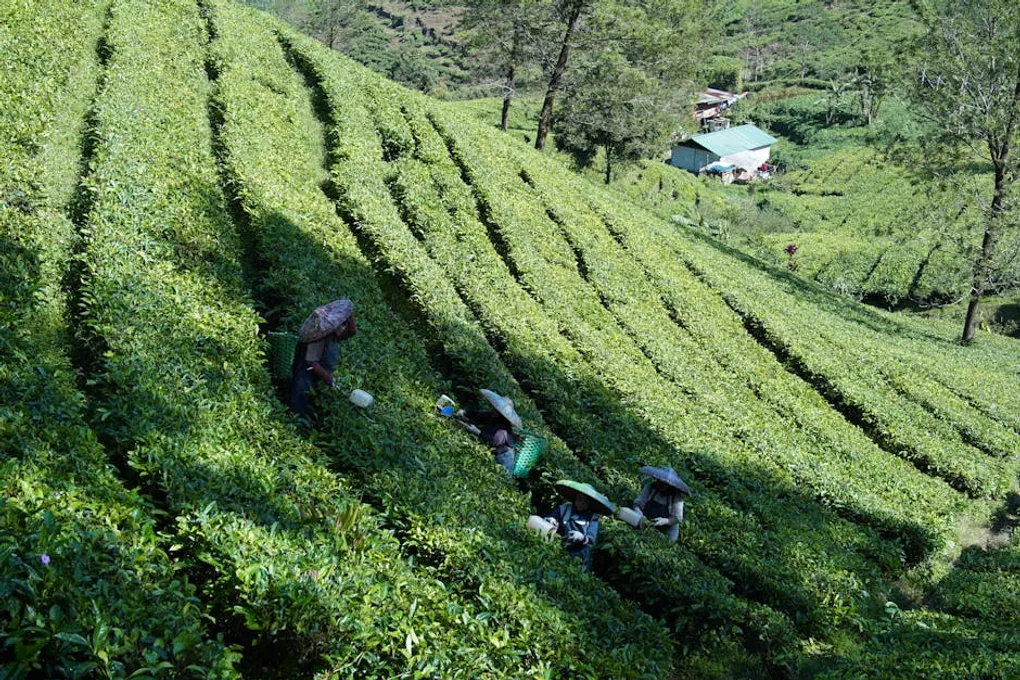
Yes, China grows coffee. And not just a little — Yunnan province alone produces over 2 million bags annually, making China a larger coffee origin than Kenya, Rwanda, and Bolivia combined. But if your reaction to “Chinese coffee” is skepticism, you’re not alone. For decades, Yunnan’s coffee was synonymous with low-grade Catimor destined for instant coffee factories. The quality reputation was, to put it kindly, nonexistent.
That story is changing fast. Over the past five years, a wave of investment, varietal experimentation, and a rapidly growing domestic specialty market has pushed Yunnan’s quality ceiling dramatically upward. In 2025, George Jinyang Peng became the first Chinese World Brewers Cup champion, and Simon Sun Lei placed second at the World Barista Championship — the best-ever Chinese result at either event. Specialty roasters in Shanghai, Chengdu, and Beijing are sourcing directly from Yunnan farms. And the terroir that produces the world’s most celebrated pu-erh tea turns out to be very good at growing coffee, too.
Yunnan isn’t Panama or Ethiopia yet. But it’s improving faster than almost any other origin on Earth, and the scale of resources behind the effort — government investment, private capital, domestic demand — suggests this isn’t a flash in the pan.
If you’re new to single origin coffee, Yunnan is one of the most surprising and rapidly evolving places to start exploring.
How Coffee Came to Yunnan
Coffee arrived in Yunnan in the late 1800s, introduced by French missionaries near the Vietnamese border. It remained a curiosity crop for nearly a century — China was (and is) a tea country, and coffee had no cultural foothold.
Commercial production began in earnest in the late 1980s when Nestle partnered with the Yunnan provincial government to establish coffee farming as an economic development project. The goal was simple: produce cheap Robusta and Catimor for Nestle’s instant coffee supply chain. Thousands of hectares in Pu’er (then called Simao), Baoshan, and Dehong prefectures were planted with Catimor — a high-yielding, rust-resistant variety with a mediocre cup quality reputation.
For two decades, this worked exactly as intended. Yunnan produced commodity coffee for commodity prices. Farmers earned a living. Quality was not a consideration.
The pivot began around 2012 to 2015, driven by two forces: the explosive growth of China’s domestic specialty coffee market (cafe culture in Shanghai, Beijing, and Chengdu was booming) and a growing recognition among Yunnan’s more ambitious producers that their terroir could support much better coffee than Catimor commodity.
Growing Regions
Yunnan’s coffee grows in the province’s southwestern prefectures, along the mountainous border with Myanmar, Laos, and Vietnam. The terrain is defined by deep river valleys, subtropical highlands, and the southern edge of the Tibetan Plateau.
Pu’er (Simao)
Pu’er prefecture — yes, the same one that gives pu-erh tea its name — is Yunnan’s largest coffee-producing area. Farms range from 1,000 to 1,500 meters, with some specialty-focused operations pushing to 1,600+ meters. The latitude (around 22 degrees N) means that even moderate altitude provides the temperature moderation that coffee needs.
Pu’er’s coffee lands overlap significantly with its tea-growing regions. The deep red laterite soils, monsoon-influenced climate, and biodiversity-rich forests create a terroir that has proven itself over centuries with Camellia sinensis. Increasingly, it’s proving itself with Coffea arabica too.
Flavor profile: Nutty, chocolate, mild acidity, clean. Higher-altitude lots: more fruit complexity, brighter acidity.
Baoshan
Baoshan prefecture sits higher and further west than Pu’er, with farms at 1,200 to 1,800 meters along the Salween (Nu) River valley. The altitude and more pronounced diurnal temperature variation produce denser beans with greater flavor potential than lowland Pu’er lots.
Baoshan is where much of Yunnan’s specialty ambition is concentrated. Several quality-focused operations have invested in varietal trials, processing innovation, and direct relationships with specialty roasters. The region has produced some of Yunnan’s highest-scoring lots.
Flavor profile: Stone fruit, floral hints, bright acidity, more complexity than Pu’er.
Dehong
The Dehong Dai and Jingpo Autonomous Prefecture, near the Myanmar border, grows coffee at 800 to 1,400 meters. Dehong’s lower average altitude means most production is commercial-grade, though pockets of higher-elevation farms are beginning to produce specialty lots.
Flavor profile: Mild, nutty, low acidity. Better lots show chocolate and caramel sweetness.
Lincang
Lincang prefecture — home to some of Yunnan’s most prized pu-erh tea growing areas — is a newer entrant in coffee. Higher-altitude plots (1,300 to 1,700 meters) show real promise, and the tea industry’s existing infrastructure and quality culture may accelerate coffee development.
Flavor profile: Emerging. Early lots show clean sweetness, mild fruit, promising complexity.
The Catimor Challenge — and Beyond
The fundamental quality obstacle for Yunnan has been varietal. Catimor — the Timor Hybrid x Caturra cross that was planted en masse during the Nestle era — is productive and disease-resistant but carries Robusta genes that can produce earthy, flat, or rubbery cup characteristics, particularly at lower altitudes.
The specialty community’s bias against Catimor is well-earned but also somewhat outdated. At altitude (1,400+ meters), well-processed Yunnan Catimor can produce clean, sweet, respectable coffee — not world-class, but far better than its reputation suggests. The variety’s density at altitude concentrates sugars and acids enough to mask the Robusta heritage.
More importantly, Yunnan’s progressive producers are diversifying:
- Typica and Bourbon: Small plantings of heritage varieties are appearing at specialty-focused farms, particularly in Baoshan. Cup quality is demonstrably higher but yields are lower and disease pressure greater.
- SL34: Some farms have imported Kenyan selections, chasing the variety’s fruit complexity.
- Geisha: A handful of ambitious operations have planted Geisha at high altitude. The early results are intriguing — Yunnan’s latitude and altitude can support the variety’s needs.
- F1 Hybrids: Modern hybrid varieties that combine quality, yield, and disease resistance are being trialed.
The 2025 Gems of Yunnan competition — China’s first Cup of Excellence-affiliated event — validated the quality shift: 19 of 144 entries scored 87+ SCA points, with the top lot from Lincang selling for $1,814 per kilogram at auction.
The varietal transition will take years — coffee trees need 3 to 4 years to reach production, and replacing established Catimor with unproven varieties is a financial risk for farmers. But the direction is clear.
Processing Innovation
If there’s one area where Yunnan is moving fastest, it’s processing. Chinese producers have embraced experimental methods with a speed and enthusiasm that reflects the country’s broader culture of rapid innovation:
- Anaerobic fermentation: Sealed-tank fermentation at controlled temperatures, producing intense fruit and floral notes.
- Carbonic maceration: CO2-flushed tanks borrowed from winemaking, creating confectionery sweetness and aromatic esters.
- Lactic fermentation: Controlled lactobacillus inoculation for creamy, yogurt-like acidity.
- Co-fermentation: Coffee fermented with local fruit (Yunnan’s tropical fruits provide interesting substrates).
These techniques can compensate for Catimor’s varietal limitations by adding processing-derived complexity. The best experimental lots from Yunnan are scoring 85+ SCA points — impressive for any origin, remarkable for one that was producing commodity Catimor a decade ago.
The Pu-erh Tea Terroir Connection
The overlap between Yunnan’s coffee and tea terroirs is not coincidental. Both crops thrive in acidic, well-drained, mineral-rich soils at moderate altitude with consistent moisture. Pu-erh tea has been cultivated in these hills for over a thousand years, and the long agricultural tradition has created a knowledge base around terroir management, processing technique, and seasonal timing that transfers to coffee.
Several of Yunnan’s most interesting coffee producers came from tea backgrounds, bringing the tea industry’s reverence for terroir expression, processing precision, and vintage differentiation. The concept of shangtou (mountain character) — the idea that each specific hillside imparts a unique signature — maps directly onto specialty coffee’s obsession with microlot terroir.
This cross-pollination between China’s ancient tea culture and its nascent coffee culture is producing something genuinely distinctive. Yunnan coffee doesn’t taste like tea, but the approach to growing and processing it reflects tea-world values that the rest of the coffee industry is only beginning to articulate.
The Domestic Market Advantage
China’s greatest asset for coffee development is something no other emerging origin has: a massive and rapidly growing domestic specialty market. China is now the world’s fastest-growing coffee market by revenue, with an estimated 20,000+ specialty cafes operating in cities like Shanghai (which alone has more cafes than New York).
This means Yunnan producers don’t need to compete on the global market to find specialty buyers. The domestic demand for “Yunnan specialty” is its own market — one that’s patriotic, quality-conscious, and willing to pay premiums for local product. Companies like Torch Coffee, Seesaw Coffee, and Manner Coffee are building direct supply chains from Yunnan farms to urban cafes, creating a feedback loop that incentivizes quality.
What Yunnan Coffee Tastes Like Today
At the specialty level, Yunnan is producing a range of profiles:
- Washed Catimor (altitude 1,400m+): Clean, mild, nutty, chocolate. Inoffensive and balanced, if not exciting.
- Washed heritage varieties (Typica/Bourbon): More complex — stone fruit, citrus, floral hints, brighter acidity. Approaching Central American quality.
- Anaerobic/experimental (any variety): Fruit-forward, confectionery, tropical. Processing-driven complexity that can score surprisingly high.
- Overall character: Yunnan’s best lots show a clean sweetness, moderate acidity, and a smoothness that probably reflects the terroir’s tea-growing heritage. The acidity tends to be round rather than sharp — more apple than lemon.
If you’re curious about tasting the difference, brew a Yunnan specialty lot as a pour-over with a medium-fine grind to let the terroir speak.
Final Thoughts
Yunnan in 2026 feels like Honduras did fifteen years ago — a high-volume origin with a commodity reputation that’s being systematically upgraded through investment, varietal improvement, processing innovation, and an emerging quality culture. The difference is that Yunnan has resources behind it that Honduras never did: government agricultural subsidies, a billion-person domestic market, and a culture that’s already obsessed with terroir through its tea tradition.
The coffee isn’t yet at the level of East Africa or Panama. But the trajectory is steep, the ambition is enormous, and the speed of improvement is unlike anything else in the coffee world. If you find a well-roasted Yunnan specialty lot — particularly an experimental process from Baoshan — it’s worth trying. You’ll be tasting the early chapters of what may become one of the most significant origin stories in 21st-century coffee.
Some links above are affiliate links. If you purchase through them, we earn a small commission at no extra cost to you.
Frequently Asked Questions
- Does China really grow coffee?
- Yes -- and more than most people realize. Yunnan province alone produces over 2 million bags annually, making China a larger coffee origin than Kenya, Rwanda, or Bolivia. Commercial production began in the late 1980s through a partnership between Nestle and the Yunnan provincial government. While most production is still commodity-grade Catimor, the specialty segment is growing rapidly.
- What does Yunnan coffee taste like?
- It depends on the variety and processing. Standard Catimor lots are mild, nutty, and chocolatey with low acidity. Heritage varieties (Typica, Bourbon) at altitude show more complexity -- stone fruit, citrus, and brighter acidity approaching Central American quality. Experimental lots (anaerobic, carbonic maceration) can be intensely fruity and confectionery. Overall, Yunnan's character tends toward clean sweetness and round (not sharp) acidity.
- What's the connection between pu-erh tea and Yunnan coffee?
- Yunnan's coffee and tea growing regions overlap significantly. Both crops thrive in acidic, well-drained, mineral-rich soils at moderate altitude with consistent moisture. Many of Yunnan's most interesting coffee producers came from tea backgrounds, bringing the tea industry's reverence for terroir expression and processing precision. The concept of mountain-specific character that defines pu-erh directly maps onto specialty coffee's microlot approach.
- Why was Yunnan coffee historically low quality?
- Most of Yunnan's coffee was planted as Catimor -- a high-yielding, disease-resistant variety developed from a Robusta hybrid -- specifically for Nestle's instant coffee supply chain. Quality wasn't the goal; volume and affordability were. The specialty pivot began around 2012 to 2015, driven by China's booming domestic cafe culture and producers who recognized their terroir could support better varieties and processing.
- Is Yunnan coffee available to buy outside China?
- Increasingly, yes, though it's still uncommon. A handful of specialty importers carry Yunnan lots, and some international roasters have featured Yunnan coffees as limited releases. The majority of Yunnan's specialty production is consumed domestically by China's rapidly growing cafe market. Look for lots specifying Baoshan region, heritage varieties, or named experimental processes for the best quality.