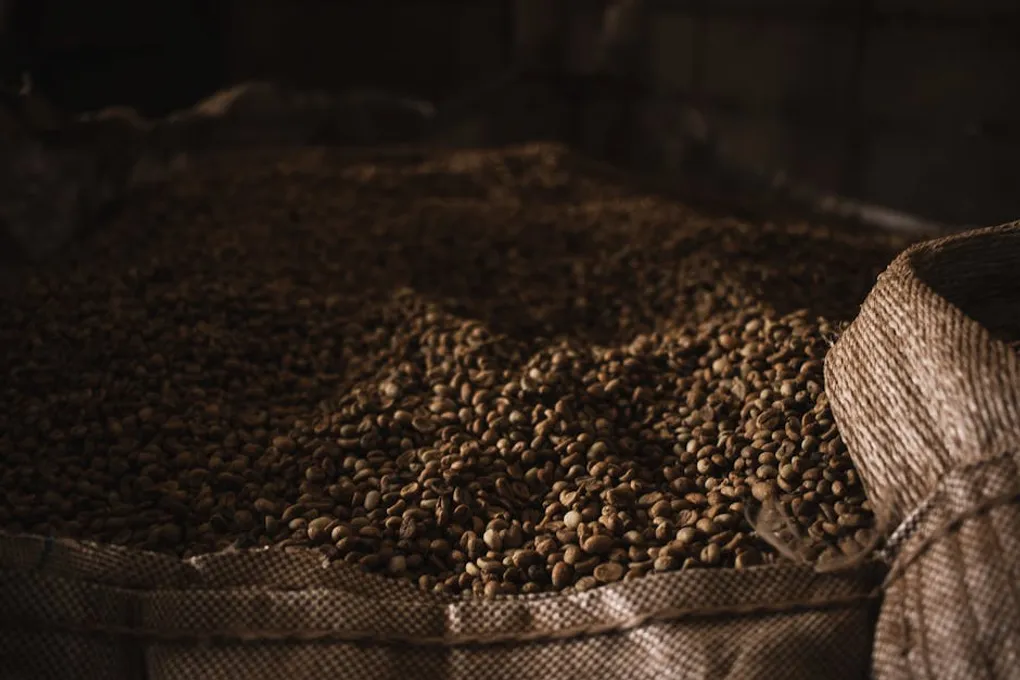
Every coffee you’ve ever tasted exists because of Yemen. That’s not an exaggeration. While Ethiopia is the birthplace of the coffee plant itself, Yemen is where humans first deliberately cultivated, roasted, brewed, and traded coffee. The port city of Al-Mokha (Mocha) gave the world its first coffee exports in the 15th century. From there, a single plant traveled to India, then Java, then a greenhouse in Amsterdam, then to Louis XIV in Paris, then to Martinique — and eventually to every coffee-growing country on Earth.
Today, Yemeni coffee is among the rarest, most expensive, and most distinctive you can buy. The varieties are ancient heirlooms, unchanged for centuries. The processing is traditional sun-drying on rooftops. And the flavor is unlike anything else in specialty coffee — wild, wine-like, dried fruit, spice, and a complexity that borders on hallucinatory.
It’s also one of the hardest origins to source, for reasons that are as heartbreaking as they are complicated.
Where the Coffee Trade Began
Coffee’s journey from Ethiopian forest plant to global commodity runs directly through Yemen. Sufi monks in 15th-century Yemen are widely credited with popularizing coffee as a brewed drink, using it to stay awake during nighttime devotional prayers. By the early 1500s, coffee houses had spread across the Arabian Peninsula, eventually reaching Constantinople, Venice, London, and the rest of Europe.
The port of Al-Mokha — from which we get the word “mocha” — was the sole export point for all the world’s coffee for nearly two centuries. Yemen guarded its monopoly jealously, requiring that all beans be boiled or partially roasted before export to prevent foreign cultivation. But in the late 1600s, the Dutch smuggled fertile seeds to India, and then to their colony in Java. By the early 1700s, Yemen’s monopoly was broken.
But while the world moved on to industrial coffee production across Latin America, Africa, and Asia, Yemen’s coffee sector remained frozen in time — small terraced plots on arid mountain slopes, ancient varieties, traditional methods. That’s both its greatest strength and its deepest vulnerability.
Growing Regions
Yemeni coffee grows on steep terraced mountainsides at 1,500—2,500 meters in the western highlands, where the Arabian Peninsula’s thin strip of arable land catches enough moisture to sustain agriculture. Water is scarce. Farming is entirely manual. Most plots are less than a hectare.
Mattari (Bani Mattar)
The Bani Mattar district northwest of Sana’a is Yemen’s most celebrated coffee region, producing what’s traditionally sold as “Mocha Mattari.” Farms sit at 2,000—2,400 meters — among the highest coffee-growing altitudes anywhere. The arid climate, intense sun, and extreme diurnal temperature swings produce dense, concentrated beans with extraordinary complexity. For context on what extreme altitude does to a coffee bean, see our coffee altitude guide.
Flavor profile: Wine-like, dried fruit (raisin, date, fig), rich chocolate, spice (cinnamon, cardamom), heavy body, low acidity.
Sanani (Sana’a Region)
Coffee from the broader Sana’a highlands is sold as “Mocha Sanani.” Growing conditions are similar to Mattari but at slightly variable altitudes (1,500—2,200 meters). Sanani tends to be somewhat lighter and more fruit-forward than Mattari, with more pronounced citrus and berry notes.
Flavor profile: Fruit-forward, berry, citrus, chocolate, moderate body, more acidity than Mattari.
Ismaili (Ibb/Ta’izz)
The southern regions around Ibb and Ta’izz produce coffees labeled “Ismaili.” These areas receive more rainfall than the northern highlands, and the coffees tend to be wilder and more varied in character — sometimes brilliantly complex, sometimes rustic and unrefined. Processing consistency varies more here than in Mattari or Sanani.
Flavor profile: Wild, tropical fruit, fermented notes, varied body, unpredictable but sometimes stunning.
Haraaz
Haraaz has emerged as Yemen’s most recognized specialty region over the past decade, largely through the efforts of companies like Qima Coffee (founded by Faris Sheibani) and Al-Ezzi Industries. The Haraaz mountains reach 2,200+ meters, and the remoteness of the district has preserved heirloom varieties and traditional farming methods that have disappeared elsewhere.
Flavor profile: Intense dried fruit, berries, floral notes, complex spice, wine-like, long finish.
Ancient Heirloom Varieties
Yemen’s coffee varieties are essentially uncatalogued heirlooms — genetically distinct from the Typica and Bourbon lines that dominate global production. These varieties arrived in Yemen centuries ago from Ethiopian forests and have evolved in isolation ever since, adapting to the arid, high-altitude conditions of the Arabian Peninsula.
Local farmers identify varieties by names like Udaini, Dawairi, Jaadi, Tufahi, and Burai, but formal genetic mapping is still in its early stages. What we know is that Yemeni varieties tend to produce small, dense beans with concentrated flavor compounds — a result of the extreme growing conditions (high altitude, minimal water, intense solar radiation) and centuries of natural selection.
This genetic distinctiveness is part of what makes Yemeni coffee taste so different from everything else. The varieties themselves carry flavor potential that modern cultivars bred for productivity simply don’t possess. For comparison with how variety affects flavor across other origins, see coffee varieties explained.
Processing: Sun-Drying on Rooftops
Yemen’s processing method is as traditional as it gets. Nearly all Yemeni coffee is natural-processed — whole cherries are spread on rooftops or raised beds and dried in the sun for 2—4 weeks. There’s no mechanical depulping, no fermentation tanks, no controlled environments. It’s coffee processing the way it was done in the 1500s.
This gives Yemeni coffee its characteristic wild, fruit-heavy, wine-like profile. The extended contact between bean and fruit during drying allows sugars and organic acids to migrate into the seed, producing intense dried-fruit sweetness and complex fermentation notes. For how natural processing compares to washed and honey, see our full coffee processing methods guide.
The tradeoff is inconsistency. Without controlled fermentation, some batches develop off-flavors — funky, musty, or overly fermented. This is why sourcing matters enormously with Yemeni coffee. The best lots are meticulously sorted, with defective cherries removed by hand. The worst lots are chaotic. There’s very little middle ground.
Some newer operations — particularly Qima Coffee and a handful of progressive cooperatives — have introduced more controlled drying and sorting practices while maintaining the natural process tradition. These lots represent the intersection of Yemeni terroir and modern quality standards, and they’re producing some of the most extraordinary coffees on Earth.
Why Yemeni Coffee Is So Rare and Expensive
Several factors make Yemeni coffee scarce:
- Minimal production: Yemen produces a tiny amount of coffee — estimates range from 15,000 to 25,000 metric tons annually, much of it consumed domestically. For comparison, Honduras produces over 300,000 tons.
- Qat competition: The narcotic shrub qat is far more profitable for Yemeni farmers, and it requires less water. Many former coffee terraces have been converted to qat cultivation.
- Water scarcity: Yemen is one of the most water-stressed countries on Earth. Coffee requires irrigation that competes with drinking water and other crops.
- Civil war: The ongoing conflict (since 2014) has devastated infrastructure, disrupted supply chains, and made export logistics extremely difficult. Some coffee-growing regions have been directly affected by fighting.
- No modern infrastructure: There are virtually no wet mills, mechanical dryers, or centralized processing facilities. Everything is done by hand at the farm level.
The result is that genuine Yemeni coffee typically costs $30—80 per bag at retail, with exceptional lots reaching $100+. For comparison, comparable quality Ethiopian coffee costs $18—30.
What Yemeni Coffee Tastes Like
Yemeni coffee has a flavor signature that’s immediately recognizable to anyone who’s tasted it — and utterly unlike any other origin:
- Dried fruit: Raisin, date, fig, dried apricot — the natural processing and arid climate produce intense dried-fruit sweetness.
- Wine-like: A deep, vinous quality that’s richer and more concentrated than the “winey” notes found in natural-processed Ethiopians.
- Chocolate: Dark chocolate, cocoa, sometimes baker’s chocolate bitterness that complements the fruit.
- Spice: Cinnamon, cardamom, nutmeg, allspice — subtle but distinct, unlike any other origin.
- Complex acidity: Present but never sharp. More like the acidity of a dried fig than a citrus fruit.
- Heavy body: Full, almost syrupy, with a long, lingering aftertaste.
The overall impression is of something ancient and wild — a cup that doesn’t conform to modern specialty conventions. That’s either thrilling or disorienting, depending on what you’re used to.
The Modern Yemeni Coffee Revival
Despite every obstacle, a small but passionate group of people is working to preserve and elevate Yemeni coffee. The most visible is Qima Coffee, founded by Faris Sheibani, a British-Yemeni entrepreneur who returned to his family’s homeland to build a transparent, quality-focused supply chain. Qima works directly with farming communities in Haraaz and other regions, providing quality training, sorting infrastructure, and market access that didn’t exist before.
Port of Mokha, founded by Mokhtar Alkhanshali (whose story is told in Dave Eggers’ book The Monk of Mokha), has similarly worked to connect Yemeni farmers with specialty buyers, navigating war zones and political complexity to get exceptional coffee to market.
These organizations have demonstrated that when Yemeni coffee is properly sorted, carefully processed, and transparently sourced, it can compete at the highest levels of specialty. Lots from Haraaz and Mattari have scored 90+ SCA points — territory occupied by the finest Geishas and washed Ethiopians.
The challenge is sustainability. Every improvement depends on fragile supply chains running through a conflict zone. A single road closure, port shutdown, or escalation in fighting can disrupt an entire season’s export. The people doing this work deserve immense credit — they’re preserving a 500-year coffee heritage under conditions that would make most entrepreneurs quit on day one.
Where to Buy Yemeni Coffee
Authentic Yemeni coffee is available but requires some diligence:
- Specialty importers: Companies like Qima Coffee, Port of Mokha, and Al-Ezzi Industries have built transparent supply chains from specific Yemeni regions. Their coffees tend to be the most consistent and well-documented.
- Specialty roasters: Look for roasters who name the specific region (Mattari, Haraaz, Sanani) and ideally the farm or cooperative. Vague “Mocha” labeling is a red flag — it often indicates commodity-grade or blended origin.
- Beware of fakes: “Mocha Java” blends at the supermarket contain zero Yemeni coffee. The “mocha” name has been co-opted to mean chocolate-flavored or generically dark. Genuine Yemeni coffee will always specify the origin clearly and cost $30+ per bag.
If you want to search for authentic Yemeni coffee, look for bags that name Mattari, Haraaz, or Sanani and specify the importer.
Brew Yemeni coffee as you would a natural-process Ethiopian — pour-over or French press, medium grind, water around 200 degrees F. The fuller body actually makes it one of the few single-origins that works beautifully in a French press. For ratio and temperature guidance, see what’s the ideal coffee brewing temperature. Don’t add milk — you’d be drowning centuries of terroir expression.
Final Thoughts
Yemen is where it all started. Every origin in this blog, every variety in every roaster’s catalog, every cup you’ve ever poured — the thread leads back to the terraced hillsides above Al-Mokha and the Sufi monks who discovered that this strange red fruit, when dried and boiled, could open the mind.
Yemeni coffee isn’t for everyone. It’s expensive, inconsistent by modern standards, and tastes nothing like the clean, bright profiles that dominate specialty right now. But for those willing to meet it on its own terms, it offers something no other origin can: a direct sensory connection to coffee’s deepest roots. There’s a wildness and complexity in a good Yemeni cup that reminds you coffee is, at its heart, a fruit from a plant — not a product from a factory.
If you can find a fresh, well-sourced lot from Haraaz or Mattari, buy it. You owe it to yourself to taste where this whole thing began.
Some links above are affiliate links. If you purchase through them, we earn a small commission at no extra cost to you.
Frequently Asked Questions
- Is "mocha" coffee the same as Yemen coffee?
- The word "mocha" originally referred to the Yemeni port city of Al-Mokha, the world's first coffee export hub. Today, "mocha" has been broadly co-opted to mean chocolate-flavored coffee or espresso drinks. "Mocha Java" blends at the supermarket typically contain zero Yemeni coffee. Genuine Yemeni coffee will always specify the origin (Mattari, Sanani, Haraaz) and cost $30+ per bag.
- Why is Yemeni coffee so expensive?
- Yemen produces less than 0.3% of the world's coffee. The tiny supply is constrained by water scarcity, competition from the more profitable qat crop, virtually no modern processing infrastructure, and ongoing civil conflict that has disrupted supply chains since 2014. Every step -- from hand-picking on steep mountain terraces to manual sorting -- is labor-intensive. These factors combine to make genuine Yemeni coffee one of the most expensive single origins available.
- What does Yemeni coffee taste like?
- Yemeni coffee has an unmistakable flavor profile: intense dried fruit (raisin, date, fig), deep wine-like character, dark chocolate, warm spice (cinnamon, cardamom), and a full, almost syrupy body. The natural sun-drying process and ancient heirloom varieties create a cup that's wilder and more complex than most modern specialty coffees. It's immediately recognizable and utterly unlike any other origin.
- How should I brew Yemeni coffee?
- Pour-over and French press both work beautifully. The full body actually makes Yemeni coffee one of the few single origins that excels in a French press. Use medium grind, water around 200 degrees F, and a standard 1:15-1:16 ratio. Skip the milk -- Yemeni coffee's complexity deserves to be tasted straight. A medium roast preserves the dried-fruit sweetness and spice without introducing excessive roast bitterness.
- Is Yemeni coffee ethically sourced?
- It depends on the supplier. Companies like Qima Coffee, Port of Mokha, and Al-Ezzi Industries have built transparent, direct-trade supply chains that pay farmers well above commodity rates. These organizations also invest in community infrastructure and quality training. However, the broader Yemeni coffee market can be opaque due to the conflict, so buying from named importers with traceable lots is important.