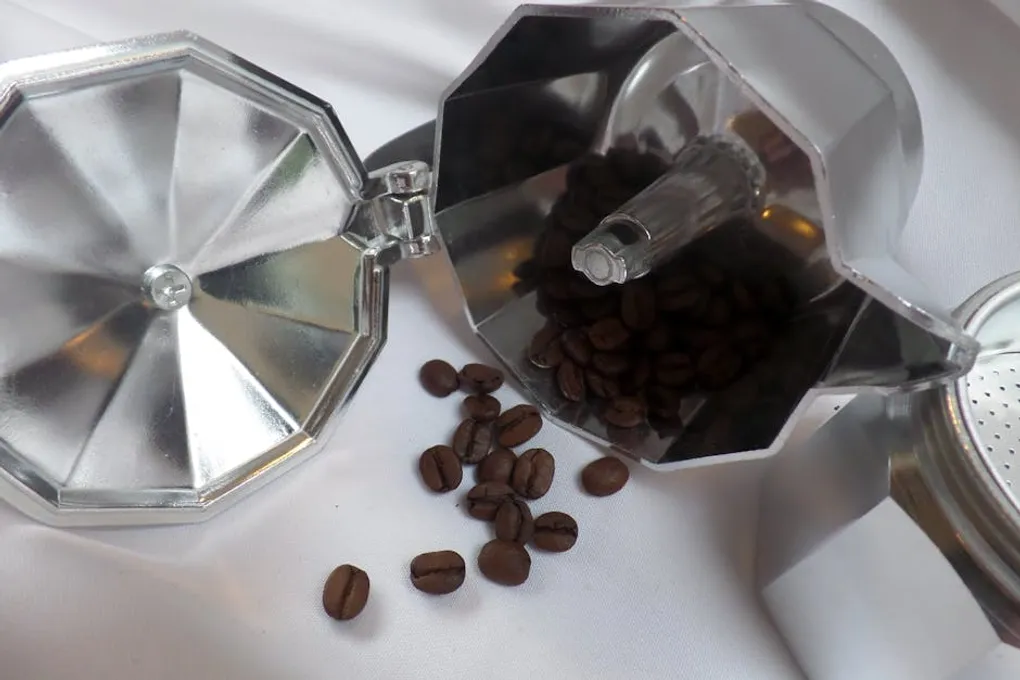
The moka pot is one of the most misunderstood coffee makers in any kitchen. Invented by Alfonso Bialetti in 1933, the little octagonal brewer has sold over 300 million units worldwide and is standard equipment in virtually every Italian household. It makes strong, concentrated coffee that’s closer to espresso than drip — but it’s not actually espresso, and understanding what it is will help you make better coffee with it.
A moka pot uses steam pressure (about 1.5 bar) to push hot water through a bed of ground coffee. Real espresso machines operate at 9 bar — six times the pressure. So moka pot coffee is more concentrated than drip, less concentrated than espresso, and has its own distinct character: intense, slightly smoky, full-bodied, with a richness that makes it excellent as a base for milk drinks or as a small, strong cup on its own.
The best part? A quality moka pot costs $25—40 and lasts decades. No electricity, no pods, no learning curve that takes months to flatten. Just a stovetop, water, coffee, and about five minutes.
How a Moka Pot Works
The design is elegantly simple. Three chambers stacked vertically:
Bottom chamber (boiler): Holds water. When heated, steam pressure builds in the air space above the water, forcing the liquid water upward.
Middle basket (filter): A funnel-shaped metal filter that holds the ground coffee. Water is pushed up through the grounds from below.
Top chamber (collector): Brewed coffee emerges through a central spout and collects here. A rubber gasket and the filter plate seal the system so pressure can build.
The physics are straightforward: heat creates steam, steam creates pressure, pressure pushes water through coffee. No pumps, no motors, no moving parts.
Step-by-Step Brewing Guide
1. Start with Hot Water
Fill the bottom chamber with hot water — just below the safety valve. This is the single most important tip that most moka pot guides miss. Starting with cold water means the aluminum body heats up slowly, cooking the coffee grounds for minutes before any water reaches them. That extended heat exposure produces the bitter, metallic taste people associate with bad moka pot coffee.
Pre-heating the water also means you’ll need an oven mitt or towel to hold the bottom chamber while assembling. Worth it.
2. Grind and Fill the Basket
Use a medium-fine grind — finer than drip, coarser than espresso. Think table salt, not powdered sugar. If you’re using pre-ground coffee, “espresso grind” from the supermarket is usually slightly too fine for a moka pot and will produce a bitter, over-extracted cup. Drip grind is slightly too coarse. You want the middle ground. For a full breakdown of grind sizes by brew method, see our coffee grind size guide.
Fill the basket level to the rim. Don’t tamp or compress the grounds — just fill and level off with your finger. The moka pot’s low pressure (1.5 bar vs. espresso’s 9 bar) can’t push water through a tamped bed. If you pack it down, you’ll get channeling, spurting, and a thin, sour cup.
3. Assemble and Heat
Drop the filled basket into the bottom chamber, screw on the top firmly, and place on medium heat. If you’re using a gas stove, keep the flame smaller than the base of the pot — flames licking up the sides overheat the body and contribute to that metallic taste.
Leave the lid open. You want to watch what happens next.
4. Watch for the Flow
After 2—4 minutes, you’ll hear a gentle gurgling as coffee begins flowing into the top chamber. It should emerge as a steady, honey-colored stream. This is the good stuff — the first coffee through is the most flavorful and least bitter.
If it sputters or explodes upward, your heat is too high or your grind is too coarse. If nothing comes through, your grind may be too fine or you’ve accidentally tamped the grounds.
5. Remove from Heat Early
Here’s the second critical tip: take the pot off the heat before it’s “done.” When the stream turns pale yellow and starts sputtering and hissing, the water in the bottom chamber is nearly exhausted and steam is now being forced through the grounds. That steam carries the bitter, ashy flavors you want to avoid.
Remove the pot from the burner when the top chamber is about 80% full and the stream is just starting to lighten. You can cool the bottom chamber under cold running water to stop the extraction immediately.
6. Serve
Pour immediately. Moka pot coffee doesn’t improve by sitting — it cools fast in the aluminum body, and the flavor shifts quickly.
For a café-style drink, the output is strong enough to mix 1:1 with hot water (like an Americano) or use as the base for a latte. In Italy, most people drink it straight from small cups, often with sugar.
Common Mistakes
Cold water start: The number one moka pot sin. Produces bitter, metallic, overcooked coffee. Always use pre-heated water.
Tamping the grounds: This isn’t espresso. The pressure is too low to push through a compressed bed. Fill, level, done.
Heat too high: Medium heat is all you need. High heat rushes the extraction and overheats the body.
Letting it finish on the stove: The last 20% of liquid through a moka pot is mostly steam and bitterness. Pull it early.
Dirty gasket and filter: Coffee oils accumulate on the rubber gasket and the filter plate. They go rancid. Disassemble after every use and rinse all parts with hot water. Replace the gasket when it gets hard or cracked — they’re cheap and make a real difference.
Using soap: The Italian tradition says never use soap, and there’s some logic to it — soap can absorb into the aluminum and gasket. Hot water and a non-abrasive sponge is sufficient.
Choosing a Moka Pot
The Bialetti Moka Express is the original and still the most popular. It comes in sizes from 1-cup (60ml) to 12-cup (670ml). The “cup” measurement is Italian-sized — about 2 oz each — so a “6-cup” moka pot makes roughly 10 oz of coffee, enough for two American-sized servings.
Aluminum vs. stainless steel: The classic Bialetti is aluminum, which heats fast and evenly but can’t be used on induction cooktops. Stainless steel models (like the Bialetti Venus) work on induction but heat slightly less evenly. Both make good coffee.
Size matters: Always brew a full pot. Moka pots are designed to work at capacity — half-filling produces inconsistent results. Buy the size that matches your actual usage. A 3-cup for one person, 6-cup for two.
What to Expect in the Cup
Well-brewed moka pot coffee is intense and full-bodied, with a slight smokiness and a rounded bitterness that’s pleasant rather than harsh. It won’t have espresso’s crema or quite the same concentration, but it delivers a richness and depth that no drip method can touch.
The body is heavy — closer to espresso than anything else you can make without a machine. Acidity is moderate and tends toward dark chocolate and roasted nut rather than fruit. It’s an excellent vehicle for milk, sugar, or both.
For beans, medium-to-dark roasts work best. Light roasts can taste thin and sour in a moka pot — the brewing temperature and pressure don’t extract enough sweetness from delicate, lightly roasted beans. A good Brazilian, Colombian, or any classic espresso blend is ideal. Water temperature matters too — see what’s the ideal coffee brewing temperature for context on how moka pot temperatures compare to other methods.
Final Thoughts
The moka pot isn’t trying to be an espresso machine. It’s its own thing — a simple, elegant, nearly indestructible brewer that produces strong, rich coffee for almost no cost. The learning curve is about two pots: one where you make the common mistakes, and one where you fix them.
If your moka pot has been collecting dust because the coffee it made was bitter and metallic, try it again with hot water, medium heat, and an early pull. The difference is dramatic. There’s a reason 300 million of these things exist.
Some links above are affiliate links. If you purchase through them, we earn a small commission at no extra cost to you.
Frequently Asked Questions
- Is moka pot coffee the same as espresso?
- No. A moka pot produces about 1.5 bar of pressure; espresso machines use 9 bar. Moka pot coffee is strong and concentrated -- more than drip, less than espresso -- but it doesn't produce crema and has a different extraction profile. Think of it as its own category: stovetop strong coffee.
- Why does my moka pot coffee taste bitter and metallic?
- Almost always one of two causes: starting with cold water (the aluminum body slowly cooks the grounds before brewing begins) or leaving the pot on heat too long (the last steam-pushed liquid is bitter and ashy). Use pre-heated water and pull the pot off heat when the top chamber is about 80% full.
- Should I tamp the coffee in a moka pot?
- No. The moka pot's low pressure can't push water through compressed grounds. Just fill the basket to the rim and level it off with your finger. Tamping will cause channeling, spurting, or no flow at all.
- What grind size should I use?
- Medium-fine -- finer than drip, coarser than espresso. Think table salt. Pre-ground "espresso" from the store is usually slightly too fine; drip grind is slightly too coarse. If you have a burr grinder, start in the middle and adjust.
- What size moka pot should I buy?
- Moka pot "cups" are Italian-sized (about 2 oz each). A 3-cup makes about 6 oz (one American mug), a 6-cup makes about 10 oz (two servings). Always brew a full pot -- moka pots are designed to work at capacity and produce inconsistent results when half-filled.