Most specialty coffee drinkers know that roast date matters. Fewer know that the green coffee sitting inside that bag has its own timeline — one that started months before roasting, in a harvest season on the other side of the world. Understanding that timeline is the difference between drinking vibrant, lively coffee and drinking something that peaked three months ago.
Coffee is an agricultural product with a shelf life that starts long before it reaches your grinder. Here’s how to read that clock.
Three Dates That Define Your Coffee’s Freshness
Every bag of coffee has three dates worth caring about. Most roasters only print one of them.
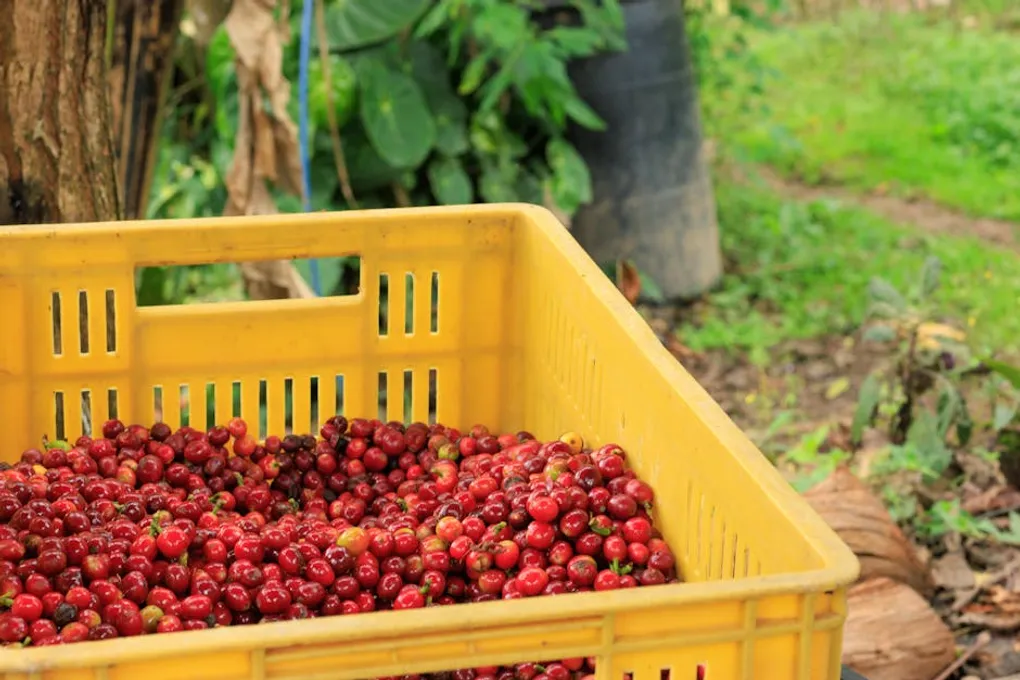
Crop year is when the coffee cherry was harvested. A “2025/26 crop” Ethiopian coffee was picked between October 2025 and January 2026. This is the starting gun for the freshness clock on the green (unroasted) bean.
Arrival date is when the green coffee landed at the importer’s warehouse in the destination country. For most origins, this is 3–5 months after harvest begins — processing, dry-milling, export logistics, and ocean freight all take time. Arrival date is what importers and roasters track. It tells you how long that green coffee has been sitting in a warehouse.
Roast date is the one printed on retail bags. It matters for the roasted bean’s freshness window (peak at 7–21 days post-roast, usable for about a month). But roast date tells you nothing about whether the green coffee was fresh when it was roasted. A roaster can roast stale green coffee today and slap today’s date on the bag. It’ll still taste flat.
The best coffee is fresh at every stage: recently harvested, recently arrived, recently roasted. Knowing the harvest calendar tells you when each origin is at its peak — and when it’s running on borrowed time.
What Happens When Green Coffee Ages
Green coffee doesn’t last forever. Stored properly in climate-controlled warehouses (cool, stable humidity, sealed in GrainPro bags), high-quality Arabica holds well for about 6–9 months after arrival. Past that window, degradation accelerates.
The signs of past-crop coffee are unmistakable once you know them. Acidity fades first — the bright, lively notes that define great Kenyan or Ethiopian coffee gradually flatten out. Aromatics dull. What replaces them are woody, papery, or cardboard-like flavors. Body may remain, but the coffee loses its spark. Some roasters describe it as the difference between fresh-squeezed orange juice and juice from concentrate. Technically the same fruit, but the life is gone.
This is why origin harvest timing matters to you as a buyer. If someone is selling you a “new arrival” Kenyan coffee in February, that checks out — Kenya’s main harvest runs October through December, and fresh arrivals typically land in the US by January–March. If they’re selling a “new arrival” Kenyan in August, be skeptical.
The Harvest Calendar: Country by Country
Coffee grows between the Tropics of Cancer and Capricorn, and harvest timing depends on hemisphere, altitude, and rainfall patterns. Southern hemisphere countries generally harvest in their winter/dry season (April–September), while northern hemisphere origins harvest October through March. Countries on or near the equator sometimes manage two harvests per year.
Africa
Ethiopia (October–January) The birthplace of coffee and the source of some of the most complex, aromatic lots in the world. Main harvest runs October through January, though timing varies across its many growing regions. Washed coffees process faster (2–4 weeks), while naturals can take 3–6 weeks on drying beds. Expect fresh Ethiopian arrivals in the US between February and May. Peak buying window: March–June.
Kenya (October–December main / June–August secondary) Kenya’s main “fly crop” harvest runs October through December, with a smaller secondary harvest June through August. The country’s meticulous wet-processing and weekly auction system add time, but quality control is exceptional. Fresh main-crop arrivals typically land February–April. The smaller mid-year harvest arrives August–October. Peak buying window: March–June (main crop). For more on what makes Kenyan coffee special, see our Kenyan coffee flavor guide.
Rwanda and Burundi (March–July) These neighboring Bourbon-growing countries harvest March through July. Fully washed processing is standard. Arrivals in the US typically begin in August and run through October. Peak buying window: September–December.
Tanzania (July–December for Arabica) A long harvest window stretching July through December, with the famous peaberry lots often among the earlier picks. Arrivals begin around November and extend into March. Peak buying window: December–April.
Central America
Central American harvests cluster tightly in the Northern Hemisphere dry season. The timing overlap means these origins often compete for attention — and shelf space — in the same months.
Guatemala (December–March) One of the most celebrated Central American origins. High-altitude regions like Huehuetenango and Antigua harvest December through March. Fresh arrivals land April–July. Peak buying window: May–August.
Costa Rica (November–March) The micro-mill revolution means lots ship in smaller batches, sometimes arriving faster than other Central Americans. Harvest runs November through March; arrivals April–July. Costa Rica’s honey-process innovation means you’ll often find yellow, red, and black honey lots arriving during this window. Peak buying window: May–August.
Honduras (November–April) Central America’s largest producer by volume. The longer harvest window means arrivals are spread across April–August. Peak buying window: May–September.
El Salvador (November–March) Known for Bourbon and the striking Pacamara variety. Harvest November–March, arrivals April–July. Peak buying window: May–August.
Nicaragua (November–March) Rapidly improving in quality. Same general timeline as its neighbors: harvest November–March, arrivals April–July. Peak buying window: May–August.
Panama (December–March) Home of the legendary Geisha variety. Small production, premium lots. Harvest December–March, arrivals April–June. Peak buying window: May–August.
Mexico (November–March) Major organic producer, with Chiapas as the standout region. Harvest November–March, arrivals April–July. Peak buying window: May–August.
South America
Brazil (May–September) The giant. Brazil produces roughly one-third of the world’s coffee, and its harvest runs May through September — peaking June–August. Machine harvesting and massive infrastructure mean processing is fast. Fresh arrivals land in the US August–December. Brazilian coffee’s naturally low acidity means it holds up longer in storage than brighter African lots, but fresh-crop Brazilian still has a sweetness and clarity that past-crop lacks. Peak buying window: September–January.
Colombia (October–January main / April–June mitaca) Colombia’s geography is unique: three Andes mountain ranges create microclimates that support two distinct harvests. The main harvest runs October–January, the secondary “mitaca” harvest April–June. This dual cycle means fresh Colombian coffee is available in the US nearly year-round — main crop arrivals land February–May, mitaca arrivals August–October. Peak buying window: virtually year-round. If you want to understand the regional character within Colombia, our single-origin Colombian coffee guide covers what to expect from different departments.
Peru (April–September) A major organic and Fair Trade producer with enormous potential that’s still being realized. Harvest April–September, arrivals August–December. Peak buying window: September–January.
Asia and Oceania
Indonesia — Sumatra (September–December main / March–June secondary) Sumatra’s unique Giling Basah (wet-hulling) process creates its signature earthy, herbal, heavy-bodied profile. Main harvest September–December, with a secondary crop March–June. Main-crop arrivals typically land January–April. Peak buying window: February–June.
Indonesia — Java and Sulawesi (June–September) Different islands, different timing. Java and Sulawesi harvest June–September, and their processing methods differ from Sumatra’s — you’ll find more fully washed lots here, with cleaner and more balanced profiles. Arrivals October–January. Peak buying window: November–February.
India (November–February) India’s Monsooned Malabar is a special case — the monsoon exposure process adds months to the timeline. Standard Indian Arabica harvests November–February, with arrivals reaching the US by April–June. Peak buying window: May–August.
Yemen (October–December) Tiny production, sky-high prices, and a flavor profile unlike anything else. Harvest October–December. Limited, erratic supply due to ongoing conflict. When it arrives (typically March–June), it goes fast. Peak buying window: whenever you can find it.
Papua New Guinea (April–September) Excellent but underrated. PNG coffees at their best show complex, bright profiles that rival East African lots, at a fraction of the price. Harvest April–September, arrivals August–December. Peak buying window: September–January.
Hawaii / Kona (September–January) The only US-grown origin of commercial significance. Harvest September–January. Because there’s no ocean shipping delay, fresh Kona is available almost immediately after processing — a rare luxury in an industry where months of transit are the norm. Peak buying window: November–March.
The Year-Round Fresh Coffee Strategy
The global harvest calendar has a beautiful feature: it never stops. At any point in the year, something fresh is arriving somewhere.
January–March: Fresh Ethiopian and Kenyan arrivals start landing. Colombian main crop is arriving. This is one of the best windows of the year for bright, complex African coffees.
April–June: Central American coffees flood the market — Guatemala, Costa Rica, Honduras, El Salvador, Panama. This is peak Central American season. Colombian mitaca is being harvested. Ethiopian and Kenyan arrivals are still fresh.
July–September: Brazilian new crop starts arriving. Rwandan and Burundian coffees are fresh. Colombian mitaca arrivals begin. Peru and PNG lots are landing. Central Americans are still in their sweet spot.
October–December: Brazilian arrivals are strong. Sumatran main crop is fresh. Java and Sulawesi lots are arriving. Colombian main harvest begins. Fresh Indian coffee starts processing. Ethiopian and Kenyan harvests are just starting — anticipation builds for the next wave.
The key insight: you never need to drink past-crop coffee. By rotating origins with the seasons, every bag you buy can be within its peak freshness window.
Practical Tips for Buying Seasonally
Ask your roaster about arrival dates. Good specialty roasters know when their green coffee arrived and will tell you. If a roaster is evasive about this, it could mean they’re sitting on old inventory.
Watch for “new crop” and “fresh arrival” language. Reputable roasters and importers announce new arrivals because it’s a selling point. When you see these announcements, that’s your signal to buy.
Be skeptical of year-round single-origin offerings. If a roaster sells the same Kenyan coffee in March (plausible — fresh arrival) and September (suspect — that green is 6+ months old), the September version won’t taste the same. Colombia is the notable exception — its dual harvest supports genuine year-round availability.
Subscription services can help. Good subscription roasters rotate their offerings seasonally, which means they’re doing the harvest-tracking work for you. You get whatever is freshest, which is often something you wouldn’t have picked yourself. A specialty coffee subscription from a roaster that publishes arrival dates is worth considering.
Stock up and freeze. When your favorite origin hits its peak season, buy extra and freeze it. Properly sealed and frozen, roasted coffee retains its freshness for months — far longer than it would sitting in a cabinet. This is the best way to enjoy peak-season Kenyan or Ethiopian coffee outside their arrival window.
Coffee is a seasonal product that the industry has trained us to treat as a pantry staple. The big commercial brands want you to think of coffee the way you think of rice — always available, always the same. But specialty coffee is closer to stone fruit or tomatoes. There’s a season when it’s incredible, and a season when it’s just okay. Once you start asking “what’s in season right now?” instead of “what brand do I usually buy?” your average cup quality goes up immediately. No new gear required. Just better timing.
Frequently Asked Questions
- When is coffee harvested in most countries?
- It depends on the hemisphere. Northern hemisphere origins (Central America, Mexico, Ethiopia, India) generally harvest October through March during their dry season. Southern hemisphere origins (Brazil, Peru, Papua New Guinea) harvest April through September. Countries near the equator, like Colombia and Kenya, can produce two harvests per year, which is why Colombian coffee is available fresh almost year-round.
- How long after harvest does coffee arrive in the US?
- Typically 3–5 months. After picking, coffee goes through processing (1–4 weeks for washed, up to 6 weeks for naturals), dry-milling, quality grading, export paperwork, and ocean freight. A coffee harvested in December in Guatemala will usually arrive at a US importer by April or May. Some origins with faster infrastructure (Brazil, Colombia) can move more quickly; others with logistical challenges (Ethiopia, Papua New Guinea) sometimes take longer.
- What does past-crop coffee taste like?
- Stale green coffee loses acidity first — the bright, fruity, floral notes fade and flatten. What remains is a woody, papery, or cardboard-like character with muted aromatics. Body may persist, but the coffee loses its liveliness and complexity. High-quality Arabica stored in climate-controlled warehouses holds well for about 6–9 months after arrival, but after that, degradation is noticeable even to casual drinkers.
- Which coffee origins are freshest right now?
- It rotates through the year. January–March brings fresh Ethiopian, Kenyan, and Colombian main-crop arrivals. April–June is peak Central American season (Guatemala, Costa Rica, Honduras). July–September features new-crop Brazil, Rwanda, Burundi, and Peru. October–December brings fresh Sumatran, Javan, and Indian lots. Following what specialty roasters label as 'new arrivals' or 'fresh crop' is the easiest way to stay in season.
- Is crop year or roast date more important?
- Both matter, but they measure different things. Roast date tells you how fresh the roasted bean is — aim for 7–21 days post-roast for peak flavor. Crop year tells you how fresh the green coffee was before roasting. A coffee roasted yesterday from past-crop green beans will have today's roast date but won't taste as good as the same coffee roasted from current-crop green. The best bags are recent crop year, recently arrived green, and recently roasted.
Some links above are affiliate links. If you purchase through them, we earn a small commission at no extra cost to you.