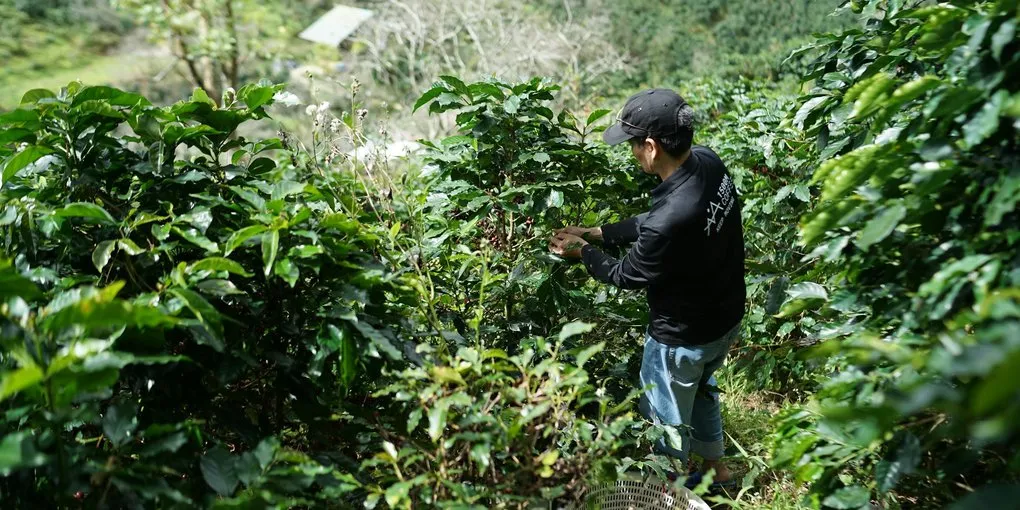
Arabica coffee has a genetic diversity problem. Most cultivated Arabica descends from a handful of plants taken out of Ethiopia and Yemen centuries ago. In Brazil, the world’s largest producer, 97.55% of all coffee cultivars are derived from just two varieties: Typica and Bourbon. That is a staggeringly narrow genetic base for a crop that supports 125 million livelihoods.
Coffee leaf rust is exploiting that vulnerability. F1 hybrid varieties are the most promising response the industry has, combining disease resistance, high yields, and cup quality that traditional breeding cannot match. Here is what they are, why they matter, and what stands in the way.
Arabica’s Genetic Bottleneck
Arabica is not just any crop with low genetic diversity. It is a natural hybrid itself — a cross between Coffea canephora (Robusta) and Coffea eugenioides that occurred in southern Sudan. All Arabica coffee traces back to this single hybridization event.
From that already narrow genetic base, the commercial coffee industry was built on two lineages:
The Typica lineage traveled from Ethiopia to Yemen, then to India (late 1600s), Java (Dutch, 1696/1699), Amsterdam (1706), the Jardin des Plantes in Paris (1714), and finally to Martinique (1723), Jamaica (1730), and across the Americas. Most New World Typica descends from a single plant gifted to Louis XIV.
The Bourbon lineage went from Ethiopia to Yemen to Reunion Island (the French attempted three transplantations in 1708, 1715, and 1718 — only the second and third partially succeeded), then to Africa via Spiritan missionaries and eventually to Brazil and Central America.
Nearly every commercial coffee variety — Caturra, Catuai, Mundo Novo, SL-28, Pacas, Villa Sarchi — is a mutation or cross within these two lineages. The genetic base is extraordinarily thin.
Why Leaf Rust Changes Everything
Coffee leaf rust (Hemileia vastatrix) has devastated coffee production before. In the 1860s and 1870s, it destroyed Ceylon’s coffee industry so thoroughly that the British shifted to tea. What is happening now may be worse because rust resistance is breaking down.
The Timor Hybrid — a natural Arabica-Robusta cross discovered on the island of Timor in the 1920s — has been the primary source of rust resistance genes for decades. Varieties like Catimor, Sarchimor, Castillo, and their descendants all trace their disease resistance back to this single genetic source.
The problem, according to the World Coffee Research (WCR) Varieties Catalog, is that this shared ancestry creates a shared vulnerability. In the early 21st century, historically rust-resistant varieties began being infected:
- Lempira in Honduras — once considered reliably resistant
- Costa Rica 95 in Costa Rica — resistance breaking down
Because most available rust-resistant varieties obtained their resistance from the Timor Hybrid, WCR states that most experts believe most existing rust-resistant varieties will no longer be resistant in the near-to-medium term. The disease evolves. The defenses do not.
This is the context that makes F1 hybrids urgent rather than merely interesting.
What F1 Hybrids Are
F1 hybrids are first-generation crosses between two genetically distinct Arabica parents. The “F1” designation means they are the direct offspring of the cross, not a stabilized variety bred over multiple generations.
The principle is heterosis, or hybrid vigor. When two genetically distant parents cross, the offspring frequently outperform both parents in yield, disease resistance, and other traits. This is the same principle that revolutionized corn production in the 20th century.
In coffee, F1 hybrids combine three properties that traditional breeding struggles to achieve simultaneously:
- High cup quality — often scored as Very Good to Exceptional by WCR standards
- High yield — significantly above conventional varieties, with research showing 22-47% yield increases
- Disease resistance — multiple resistance genes from diverse parents, not just the Timor Hybrid
The trade-off is propagation. Seeds from F1 hybrids do not breed true. The second generation (F2) will segregate, meaning the offspring will vary widely and will not perform like the parent. This is a fundamental genetic property called Mendelian segregation. F1 hybrids must be reproduced through clonal propagation — tissue culture or cuttings — which is more expensive and technically demanding than planting seeds.
The Star Varieties
Centroamericano (H1)
Centroamericano is arguably the most important F1 hybrid in production today. It was developed by crossing Sarchimor T5296 (a rust-resistant variety) with Rume Sudan (an Ethiopian landrace with exceptional cup quality).
The WCR catalog rates it:
- Cup quality: Exceptional (the highest rating)
- Yield: Very High
- Rust resistance: Highly Resistant
- Bean size: Large
- First production: Year 2
At the Cup of Excellence Nicaragua, Centroamericano scored 91.25 SCA points. That is an outstanding score by any standard, and it came from a variety that also produces very high yields and resists rust. Traditional varieties force producers to choose between quality, yield, and disease resistance. Centroamericano delivers all three.
It must be clonally propagated, which limits accessibility for smallholders who do not have access to tissue culture nurseries.
Starmaya
Starmaya is unique among F1 hybrids because it can be reproduced by seed. It uses a male-sterile line (Marsellesa) crossed with Rume Sudan. Because the Marsellesa mother is male-sterile, it can only be pollinated by the Rume Sudan father, ensuring the hybrid cross occurs reliably from seed.
The WCR catalog rates it:
- Cup quality: Very Good
- Yield: Very High
- Rust resistance: Highly Resistant
- Bean size: Large
- First production: Year 2
Starmaya’s seed-propagation ability is a game-changer for accessibility. Smallholder farmers who cannot afford tissue culture seedlings can still grow a high-performing F1 hybrid. The cup quality is a step below Centroamericano’s Exceptional rating, but Very Good with Very High yield and high resistance is an extraordinary package.
Ruiru 11
Kenya’s answer to rust and coffee berry disease. Ruiru 11 is a composite F1 hybrid (technically a population of controlled crosses rather than a single clone) that combines multiple resistance genes with compact, high-yielding plants.
- Cup quality: Good
- Yield: Very High
- Rust resistance: Highly Resistant
- First production: Year 2
Ruiru 11 is seed-propagated from controlled crosses. Its cup quality is not as high as Centroamericano or Starmaya, but it was bred for a different purpose: providing Kenyan smallholders with a productive, disease-resistant variety that does not require expensive inputs.
The Climate Crisis Makes F1 Hybrids Essential
The urgency behind F1 hybrid development is not just about rust. Climate change is reshaping where coffee can grow.
Central America faces projected area losses of 38-89% by 2050. The minimum viable altitude for Arabica is rising — in Colombia, farms are shifting from 1,200 meters to 1,600 meters and above, requiring a 150-meter altitude gain per 1 degree Celsius of warming.
The Climate Central 2026 report found that 25 coffee-producing countries (accounting for 97% of global production) now experience 47 additional days per year above 30 degrees Celsius compared to pre-industrial baselines. The top five producing countries average 144 days per year of coffee-harming heat.
Brazil’s situation illustrates the scale: 1.2 degrees Celsius rise during the flowering period since 2010, the worst drought in 70 years in 2024, and projections that northern Minas Gerais will be about 80% unsuitable for coffee by 2050.
F1 hybrids contribute to adaptation in two ways. Their higher yields mean the same production can come from less land as suitable area shrinks. And their disease resistance helps buffer against pest and disease pressures that intensify as temperatures rise — coffee berry borer is already migrating to highland areas in Kenya and Latin America. For a deeper look at how altitude shapes flavor and why these shifts matter, our altitude guide covers the science.
What About Robusta as a Backup?
For years, the industry assumed Robusta would serve as climate insurance. Robusta is perceived as hardier, more heat-tolerant, and less disease-prone than Arabica. Robusta production has grown from 25% of global output in the early 1990s to 44% today.
But research from Kath et al. (2020) undermined this assumption. The study found that Robusta’s true optimal temperature is 20.5 degrees Celsius — far below the 22-30 degree range the industry had long assumed. At every 1 degree above optimal, Robusta shows about 14% yield decline, similar to Arabica. Robusta is not the climate-resilient backup the industry thought it was.
This makes Arabica F1 hybrids even more critical. If Robusta is also vulnerable to warming, then the path forward for quality and production requires engineering resilience within Arabica, not retreating to Robusta.
The Agroforestry Connection
F1 hybrids are part of a broader adaptation toolkit. Agroforestry — growing coffee under shade trees — is the most effective single intervention for climate resilience.
Research shows that agroforestry reduces coffee plant mortality from 39% in full sun to 7% under shade during drought conditions. Shade trees lower air temperature by 0.6-6 degrees Celsius, reduce soil temperature by 4-6 degrees, and cut evapotranspiration by about 30%.
Combining F1 hybrids (which yield 22-47% more than conventional varieties) with agroforestry (which reduces drought mortality by 82%) creates a resilient production system that addresses both the genetic and environmental vulnerabilities simultaneously. Yet most coffee is still grown in full sun, and most smallholders still plant conventional varieties.
What Stands in the Way
F1 hybrids are not a silver bullet. Several barriers limit adoption:
Propagation costs: Tissue culture seedlings cost significantly more than seeds. For a smallholder farmer planting a few hundred trees, the cost difference matters. Starmaya’s seed-propagation ability is a partial solution, but it is only one variety.
Nursery infrastructure: Tissue culture requires specialized labs that do not exist in many producing regions. Scaling F1 hybrid distribution requires building that infrastructure.
Intellectual property: Many F1 hybrids were developed by research consortia (CIRAD, WCR, national coffee institutes) that control the genetics. Farmers depend on these institutions for access to planting material.
Farmer knowledge: F1 hybrids may require different agronomic management than traditional varieties — different spacing, fertilization, or pruning. Extension services need to keep pace with variety releases.
Time lag: Coffee trees take 2-4 years to reach first production. Transitioning a farm from conventional varieties to F1 hybrids means years of reduced income before the new trees produce. Smallholders often cannot afford this transition period without financial support.
What This Means for Coffee Drinkers
If you buy specialty coffee, you are already encountering F1 hybrids even if you do not realize it. Centroamericano lots appear at the Cup of Excellence. Castillo (while not an F1 hybrid, it is a rust-resistant introgressed variety from Colombia) is in bags from many Colombian roasters. Ethiopian heirloom coffees represent the genetic diversity that F1 hybrid programs are trying to capture.
The variety listed on your coffee bag tells you something about what is in your cup. But it also tells a story about the economics and biology of coffee farming. When you see “Centroamericano” or “Starmaya” on a bag, you are looking at the front line of coffee’s survival strategy. Understanding how coffee scoring works helps put the 91.25-point Centroamericano result in context — that is a genuinely exceptional score.
Over the next decade, F1 hybrids will likely become a larger share of specialty coffee. The Cup of Excellence scores show they can compete on quality. The yield data shows they help producers economically. And the climate data shows we need them.
The best thing coffee drinkers can do is buy them when they see them, just as buying Gesha lots incentivized producers to plant that once-obscure variety. Market demand drives planting decisions, and the varieties that can sustain both cup quality and production in a warming world deserve that demand.
Frequently Asked Questions
- Are F1 hybrid coffees genetically modified (GMO)?
- No. F1 hybrid coffee is produced through conventional cross-pollination -- the same method humans have used to breed plants for thousands of years. Two genetically distinct Arabica parent plants are crossed, and the resulting seeds are the F1 hybrid. No genes are inserted, deleted, or edited using biotechnology tools. Coffee has no commercially available GMO varieties anywhere in the world as of 2026.
- Why can't you save seeds from F1 hybrid coffee plants?
- You can physically save and plant F1 hybrid seeds, but the resulting plants (the F2 generation) will not perform like the F1 parent. This is due to Mendelian segregation: the F1 generation is uniform, but the F2 recombines genes unpredictably. Some F2 plants may be excellent, others poor. This is why F1 hybrids must be clonally propagated through tissue culture or cuttings -- and why Starmaya's ability to be seed-reproduced through its male-sterile mother line is such a significant innovation.
- Do F1 hybrid coffees taste different from traditional varieties?
- F1 hybrids span a range of flavor profiles depending on their parentage. Centroamericano (Sarchimor T5296 x Rume Sudan) has scored Exceptional cup quality ratings with complex, fruity profiles from the Rume Sudan Ethiopian landrace parent. Starmaya rates Very Good, slightly less complex but still excellent. Each hybrid cross produces different characteristics based on which parents were chosen, and the best F1 hybrids match or exceed traditional specialty varieties in blind cupping.
- How much do F1 hybrid seedlings cost compared to traditional varieties?
- Tissue-culture F1 hybrid seedlings typically cost 3-5 times more than conventional seedlings. Over a 20-25 year tree lifespan, the seedling cost is a tiny fraction of total production costs, and the 22-47% yield increase more than compensates economically. The real barrier is the upfront capital: a smallholder replanting 1,000 trees faces a significant nursery bill plus 2-4 years of no production from those trees.
- Could F1 hybrids make specialty coffee more affordable?
- Potentially, but the effect will be gradual. F1 hybrids' higher yields mean more coffee per hectare, which should increase supply. However, the specialty market is driven by cup quality scores, not just volume. The most likely near-term effect is that F1 hybrids will make good coffee (80-85 SCA points) more abundant, while outstanding coffee (85+ points) continues to be priced by scarcity and quality. For farmers, the yield increase means better livelihoods from the same land.