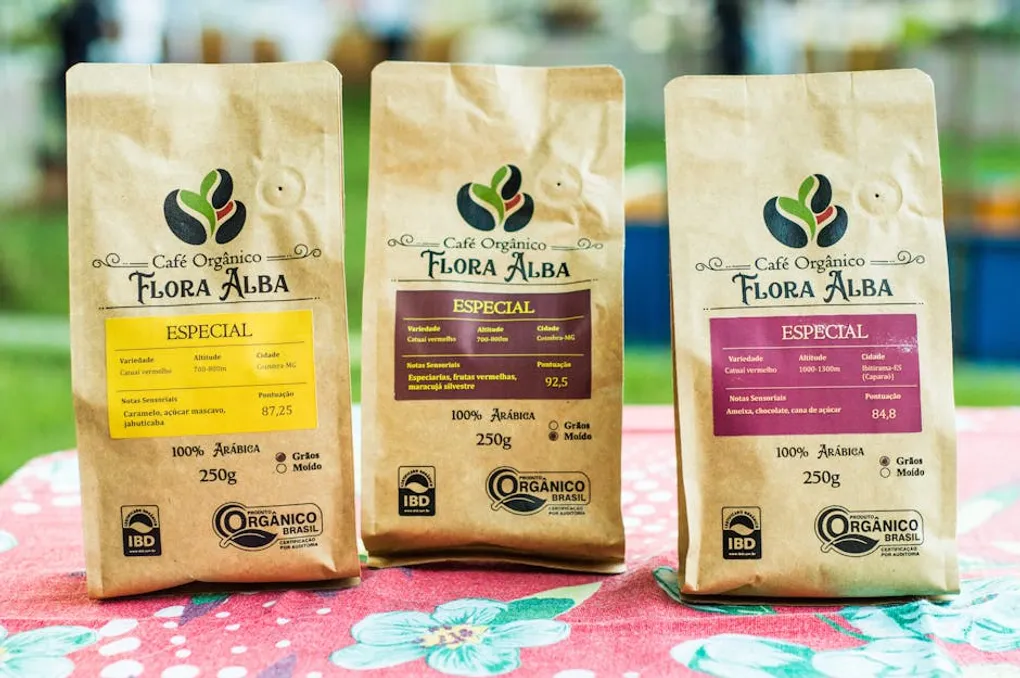
Coffee bags are covered in seals. Fair Trade. Rainforest Alliance. USDA Organic. Direct Trade. They all suggest you’re doing something good by buying this bag over the one next to it. But what do these certifications actually guarantee? Who audits them? How much of your premium reaches the farmer? And which ones are just marketing?
After digging into the standards, the audit processes, and the economics behind each label, I’ve found that the answers are more complicated — and more uncomfortable — than the seals want you to believe. Some certifications deliver real impact. Others are so diluted they’re nearly meaningless. And one of the most used terms in specialty coffee isn’t a certification at all.
Here’s what each label actually means, what it costs, who benefits, and where the gaps are.
Fair Trade (Fairtrade International / FLO)
What it certifies: A guaranteed minimum price floor for farmers, plus a community development premium. Audited by FLOCERT, an independent body. Requires producers to be organized as cooperatives or associations — individual farms can’t participate.
The economics: The current Fair Trade minimum is $1.40/lb for washed Arabica and $1.05/lb for Robusta, plus a $0.20/lb premium that goes to the cooperative for community projects (schools, infrastructure, healthcare). Organic-certified Fair Trade coffee adds another $0.30/lb premium.
What it gets right: The price floor concept is sound. When commodity prices crash — and they do, regularly — Fair Trade provides a safety net. The community premium funds tangible projects. Cooperatives give smallholders collective bargaining power they’d never have alone. For commodity-grade coffee, Fair Trade is meaningfully better than the alternative.
Where it falls short: The minimum price hasn’t kept pace with the specialty market. Specialty coffee regularly trades at $3-8+/lb green, and exceptional lots fetch $15-50+/lb. At those prices, the $1.40 floor is irrelevant — it’s like a minimum wage that’s half the going rate. This means Fair Trade is most useful for lower-quality coffee, and least useful for the farmers producing the best stuff.
The cooperative requirement also creates friction. Cooperatives can be bureaucratic, slow to distribute payments, and sometimes poorly managed. Farmers producing exceptional coffee may earn less through a cooperative than they would selling directly to a specialty roaster. Some cooperatives take significant cuts before the farmer sees anything.
Honest assessment: Fair Trade provides a genuine safety net at the commodity level and has funded real community development. But it’s not the gold standard for farmer welfare that its marketing implies. If you’re already buying specialty coffee from a reputable roaster, the farmer is almost certainly being paid more than Fair Trade minimums anyway.
Rainforest Alliance
What it certifies: Environmental and social standards across farm management — biodiversity, soil health, water management, worker welfare, and business practices. Merged with UTZ Certified in 2018 to create a single consolidated standard. Audited annually by approved third-party certification bodies.
The economics: No minimum price floor. The seal signals compliance with sustainability standards, but doesn’t guarantee any specific price premium to the farmer. The market determines what buyers pay.
What it gets right: The standard covers real environmental issues — deforestation, pesticide management, water pollution, habitat preservation. The social criteria address worker conditions, which many other certifications ignore entirely. The scope is broad and genuinely addresses sustainability beyond just the economic dimension.
Where it falls short: The 30% rule is the biggest problem. A product can carry the Rainforest Alliance seal with only 30% certified content. When UTZ and Rainforest Alliance merged, this threshold was actually lowered from UTZ’s stricter standard. That means 70% of the coffee in a “Rainforest Alliance Certified” bag might meet none of the standards the seal implies.
The absence of a minimum price floor means farmers bear the cost of compliance — maintaining records, changing practices, paying for audits — with no guaranteed return. The seal is ubiquitous on mass-market brands, which raises the question: if nearly every major brand can slap the frog on their packaging, how rigorous is the standard really?
Honest assessment: Rainforest Alliance does more for environmental standards than most certifications. But the 30% content threshold undermines consumer trust, and the lack of a price floor means the economic benefit to farmers is uncertain. The seal on your grocery store coffee tells you less than you think it does.
USDA Organic
What it certifies: No synthetic pesticides, herbicides, or fertilizers used on the farm for at least three consecutive years. Annual inspections verify ongoing compliance. Applies to the entire supply chain — growing, processing, importing, and roasting must all meet organic standards.
The economics: Certification costs $2,000-5,000+ per year, which is significant for a smallholder earning a few thousand dollars annually. The organic premium at the consumer level (typically 30-50% more per bag) doesn’t translate directly to farmer income — roasters, importers, and retailers all take their cut. At the Fair Trade level, the organic differential is $0.30/lb extra to the farmer.
What it gets right: The standard is clear, verifiable, and well-enforced. You’re getting coffee grown without synthetic chemicals. For consumers who prioritize reducing pesticide exposure in their diet, organic certification delivers on its core promise. The three-year transition requirement prevents quick label-swapping. For a deeper look at whether organic certification changes the cup, see our guide to organic coffee.
Where it falls short: The certification cost creates a painful paradox. Many smallholder farms in Ethiopia, Peru, Indonesia, and rural Colombia already farm organically — they simply can’t afford synthetic inputs. Their coffee is organic in practice but can never carry the label because the certification fee is prohibitive. Meanwhile, large operations can absorb the cost easily, even if their commitment to sustainability is more about market positioning than philosophy.
The organic label also says nothing about flavor quality. A stale organic supermarket blend is objectively worse coffee than a fresh, well-roasted conventional single-origin from a specialty roaster. The certification addresses chemistry, not quality.
Honest assessment: USDA Organic guarantees a chemical-free growing process, and that’s worth something. But the cost barrier excludes many of the world’s most naturally-grown coffees from ever carrying the label. If you care about both organic practices and farmer welfare, organic certification alone isn’t enough — you need to look at who’s growing the coffee and how they’re being paid.
Bird-Friendly (Smithsonian Migratory Bird Center)
What it certifies: The most rigorous environmental certification in coffee. Requires both USDA Organic certification AND a minimum 40% shade canopy with specific tree diversity requirements (at least 10 native tree species). The shade canopy must provide multi-layered habitat for migratory birds. Certified by the Smithsonian Migratory Bird Center — a scientific institution, not a trade organization.
The economics: Premium to farmers is approximately $0.25-0.50/lb above market price. Only about 100 farms worldwide currently hold this certification. The dual requirement of organic plus shade canopy makes it the hardest certification to achieve.
What it gets right: Almost everything. The standard is backed by decades of peer-reviewed ornithological research showing that shade-grown coffee farms can function as viable habitat for migratory bird species whose forests have been destroyed. The shade canopy requirement also benefits the coffee itself — slower cherry maturation at lower light levels often produces more complex flavor. The organic prerequisite eliminates greenwashing. The Smithsonian has no financial incentive to dilute the standard. And the limited number of certified farms means the seal actually means something.
Where it falls short: Scale. With roughly 100 certified farms worldwide, Bird-Friendly coffee is genuinely difficult to find. The dual certification requirement means farmers must first achieve organic certification (with its own costs and multi-year transition), then meet the additional shade canopy standards. This is a high bar that many deserving farms can’t clear — not because their practices are inadequate, but because the cost and complexity are prohibitive.
Honest assessment: Bird-Friendly is the certification I’d point to if someone asked which seal actually delivers on its promise. The science is real, the standards are rigorous, the certifying body is credible, and the seal hasn’t been diluted by mass adoption. If you find Bird-Friendly coffee, buy it. But don’t expect to find it easily.
Direct Trade
What it certifies: Nothing. Direct Trade is not a certification. There is no standard definition, no external audit, no governing body, and no minimum requirements. Any roaster can call their coffee “Direct Trade” and face zero accountability for the claim.
The economics: At its best, Direct Trade means a roaster visits origin, builds long-term relationships with specific farms, and pays 25-50%+ above Fair Trade minimums — often significantly more. The roaster can verify quality firsthand and the farmer gets a better price by cutting out middlemen. At its worst, it means a roaster bought coffee through a normal import chain, maybe met a farmer once, and slapped “Direct Trade” on the bag because it sounds good.
What it gets right — when it’s real: The best Direct Trade relationships are the gold standard of ethical coffee sourcing. Roasters like Counter Culture, Intelligentsia, and George Howell publish their purchase prices, visit farms annually, invest in farm infrastructure, and maintain relationships spanning decades. When a roaster is transparent about what they pay and who they buy from, Direct Trade can deliver more to the farmer than any formal certification.
Where it falls short: There’s no way for a consumer to verify the claim. A roaster saying “Direct Trade” is exactly as reliable as that roaster’s honesty. There’s no audit, no seal to revoke, and no minimum standard. The term has been co-opted so broadly that it now ranges from genuinely transformative partnerships to hollow marketing copy.
How to tell the difference: Look for specificity. Does the roaster name the farm, the farmer, and the region? Do they publish what they paid per pound? Do they show photos from farm visits? Can you find the same farm relationship mentioned over multiple years? Transparency is the only verification mechanism for Direct Trade, and the roasters doing it right tend to be very transparent because the numbers are in their favor. Much of this same certification terminology appears on craft chocolate labels — Fair Trade, Direct Trade, organic — and the gap between what the seal promises and what it delivers is just as wide.
Honest assessment: Direct Trade is a philosophy, not a certification. When practiced with integrity, it’s the most effective model for farmer welfare in specialty coffee. When practiced as marketing, it’s meaningless. The burden is on you to evaluate the roaster’s transparency.
Cup of Excellence
What it certifies: Quality. Cup of Excellence is not a certification — it’s an international competition and auction run by the Alliance for Coffee Excellence. Coffees scoring 87+ points (out of 100) on a standardized cupping protocol are selected by a panel of international judges over multiple blind evaluation rounds. Winning lots are then sold at public online auction with full traceability.
The economics: Auction prices range from $5/lb to $300+/lb, with rare lots exceeding that. The money goes directly to the farmer or cooperative that produced the winning lot. Panama Geisha lots, for instance, have sold for record-breaking prices at CoE and similar auctions — Hacienda La Esmeralda’s trajectory from $21/lb in 2004 to $350.25/lb in 2013 shows what quality-verified traceability can do for farmer income.
What it gets right: Complete transparency. The cupping scores are public. The auction prices are public. The farm identity is public. There’s no ambiguity about what you’re getting or what the farmer was paid. This is the cleanest transaction model in coffee — quality is objectively evaluated by independent experts, and the market sets the price in an open auction.
Where it falls short: It’s not scalable. Cup of Excellence covers a tiny fraction of global coffee production. Only the top lots from participating countries make the cut. It doesn’t help the millions of smallholders producing decent but not exceptional coffee. It’s a showcase for the best, not a safety net for the rest.
Honest assessment: Cup of Excellence is the most transparent quality-verification system in coffee. If you see a CoE designation, you know exactly what the coffee scored, who grew it, and what it sold for. It’s not a certification that solves systemic problems — it’s a competition that proves what’s possible when quality is rewarded transparently.
What Your Money Actually Supports
Here’s the uncomfortable reality that ties all of this together: the certification on the bag matters less than the supply chain behind it.
A specialty roaster buying high-quality single-origin coffee at $4-6/lb green — with no certification whatsoever — is paying the farmer 3-4 times more than the Fair Trade minimum. A grocery store brand with a Rainforest Alliance frog on the label might be paying commodity prices with 70% uncertified content. The seal and the reality can point in opposite directions.
About 125 million people worldwide depend on coffee production for their livelihoods. The global specialty coffee market hit $101.6 billion in 2024 and is projected to reach $183 billion by 2030. There is enormous money in coffee. The question is where it lands.
Here’s a rough hierarchy of what actually helps:
- Buying fresh, traceable coffee from transparent roasters — whether they use a certification label or not. Traceability means accountability.
- Bird-Friendly — rigorous, science-backed, and genuinely impactful for biodiversity.
- Fair Trade — provides a real safety net at the commodity level, especially for cooperatives in vulnerable markets.
- USDA Organic — guarantees chemical-free growing, which benefits farm workers and ecosystems, even if the label excludes many naturally organic farms.
- Rainforest Alliance — better than nothing, but the 30% threshold means the seal carries less weight than it should.
- Direct Trade — could be the best or worst thing on the list, depending entirely on the roaster’s integrity. Verify before you trust.
Practical Buying Advice
If you buy from a specialty roaster: The certification matters less than the roaster’s sourcing practices. Look for farm names, lot numbers, processing details, and purchase prices. A roaster who publishes this information is doing more for transparency than most certifications require. Our single origin coffee guide explains what that kind of traceability actually looks like on a bag.
If you buy from a grocery store: Fair Trade and USDA Organic are the most meaningful seals you’ll find on the shelf. Rainforest Alliance alone doesn’t tell you much. Bird-Friendly is rare but excellent if you spot it.
If you care most about the environment: Bird-Friendly is the clear winner. Shade-grown coffee preserves forest canopy, supports migratory bird habitat, and typically produces better-tasting coffee. USDA Organic addresses chemical inputs but not habitat.
If you care most about farmer income: Look for transparent Direct Trade relationships or Cup of Excellence lots. The price floor of Fair Trade is good insurance, but the best specialty roasters are already paying well above it.
If you want one simple rule: Buy the freshest, most traceable coffee you can afford, from a roaster who tells you where it came from and what they paid. That single practice — choosing traceability over labels — does more good than any seal on a bag.
Some links in this post are affiliate links. If you purchase through them, we earn a small commission at no extra cost to you.
Frequently Asked Questions
- Is Fair Trade coffee actually fair to farmers?
- Fair Trade provides a genuine price floor ($1.40/lb for Arabica plus a $0.20/lb community premium) that protects farmers when commodity prices crash. That safety net is real and has funded schools, healthcare, and infrastructure in coffee-growing communities. However, the minimum price hasn't kept pace with specialty coffee, which regularly trades at $3-8+/lb. For farmers producing high-quality specialty coffee, Fair Trade minimums are often irrelevant because the market already pays more. Fair Trade matters most at the commodity level — if you're buying grocery store coffee, the seal makes a meaningful difference. If you're buying from a specialty roaster, the farmer is almost certainly being paid above Fair Trade regardless.
- What is the difference between Fair Trade and Direct Trade coffee?
- Fair Trade is a formal certification with audited standards, a minimum price floor, and independent verification by FLOCERT. Direct Trade is not a certification at all — there is no governing body, no standard definition, and no external audit. Any roaster can call their coffee Direct Trade without accountability. At its best, Direct Trade means a roaster visits farms, pays 25-50%+ above Fair Trade minimums, and builds long-term sourcing relationships. At its worst, it's a marketing term. The way to tell the difference: look for roasters who publish specific farm names, purchase prices, and visit documentation. Transparency is the only verification mechanism Direct Trade has.
- What does the Rainforest Alliance seal actually mean on coffee?
- The Rainforest Alliance seal means the product contains at least 30% coffee from farms that meet the organization's environmental and social standards — covering biodiversity, soil health, water management, and worker welfare. The key detail most consumers miss: up to 70% of the coffee in that bag may come from uncertified sources. This threshold was actually lowered when Rainforest Alliance merged with UTZ in 2018. The standard also has no minimum price floor, meaning farmers bear the cost of compliance with no guaranteed premium. It's better than no standard at all, but the seal on a grocery store bag carries less weight than most people assume.
- What is the most rigorous coffee certification?
- Bird-Friendly, certified by the Smithsonian Migratory Bird Center, is the most rigorous environmental certification in coffee. It requires both USDA Organic certification and a minimum 40% shade canopy with at least 10 native tree species — meaning farms must clear two certification hurdles, not one. Only about 100 farms worldwide currently hold it. The dual requirement, scientific backing, and limited adoption mean the seal hasn't been diluted by mass-market use. The shade canopy also benefits coffee quality — slower cherry maturation under tree cover often produces more complex, developed flavors.
- Does organic coffee taste better than conventional coffee?
- No, not inherently. Flavor in coffee is determined by variety, processing method, altitude, soil, harvest timing, and roast quality. USDA Organic certification addresses chemical inputs during growing — it says nothing about any of those flavor variables. A fresh, well-roasted conventional single-origin from a specialty roaster will almost always taste better than a stale organic blend from a grocery store shelf. What organic certification does guarantee is that no synthetic pesticides, herbicides, or fertilizers were used for at least three years. That matters for farm worker health, soil ecology, and your own chemical exposure. It just doesn't correlate with what's in the cup.