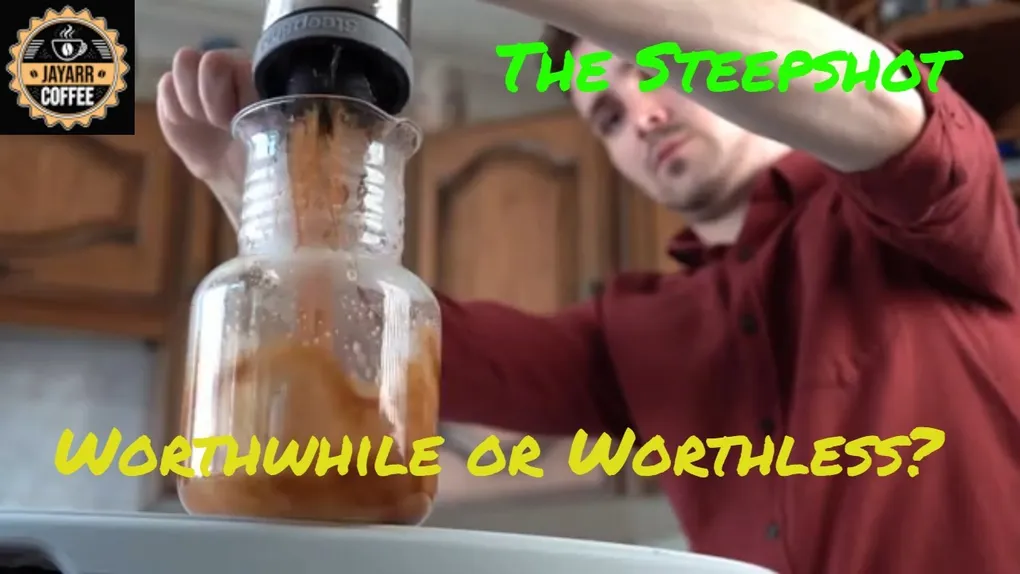
The SteepShot promises to brew coffee in a clean, simple way in just 30 seconds. Throw in your grounds, add boiling water, close it up, wait, and you’ve got coffee. We got our hands on one to see if it lives up to the hype — and whether it’s worth the investment.
The Backstory
The SteepShot was invented by Ari Halonen in 2015. The story goes that his wife refused to make him coffee in the morning because regular brewing devices were too time-consuming and complex. Ari created a prototype and showed it to local barista Tim Wendelboe, who agreed it was a great idea. Together they took it to Kickstarter, raised 36,000 euros, and in May 2020 the SteepShot finally hit the shelves.
It’s available from Tim’s website for around 60 euros (about 55 GBP or $70 USD). We also had to pay 30 euros for shipping plus a 20-pound customs bill. All told, the total came to over 100 British pounds — a significant investment for a single coffee brewer.
Unboxing
The packaging is simple cardboard with a clean design. Inside: one SteepShot and one instruction manual (English on one side, Norwegian on the other). The device arrived fully assembled and consists of a flask, a filter ring, a filter tray, a cap, a deflector, and an O-ring.
One alarming issue right away: no filter was included. The website clearly shows metal filters (the same size as AeroPress filters), and they’re supposed to come with the device. Fortunately, as avid AeroPress users, we had compatible filters on hand. But if this were someone’s first coffee brewer and they didn’t receive a filter, they’d be stuck.
Brew Attempt 1: Following the Instructions
We used a Costa Rican SHB medium roast with a medium-fine grind: 14 grams of coffee, 200 grams of boiling water, and a mesh disc filter. The SteepShot calls for boiling water poured in quickly — a gooseneck kettle actually pours too slowly, so a standard kettle works better.
After 30 seconds, we flipped and pressed. The pressing action was satisfying, and the brewer absolutely lives up to its speed claim. But the coffee? It came out cloudy, lighter in color than expected, and tasted burnt and under-extracted at the same time. An average coffee drinker might settle for it, but anyone who cares about coffee quality won’t be impressed.
Brew Attempt 2: Adjustments
For the second attempt, we made some changes: paper filter instead of mesh, a medium-coarse grind, water at 95 degrees Celsius instead of boiling, and a 40-second steep instead of 30.
The result was noticeably better — much clearer, and the taste was acceptable. Still a bit light in color for the bean we were using, but we were moving in the right direction. The takeaway: the SteepShot definitely needs experimentation to find settings that work for you.
The Pros
1. Simplicity. Once you figure out the assembly, the rest is straightforward: coffee, water, wait, release, drink. It’s the main selling point and it delivers.
2. Easy to clean. It’s simple enough to rinse out, though we’d argue it’s not significantly easier than cleaning an AeroPress, a V60, or even a French press. The cleaning time differences between most manual brewers are minimal.
The Cons
1. The coffee tastes just okay. If you want to brew coffee to the best possible standard at home, this isn’t the way. It makes “good enough” coffee for people who prioritize convenience above flavor.
2. Missing filter. Whether a mistake or not, receiving a brewer without its key consumable is a problem. We’ve contacted SteepShot about it, but this could be a deal-breaker for first-time buyers without backup filters.
3. The price. This is the biggest issue. Spending over 100 pounds (with shipping and customs) for a brewer that produces average coffee is hard to justify. If it made extraordinary coffee and was super fast and easy to clean — everything it claims — the price might be worth it. But in its current state, there are better options for the money.
4. Build quality concerns. The top section shows visible machining marks, almost as if it were 3D-printed. This is clearly a very early production run, and future versions may address these fit-and-finish issues.
The Verdict
The SteepShot is a brilliant idea that isn’t quite there yet. It’s fast and simple, but the coffee quality doesn’t match what you can get from an AeroPress, pour-over, or even a good French press — all of which cost significantly less. As avid consumers of different coffee products, we’d rather spend our money elsewhere in its current state. That said, the concept has real potential, and a future version that addresses the quality and consistency issues could be a genuine contender.
Some links above are affiliate links. If you purchase through them, we earn a small commission at no extra cost to you.