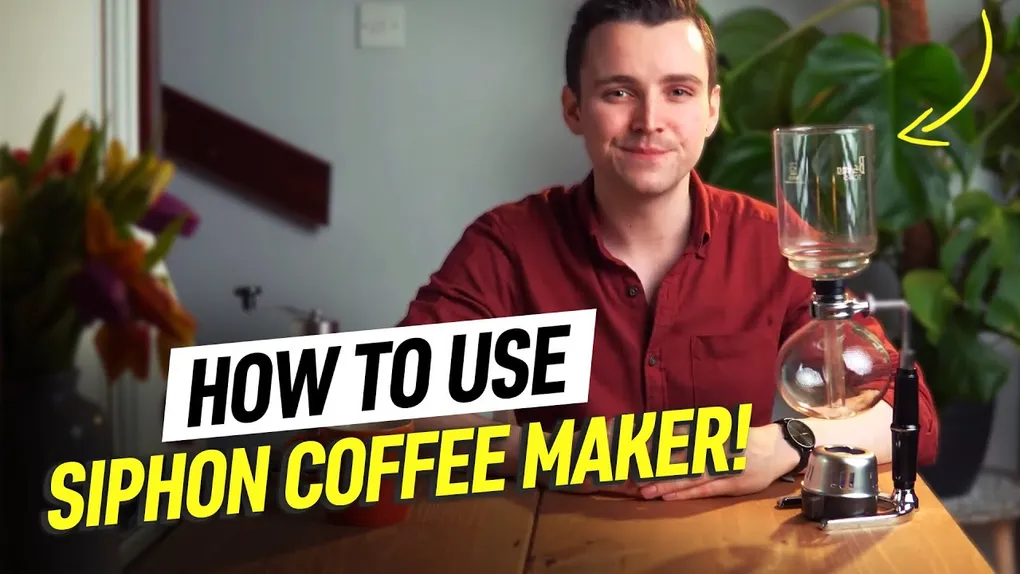
Few coffee brewers turn heads quite like the siphon coffee maker. Part chemistry lab, part kitchen gadget, these striking devices produce some of the smoothest, cleanest coffee you’ll ever taste. Whether you’ve just picked one up or you’ve been eyeing them from across the cafe, this guide covers everything you need to know about vacuum brewing.
A Brief History of the Siphon Brewer
Siphon coffee makers have been making a comeback recently, but they’re far from new. According to historical records, the siphon brewer was invented in the early 19th century by a gentleman known as Loeff of Berlin. While the brewing machine was his brainchild, its popularity is credited to a French woman known as Madame Vassieux, who commercialized the product and redesigned the original model into the double-balloon shape that characterizes the brewer today.
By the 20th century, siphon coffee makers were a household item in American homes, with companies like Hario selling their designs in large quantities. The hype gradually died off toward the turn of the 21st century as consumers sought more convenient brewing techniques. Today, siphon brewers are clearly making a comeback among coffee enthusiasts and baristas paying renewed attention to the age-old craft.
How a Siphon Coffee Maker Works
As the name suggests, siphon (or vacuum) coffee makers harness the power of atmospheric pressure to produce an exceptionally clean brew. Here’s the science behind it:
The typical design consists of a constant heat source (preferably a butane burner), a filter, a siphon tube, and two glass chambers positioned vertically. The brewing process works like this:
- Fill the lower chamber with water and the upper chamber with ground coffee
- Heat the apparatus — water in the lower chamber boils into vapor, increasing pressure
- The “kick up” — pressure inside the lower vessel exceeds atmospheric pressure, forcing water up the siphon tube into the upper chamber containing the ground coffee
- Remove the heat source — water in the upper chamber drops due to gravity and a reversal of pressure, creating a partial vacuum
- Filtration — as the liquid is forced back into the lower chamber, it passes through a filter, completing the brew
In short, you’re combining filter brewing and full immersion brewing using one ingenious apparatus.
Why Choose a Siphon Coffee Maker?
With so many brewing methods available — French press, percolator, AeroPress, drip — why go out of your way to use a siphon? Here are the key advantages:
- Full immersion extraction facilitates complete flavor extraction from your grounds, making it ideal for single origin coffees with complex tasting notes
- Even consistency is achieved by heating water throughout the brewing process
- Smooth, pure liquid with minimal residue in the finished cup
- Serious street cred — if you want to impress fellow coffee enthusiasts, few devices match the dramatic, exciting look of a siphon brewer
That said, there are some drawbacks to consider:
- Cleaning is intensive and requires careful handling
- The glass is delicate, making storage a challenge
- Constant monitoring is required during the brew
- Replacement parts can be costly and hard to find
Step-by-Step Brewing Tutorial
Here’s what you’ll need:
- Your favorite medium-ground coffee
- A siphon coffee maker
- A stir stick (wooden or plastic — avoid metal)
- A scale for measuring coffee
- Water (hot, but not boiling)
Prepare the Filter
If you’re using a cloth filter, start by soaking it in warm water for a few minutes. This allows the filter to expand and completely cover the opening of the siphon. Attach the filter to the top portion of the brewer by gently placing it over the siphon, dropping it through, and pulling the chain down to secure it at the bottom.
Measure and Grind
Use your scale to measure out the coffee grounds. We used three scoops for three cups of coffee. Grind your coffee with a burr grinder to a medium consistency.
Heat the Water
Set up your burner and pour water into the bottom chamber. We’ve found that using hot (but not boiling) water speeds up the process significantly. If you’re using cold water, you’ll be waiting much longer for it to reach temperature. This is especially handy if you’re brewing at home or in a cafe with access to a kettle.
Safety note: When working with an open flame, always take proper safety precautions and keep a fire extinguisher nearby.
The Kick Up
Once the water gets close to boiling point, place and seal the upper chamber on top of the lower chamber. As the water continues to boil, the building pressure will force it into the upper chamber — a process known as the “kick up.”
Add Coffee and Steep
Pour your ground coffee into the upper chamber and quickly stir the grounds using your stir stick. Now remove the heat source. The steep time varies by manufacturer, but allow the coffee to steep in the upper chamber before it begins to draw back down.
The Kick Down
Once you break the seal, the liquid will gradually filter back down into the bottom chamber — the “kick down.” When all the coffee has drained, carefully remove the top chamber (it will still be hot).
Serve and Enjoy
Some people prefer to pour their coffee into a carafe for serving. We prefer to serve it straight from the brewer. Either way, you’ve just brewed one of the cleanest, smoothest cups of coffee possible.
Final Thoughts
Brewing with a siphon coffee maker is both a science and an art. It’s not as straightforward as other methods, but the reward is absolutely worth the effort. If you’re a barista or an enthusiastic coffee aficionado, this peculiar brewing apparatus is definitely worth a try.
Some links above are affiliate links. If you purchase through them, we earn a small commission at no extra cost to you.